
Exhausted With “His Potential”
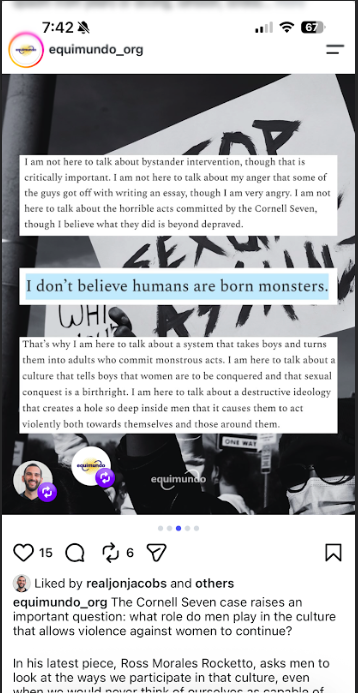
Equimundo does AMAZING work.
Their State of Men work in both 2023 AND the newest edition this past month for 2026 is absolute MUST READ literature that both educates and guides you in what the world is facing in helping men unlearn the Manbox and offers real, researched best-practices methodology to help them reimagine manhood.
I would highly suggest you follow them NOW and refer to their content often.
However, today, this particular line is something I do want to push back on.
Not because I think it is some egregious error…or some patently false statement.
I actually I really like the fact this says “humans” and isn’t what I’ve been seeing from so many folks this past week defending “men” with some version of the usual “not all men” or “boys aren’t born this way” statements. The Cornell 7×57 has brought much needed discourse around SA, DV, masculinity, the manosphere, etc…but has also brought with it well funded, highly visible sources of EXCUSES for men.
I’m not necessarily putting this from Equimundo in that category…and if you read the whole piece, there is a TON of alignment between it and TeamsOfMen’s purpose, teaching and vision.
But I think I’m at the point now where I can no longer grant a presumption of inherent goodness without requiring evidence of it.
I can’t allow us, as men, to hide culpability and participation behind “well, we aren’t born evil” without proof of action to the contrary. The moment we are born, we are required to move, to LIVE and as we grow, those movements become intentional choices we make.
We cannot hide behind our supposed “pure beginnings” while rolling in the mud every second after.
As a coach, we get ZERO points in a game from our potential…and we hammer that into our players in every practice or post-game tirade we make. “We are only as good as our last game” “The next play is the most important play” “No one wins on paper” blah blah blah.
Those cliches probably hold some truth, in terms of having to prove yourself at every new scoreboard.
So why…WHY do we settle for “Well, I know they are good guys” or “My dudes weren’t born evil” when we’re reacting to the latest headlines around men causing harm?
But, what have they DONE lately? What is the evidence of their acting to that benevolent beginning NOW, at age 15, at age 25, at age 40???
If potential doesn’t count on the scoreboard, why the hell should it count as proof of character?
Coach Prompts
If potential doesn’t count on your scoreboard, why should “he’s a good kid” count as evidence of character?
What BEHAVIORS would you point to as evidence that the men in your program are actually living the values you claim they have?
When one of your players causes harm, do you evaluate what he DID—or retreat to what you believe is “really in his heart”?
Player Prompts
If someone described you as a “good guy,” what actual evidence from the last month would support that?
What matters more in determining someone’s character: what they believe about themselves or what they repeatedly DO?
Where in your life are you still asking people to give you credit for your potential instead of your actions?
The Prevention Self-Audit
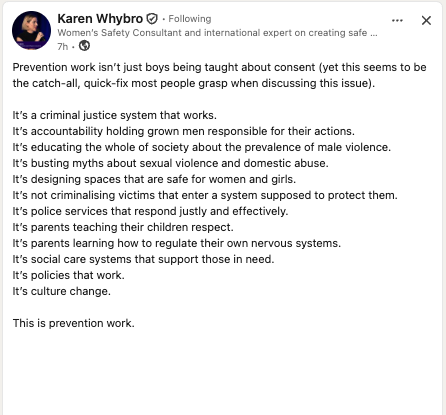
Karen Whybro is NOT to be messed with.
What do I mean by that?
I mean that anyone who is rightfully known as “Women’s Safety Consultant and international expert on creating safe spaces for women and girls through research, consultancy and training to reduce sexism & misogyny” and has the writing skills she regularly displays on LinkedIn is not someone who suffers fools in her comments.
She is one of the best follows on the platform.
Her latest (as shown above in the screengrab) is such a spot-on evaluation of the ecosystem that produces the conditions surrounding cases like Cornell that I not only had to share it, BUT also wanted to use it as an evaluation of what we’re doing with TeamsOfMen.
Each sentence that starts with “It’s…” is worthy of your scrutiny and reflection by simply swapping in “DO WE…”
Example: “It’s accountability holding grown men responsible for their actions” becomes “DO WE hold the men in our program responsible for their actions?”
From there, keep going. Do we educate the men in our program about the prevalence of male violence? Do we challenge myths about sexual violence and domestic abuse when they show up in our team rooms? Do we consider whether the spaces, events and culture surrounding our program are safe for women and girls? Do we intentionally teach AND model respect to the young men entrusted to us?
Some of the lines won’t be applicable to your sport program. Some will absolutely speak truth to you and the actual influence you CAN have on the men in your space.
Take 10 minutes with yourself today (if your staff is around, include them). Read each “It’s…” and turn it into a “DO WE…”
And if the honest answer to one of them is “No”…sit with that for a second before explaining why. Then ask what it would take to turn it into a “Yes.”
Coach Prompts
DO WE hold the men in our program accountable when their actions violate the values we claim to have?
DO WE actively challenge myths, jokes and beliefs about sexual violence when they enter our team spaces?
DO WE consider whether the culture we create around our program is actually safe for women and girls?
Player Prompts
Where do you think prevention actually starts BEFORE someone causes harm?
What beliefs about sexual violence, consent or relationships have you heard from other guys that deserve to be challenged?
What is one part of your team culture that YOU have influence over making safer or more respectful?
Today…I don’t.

Writing every day is awesome.
It feeds a drive I’ve had to express myself via the written word since I was in fourth grade.
But the topics I choose to tackle here in our TeamsOfMen blog are heavy. They are hard. And oftentimes, they are emotionally and physically draining.
This week has been engulfed by the Cornel 7×57 (I’m using that phrasing now because, as many smarter people online have pointed out, the failure of humanity extended past the 7 alleged rapists and into the group chat of silence they sent ‘Free Pu**y’ tests to).
Writing about them, texting about them, posting about them, and having at least 10 different conversations with coaches of male athletes who are in the ToM ecosystem. That’s a good thing, as we obviously have work to do in calling more men into the prevention space.
But it does become exhausting…maybe not in terms of the “my eyes are closing and I can’t stop them” way we think of physical exhaustion…but in the “Jesus, I am DONE with this shit emotionally” way.
Now, I recognize I’m carrying NOTHING compared to actual survivors. Nothing compared to frontline victim advocates and support networks. NOTHING compared to so many women IN THIS.
That doesn’t make it less taxing to feel like we’ve been screaming into the ether here at TeamsOfMen for over a decade that “You’re team room is where you can make an actual difference” only to be met, if we’re being honest (especially in terms of revenue from sales of licenses that we measure as “signing up to do this work”) silence.
And yes, I am using the measuring stick of dollars and sales.
Because when a coach, school or organization buys a TeamsOfMen license, that is one tangible version of someone saying, “We’re signing up to do this work.” If you VALUE something you have to prove it with TIME and or MONEY invested into it.
And too often, they don’t.
It’s beyond frustrating.
It’s actually enraging and hope-stealing.
For every “Kip, this made me realize we have to bring your stuff to our place” there is silence, an ostrich like plunging of heads into the ground and doubling down on practice plans of pure sport, no character.
I don’t have the answer here today, In reality, I barely had the will to write a blog post today. I had a “what is the fucking point” moment.
I’ll be fine tomorrow. I’ll have a renewed zest for it tomorrow. I’ll probably even had a refilled cup of delusion that we CAN do this.
But I don’t have it today.
And maybe the most honest thing I can write today is that doing work you believe deeply matters does not mean you always believe it is working.
Today, I don’t.
Until tomorrow…
Coach Prompts
When was the last time you wondered whether the “life lessons” you say you teach are actually reaching your players
Where have you confused talking about character with actually creating time in your program to PRACTICE it
If your practice plan shows exactly what you value, how much space did you intentionally give this week to anything beyond the sport?
Player Prompts
What is something you’ve heard repeatedly from coaches that you didn’t understand the importance of until later?
When the adults around you keep bringing up difficult topics, what makes you engage instead of tuning them out?
What is one conversation about life, relationships or manhood you wish your team would actually make space for?
Show Them This
I’ve spent much of this week in a slow-burning rage.
Much of that I can attribute directly to the Cornell situation, and not only my Monday writing on it, but subsequent follow-ups, not only across general culture and on social media, but direct commentary back to me that is, for lack of a better phrase, victim blaming at its height.
I watched in fury as The View co host Sonny Hostin tried to both sides, legalese her way around what I saw as a victim blaming stance.
I read in rage comments on various Cornell 7 posts that tried to excuse away the men’s alleged behavior, infantilize them AND deploy the usual DARVO tactics we all know and loathe (but also have come to expect).
Hell I went back and forth with a random on Bluesky who tried to hide behind the semantics of an awful New York state law and pretend they were having a hard time dealing with the “messy” of the situation.
If I’m at this point of exasperation and anger, I can only imagine what survivors are feeling this week.
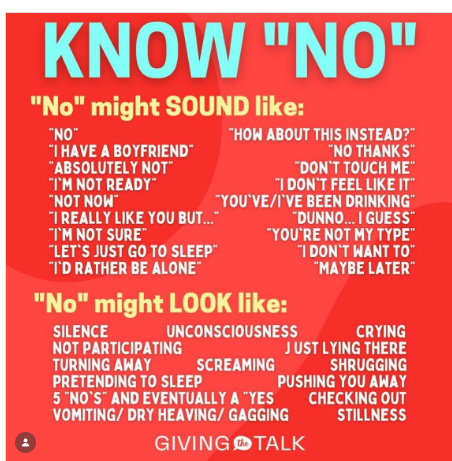
That being said, I wanted to share the above graphic (originally posted on IG by @givingthetalk) as a very simple “Listen, are you moved by this? Yes? Are you around men? Yes? Then show them this dammit” share.
It’s very easy to decipher…it’s based in a reality where a clean “No” may not be available, but that does NOT make the absence of a “No” consent.
You can literally post it, print it, hang it, share it.
Done.
I don’t have the energy to go further today here…not because I have less resolve, but because I don’t want to give folks the option to “opt out” of the conversation because we get too far in the weeds of our educated language and research-based verbiage.
Share the “KNOW ‘NO’” and sit with it.
Coach Prompts:
What keeps you from simply putting a graphic like this in front of your players?
Where might your players have learned that the absence of “no” means permission to continue?
Are you making consent education so complicated that it becomes easier to avoid doing it?
Player Prompts:
If someone never says “no,” what tells you they actually WANT what is happening?
Why might someone be unable or unwilling to give a clean, verbal “no”?
What should you be looking and listening for instead of simply waiting to hear the word “no”?
Rehearse Them Out of Silence
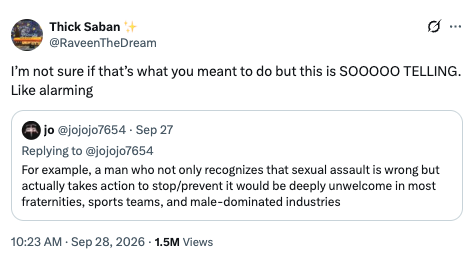
Now, today’s blog action step is going to require you to have access to scroll an X post.
And I recognize that in 2026 that may be a deal breaker for some of you. I’m still on it, even though I refrain from posting there unless it’s a Dallas Cowboys in-game rant thread OR it’s a day like the past few with the Cornell 7 and I’m in a mood to battle bots and MAGA folks all day long. I have NOT been able to quit it, despite repeated attempts.
Today, however, that is probably a good thing because otherwise, I wouldn’t have this very usable post and comment thread to share with coaches of male athletes.
It’s in response to the Cornell 7 allegations (which, rightfully so, have set the internet ablaze this week) and is from a post that correctly identifies that male-dominated spaces like frats, sports and industry are (without intentional work) places of perpetration and silence, NOT of victim advocacy and prevention.
Now, you can stop on that post and just read it to your team and ask “Thoughts?”. That will get you a solid 10-minute conversation with your players about the incident, about climate and culture, etc. It will be good.
But to take it one step further and get into more TRUTH…you need to read the first post and then ask them to scroll the responses. Better yet…put the post by itself up on the screen…and then READ the comments with real emotion (i.e. if they all-caps something, you scream it out loud).
Then ask your guys, with a partner, with a group, etc the following:
Do you think that response is something you would hear from your circle of friends or teammates?
How would you respond to that?
Have you witnessed your coach, your dad, your teacher, any trusted male adult stand up to comments like that (in writing or in person)? How did they do it?
This is a real TeamsOfMen convo.
This is an actual rep in interruption.
And without interruption, without actual tools to use when the moment of truth arises, our young men are left on their own and most likely will choose SILENCE (just like the other 53 men did in that text thread from Cornell).
Coach Prompts
If your players read this comment thread, which responses would sound NORMAL to them?
Have your players ever actually watched YOU interrupt a sexist, victim-blaming or dismissive comment?
Where in your program are players getting reps in what to SAY—not simply being told what they should believe?
Player Prompts
Do you think that response is something you would hear from your circle of friends or teammates?
What would you actually SAY if someone you know made that comment in front of you?
Think of a trusted male adult you’ve watched push back on something like this. What did he actually DO that you could use yourself?
Would They Think It Was Random?
Unless you’ve been purposely trying to avoid social media the past 72 hours, you have been exposed to posts and information about what is being called the “Cornell 7”.
I will let you read and digest the information regarding seven current and former members of Cornell’s Chi Phi fraternity who were named as defendants in a high-profile civil lawsuit filed in September 2026 regarding an alleged October 2024 sexual assault at the fraternity house in Ithaca, New York.
I will let you read and digest the allegations that a young woman was drugged and sexually assaulted over the course of hours, and that during the alleged assault a message announcing “free p***y” upstairs was sent to a fraternity group chat.
I will let you read and digest the university’s response, the lawsuit’s allegation that the men were offered an opportunity to mitigate their conduct by writing essays, and the fact that NOW, in 2026, the criminal investigation has been reopened.
Then I will ask you to ponder a very simple question:
“If I was going to text this out to my own players, whether that be with a 'FYI’ or a ‘Don’t be these guys’ theme, WOULD THEY THINK IT RANDOM for me to be talking about this with them?”
If you’re answer to that question is “Yes”…
Then you are not building the life skills in your program that you think you are.
Then you have not given them any preparation for a moment like this that arises in their life (getting the text, hearing the rumors, BEING IN THAT ROOM)
Then you are simply letting “dealer’s choice” be the prevention model in your program.
I say this as someone who, despite being 13 years into coaching with the idea that reducing the rates of sexual assault and gender violence committed by men requires intentional programming that helps young men identify and escape the Manbox, is usually loathe to say “Look what I did.”
It usually doesn’t work. It usually leads to defensiveness in other coaches. And doing the work the way we do with TeamsOfMen does not come with a “our guys will always be angels” guarantee.
BUT, when the Cornell 7 news dropped, I could (and did) text a number of past players (both graduated and IN college, some in frats) about the topic without them being shocked to hear from me.
When the Cornell 7 news dropped, I could (and did) draw upon past convos, sessions, and programming they had been exposed to and say “You have the skills to ensure your space, your team, your FRAT now does not do this. You have the voice and the training to do this.”
What if…all coaches could say this to their male athletes (current and past)?
What if…all coaches had sent a legion of men out into the world who would not only never think to drug or sexually assault a woman at a party…but who would also have the courage to report a text announcing something like this to someone who could intervene immediately, instead of simply remaining silent?
What if…all coaches had spent intentional time, during the years when they had a platform with their players, on things like victim advocacy and reimagining what “brotherhood” means?
What if….
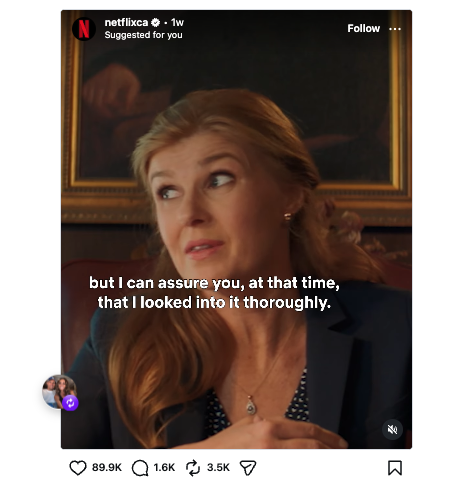
NOTE: The clip I posted above with this blog is NOT directly related to the Cornell 7, but is an amazing scene from “Promising Young Woman” that plays out a college administrator vs.* victim’s advocate conversation that one can imagine playing out in ways that lead to institutional failures like the ones alleged in the Cornell lawsuit.
Coach Prompts
If you texted your players about the Cornell allegations today, would they understand why YOU were the person sending it—or would it feel completely random?
What have you actually practiced with your players that prepares them for getting the text, hearing the rumor, or BEING IN THAT ROOM?
If one of your former players encountered something like this tonight, what previous conversation with you could he draw upon to decide what to do next?
Player Prompts
If a message suggesting a woman was sexually available appeared in one of your group chats, what would you actually do next?
What does “brotherhood” require when protecting another person means challenging or reporting one of your own?
Who have you identified in your life that you could contact immediately if you witnessed or learned about potential sexual violence and didn’t know what to do?
Stop Pretending Your Players Haven’t Heard This
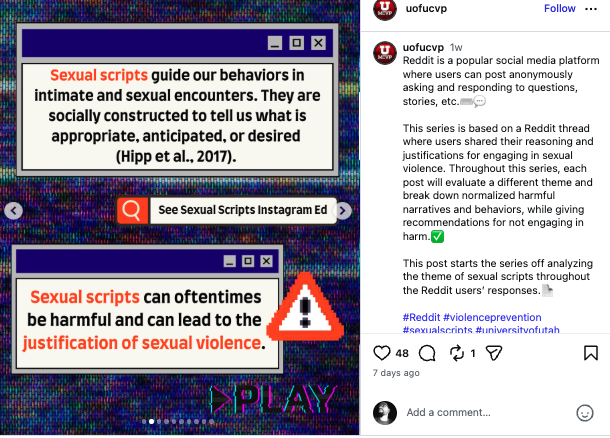
First of all, as a coach you CAN USE this screengrab in the next film session (it’s already edited).
So let’s throw that excuse that I hear from coaches a lot (“Man, I’m not getting in trouble with these parents for putting up nasty -ish") out the window.
Next, the original carousel post on IG from @uofucvp is already broken down into a “lesson plan”-like roll out by the University of Utah’s McCluskey Center for Violence Prevention.
So you can’t tell me “I don’t know what I’m supposed to do with this.” It’s already laid out for you.
Finally, these sexual scripts are LITERALLY what are being taught to your male athletes (whether you have them in HS or College) and what’s worse? They are ACTING in lockstep with them (especially in the absence of any counter programming from you and other trusted men in their lives).
I know, I know.
My tone today is not “best practices” approved. I’m supposed to meet everyone where they are. I’m supposed to invite coaches into the work. I’m supposed to recognize the angst and worry associated with the discomfort and hesitancy of coaches who have not dipped their toes in violence prevention before.
I’m not in that space today. I choose to shake you awake today.
When I tell you I don’t have to click on more than one or two social media sites each morning and scroll ONE SCREEN down before I find an example of men causing harm with their words, their hands or their sheer indifference due to Manbox influence, I mean it is almost INSTANTANEOUS. It’s exhausting. And today is a day (and a ready to use post that doesn’t need hand holding) that you can be a big kid and DO THE WORK.
I mean look at this post from a man on Reddit and tell me you can’t envision one of your players (or your staff) holding the belief that this is 100% the way to roll
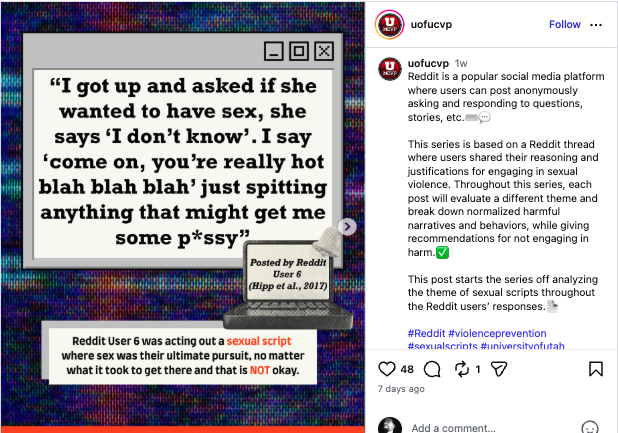
I’ve been in rooms deploying similar examples and sat through the awkward laughs and silence that follows you saying “How many of you or dudes in your circle would co sign this as a thought they’ve had?”
I’ve been in the cars and rooms where friend groups ask for validation of their own “game” when it comes to convincing an unwilling woman for some sexual favor.
And if we’re being honest so have you.
The question is whether they’ve been handed the same script—and whether anyone they trust is helping them rewrite it.
Coach Prompts
When one of your athletes hears “I don’t know” during a sexual encounter, what has he been taught that those words require from him?
What sexual scripts are your players absorbing from friends, porn, social media and older men—and where is the counter programming coming from?
If your answer is “my guys know better,” what have you actually done with them that gives you evidence for that belief?
Player Prompts
In the Reddit example, what do you think the guy believes his job is once she says “I don’t know”?
Where do guys learn the idea that being good at “rizz” means turning hesitation into a yes?
What could a healthier script sound like when someone you’re interested in isn’t clearly communicating that they want the same thing you do?
You Don’t Know What You Don’t Know
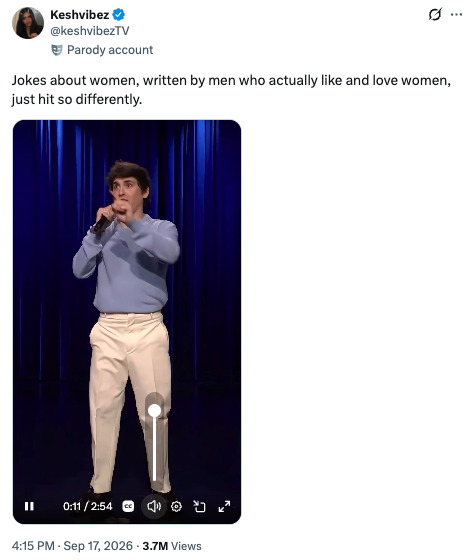
Let’s learn via laughing today shall we?
Show the clip above (originally posted on X by @keshvibezTV) of actor/comedian doing Marcello Hernandez stand-up about the trials and tribulations of life as a woman.
Raised by a single mom, Hernandez’ set features hilarious stories and depictions of
Women’s clothing
Women’s facial care
Women’s hair care
Women’s hygiene
all from the perspective of a young man (Hernandez) growing up and tagging along to all these appointments and being in these situations with his mom. The take is honest, rooted in lived experience, and HILARIOUS.
I throw this one in here for our blog today because as serious as many of the subjects we broach are, I do believe doses of levity and laughter matter. I think humor can help lower the barriers in a room, allow young men to relax and hopefully, be more willing to engage in a topic they normally wouldn’t.
And, I think these topics could be just as much a “Women 101” conversation course as anything as Hernandez talks about what men don’t know about types of women’s clothing, how their hair appointments actually go, and, yes, what a “Brazilian” spa session really entails.
Young men don’t know what they don’t know (hell, a lot of their dad’s don’t know what they don’t know) and letting them learn in a space of stand up comedy is a recipe for growth. There’s value in being able to admit that, laugh about it, and get curious about experiences that aren’t yours. And sometimes, letting that curiosity start in the space of stand-up comedy can make the learning feel a whole lot less threatening.
Coach Prompts
What topics do your players seem more willing to explore through humor than through a formal conversation?
Where might laughter help lower the temperature enough for your players to admit, “I actually don’t know anything about this”?
After showing the clip, resist becoming the expert: what questions could you ask that turn the laughter into curiosity?
Player Prompts
What was something Hernandez talked about that you realized you genuinely knew very little about?
Why can it sometimes feel easier for guys to joke about something they don’t understand than admit they don’t understand it?
What’s something about the experiences of women in your life that you’ve never actually thought to ask them about?
Caring Before It’s Personal
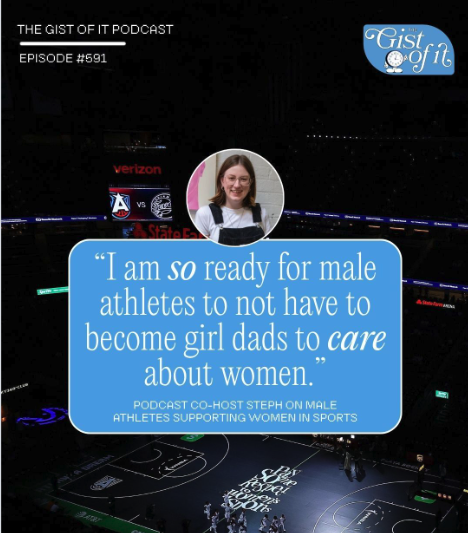
Couple of things that this post (originally on IG by @thegistusa) stirred in me when I first saw it during my usual doom scrolling last night:
YES YES YES…such a spot on naming of a frustration I can only imagine weighs heavily on women as they hear and see so many men get some sort of figurative “badge of honor” for leading off their “allyship” with “Well, you know I’m a girl dad”
And it we’re being honest, this runs rampant in our sports ecosystems. Whether that be a coach, a player or a adjacent administrator or executive, someone somewhere decides this week’s Gameday must lead with a “well, I finally stopped being a complete dick when my daughter was born”.
It led me back to one of the more powerful (but also likely to cause awkward silence) graphics we’ve used and helped coaches use with their players for a few years (see below)
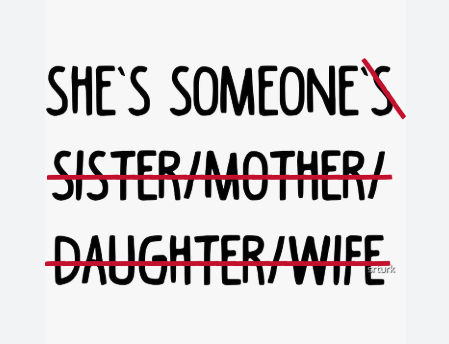
You post this up on a film screen before a session with your guys, and let me tell you, as someone who has done it, you’re going to get a combination of head nods, tilted head confusion and telling silence.
If you do this in your STAFF MEETING room beforehand, you might even get SCOFFS and deflection, because if I’m being honest, I know in certain spaces, certain teams or audiences that I’ve led and spoken to, it’s always SAFER to lead with “Think about your mom or your girlfriend going through this” than “Yo, you should give a damn about any woman you encounter because they have inherent value as a human being.”
It’s a bigger lift.
IT SHOULD NOT BE.
But it is.
And I think it’s okay to hit dudes in the face with the hypocrisy of ONLY giving a damn about VAW in the context of “your” woman is harmed.
Because in that world, we’re still in some gross version of “ownership” of the women in our lives. We’re still living some “white knight savior” nonsense. And we’re still indifferent to harm to strangers, which we know is not the actual definition of a community that cares for one another.
Finally, if you are a coach who claims (like we all do, and I believe is true) that your true calling is building better men for their future lives as husbands and dads…is it really a successful formula to have him WAIT to give a shit about women until he is married or fathers one?
My god, in our “reps to prep for the game” world of sport, that’s literally akin to “hey, we are going to start giving a damn about that game…at kickoff. NOT practice before, film before, weights before…nope, not until actual kickoff. See ya there.”
Coach Prompts
When talking with your players about harm toward women, how often do you rely on “imagine if that were your mom/sister/girlfriend”? What might happen if you removed that framing?
What are you actively rehearsing now with your male athletes that prepares them to care about and advocate for women later?
Where might your own language unintentionally teach players that women deserve care because of their relationship to men rather than because of their inherent humanity?
Player Prompts
Why do you think “imagine if that was your mom/sister/girlfriend” can feel more convincing than simply saying a woman deserves to be treated with dignity?
What changes when you cross out sister, mother, daughter, and wife and leave only “She’s someone”?
If caring about people is something we can practice, what is one “rep” you can take now rather than waiting until the issue becomes personal?
When Not Laughing Isn’t Enough
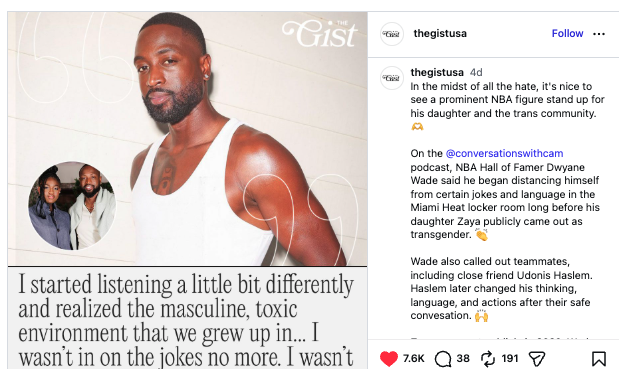
I recognize that as much of a sports figure Dwyane Wade was in my early adult years, he may be viewed as an old head and have “Unc” status with today’s male athletes. But, in our quest to generate topics and conversations with them that actually interest them, I think he still has enough name recognition to earn a slowdown and focus from them.
The above post (originally on IG from @thegistusa) tells the story of how Wade had to navigate the Miami Heat locker room, and more specifically, the jokes and humor being tossed around it after his daughter Zaya came out publicly as transgender. It talks about him moving from simply not laughing, to physically standing and removing himself from the room to ultimately challenging a close friend and teammate (Udonis Haslem) via conversation.
This is the progression we would all HOPE each of our players individually would be capable of when faced with a team room full of toxic humor. This is the courage and conviction we would love for them all to act with in situations where their values are put to the test by the group dynamic.
But, I also recognize this is what a grown, adult father was capable of. Many of you have young men, some of you have teenage boys in your room.
They most likely won’t have the capacity for this.
So, in my opinion, sharing this story of courage is awesome…but setting the parameters for what is acceptable humor in your spaces is the next move. You are the coach. You are the adult. You have the power within that dynamic to mandate that “this program DOES NOT tolerate homophobic, transphobic hate speech OR jokes of any kind.”
By doing this, you are not only trying to curb the type of language Wade had to deal with, but you are also signaling to kids in the room who hold the same values as you that “my coach has my back.”
Imagine if Coach Erik Spoelstra had been laughing alongside Wade’s Miami Heat teammates during these joke sessions? Imagine the effect on their coach-player relationship in that moment when Wade looked to the leader of the team for support and safe haven and instead found a cosigner of that humor?
This is TeamsOfMen in all aspects. What you do with your relationships with players, how you create and normalize a healthier version of humanity inside the walls of your team spaces AND how you model what it means to truly “teach life lessons.”
Coach Prompts
What types of humor have you explicitly told your team are outside the boundaries of your program—and what have you only assumed they know?
When harmful humor happens in your team space, who currently carries the burden of challenging it: the targeted player, another teammate, or you?
What does a player see from you when a joke violates the values you claim your program holds?
Player Prompts
Have you ever disagreed with a joke in a team setting but laughed, stayed quiet, or went along with it anyway? What made speaking up difficult?
Which of Wade’s moves—not laughing, leaving the room, or directly challenging a teammate—feels realistic for you right now? Which feels hardest?
What would your coach need to do consistently for you to genuinely believe, “my coach has my back”?
What “PAUSE” Is Doing In Your Team Room
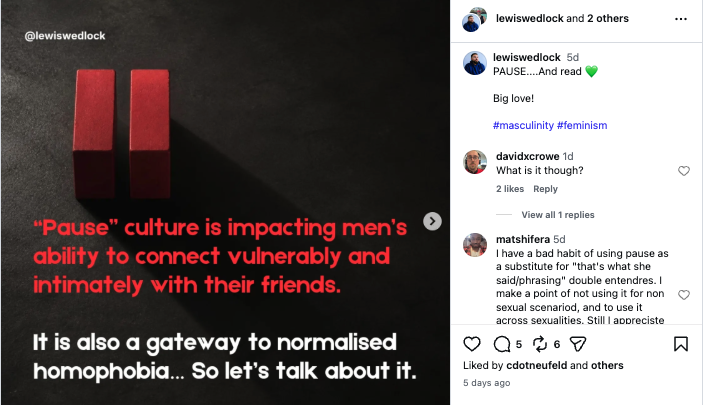
If you’ve been coaching male athletes in the past five years or so, you have heard a young man on your team use “PAUSE.”
You’ve experienced someone on your roster (maybe even one of your coaches) in a deep conversation, mid-story, seemingly randomly divertiung to get in a quick “PAUSE”.
You’ve been in a team circle or team room and while a teammate is talking, someone from the audience says “pause” and the roster erupts in laughter.
If you were unaware of what that was about, this post is PERFECT for you to upgrade your understanding AND start pushing back on.
First, it’s probably easiest to say this is a 2020s version of “That’s what she said.” Think of Jim Halpert looking at the camera in “The Office” every time Michael Scott utters that line and you’ll get a physical representation of what that “pause” comment is doing in your team room.
It’s trying to police sexual innuendo, sexual suggestion and, as the original IG author Lewis Wedlock mentions above, often ends up normalizing homophobia. Any suggestion from an otherwise unrelated comment like “You sucked that shake down fast” or “That’s way to big for me” is going to get a “pause” call and a giggle festival started. And while sometimes it will lean towards a heterosexual pornification of everyday language, it most likely will be rooted in Manbox type gate keeping of any “softness” or “gayness” in your team room.
I won’t ruin Lewis’ post (after all, I want you read it with your staff and players slide by slide and lean into it’s conversation-starting statements), so after going through that exercise, roll out our usual Coach Prompts and Player Prompts to truly examine WHERE and HOW this casual “interruption” is showing up in your team spaces.
Coach Prompts
When “pause” gets called in our team space, what exactly is being identified as funny, embarrassing, or unacceptable?
When have you heard “pause” used to police something a player said or how he expressed himself—and what message did the laughter that followed send?
How can you interrupt “pause” culture without simply becoming the adult who bans another word, and instead help players understand what the joke is doing?
Player Prompts
Think about the last few times someone said “pause.” What was actually being joked about?
What does someone have to say or do in your group to earn a “pause”? What does that tell you about what your group considers acceptable masculinity?
If a teammate were gay—or simply worried about being perceived as gay—how might hearing “pause” over and over change what he feels comfortable saying or doing around the team?
Are You Asking For Respect…or Obedience?
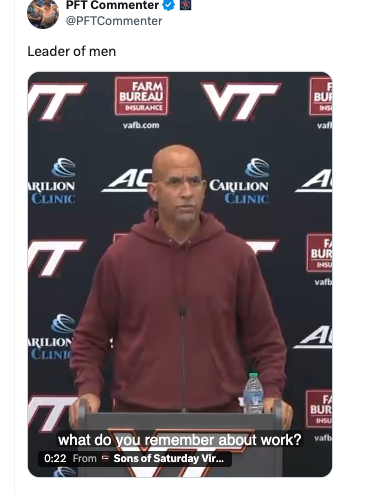
If you missed this earlier this week, this one we can chalk up as a master class in “performative politeness” disguising a real control issue.
Virginia Tech Head Football Coach James Franklin started off what I can only assume is his weekly press briefing by refusing to answer a question from a reporter without first getting the exact interaction he apparently wanted from him.
Except here's the weird part: the reporter, Michael Howes of The Baltimore Sun, had ALREADY started with “Hey, Coach,” before introducing himself and beginning his question. Franklin responded “Hey, Michael,” and then repeatedly interrupted Howes with the same greeting as he tried to continue. Howes later explained that he couldn't see Franklin on Zoom and initially thought his audio was glitching.
After making the viral rounds, the clip has generated debate over whether the coach was actually “just doing the polite thing and asking for that in return” or, as I would view it from a TeamsOfMen lens, deciding to expect the level of power and mandated action he enjoys over his players in the real world.
Listen, it IS polite to respond to a person saying hello to you with some sort of acknowledgement. If you are greeted, I suppose it’s reasonable to reciprocate back (either verbally or with some sort of head nod or wave). I’m not arguing that.
But I also know that a failure in that department is not the final nail in the coffin of our society and I wouldn’t stop in my tracks and forcefully confront someone who hasn’t given me a dap up.
And again, in this case, Howes HAD greeted him.
What I believe we have here is a man used to owning a room, not just in presence, but in mandated obedience. I say jump, 100 men jump. I say echo a phrase, all voices sing. But that’s not the actual world.
That’s the environment your status and privilege as the coach have afforded you.
Coach Franklin doesn’t “coach” Michael. Michael doesn’t play “for” Virginia Tech Football.
This is a silly display of power that he should be above (or at the very least, later, off to the side ask Michael “Hey, Mike, listen, I think it’s polite to have a little back-and-forth with each other before we do the song and dance of Q&A. You good with that?”
Because there is a difference between wanting someone to be polite and requiring someone to perform politeness exactly the way YOU want before you'll allow the interaction to continue.
One is a relationship preference.
The other starts looking a whole lot like obedience.
Coach Prompts
When you say a player is being “disrespectful,” what observable behavior are you actually responding to?
Does “respect” in your program ever accidentally mean doing exactly what the coach expects, exactly when the coach expects it?
How does the power you hold inside your program affect what you expect from people outside of it?
Player Prompts
What is the difference between respecting someone and obeying someone?
Have you ever been accused of being disrespectful when you felt like you simply didn’t respond the way someone wanted you to?
When someone doesn’t respond to you the way you expect, how quickly do you assume they are disrespecting you?
When The Values Get Taxed
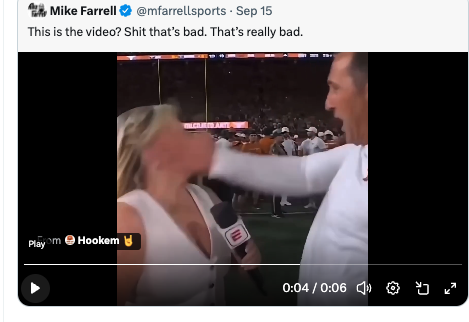
“Sounds like Arch needs some TeamsOfMen curriculum.”
I got that text last night round 9p.m. from a longtime friend of mine who has been in HS teaching and admin for almost three decades. He was of course referring to the situation that occurred after the University of Texas football team win over Ohio State Saturday night, when Texas HC Steve Sarkisian ended his postgame interview with sideline reporter Holly Rowe in a strange, abrupt way. In the media sessions following the game, Texas QB Arch Manning was asked about the social media edits he had seen from the weekend. Manning brought up the video above, laughed, and called it “a good one” and “hilarious.” The video was an AI creation depicting Sarkisian slapping Rowe across the face.
Multiple things are true in this case.
First, what Sarkisian did to Rowe in reality was not physically violent, but was at best weird and more accurately RUDE and DISMISSIVE.
Second, Manning’s laughter doesn’t in and of itself convey his agreement with violence against women, but it at least signals his willingness (like so many other boys and men) use laughter to move through a moment without confronting what is actually being laughed at.
And third, Manning has since apologized. He acknowledged that there was “nothing funny” about the video, apologized specifically to Rowe, and Rowe accepted that apology after the two had a private conversation. That matters, too.
There are two paths I want to take in examining this entire situation, which of course is generating national discussion (and includes the usual deflection points in online responses like “libtards are soft” and “it was just a joke”).
First, in 2026, a currency in manhood as important as (if not more so) than literal cash is HUMOR.
Boys will do anything to be seen as funny.
Boys will laugh at anything to maintain their status in a group (even when the thing they are laughing at is not in alignment with their values).
Boys will look for escape from accountability for causing any type of harm by claiming “it was just a joke” or “it’s not that deep.”
What’s worse? The adults in their lives (as evidenced by some of the comments below on the blowback Arch was getting) will GRANT them those hall passes (and I suspect that is due to the adults themselves wanting that future grace from their own bullshit moments). Examine the boys in your life and imagine them being confronted with awkward silence…they may be prone to making weird noise or strange sound or dumb joke to break that quiet (rather than sit with their own thoughts).
Think of the men in your life who rather than share real truths and thoughts on their lives and the world with each other devolve to sex and fart jokes in each other’s presence (the hyena cackling is probably echoing in your ears right now).
Lastly, even if we are to imagine the moments in life when men hear something they know their values don’t align with, rather than confront it with an interruption, you can visualize them right now smirking or quietly laughing while trying to escape the scene.
Humor can absolutely build connection between boys and men. But it can also become camouflage.
This jokester economy is not one of courage. It is one of deflection. And THAT is something worth teaching our guys to recognize: Am I laughing because I think this is funny? Or am I laughing because laughter gets me out of having to decide what I actually think about it?
Second, in taking a 150-foot view of this entire situation, I want to present the image below (allegedly an online image from the Texas team room). Among the listed “CORE VALUES” is “TREAT WOMEN WITH RESPECT.” Reporting about the image has likewise identified it as a Texas locker-room values display.
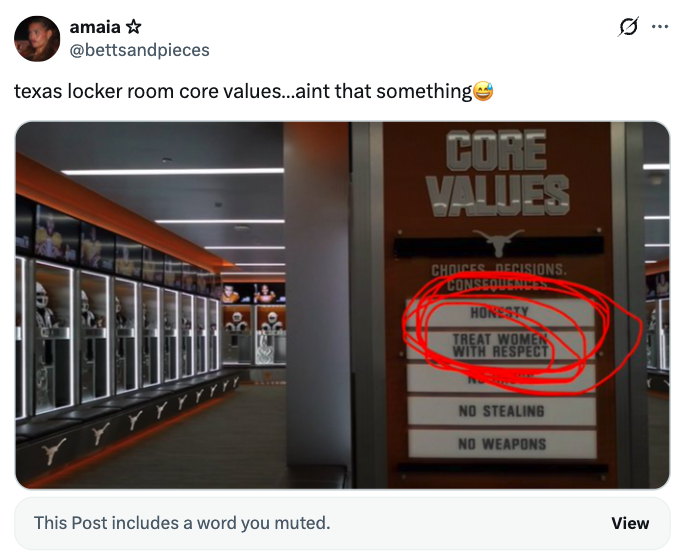
In 2026, I’m not sure being called (or even proven) to be a hypocrite moves anyone anymore (I mean, you can just look to our Commander in Chief for examples of this claim). Knowing this, I’m willing to bet Coach Sark and the ol ‘Horns won’t be adjusting their behaviors based on the fact their sign clearly states they believe in acting the complete opposite of how he did on Saturday night.
And we know, as we’ve pointed out in this blog and in our TeamsOfMen in-person sessions with coaches, that signs to don’t guarantee outcomes or behavior. This literally isn’t worth the paper it’s printed on if the leader of the program is going to move the way he did on national television. We could waste our time and point out that the sign also claims “Choices. Decisions, Consequences” for players in the Longhorn burnt orange…but we can reasonably deduce that (based on the “oh, well Sark and Arch issued statements") that consequences should be read as “apologies and amnesia required”.
If these stated “core values” or “standards” don’t hold up in the brightest moments under the biggest lights with the most at stake, then we cannot claim them.
And trust me, I know after almost 25 years of coaching, that things GET TAXED and FAIL. But, in the version of coaching I choose to deploy, that failure requires as much scrutiny and practice planning for improvement on the same scale as a failed 4th down conversion.
I wonder, with the millions of dollars UT football has its disposal, about the who/what/how of the internal examination of this moment for their coach and QB.
Coach Prompts
When one of your program’s stated values FAILS in a real moment, what happens next besides an apology or consequence?
Which of your team’s values have you actually practiced under pressure rather than simply talked about or displayed?
When your players use humor to escape an uncomfortable moment, can you help them distinguish “I think this is funny” from “laughing gets me out of dealing with this”?
Player Prompts
Have you ever laughed at something you didn’t actually think was funny because everyone else was laughing?
When you say “it was just a joke,” does that explain your intention or erase the impact?
Pick one value your team claims. What would it actually look like to live that value when doing so is uncomfortable?
NOTE: This same blog appears as a longer form article on my Medium Page
The Pass Isn't Transferable
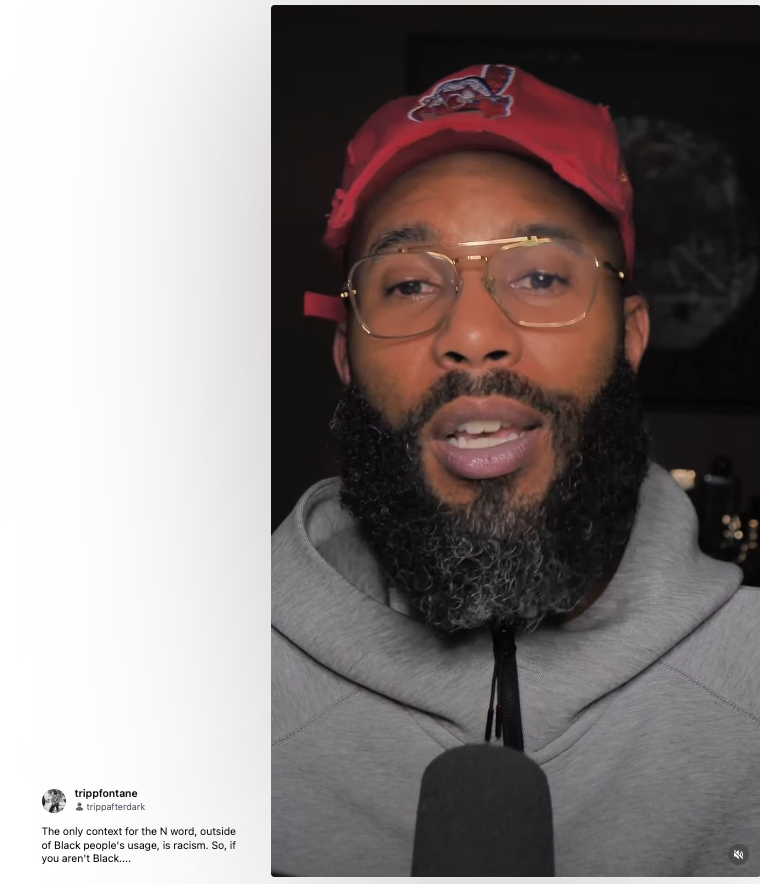
If you coach in a diverse community, the N word is something you are going to have to have a policy and plan for.
If you coach in a monolithic white community, the N word is something you are going to have to have a policy and plan for.
If you coach against teams from either of those descriptions, the N word is something you are going to have to have a policy and plan for.
If you do the math, between those three sentences, I’ve covered everyone everywhere in coaching.
No matter how badly I would love to erase that damn word from existence, it is going to come up at some point, somehow, somewhere in your coaching.
If you are lucky, it will be the soft “n***A” version of the word. That’s what today’s writing is on.
The hard R ending version of that word? I have zero tolerance for, by my coaches, my players, our opponents, their staff, their fans, whoever. That shit don’t fly with me. I will walk my team the hell off the floor until you either find the fool who used it towards us or you clear the damn arena (RIP to Coach John Thompson who showed the way on how to combat in house racism by not taking the floor until it was gone). I don’t believe the hard R needs me to write a long list of “how should I deal with this”. You don’t. You eradicate even the idea of it in your presence.
Now, the soft A is harder.
Especially if you are NOT Black (I am Samoan) but have Black players/coaches etc in your orbit who use the soft A as a term of endearment between each other (and, in fact, may come from families or communities where its usage is normalized). You are stepping into cultural and relational territory that isn't yours to simply define for them. That is not your battle, and the most I ask of my guys is “in our program spaces, in my presence, I don’t want to hear it. BUT, that is not me telling you what happens in your life away from here. That is absolutely within your agency to decide.” (NOTE: In Oregon HS hoops, even a black player saying the soft A version to another black player within earshot of a ref earns an auto ejection.)
But, you may have Hispanic, Polynesian, or even Asian players in your space who claim to have some version “a pass” to say it.
As the speaker @trippfontane explains in the MUST WATCH video above, they may actually have that pass…WITH THAT set of specific Black friends.
But that's the important distinction: permission within a relationship isn't universal permission. Those friends do not speak for the entire Black community.
That pass expires the second they try that -ish around someone from the Black community they don’t know.
And whatever permission exists inside those particular friendships doesn't automatically transfer into every other space they enter.
That pass also expires the second they try to use that word between each other from their ethnic group that isn’t Black. You don’t get to throw around that word in your group because your group doesn’t carry the history and consequences of that word on the Black Americans experience (and I say that as someone who has been mistakenly called the N word despite being from the Pasifika diaspora).
And THIS is exactly why waiting until somebody says it is a terrible coaching strategy.
I think this video is a staff meeting before the season starts viewing.
I think this video is then a shared viewing with your Black players followed by a discussion of their thoughts on it premise and statements.
Not because you're asking those players to create the policy for you or speak for every Black person. You're listening because the policy you're about to implement directly affects their experience in your program.
I think this video is then a must view for everyone in your program, TOGETHER.
Then you tell them exactly where your program stands BEFORE somebody tests the boundary.
At the very least, this video should be the basis by which you and your staff build the policy and plan for this word you KNOW has the potential to derail your season.
Coach Prompts
What is your program’s policy around the N word, and do your players know it BEFORE an incident happens?
Have you distinguished between setting a boundary for your team space and trying to dictate your players' language outside of it?
If this word were used at practice or during a game tomorrow, would every coach on your staff respond consistently?
Player Prompts
Does permission to use certain language with one group of friends mean you have permission to use it around everyone? Why or why not?
What responsibility do you have to understand how a word may land differently with someone who doesn't know you or your intentions?
What should happen in our team space when someone's language crosses a boundary we've already agreed upon?
Bring Who You've Become

This past weekend I spent time with a group of lifelong buddies (literally guys I have known and been teammates/friends with since elementary school) in Reno, NV. We have a tradition where as many of us as possible get together for a weekend, centered around my brother Kane’s college football team’s schedule. He’s currently the defensive coordinator at the University of Nevada, but whether there, at Boise State, the University of Washington or even Montana State, we pick a game that is located somewhere we all want to meet at and then we spend an awesome two days together.
I bring this up because I think our group finds itself, like many male friend groups, navigating the nuance of adult friendship:
What we were THEN
What we are NOW
How long we go between actually experiencing time together
Now, if you dive into this, you will probably recognize the similarity between those three bullet points and the life cycles of a team. You can draw throughlines to your players being around each other all day every day IN SEASON, then going their separate ways in the offseason and reconvening the next year, older, (hopefully bigger and faster) and looking to rekindle bonds and relationships.
It is NOT easy to do.
Because the people who come back aren't exactly the same people who left.
How does this apply to TeamsOfMen convos with your guys?
Because I think you SHARE adventures like this with them…not just in terms of “yeah, we flew in at this point, we then did this thing, our seats were here” transparency truths, but VULNERABLE things like “Yeah, a friend of mine is single now, looking to start a new adult relationship” or “this guy, we hadn’t seen in two years, we had NO idea his wife was sick” or any other of the many things that come up when you get back together with a group and both try to relive the old days AND create new memories.
Those are chances to show your players that adult male friendship isn't just nostalgia. It requires continuing to learn who your friends are becoming.
Here’s an easy one to start a convo with your guys about: “So, when you picture your friend from elementary school…is he the same guy today? Do you treat him like he is (for example, a nickname he had in 2nd grade might not feel right to him now in 10th)? How can you help the friendship grow and be about who each of you are now?”
You could go another way and ask: “When you are around your guys who ARE NOT in our TeamsOfMen sessions, do you hold them accountable to language and jokes you know now are nonsense…or do you just stay silent?”
Because that's another test of growth: when you return to an old group, do you bring the person you've become with you? Or do you slip back into the version of yourself that group remembers?
A combo of these could prove to be a powerful reflection and MODELING for your guys about how important friendship can be, but also about the idea that we must let and CELEBRATE each other as we grow beyond the “old days".
The old stories matter. The old nicknames might. The old jokes might not.
Maybe part of being a lifelong friend is giving each other permission to become somebody you didn't know when you first became friends.
Coach Prompts
When you talk with your players about friendship, do you talk about how friendships have to change as the people inside them change?
What could you share from your own adult friendships that would MODEL something your players rarely get to hear men discuss openly?
When your players leave your team environment and return to other friend groups, are you preparing them to bring their growth with them?
Player Prompts
Think about one of your oldest friends. How is he different from the person you first became friends with?
Is there an old nickname, joke, expectation, or version of you that doesn't really fit who you are anymore?
When you're around friends who aren't part of the conversations happening on your team, do you act like the person you're becoming or slip back into the person they expect you to be?
You Don't Have To Laugh

So I have a Starbucks addiction.
No, seriously.
Every day, since the birth of my oldest child in 2007, I have had at least one Starbucks Venti Iced Coffee (sometimes two).
Yeah, it’s an issue I’m well aware of but unwilling to do anything about.
Also, as you are all aware, I am into Mantra TShirts. I think taking the small step in courage of wearing a shirt with words on it that not only state something you believe in, but also something you are pretty sure others disagree with, is a choice we should all try to make occasionally.
These two truths collided yesterday for me at my local “watering hole” Starbucks here in Salem. I was in for my usual and it happened to be a light-traffic today and there was a middle-aged man also waiting for his mobile order to be served. I caught his gaze as I walked in and I knew he was reading my shirt (one of the She Is Not Your Rehab line found here). I took a short breath knowing some nonsense was coming and the man said, “Whoa, what does that shirt say?”
I responded, “She Is Not Your Rehab,” and sort of flipped the bottom of the shirt out a little tighter so he could read the text.
He said, “What does that mean?”
I said, “To me, it means that if you are a man with a wife, girlfriend, partner….that person is NOT responsible for your issues. You need to figure them out your damn self.”
He made a weird joke about “being IN rehab” and then said “well, I think women should wear that shirt for us” which of course is a pretty clean example of the deflection tendency we men know well: somehow turning a challenge about our behavior into a conversation about what women do wrong.
I said, “Tell me more about that” something which he appeared very unready to do.
He mumbled something and the convo ended.
I don’t think I changed the world yesterday during this Starbucks convo.
But, I do think this was an opportunity to interrupt some line of thinking and a script too many men let unfold unchallenged. This person, who let’s stop short of claiming to be awful (but most likely carries some Manbox training) was used to saying some sexist -ish, joke, banter with another man and getting laughter back.
I simply didn’t provide it.
That in and of itself was I’m sure a shock to his system. If that shock held or not is immaterial.
For me, it was a modeling of what I ask my players to do. In those moments, when someone is saying or doing what you KNOW you don’t agree with, you at least have to say something.
And THAT is the part I keep coming back to.
He didn’t need me to win an argument with him. I didn’t need the perfect comeback. I didn’t need to turn Starbucks into a TeamsOfMen session.
I just needed to not give him what the script was asking me for: another man’s approval.
Or, sometimes, simply refuse to give them the laugh, head nod, “exactly,” or whatever other form of approval they expected from you.
Because interrupting a script doesn’t always require a speech. Sometimes the interruption is simply making sure the other guy doesn’t leave believing you agreed with him.
Coach Prompts
When a player makes a sexist, homophobic, or otherwise harmful joke, what response is he expecting from the other guys in the room?
Do your players believe interrupting something they disagree with requires a confrontation, or have you shown them smaller ways to refuse participation?
How often do YOU unintentionally reinforce a harmful script with a laugh, smile, head nod, or silence?
Player Prompts
Think about the last time another guy said something you disagreed with but you laughed or went along with anyway. Why did you?
What could you do when a friend says something you don’t agree with without turning the moment into a huge confrontation?
What does another guy assume about your beliefs when you laugh along with something he says?
When a player makes a sexist, homophobic, or otherwise harmful joke, what response is he expecting from the other guys in the room?
Sweat Equity Isn't Character Development
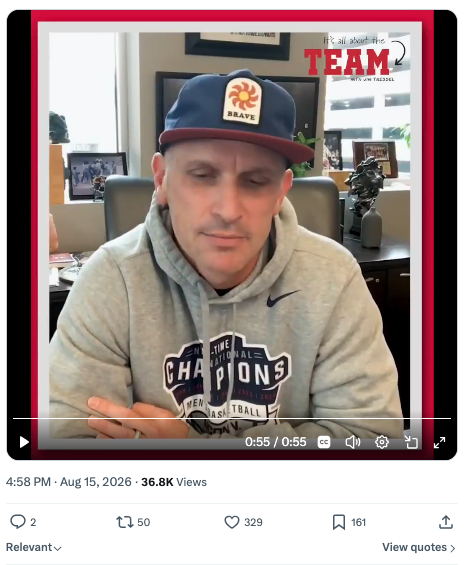
Coach Hurley returns to the blog!!! I say that a bit tongue in cheek because if you have been here often, you know Dan Hurley has provided us with a few moments worth a TeamsOfMen lens deep dive. Now, he is nowhere near the number of appearances by Mick Cronin, but he is back. As always, there is no denying his acumen on the scoreboard, as his back-to-back National Championships attest. But, once again, I think his words here are at best a misunderstanding of definitions or at worst a blatant bastardizing of them.
The post, originally put up on X by @coachajkings, is supposedly cueing the viewer to watch the video where “Dan Hurley shares the difference between transactional and transformational coaching.” But as you watch the video, you realize that YES, Coach Hurley says that he is a transformational coach, not a transactional coach…but then proceeds to simply describe an environment of physical and mental challenge.
He describes hard work. He describes seeking discomfort. And he describes a payoff the includes a lot of winning.
That’s sweat equity and a culture of effort. Absolutely fine. No issue there.
But transformation doesn’t happen during rigorous physical exertion simply by osmosis. Muscles and cardio systems are improved for sure. Work capacity can improve. Perseverance can be practiced.
But when I hear transformation, I think of human qualities and character. I think of (as we’ve talked about in the past) character of HEART, not simply perseverance.
I can run a lot of lines. I can do defensive slides for hours. That can get me in phenomenal shape.
I can be yelled at for hours. I can bite my tongue and learn to deal with it. That probably makes me at least PATIENT, maybe?
But I’m not sure you can claim TRANSFORMATION simply from enduring hard work. I think that requires exactly what we’ve learned about “virtue translation” lately and that is framing and reflection time on what happened, what I thought, what I felt, and WHY and HOW it applies to my future life.
Otherwise, we’re making the same assumption sport has made forever: because an athlete EXPERIENCED something hard, they automatically LEARNED the lesson associated with it.
I appreciate the outlining of what a day in the life of UCONN MBB looks like here (it sounds like a grueling physically challenging environment). Great.
But I don’t think this blurb (at least) showed us WHAT was transformed, WHY it was transformed, or HOW that transformation transfers beyond basketball.
Coach Prompts
What do you call “transformational” in your program, and what evidence tells you an actual transformation occurred?
When athletes experience something difficult in your program, where does the framing and reflection happen that helps them understand what they learned?
Which qualities developed in your program could your athletes identify, explain, and intentionally apply somewhere outside their sport?
Player Prompts
Think of something difficult you’ve endured in your sport. What did it actually teach you about yourself?
What is something you’ve learned through your team that you know how to use somewhere outside of sports?
When you’ve changed because of a difficult experience, what helped turn the experience into an actual lesson?
You Don't Gotta.
“As a man, I gotta…”
I’ve long argued that there may be no more destructive trap sentence than that one. And I know most men reading this can probably think of a time they’ve deployed it.
Pay attention to what comes AFTER “As a man, I gotta…” because what follows is often a Manbox-influenced limitation you’ve placed on yourself. TeamsOfMen teaches us to help our young men identify the snare before it makes the choice for them.
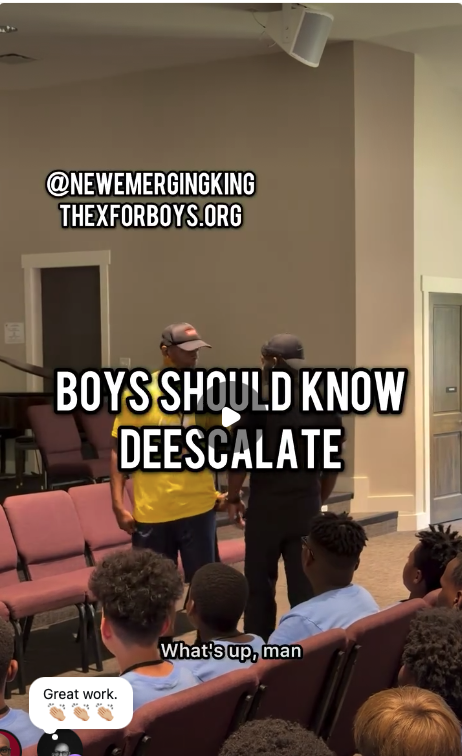
Our video share today (originally posted to IG by @newemergingking) is a great example of how to show your guys a way to counter the programming of “As a man, I gotta.”
What do I mean? The video shows a training session on deescalation, including a skit where the trainers role play how an interaction can go sideways AND how to stop it from doing so.
The shoulder bump, the mean mugging, the fist clenching…all those triggers that you see on a football field post play…on a basketball court after a hard foul…on a soccer pitch after a slide tackle gone awry. Think about how many times you’ve had a player react with that exact posture, get the flag or whistle for the resulting tussle, and then give you some version of: “Coach, as a man, I gotta…”
But he doesn’t gotta. He has options.
This could be the video you need (either to show, or to steal techniques of unlearning training from) to show your players how to #meetthemoment differently in your program. I would probably take it a step further and ask the guys to show you the way THEY would be currently comfortable deescalating. What would they say? What would they do with their hands? Would they walk away? Could they walk away without feeling like they had just “lost” something?
Their answers give you another launch point. Meet the guys where they are and start unlearning the idea that every confrontation requires them to prove something.
Coach Prompts
What versions of “As a man, I gotta…” have you heard from your players after a confrontation?
When conflict starts escalating, what options have you actually taught and rehearsed with your players?
Could your players deescalate a confrontation without feeling like they backed down or “lost”?
Player Prompts
Finish this sentence honestly: “If another guy disrespects me, I gotta…”
What could you do to deescalate a confrontation and still feel like you stood up for yourself?
When someone bumps you, stares you down, or talks trash, what makes it hardest to choose not to escalate?
Can You Watch This Without Making It Funny?
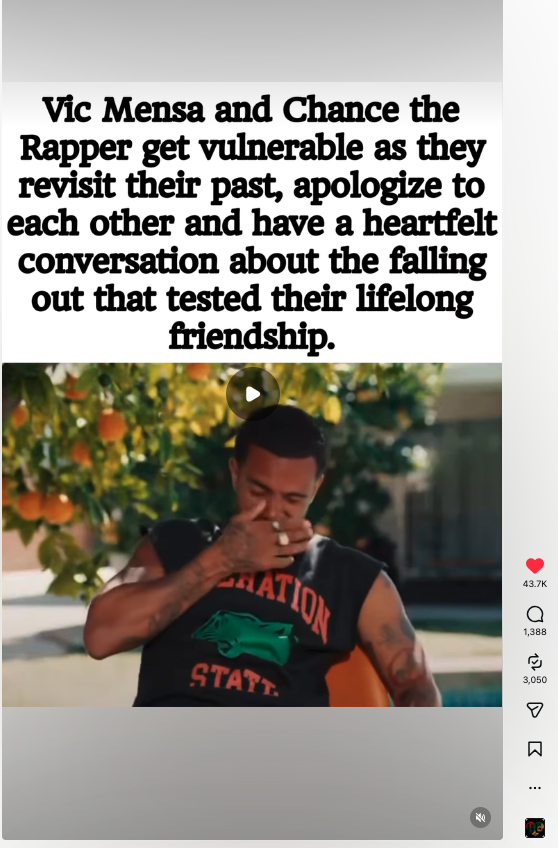
I’m not going to claim that your locker room is full of Chance The Rapper and Vic Mensa fans…but they are relevant artists in hip hop culture. And I’d wager that hip hop has some version of influence in your room.
So my hope is this video can resonate with your group.
Long story short, this is a exceptionally emotional and vulnerable scene of Vic and Chance (who were very tight for an extended period of their lives) apologizing to one another and mending fences after a prolonged “beef” between them. Their friendship was literally non existent for years and this is their trying to patch it back together.
I wouldn’t put this up with a bunch of prompts and stop it at a bunch of different points. I would let it play all the way through and then intentionally call for silence for 2 minutes. Not because it’s the best apology makeup scene of all time, but because the TEARS between the two men matter. I want your guys to be able to see the emotional exchange between Chance and Vic.
If you don’t enforce the silence, you will get guys trying to escape the moment with snickering and jokes. And those mechanisms are probably their default in all heavy situations that challenge their emotional fluency.
So, make them sit in this one for a little bit. They don’t need a lecture about how “real men cry” and you don’t need to immediately ask them to share some deeply personal story of their own. They just need to WATCH two men they recognize as culturally relevant be hurt, apologize, cry, tell each other what their friendship meant and try to repair it.
I think sometimes we get ahead of ourselves when we ask young men to “be vulnerable.” Hell, some of your guys might not even be comfortable WATCHING another man be vulnerable without using humor to break the tension. So maybe that’s the rep today. Can you sit in a room with your boys, watch two men cry with one another and not need to make the moment less uncomfortable?
After the two minutes, I’d probably start with one question: “What was it like to sit and watch that without anybody talking?”
And then LISTEN.
Coach Prompts
When something emotionally vulnerable happens around your team, how quickly do YOU help the room escape the discomfort?
Do jokes and laughter in your locker room create connection—or sometimes protect your guys from having to feel something?
Are you asking your players to demonstrate emotional vulnerability before you've given them enough opportunities to simply witness it?
Player Prompts
What made any part of that uncomfortable to watch?
Why do you think guys sometimes make jokes when another guy cries or gets emotional?
Which do you think would be harder: apologizing like that, accepting an apology like that, or letting somebody see that the relationship hurt you that much?
Before we can expect a young man to confidently CHOOSE vulnerability, he may need reps simply learning not to escape it when he sees it. That's Decision Confidence too.
Boy Math
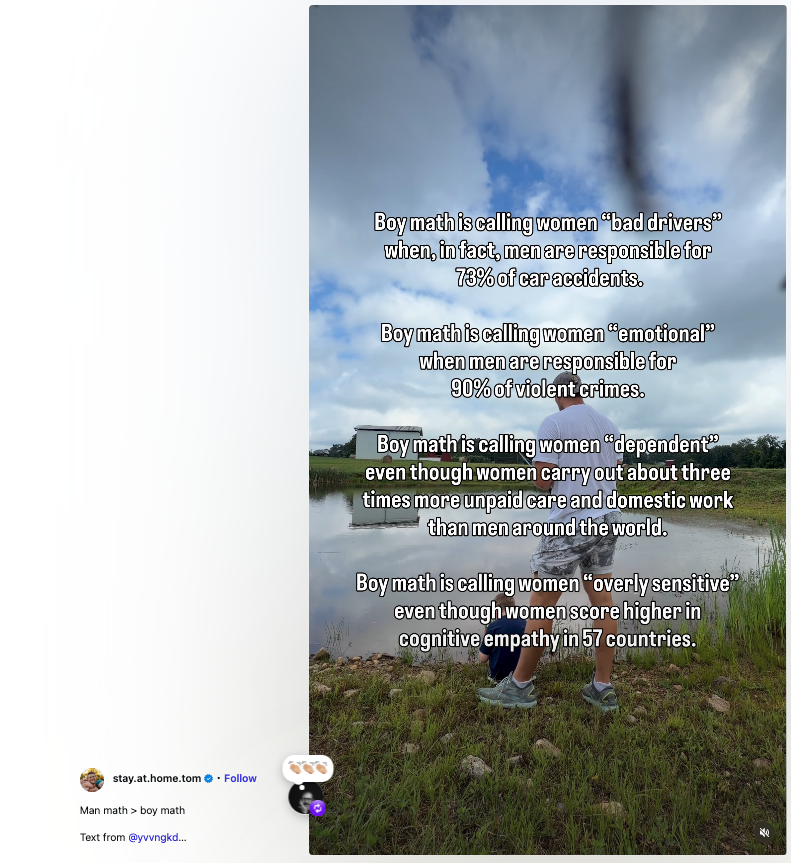
Sometimes our blog shares posts and or events that need some framing from you the coach to make it palatable for your players. Sometimes we ask you to do some “gymnastics” with the content in order to get to the real lesson in sharing it with your guys.
Today, we aren’t doing that.
Today, you can just put this graphic up as is (originally posted on IG by @stay.at.home.tom) and be quiet for awhile.
Let your guys read the captions (hell, you probably don’t even need this specific graphic, you can just read or write the stats out for your team to see). Then deploy a familiar TeamsOfMen tool (embrace the silence) and sit back and LISTEN.
Which one of those stats surprise them?
Which one’s make them uncomfortable?
Which one’s did they know in advance?
This is a Manbox myth busting list. This a cliche busting list. But it’s also going to ruffle “some feathers” in your space because you, your coaches and your players have most likely been hearing some of this “boy math” your whole life. You’ve been told my men you respect that these “boy math” statements are facts to live by.
So, maybe when one of your guys pushes back, don’t immediately tell him why he’s wrong. Ask him where he learned it. Who told you women were worse drivers? Who taught you that women were “too emotional”? Where did you learn what work “counts” inside a household? Who taught you that being sensitive or empathetic was somehow a weakness?
Using this session is a first step toward UNLEARNING that nonsense and, at the very least, planting the “hmmm, there might be some things I’ve been taught that I need to question” seed in their minds.
And that is the entire point of what we do.
Not telling young men WHAT to think, but teaching them to examine WHY they think it.
Coach Prompts
Which one of these claims would YOU have pushed back against when you were your players' age?
What beliefs about women did men you respected hand down to you that you later had to question or unlearn?
Can you let a player openly disagree with one of these claims long enough to understand WHERE his belief came from before you try to change it?
Player Prompts
Which one of these claims did you immediately want to argue with? Why?
Who or what taught you what you currently believe about that claim?
What is something you believe about men or women that you've honestly never stopped to question where you learned it?
You can't build Decision Confidence without examining the beliefs underneath the decision. Sometimes the first rep is simply asking: “Who taught me that?”