
Crash Out Culture: The Moment, The Message, The Missed Opportunity
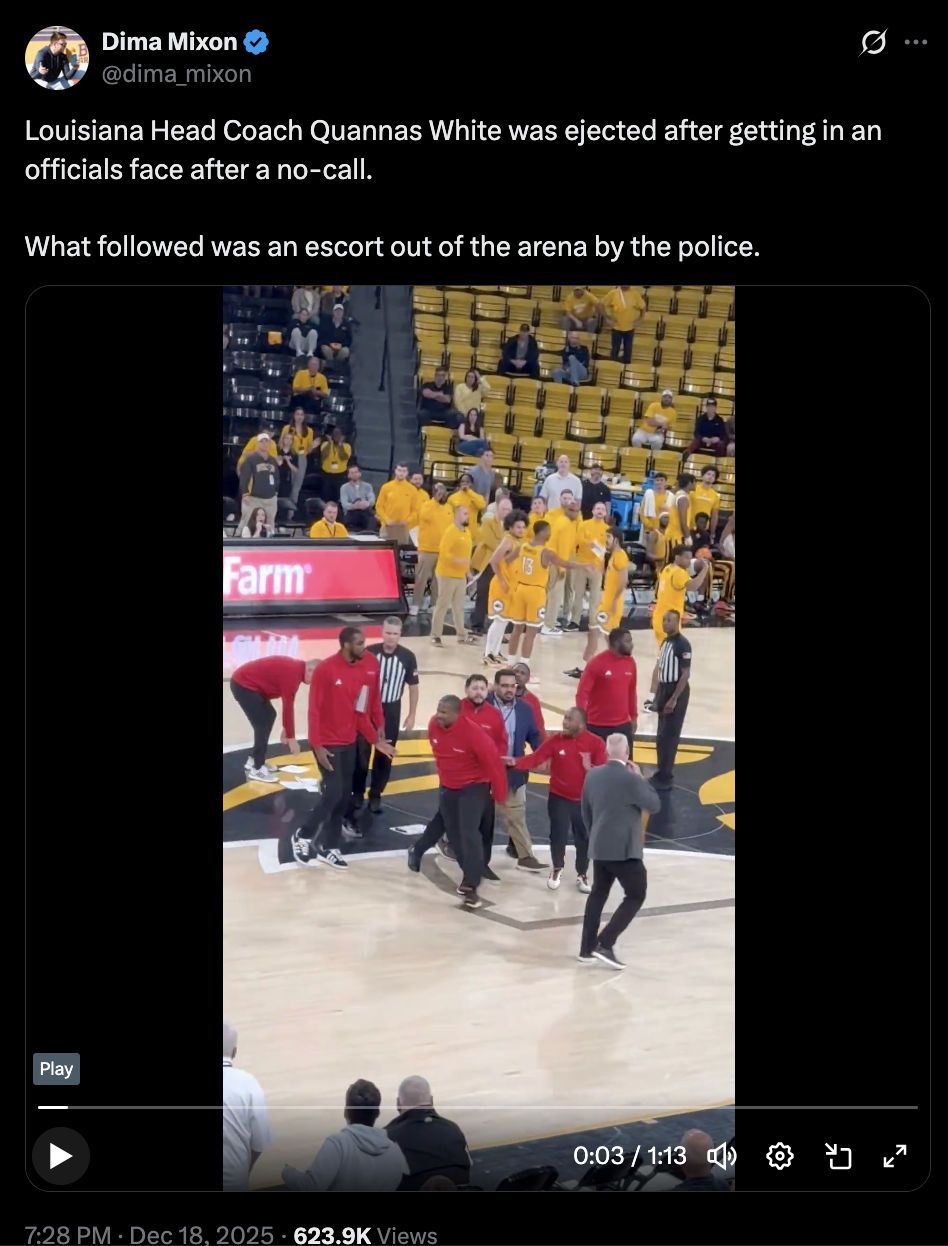
When Louisiana Head Coach Quannas White was ejected after a heated outburst at Southern Miss, the scene went viral. What followed wasn’t just a walk to the locker room—it was a full police escort off the floor. That visual, and the reaction to it, deserves your time and reflection.
Here’s why we’re putting it front and center:
1. You & Your Staff: Mirror Check
Bad officiating happens. And yes, frustration can boil. But we can’t be the ones begging our athletes to stay poised if we’re the ones cracking first. I’ve gotten techs. I’ve barked at stripes. But I’ve also made a decision the last five years: No more “working the officials,” no more sideline theatrics disguised as passion. Because my guys are watching. So are yours.
In the clip, it takes nearly the full staff to hold Coach White back at halfcourt. That image—grown men physically restraining another grown man—is not one we should ever accept as “part of the game.”
2. What the Comments Say About Us
Scroll the replies and you’ll see the real reason this clip belongs in a TeamsOfMen conversation: the reaction isn’t “How did we get here?” It’s “Why’d they need cops?” “This is soft.” “He didn’t do anything.”
This is crash out culture. The belief that our emotional spirals are someone else’s fault. The refusal to hold men accountable for public meltdowns. The normalization of grown men acting like kids when the pressure gets high.
We’re not here to pile on Coach White. We’re here to say: We’ve been there. Or we’ve been one laugh away from being there. The difference is whether we learn from the moment or excuse it.
Coach Prompts
How often do you and your staff talk about officiating strategy—beyond Xs and Os?
What message does your sideline behavior send your players after a tough call?
If a video of your worst sideline moment went viral, would it reflect your values?
Player Prompts
How do you react when things feel “unfair” on the court? What’s your outlet?
Have you ever watched a coach crash out? What did you think in that moment?
Why might the ability to stay composed under fire be a true separator—not just in games, but in life?