
When Not Laughing Isn’t Enough
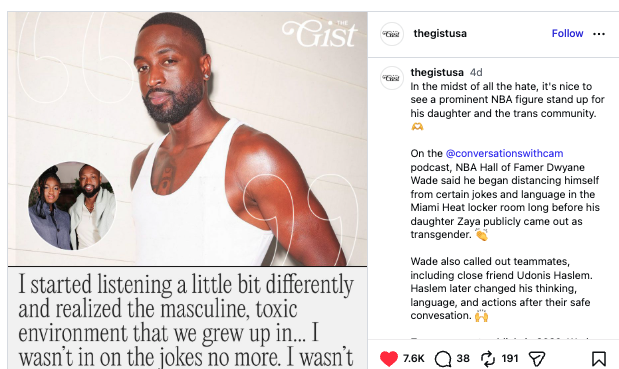
I recognize that as much of a sports figure Dwyane Wade was in my early adult years, he may be viewed as an old head and have “Unc” status with today’s male athletes. But, in our quest to generate topics and conversations with them that actually interest them, I think he still has enough name recognition to earn a slowdown and focus from them.
The above post (originally on IG from @thegistusa) tells the story of how Wade had to navigate the Miami Heat locker room, and more specifically, the jokes and humor being tossed around it after his daughter Zaya came out publicly as transgender. It talks about him moving from simply not laughing, to physically standing and removing himself from the room to ultimately challenging a close friend and teammate (Udonis Haslem) via conversation.
This is the progression we would all HOPE each of our players individually would be capable of when faced with a team room full of toxic humor. This is the courage and conviction we would love for them all to act with in situations where their values are put to the test by the group dynamic.
But, I also recognize this is what a grown, adult father was capable of. Many of you have young men, some of you have teenage boys in your room.
They most likely won’t have the capacity for this.
So, in my opinion, sharing this story of courage is awesome…but setting the parameters for what is acceptable humor in your spaces is the next move. You are the coach. You are the adult. You have the power within that dynamic to mandate that “this program DOES NOT tolerate homophobic, transphobic hate speech OR jokes of any kind.”
By doing this, you are not only trying to curb the type of language Wade had to deal with, but you are also signaling to kids in the room who hold the same values as you that “my coach has my back.”
Imagine if Coach Erik Spoelstra had been laughing alongside Wade’s Miami Heat teammates during these joke sessions? Imagine the effect on their coach-player relationship in that moment when Wade looked to the leader of the team for support and safe haven and instead found a cosigner of that humor?
This is TeamsOfMen in all aspects. What you do with your relationships with players, how you create and normalize a healthier version of humanity inside the walls of your team spaces AND how you model what it means to truly “teach life lessons.”
Coach Prompts
What types of humor have you explicitly told your team are outside the boundaries of your program—and what have you only assumed they know?
When harmful humor happens in your team space, who currently carries the burden of challenging it: the targeted player, another teammate, or you?
What does a player see from you when a joke violates the values you claim your program holds?
Player Prompts
Have you ever disagreed with a joke in a team setting but laughed, stayed quiet, or went along with it anyway? What made speaking up difficult?
Which of Wade’s moves—not laughing, leaving the room, or directly challenging a teammate—feels realistic for you right now? Which feels hardest?
What would your coach need to do consistently for you to genuinely believe, “my coach has my back”?