Safe for Who?
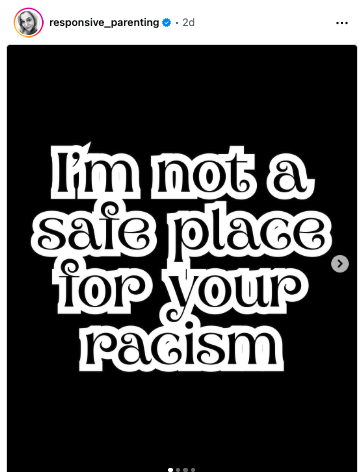
Today’s blog comes from a post by @responsive_parenting that made me stop and sit with something I’ve wrestled with for a while. The phrase in the post is simple, but it carries weight: “I’m not a safe place for your racism.”
It pushed me into a tension that shows up a lot in this work.
We talk often about creating “safe spaces” as a way to combat racism, misogyny, and other forms of harm. The intention makes sense. People need environments where they feel seen, respected, and protected. At the same time, I struggle to point to many examples where a heavily controlled or overly cautious space actually led to meaningful growth. In my experience, change usually comes with some level of discomfort.
In coaching, we already build environments that are supposed to matter. We hang signs, we name our spaces, we talk about the team room as a home. That language carries responsibility whether we say it out loud or not. So it makes me wonder what we really mean when we call a space “home.” Because if it is, then it can’t just be about comfort. It has to come with expectations for how people treat one another.
That’s where this idea shifted for me.
Instead of focusing only on whether a space feels safe, what if we were clearer about what it refuses to hold?
A team room that doesn’t allow racism.
A locker room that doesn’t tolerate misogyny.
Not as a slogan, but as a lived boundary. That doesn’t mean people aren’t welcome. It means certain behaviors and ways of thinking don’t get to stay unchecked once you step inside.
I think a lot of us hesitate right there. We start thinking about the reactions that could follow. A parent who pushes back. A conversation with administration. The possibility that taking a stand creates more problems than it solves.
Those concerns are real. Coaching doesn’t happen in a vacuum.
But it does raise a harder question that’s difficult to ignore. If we avoid setting a clear line in the one space we actually have influence over, what are we protecting? For some, the answer might be job security or avoiding conflict. I understand that. At the same time, there’s a cost to letting harmful behavior pass through a space that is supposed to develop young people. There’s also something to be learned about a program or an institution that won’t support you when that line is drawn. That kind of clarity isn’t always comfortable, but it matters.
This isn’t about creating a perfect environment. It’s about being honest about what belongs in the space and what doesn’t.
And then being willing to stand on it.
Coach Prompts
What expectations in your team room are clearly stated, and which ones are assumed?
Where have you held back from addressing something because of potential backlash?
How would you explain the difference between welcoming people and allowing harmful behavior?
Player Prompts
What does it mean to share a space with others in a respectful way?
Have you ever brought language or behavior into a group that didn’t belong there?
How do you respond when someone calls out something you said or did?