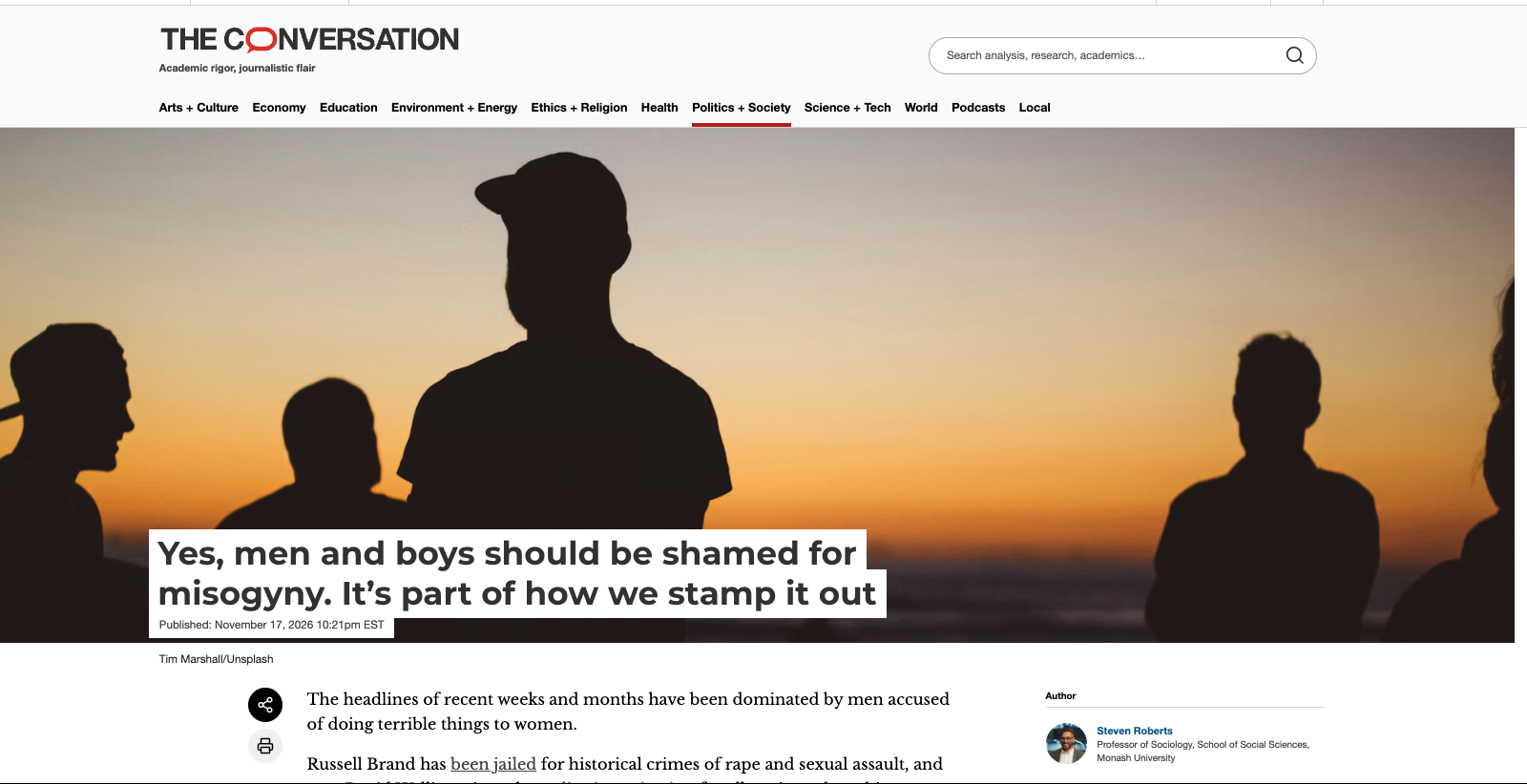
I don’t think today’s topic (and the article you can access above by Steve Roberts) is necessarily one you need to use with your players. I think it’s better served as a conversation with yourself and your staff.
This is a deep dive into the ways we do and do not deploy SHAME in our discussions around violence, men, and how to best be able to call any of our work “prevention.”
Once again, I don’t want to help you avoid reading the entire piece, so I won’t quote 40 lines from it. But I do want you to sit with this excerpt below
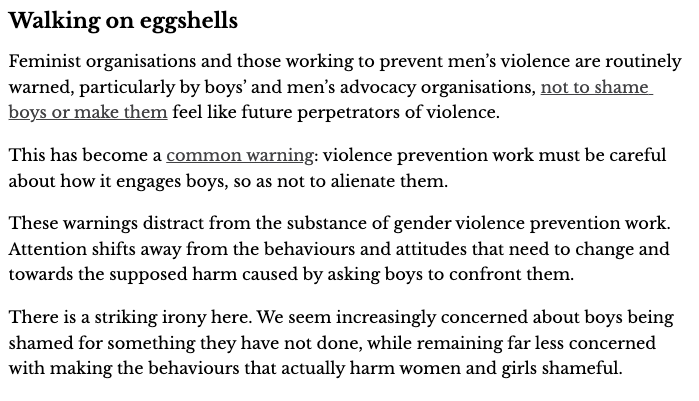
When I tell you I have LIVED THIS CONTRADICTION, I mean I have this back and forth in my mind constantly, especially BEFORE public speaking.
I am fortunate enough to get access to a lot of groups of young men...whether that be the 40 I directly coach in high school, or hundreds via the partner programs and teams of male athletes that work with TeamsOfMen. I often find myself called into spaces where harm has been observed and the fallout is severe enough that people have asked for “the work” afterwards.
I enter these spots and have to decide: What level of “I know what y’all did” and “you clowns did what?” do I open with today, vs. “Hmm, best practices say I need to meet them where they are” and believe in the best of them?
It is a constant internal dialogue.
I tend to base that decision on the familiarity and trust I have with a particular group. If I’ve been there before, I may directly challenge harder. If it’s the opening conversation, I typically show up with more neutral framing.
But, to be honest, if you ask my own roster of players, who are around me daily, I tend to forcefully call out the action (i.e., “Hell no, that couldn’t be a worse thing/take/idea”) and spare the human (“You are better than that, I believe”).
However, I completely agree with the author here that the entire ecosystem of gender violence prevention has to walk this tightrope. Some of it is based on “what does the research tell us,” but I also worry that some of that work is rooted in what male-dominated gatekeepers have told us they will allow in or pay for.
And that terrifies me.
Coach Prompts
When you hear a player say or do something harmful, how do you decide whether to challenge them publicly, privately, or not at all? What influences that decision?
Have you ever softened your response to harmful behavior because you were worried about losing a player's trust, damaging a relationship, or creating conflict? Who benefited from that decision, and who might have been harmed?
What is the difference between making a young man uncomfortable with his ACTIONS and making him ashamed of who he IS? Can both happen in the same conversation?
Player Prompts
Agree, Disagree or Unsure: Making someone feel ashamed of something harmful they've said or done can sometimes help them change their behavior.
Think about a time someone called you out for something you said or did. What made you more likely to listen to them? What made you want to defend yourself instead?
If one of your teammates says something harmful about women or girls, what responsibility do YOU have to respond? Does your responsibility change depending on how close you are to that teammate?