
The False Binary That Keeps Hurting Young Men
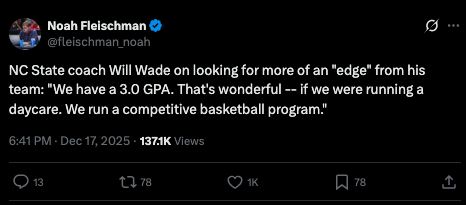
This quote attributed to NC State head coach Will Wade is a perfect example of the false binary TeamsOfMen exists to pull coaches out of.
The idea that we can either win or develop competitive young men who are thoughtful, emotionally fluent, and successful in the classroom — but not both — is a lie we keep telling ourselves because it’s convenient.
I’ve long recruited against that mindset. I tell my high school players the same thing now:
We are chasing both.
We refuse to sacrifice one for the other — in either direction.
We can compete.
We can be intense.
We can want to win badly.
And at the same time, we can demand academic excellence, emotional growth, and basic human decency.
If this quote is accurate (and to be clear, I haven’t done a deep journalistic dive to verify it), it reflects a familiar coaching shortcut:
“My job is to win, so winning requires sacrificing everything else.”
“You can’t win with softness.”
“Competitive teams need edge, not empathy.”
That’s Man Box–bathed nonsense.
Young men are capable of duality. They can be fierce competitors and smart as hell. They can be driven and emotionally aware. They can handle nuance — if we actually hold them to it.
Here’s the part that worries me most:
Once you decide it’s okay to expect less of your players as people, it becomes very easy to treat them as less than fully human.
That’s when coaching turns into rage.
Into humiliation.
Into constant demeaning language disguised as “standards.”
We don’t need that to win.
We never did.
We can be better — and the best programs already are.
COACH PROMPTS
Where have you unconsciously accepted a false choice between winning and humanity?
What standards do you hold players to off the court that match the intensity of your on-court demands?
How does your language communicate belief in your players’ full capacity — or lack of it?
PLAYER PROMPTS
Do you feel like your coaches expect you to be great in all areas — or only when it affects the scoreboard?
How do you define “competitive,” and who taught you that definition?
What would it look like to chase excellence without losing yourself?