The First Thing They Say Matters
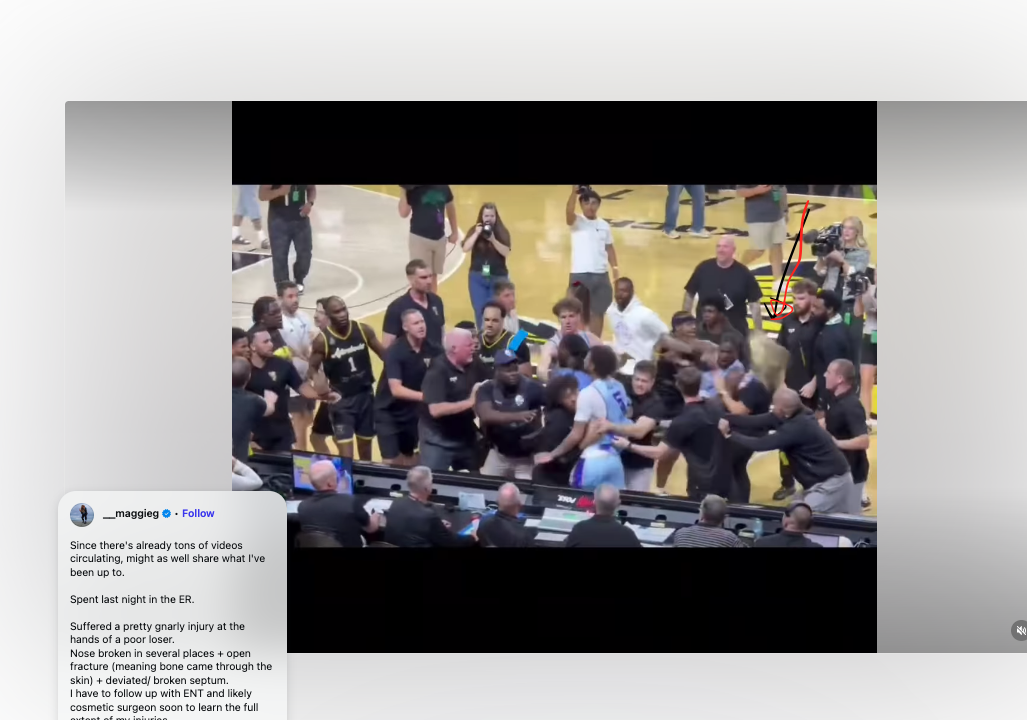
First assignment(s) before going any further in this blog:
Click on the image above and WATCH the video.
Pay particular attention to the woman on the right (red arrow I added to the screen grab above should help you find her).
Now, as you watch, you can also be given context that this happened post game of the TBT tourney and the team in blue had hit a buzzer beater to win on the team in black’s home floor (I don’t want to waste time going over the details of what the TBT is, who the two teams are, etc because to do so I think would lean into ‘hey, you gotta understand emotions were high” bullshit excuses people are already assigning to the melee that took place). The post is from the woman, and you can read the litany of injuries she suffered during this.
Now, play the video for your team and staff. Then, without any other questions or words from you or the players allowed, show the image below (whichshow the image below, which reflects a sentiment repeated throughout the comment section.)
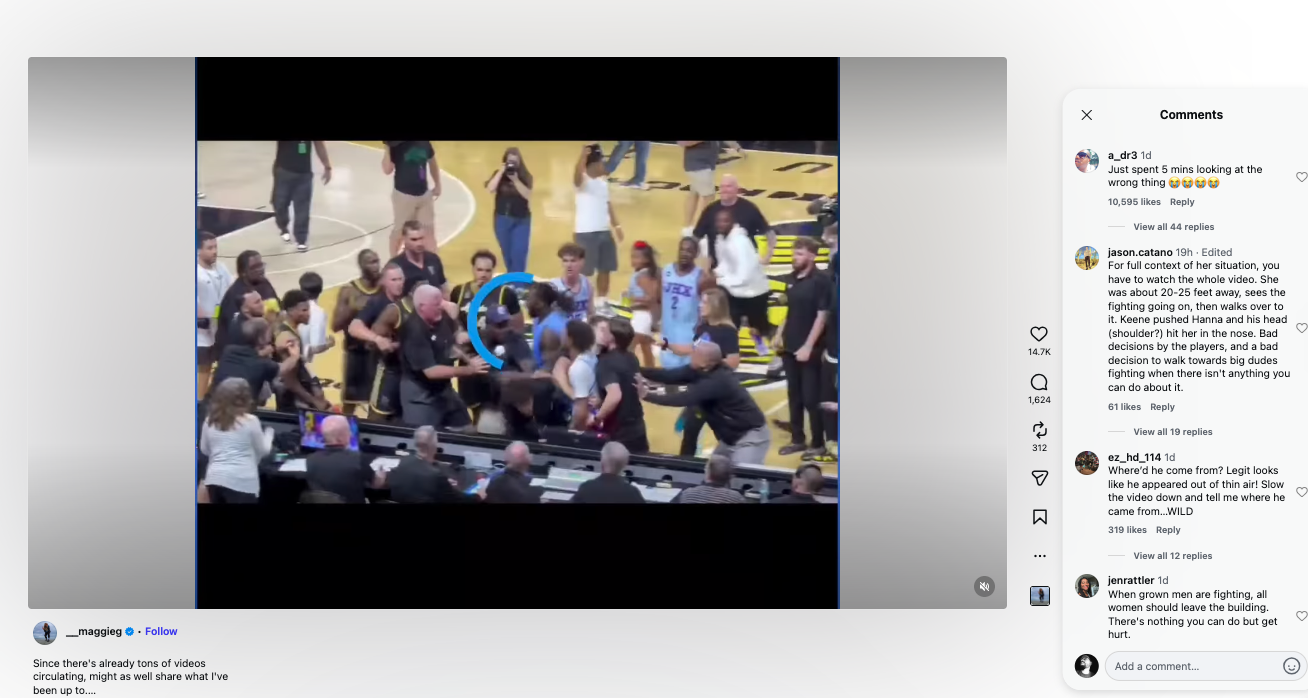
Men are literally jumping in this woman’s comments to explain why it was somehow HER FAULT for getting her nose broken and face smashed here. That “she should know better” than to get in the middle of men losing their goddamn minds over a silly game. This is clearly, as I stated above, victim blaming. This is obviously sanitizing and excusing of men’s emotional illiteracy and the harm they cause when in the throws of it. Hell, there’s even other women blaming her for not knowing to leave when men escalate.
I want you to garner input from your staff and players without my obvious leaning here. I want you to gauge your room and I want you to understand that if you have a staff or team full of dudes repeating this comment, you have a culture of complicity and a climate that excuses violence. Period.
I can’t sugar coat it for you. At a minimum, I'd hope your players respond with empathy: "Oh my God...that poor woman."
At the highest level, I'd hope they're angry—not simply because someone was injured, but because they recognize the comments afterward as another example of excusing men's inability to regulate themselves.
Unfortunately, I don't think enough locker rooms are there yet.
Moments like this are why I don't believe a single guest speaker changes a program. They reveal beliefs that have been quietly rehearsed for years. If we want different first reactions, we have to spend years building different first instincts. That's why TeamsOfMen has never been about one conversation.
It's about changing the scripts players automatically reach for when moments like this happen.
Coach Prompts
Before offering your perspective, what did your players' first reactions reveal about the beliefs already present in your locker room?
When harmful situations happen, does your team instinctively ask, "What happened to her?" or "Why was she there?" What does that difference tell you?
How intentionally are you shaping your players' first instincts, not just their answers after discussion?
Player Prompts
What was the very first thought you had after watching the video?
Why do you think so many people immediately focused on what the woman "should have done" instead of what caused her injuries?
If someone had been hurt trying to stop a fight involving one of your teammates, what responsibility would your team have afterward?
Run Your Program's System Audit
This discussion wasn't really about a basketball fight.
It was about the invisible beliefs your players and coaches reached for before anyone started teaching. Every athletic program is building those scripts—whether intentionally or not.
If today's exercise made you wonder what beliefs are quietly shaping decisions inside your own locker room, don't guess.
Click here to run the free Decision Confidence Analysis™ and discover where your program is reinforcing healthy decision-making—and where hidden gaps may still exist.