
The Gambling Talk We Pretend Isn’t There
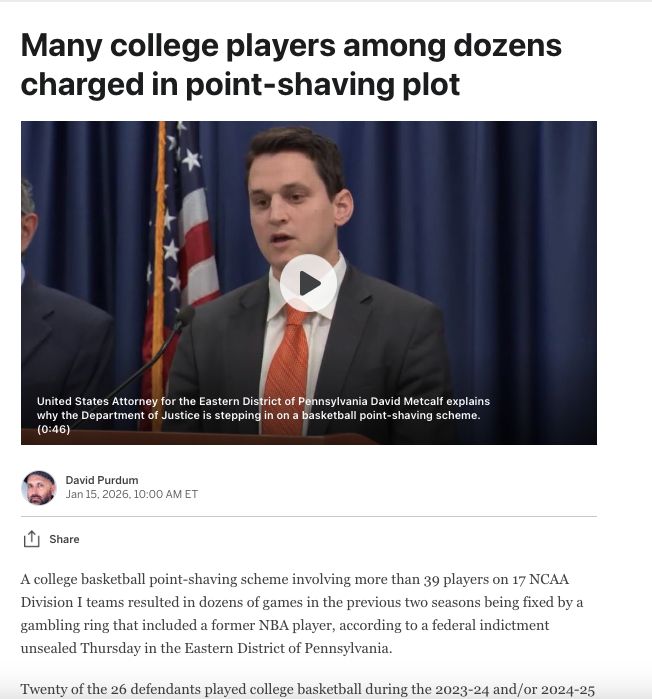
Today’s blog is in response to new reporting from ESPN regarding gambling in college sports — specifically tied to college basketball and an alleged point-shaving scheme.
I’m writing about this not because I think you have a kid on your team trying to “perform to a prop bet” to get paid by gamblers… although let’s be real: that is now a component of sports in 2026.
I’m writing about it because I wonder how many of us are hearing — and even helping create — gambling culture inside our own programs.
The language is everywhere: overs, unders, +100 / -250, parlays… team lines, player props, fantasy football. That terminology is bathing college and high school locker rooms.
And yes, sports gambling is legal in most states now. But legal doesn’t automatically mean healthy — especially for developing teenage and young adult minds.
What’s terrifying about this story isn’t just the wrongdoing. It’s the depth. The reach. The way it touched so many programs.
To me, that’s a call for every staff to at least have a real conversation about two things:
What are we going to do with what we hear in our locker rooms?
What are we willing to say out loud to players about our own habits — fantasy, betting talk, “lines,” and the way we normalize it?
Because the slope is real. And pretending we’re not part of the environment doesn’t protect our guys from it.
Coach Prompts
Where is gambling language showing up around your team (parlays, props, “lock,” overs/unders) — and are you treating it like background noise?
What’s your staff’s line: what do you ignore, what do you address immediately, and what do you proactively teach?
How often do adults in your building model it without thinking (fantasy talk, betting apps, “I had them -6”) — and what message does that send?
Player Prompts
What’s the difference between following sports and needing sports (emotionally or financially) to hit for you?
Have you ever felt pressure to perform a stat, not for your team, but for someone else’s “bet” or “fantasy” outcome?
When does gambling stop being “just for fun” and start being a problem? What are the signs?