So, here’s to hoping you enjoyed the holiday with folks you care about (and, unlike me, didn’t see the good vibes ruined by another all-time gut-wrenching loss by the Dallas Cowboys).
If you are a family or gathered group that loves sports, you probably were aware of the late-breaking news from the Pittsburgh Steelers organization, as star QB Aaron Rodgers went scorched earth on HC Mike McCarthy after being benched (and later released) by the club.
Without stating the entire laundry list of grievances Rodgers let fly on ESPN’s Pat McAfee Show, let’s summarize it this way: he alleged that the coach had unhealthy eating and drinking habits that prevented him from staying awake in meetings, knowing the game plan and being competent at his job.
Now, since those comments, there have of course been media reports, podcasts and articles on both sides of the coin, some supporting Rodgers’ claims (many of the “anonymous player text” variety) and many others ripping the QB for a violation of “team code” and “locker room ethics.”
And that is where I want to focus our 30-Second Timeout today.
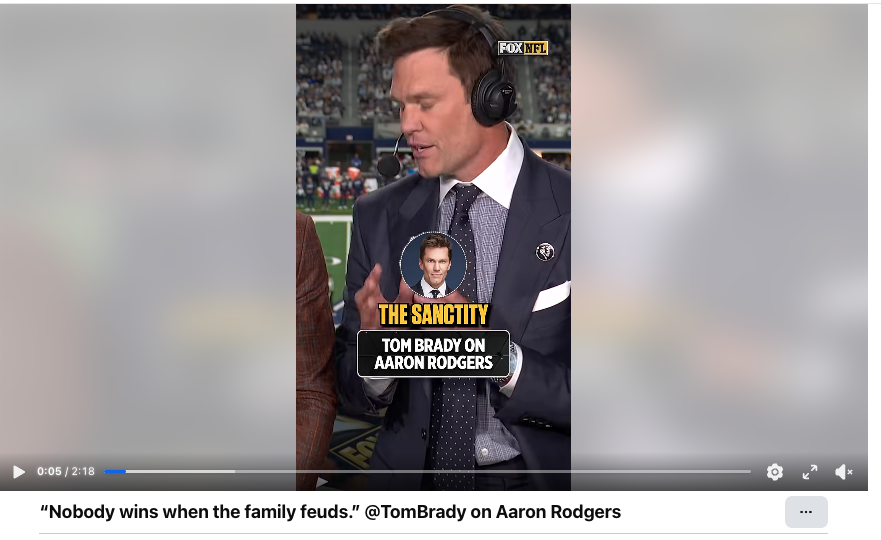
I used the screengrab and video above from halftime of the FOX broadcast of the Cowboys game, as HOF QB Tom Brady shared his take on the situation, leading with “the sanctity of an NFL locker room cannot be taken for granted.”
THIS is the take I want to explore more here today, and I think you should with your players as well.
You have heard “what happens here stays here.”
You have maybe even said a version of it as a player, as an assistant and as a head coach.
“Hey, we handle those things in-house.”
And that’s where I think we need to really dive into the nuance here.
Because while Rodgers airing out the eating habits of his head coach may be something worth keeping “in the family,” there are OTHER topics that cannot remain behind a shield of silence.
IF THERE IS HARM BEING CAUSED IN YOUR TEAM ROOM, that cannot be something that is protected by staying quiet.
Bullying. Hazing. Emotional and physical abuse. They aren’t things to protect with a “zip your mouth” policy.
You, as the head coach, need to specifically launch each season with a conversation about “what makes this place HOME” and what that means for conduct in your team room. Your players need to know what should stay in-house and what they have every right to seek help for outside of it.
Failure to do so can lead to things far worse than an old QB mad at his play caller.
Coach Prompts
When you use phrases like “what happens here stays here” or “we handle things in-house,” have you ever specifically articulated to your players what those phrases DO NOT apply to? What might they assume you are asking them to keep quiet about?
If the person causing harm in your team room was YOU or a member of your coaching staff, would your players know who they could go to outside of your program? Have you explicitly given them permission to do so?
When you talk about protecting the culture of your program, are you talking about protecting the PEOPLE in it or protecting the REPUTATION of it? When might those two things come into conflict?
Player Prompts
Agree, Disagree or Unsure: Speaking to someone outside of your team about harm happening inside your team room is an act of loyalty to your teammates.
What are some examples of things that SHOULD stay between teammates? What are some examples of things that should NEVER be kept quiet? What distinguishes one from the other?
If a teammate came to you about something harmful happening in your program and asked you not to tell anyone, how would you navigate that conversation? At what point would protecting your teammate mean NOT keeping their secret?