Three Mirrors for Coaches

Let’s be clear: I’m not above snark.
I’m very okay with letting folks sit in some discomfort after being shown the hypocrisy of their own words vs their actions. That’s not an issue for me.
So, the slide show above (from IG poster @professorpolished) had me smiling through the scroll. But, it also sent me on a journey of “what would this type of show look like if it was pointed at the excuses I most often here in this work”?
So, after some brainstorming, I came up with around 25 of them, but I’ll just share 3 of them below
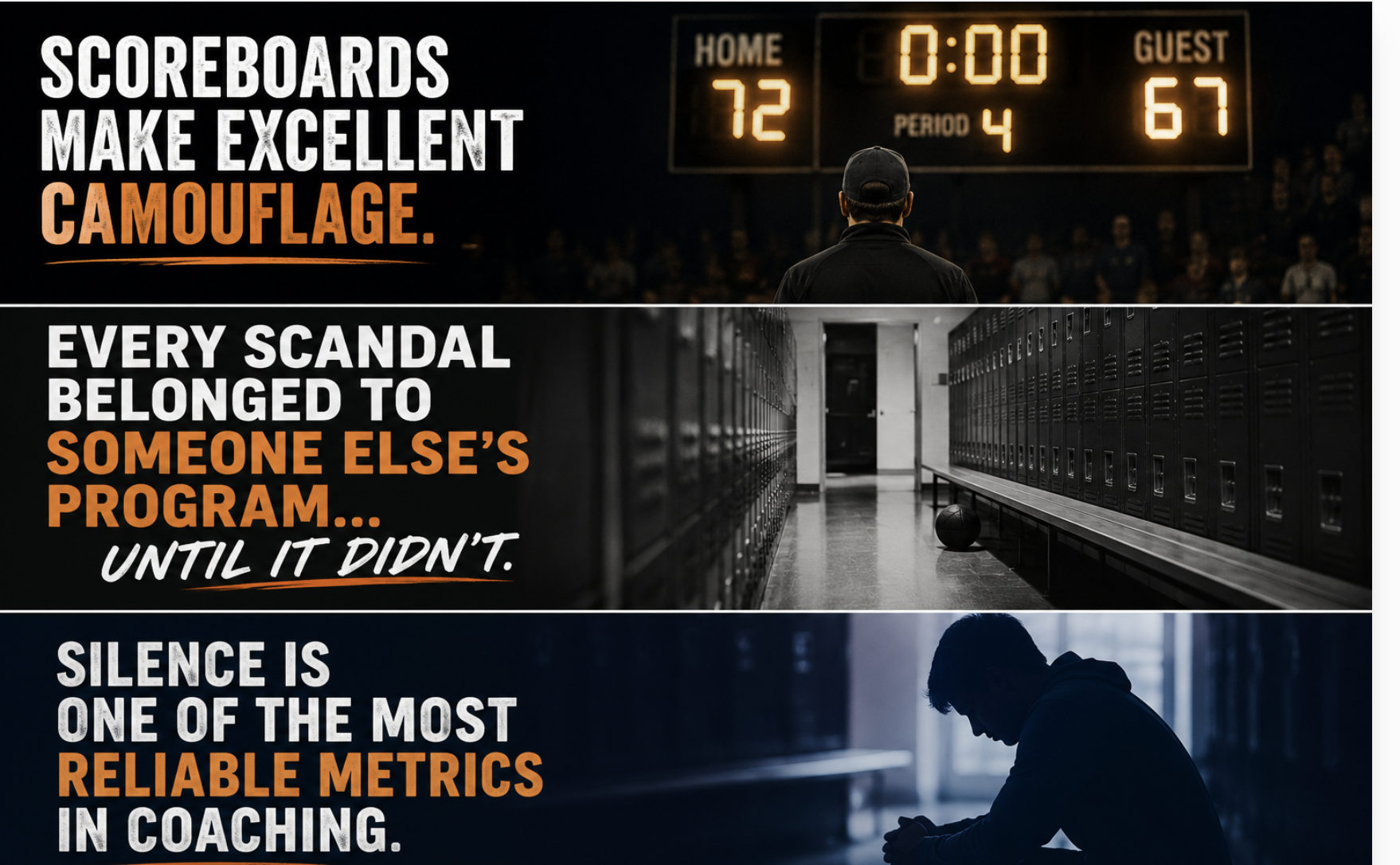
I will spare you all from explaining the biting “gotcha” moment of each, but I do want you to explore them and find for yourselves. Probably worth an exploration with your staff and or your players to, at the very least, find ways to disprove what I’m saying when applied to your program. If you can’t find concrete evidence that my statements are revealing the reality of how you coach your male athletes, it might be the impetus you need to change.
I might just know a guy you could call to get the ball rolling…
Coach Prompts
Which of the three statements made you immediately want to defend your program? Why?
What evidence—not intentions—would you point to that disproves each statement?
If your players anonymously answered these questions instead of you, would their answers match yours?
Player Prompts
Which statement do you think coaches most often miss? Why?
What does your team stay silent about that probably deserves more attention?
What parts of your team's culture are visible only when nobody from the coaching staff is around?
You wouldn't let your team run a game without a scout, but most programs leave their decision system entirely to chance.
If these statements made you even a little uncomfortable, don't guess whether they're true in your program.
Run the Decision Confidence Analysis™ (DeCA)—a free 15-minute system audit that helps coaches identify the invisible scripts, blind spots, and reinforcement patterns shaping how their athletes make decisions when no coach is around.
The report is free. The conversations it starts are often the most valuable part.
Take the DeCA and see what your program is actually teaching—not just what you hope it's teaching.