What Happens When It’s One Of Us?
TeamsOfMen was birthed from my personal realization that sexual assault, harassment, and violence against women by men was something I COULD combat in my team room.
I COULD educate young men not just about consent and healthy relationship skills, but about the scripts the Manbox was asking them to perform — and how those scripts are part and parcel to the acts of harm men commit.
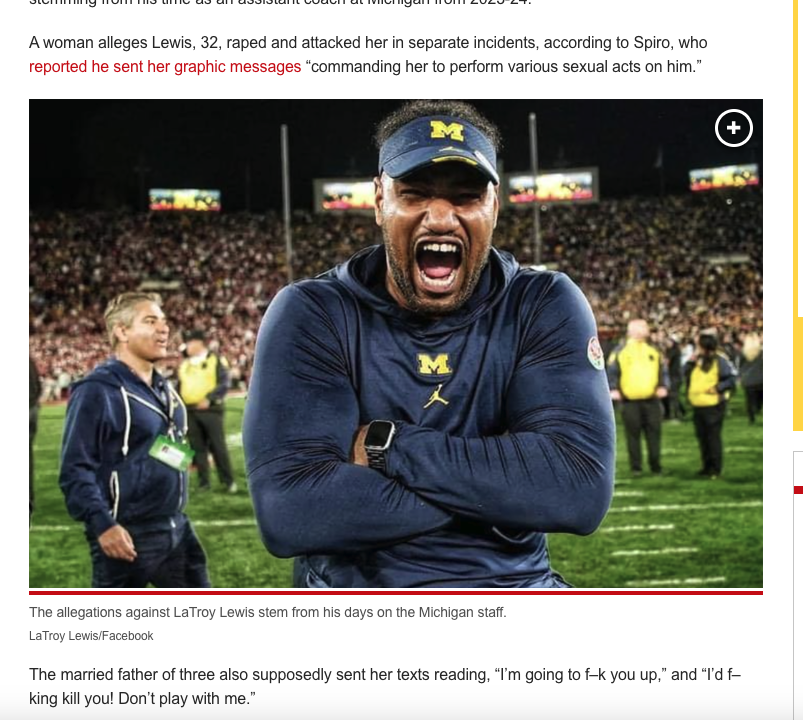
This latest sexual assault allegation (and yes, we must use that word legally — alleged — while also acknowledging that false allegations statistically account for a very small percentage of cases) against former University of Michigan and current Atlanta Falcons coach LaTroy Lewis is another validation of WHY this work is needed.
But it’s also something else. It’s a reminder that coaches of male athletes are not just facilitators of the work.
WE are the work.
We love the clichés about building character and pushing young men to be their best selves. But what about us? What about the adults in the meeting room? Are we living the principles we print on shirts and hang on banners — or are those just performances?

Look at the second image above — Lewis’ attorney stating:
“Allegations of sexual misconduct are not proof of sexual misconduct.”
That statement is legally correct. But it is also not proof of a lie.
How would your staff respond to that line?
What would happen inside your program IF — not hypothetically, but realistically — a player or staff member were accused of something this serious? What process would activate? Or would you default to damage control, loyalty reflexes, and defensiveness?
The Falcons, like so many franchises and universities before them, released statements about conducting a “thorough vetting” and promising an “investigation.”
Let’s be honest.
Do we really believe there’s an army of neutral, independent professionals digging into every hire? Or is it more likely a handful of phone calls to familiar networks and comfortable references?
This isn’t about presuming guilt. It’s about auditing preparedness. It’s about asking whether our programs are structurally aligned with the values we claim to hold. Because when allegations surface, that is not the moment to invent your ethics.
That is the moment your existing ethics are exposed.
COACH PROMPTS
What would our program actually do if a staff member were accused tomorrow?
Do we have a process — or just loyalty?
Are we prepared to protect victims with the same energy we protect reputations?
PLAYER PROMPTS
If someone on this team were accused of something serious, what should happen?
What’s the difference between “supporting your teammate” and ignoring harm?
Do you believe false allegations are common? Why?