
You Can’t Teach the Pause If You Don’t Use It
I’ve been a Georgetown fan since the Big John Thompson and Patrick Ewing days — through the Zo and Dikembe twin towers (I saw Zo’s final NCAA Tournament game in Boise), and peaking during the Allen Iverson Elite Eight run. I love the Hoyas. And I think Ed Cooley has done a credible job trying to turn that program around.
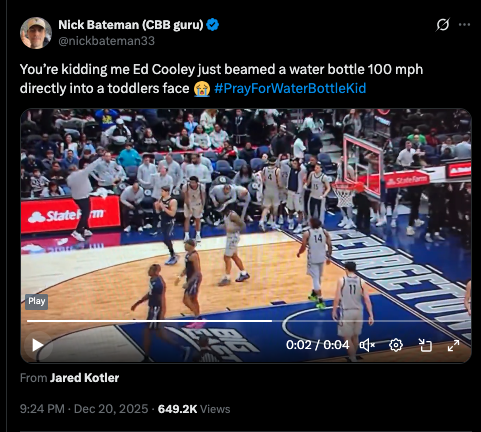
Which is why I was deeply disappointed seeing the clip last week of him losing emotional regulation and hurling a water bottle into the stands — striking a child.
I have zero doubt he did not intend to hit a kid. But intent isn’t the point here. The pause is.
If we expect players to pause in moments of disappointment, rage, or injustice — if we tell them to breathe, to regain composure, to channel emotion instead of ejecting it — then we have to ask: what was the best-case scenario when that bottle left his hand?
At best, someone was getting splashed.
At worst… exactly what happened.
I’m using this moment today because I tell partner programs and coaches — including my own staff — something we forget too often: kids are incredibly perceptive. They don’t miss contradictions. They smell hypocrisy immediately. They notice when the standard shifts depending on who’s wearing the whistle.
And when that happens, trust erodes.
This is now real work for Coach Cooley. Not a press release. Not an apology tour. But the slow, intentional rebuilding of the credibility required to look a player in the eye and say, “Hey — calm down,” or “Get it together.”
You don’t get to teach emotional regulation from a place of contradiction.
You teach it by modeling it — especially when it’s hardest.
COACH PROMPTS
What moments in your season test your ability to use the pause button the most?
Where might your players be quietly noticing contradictions between what you say and what you do?
How do you repair trust when you miss the moment?
PLAYER PROMPTS
How do you usually release frustration — and who might be affected by it?
What does “pausing” look like for you when emotions spike?
How do you respond when leaders around you don’t model what they expect?