
You Don’t Need To Say It… But You Better Understand It
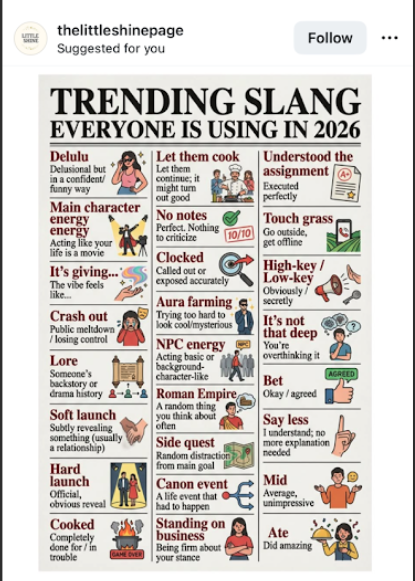
Today’s blog is about this list of “slang” terms in the graphic above.
Quick disclaimer:
I don’t know if all of these are still 2026 current, or already “old” in terms of how fast language moves.
What I do know is I’ve heard a lot of them — in my house (19, 17, and 13) and in my high school team room.
Now, I don’t know that it’s in a coach’s best interest to try and memorize these and use them. Kids will sniff out inauthenticity immediately. You running around yelling “main character energy” might get you a few laughs… but not the kind you’re aiming for.
But where this does matter? Your ears.
What are your players actually saying in those side conversations? Those small huddles that erupt in laughter? Are they talking about things we’re good with? Or are they reinforcing things that don’t align with the standards we claim in our program?
There’s also a fun entry point here.
Put this list up for your team.
Then ask you — or a brave member of your staff — to translate it into what your generation used.
Because let’s be honest: We were all young once. We all had slang. And we all thought the adults around us were out of touch.
Example:
I see “cooked” on here.
We used to say “toast.”
Same idea. Different era.
And here’s the real opportunity. Once you’ve got them laughing… Once the guard is down… Pick one of these terms. Not ten. Not the whole list.
One.
And run it through a TeamsOfMen lens. What does it mean? What does it reinforce? Is this something we actually want in our team language? Because language isn’t just communication. It’s culture. And if we’re serious about shaping culture…
We have to pay attention to what’s being said when we’re not the ones talking.
Coach Prompts
What language shows up most in your team’s informal conversations?
Are you aware of what your players are reinforcing with their slang?
Where have you tried to “fit in” instead of simply understanding?
Player Prompts
What slang do you and your friends use most often?
What do those words actually mean beyond the surface?
Do some phrases normalize things you don’t really agree with?