
A Funny Video. A Real Point.
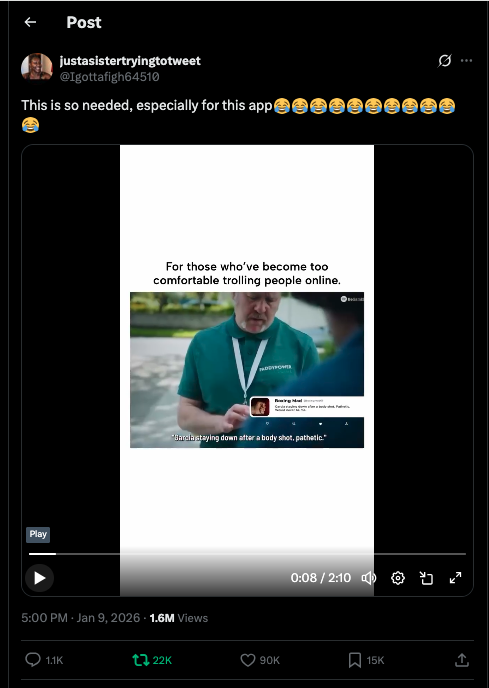
Today’s blog is in response to a viral video showing a “mobile team” called the Social Media Squad that allegedly pays home visits to men who make inflammatory, derogatory, or harmful claims on Twitter/X.
Watch the video and you’ll see the bit: they show up at the doorstep with real-world consequences attached. For example, they bring a boxer to the front door of a man who tweeted that he’d “never go down” from that boxer’s punch, etc.
I’m posting this knowing full well it’s not real — and honestly, it couldn’t be. Can you imagine the lawsuits?
But I still think it’s worth using.
Because it’s a funny way to make a serious point: accountability in the digital world is real, even when it doesn’t show up at your front door.
We can’t physically enforce it. But we can enforce something else:
We can ask one another — especially when we follow each other across platforms — to be better about what we post, and what we retweet/repost/cosign.
This is one of the more taxing parts of coaching in 2026. It’s not what most of us got into coaching to do.
But we have to do it.
Because the ramifications of a dumb post are severe — not only for the player who hit “send,” but for the program he represents.
Coach prompts
What do we say is “off limits” online for our program — and have we actually said it out loud to players?
How do we want players to handle it when a teammate posts something reckless: ignore it, laugh, or intervene?
What’s our standard for retweets/reposts/likes — what counts as cosigning in your eyes?
Player prompts
What’s something you’ve posted (or almost posted) that you’d never say to someone’s face?
What does it mean to “cosign” something online — and why do people pretend reposting doesn’t count?
If your post got screenshot and put on the wall of your locker room, would you stand by it?