
A Moment Worth Using
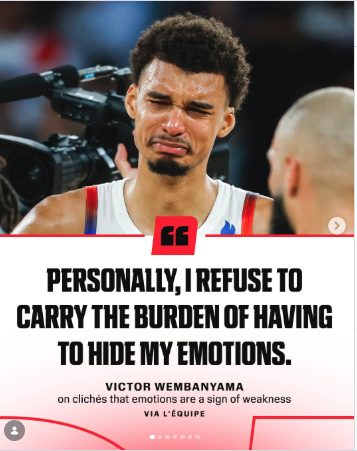
Full disclosure: I, along with my Blazer fanatic sons, was cheering against Victor Wembanyama in the first round of the playoffs.
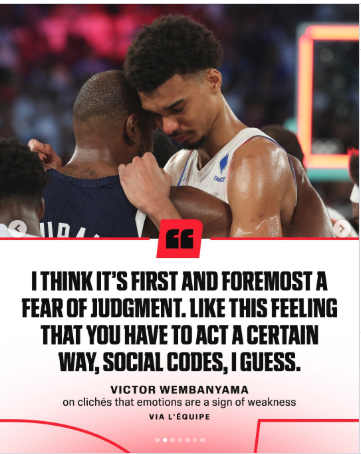
BUT, this from him yesterday was a breath of fresh air in a sports news and quotes landscape that too often feels like it’s actively working against progress in reimagining manhood. The words he chose stood out right away: burden, hide, fear, social codes. He’s naming something most players feel but rarely say out loud. At the same time, he’s doing it as someone who, physically, stands apart from almost everyone else on the court. That contrast matters. The most imposing presence in the game talking openly about emotion removes a common excuse.
What I appreciate most is the clarity in his stance. He’s not interested in carrying emotions he feels forced to suppress. That applies to how he plays and how he lives. There’s a level of ownership in that choice.
He also points directly at something a lot of us recognize but don’t always address—the way other men shape what feels acceptable. The concern about how you’ll be seen, what will be said, how quickly you might get labeled. That pressure sits underneath a lot of behavior we see in team settings.
When he mentions the feeling that you have to act a certain way, he’s getting close to something we talk about often. There are expectations, sometimes unspoken, that define what a player is supposed to look like and how he’s supposed to respond. Once those expectations take hold, it can be hard to move outside of them.
This is why moments like this matter. They give players a different reference point. Not a speech from a coach, but a current player showing another way to exist in the same space.
As a coach, this is the kind of clip you can bring into your team room without much setup. Most players will know who he is. For basketball teams, it’s an easy entry point. For others, it still lands because the message translates.
There’s value in not letting something like this pass by.
Coach Prompts
How do your players interpret emotional expression from high-level athletes?
What messages about emotions are reinforced in your program, intentionally or not?
Where do you see fear of judgment show up in your team?
How can you use moments like this to open conversation instead of just making a point?
Player Prompts
What emotions feel hardest to show around your teammates?
How much does fear of judgment affect how you act?
What does it mean to handle emotion without hiding it?
Who do you look to as an example for how to respond in tough moments?