
April Cannot Be Foreign To Coaches
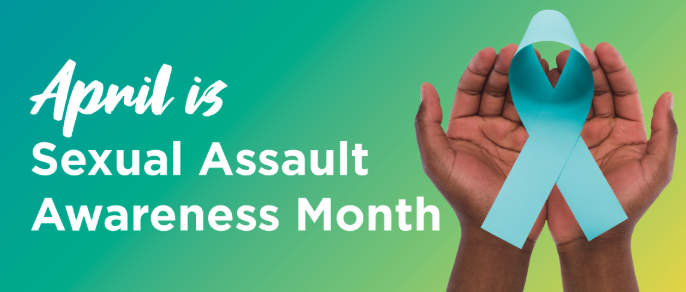
Today’s blog is going to start with this image because I want to begin with a simple question: How many coaches reading this today are even aware that April is Sexual Assault Awareness Month? My honest guess is that the number is lower than it should be.
I was unaware too until a sort of ha moment back in 2013 that, in many ways, launched TeamsOfMen in the first place. I’ve told that story enough times that I won’t repeat the full version here, but I do want to reemphasize something that I sometimes have to remind myself of: my education and journey into identifying the manbox, and the subsequent work to help other men escape it, was originally rooted in my horror at the thought of my players ever being involved in sexual assault.
The original question that sat in my gut was simple and urgent: How can I possibly be part of the solution here? How can we stop this from happening to women on college campuses at the hands of male athletes? That was the launch point.
As my ecosystem of support grew — mentors, experts, books, educators, advocates — I began to recognize that these harmful choices were not random. They were often rooted in allegiance to manbox thinking and in the desperate need to prove a “man card” through conquest, achievement, and control, including sexual conquest. That realization widened the work. It moved from simply reacting to harm into trying to understand the identity scripts that were helping produce it.
But if I’m being honest, I sometimes have to remind myself of where this started.
Even though I deeply believe the solution is rooted in reeducating men around what drives their identity, I do not want to lose sight of the fact that making the world safer for women was the launch and remains the goal.
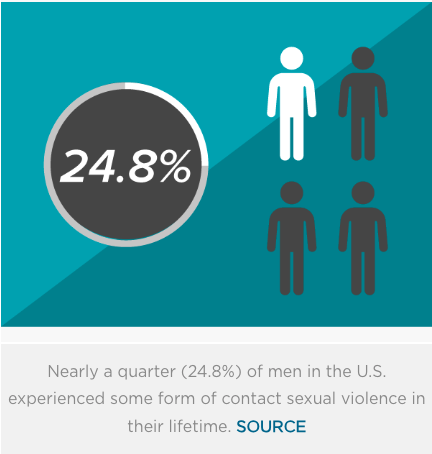
In trying to grow the message, I’ve sometimes focused more on the frames I think coaches of men will gravitate toward. The second graphic above is one example. Nearly a quarter of men in the U.S. report experiencing some form of contact sexual violence in their lifetime. If you do simple math and you’re coaching a roster of 100 football players, that means roughly 25 young men under your guidance may themselves be survivors. That matters deeply, and it absolutely belongs in this work.
But I also recognize the risk in over-rotating toward what feels most “coachable” or what is easiest to get buy-in around. If I’m not careful, that can miss the point that women are still disproportionately catching the brunt of the poor choices, entitlement, coercion, and violence that manbox thinking helps normalize.
I have not found the perfect balance yet.
And maybe that’s the wrong goal anyway.
This probably isn’t something solved by a neat equation of this percentage of content goes here and this percentage goes there. It is probably something I have to keep navigating, revisiting, and auditing in real time.
But as you read this during April, I want this part to land:
If we are serious about building the “good men” we claim we are trying to develop, Sexual Assault Awareness Month cannot be a foreign concept in our spaces.
Coach Prompts
Were you aware that April is Sexual Assault Awareness Month?
How explicitly does your program address consent and harm prevention?
Where have you drifted from your original purpose as a coach?
Player Prompts
What messages have you received about consent and respect?
How do guys your age talk about relationships and sex?
Where do harmful ideas about masculinity show up most?