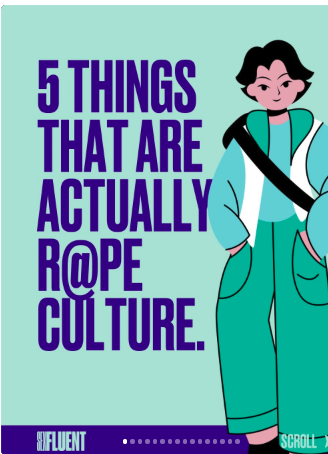
Fantastic post today (originally on IG by @sexfluent.ca) that I want to roll out here as a MUST SCROLL assignment.
And, in terms of who it's for, I'm going to start with YOU, COACH.
Because I can't tell you how many times in this work, when I put up a version of the Pyramid of Violence, I get the same comments from an audience of adult men:
"That's not my space."
"What do you mean by culture? We don't condone that stuff."
"My guys aren't like that."
And while that could certainly be true, I want you to read, as a coach, ALL FIVE of the slides that lay out what constitutes a culture that can support, excuse or simply look past "rapey shit."
That's really what we're fighting here.
Of course, I would imagine a lot of team rooms would be aghast at a depiction of a sexual predator stalking a woman into her home and violently assaulting her. But that's not what the majority of sexual assaults look like. That's the Hollywood version, meant to terrify us, but one that also makes it easier for guys to distance themselves from the reality of sexual violence because THAT scene in the movie isn't something they recognize in their own lives.
And they're right about one thing. It's more likely to be someone she knows than a stranger. More likely to involve an acquaintance, someone she's dating or a current partner than some unknown attacker lurking in the shadows.
And what these slides show us (and you're right, I'm NOT going to read them or list them because then you won't engage with the post) is how the subtle language, expectations and permissions we give EVERY DAY can create blind spots around harm. At best, we fail to recognize what's happening. At worst, we create environments where someone sees an opportunity to cross a boundary and believes they'll get away with it.
The good news?
So much of what is presented in these five slides is completely within your ability to address in the team space you lead. I'm talking about the WORDS you allow, the BOUNDARIES you establish, the BEHAVIORS you model and the CONSEQUENCES for failing to live up to those expectations.
And that means the conversation can't begin and end with "My guys aren't like that." Because the question isn't simply whether you believe your players would commit an act of sexual violence. It's whether you've examined the everyday culture of your team for the attitudes and behaviors that can make that violence easier to excuse, dismiss or ignore.
Coaches CAN BE (and as you know, TeamsOfMen believes SHOULD BE) frontline prevention workers.
But that requires us to stop treating prevention as something that begins AFTER harm has occurred.
Start today.
Coach Prompts
When you hear the phrase "rape culture," what is your immediate reaction? Does your mind go to the most extreme acts of sexual violence, or do you also consider the everyday language, behaviors and expectations within your team?
Which of the five areas presented in the post are you most confident you've addressed in your program? Which one might reveal a blind spot you've been unwilling or unable to recognize?
If I asked your players what happens when someone makes a sexually degrading joke, blames a victim or crosses another person's boundaries, could they tell me EXACTLY how you would respond? What evidence would support their answer?
Player Prompts
Agree, Disagree or Unsure: A team can have a culture that supports sexual violence even if no player on that team has ever committed a sexual assault.
What's the difference between saying "We don't condone sexual violence" and actually creating a team environment that works to prevent it? What would other people see or hear that demonstrates the difference?
If one of your teammates made a joke blaming someone for being sexually assaulted, what would you do in that moment? Would your response change if the teammate was a close friend, a team leader or your best player?