
"Let Me See Your Phone"
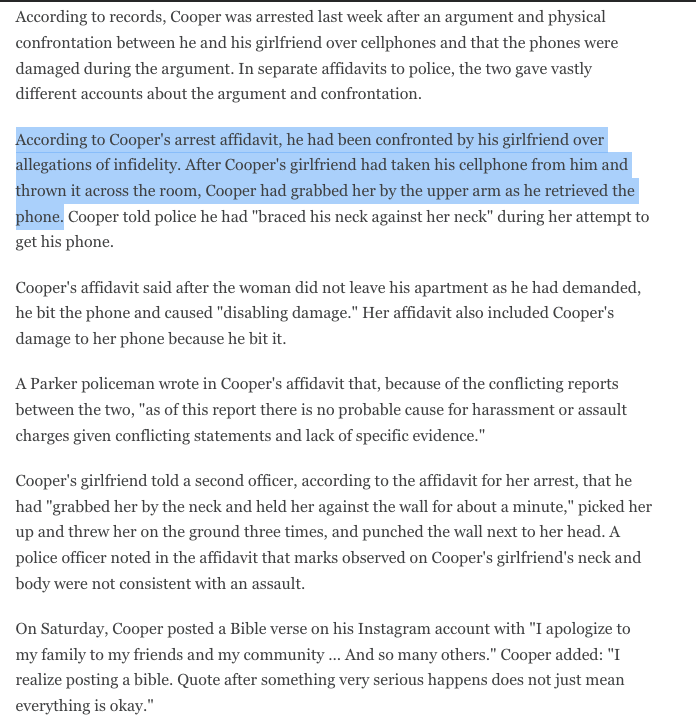
Today's headlines on ESPN included a write-up on the latest allegations involving Denver Broncos linebacker Jonathon Cooper. I won't spend much time on the details because, frankly, that's not where I think the value is for us as coaches. You can summarize it for your players as allegations that Cooper physically assaulted his girlfriend and violated protection orders, with the dispute itself reportedly stemming from an argument involving cell phones, accusations of infidelity, and access to personal communications.
There is immediate TeamsOfMen material here around healthy versus unhealthy relationships, emotional regulation, accountability, and keeping your hands to your damn self. But I actually think there is an overlooked connection point hiding inside the story that maps directly onto the daily lives of the athletes we coach.
The cell phone.
Not the lazy "kids are on their phones too much" conversation that adults seem determined to have every five minutes. I'm talking about the role cell phones now play inside intimate relationships.
I write this after spending an entire weekend driving a mini bus full of high school boys basketball players. When they weren't asleep or wearing headphones, they spent an inordinate amount of time huddled around somebody's phone trying to navigate texts, Snapchats, and interactions with girls. We've talked in our program about how a text thread is not a sanctioned watch party for all the homies, but we're still dealing with the constant chorus of "You should say this, bro," "She's capping," or "Don't respond yet." Personal conversations routinely become group projects.
Over the years, both as a college coach and now as a high school coach, I've also heard countless versions of "She wants to see my phone," "I need to check her phone," or "If you've got nothing to hide, why won't you let me look?" More often than not, those requests—and the arguments that follow—are rooted in skills we supposedly want young men to develop. Trust. Self-worth. Integrity. Communication. Emotional regulation. Yet whether they're playing out a script they saw on Love Island or genuinely worried they're being cheated on, I've seen plenty of 16- to 22-year-olds completely crash out over access to a cell phone.
That's why I think this story provides coaches with a natural entry point into a deeper conversation.
Not because you need to walk your team through every allegation. Not because you need to become a relationship counselor. But because almost every athlete in your room has either had this argument, watched a friend have this argument, or will eventually find themselves in a situation where trust, jealousy, insecurity, and cell phone access collide.
What does it mean if your partner wants to see your phone?
What does it mean if you want to see theirs?
Is access the same thing as trust?
Can a relationship survive without privacy?
Can it survive without trust?
At what point does concern become control?
Those are team room questions.
And if you don't want to tackle all of them, you can literally put the highlighted section of the article on the screen, point to the fact that this entire situation reportedly escalated over "let me see your phone," and ask your players what they think. My guess is you'll have more discussion than you know what to do with.
Coach Prompts
How has cell phone access changed the way young people navigate relationships?
What is the difference between transparency and surveillance in a relationship?
How can coaches create conversations about trust without becoming relationship experts?
Player Prompts
If someone asks to see your phone, what do you think they're actually looking for?
Is having access to a partner's phone the same thing as trusting them? Why or why not?
When does concern about a relationship become control over a relationship?