
What Are We Teaching Young Men About Trust?
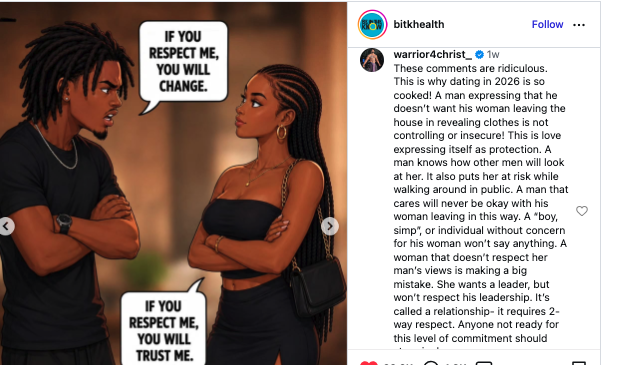
The topic (based upon the post above from @bitkhealth) most likely falls in that category coaches would tell me “Kip, there is NO WAY I’m touching that with a team.” It covers relationships, it involves how partners dress, and it could lead to BIG EMOTIONS in the room (all of which I understand a coach being leery of).
However, I also know this is 100% something your teenage and young adult players have thought about, witnessed, debated, or found themselves arguing about. And if we're being honest here, Coach, I bet you have too.
I would encourage you to approach this post in two ways. First, scroll through all of the slides. The author does a tremendous job laying out the different ways a man who is hell bent (and insecure) on controlling his partner might argue before she leaves the house, while also demonstrating how those arguments fall apart when examined through the lens of trust, autonomy, and healthy relationship skills.
Second, I would focus specifically on the comment featured in the title image of our blog today. What you're reading there is a Manbox-infused perception of how relationships are supposed to work. The commenter is somehow arguing that it is not insecure to micromanage a partner's clothing choices because "men will look at her a certain way" and that only a "simp" would allow this to happen. He even says that "she wants a leader," as if women are growing up like cattle looking for a ranch hand to guide them through the world.
What's most revealing is what sits underneath that viewpoint. It is fear masquerading as leadership. Fear of other men. Fear of losing control. Fear that trust is weakness. Fear that a partner exercising autonomy somehow diminishes your role in the relationship. None of that is leadership. Leadership requires trust. Leadership requires security. Leadership requires the ability to respect another person's agency, even when they make choices you would not make yourself.
What's most scary, Coach, is that you're probably not surprised by this viewpoint at all. You may have heard versions of it from players, friends, teammates, family members, or social media personalities. You might even have held pieces of it yourself at one point in your life. At the very least, I suspect most men can identify a season when they spent more time worrying about what other men might think, do, or say than they did trusting the person they claimed to care about.
That's why I think there is tremendous value in a coach being willing to tell that story. "I was insecure. I was a bit of a controller. I spent too much time worrying about other men and not enough time trusting my partner. I confused control with care." Then explain what helped you move beyond that viewpoint and why you eventually realized it wasn't serving either of you. Those conversations create opportunities for growth in ways that lectures rarely do.
This is a topic that requires intention and nuance. It is not a topic to avoid. And if your immediate reaction is that it should be avoided, then I would encourage you to do a little Mirror Training of your own and ask why.
Coach Prompts
What messages about relationships did you absorb as a young man that you later had to unlearn?
Where is the line between concern for a partner and control over a partner?
Why do conversations about relationships feel riskier for coaches than conversations about sportsmanship or teamwork?
Player Prompts
What is the difference between trust and control in a relationship?
Can someone genuinely care about a partner while also trying to control their choices?
What does healthy leadership look like in a relationship, and what does unhealthy leadership look like?