Protecting Your Space Means Confronting Your Circle
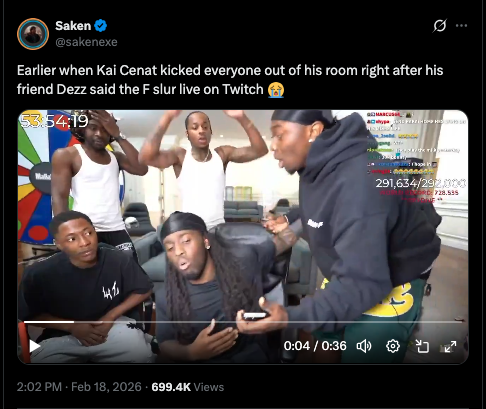
Today’s blog is in response to something we rarely see in real time: an interruption.
Famous streamer Kai Cenat was live with a group of friends when one of them casually dropped a homophobic slur into the room. No hesitation. No “let it slide.” No awkward laugh to smooth it over.
Kai immediately told everyone to get out. Cleared the room. Ended the moment. In his frustration, he also said something that stuck with me:
“Ni***s don’t have no self-awareness.”
(NOTE: There’s a double edge to this. In interrupting the homophobic slur, Kai used the most sinister slur of all time — but with the soft “a” ending that has created controversy in the Black community (and world at large), as many folks believe that version of the word is a familial, reclaimed version taken back from racists, and therefore acceptable in certain contexts.
That in and of itself is a whole other CONVERSATION we as coaches need to be prepared to navigate — especially those of us that aren’t Black — because our players are already navigating it, with or without us.)
Now, in 2026, we should question the authenticity of everything we see on social media. Performance and accountability sometimes wear the same costume. But for the sake of this space, I’m assigning credibility to what we witnessed—because the action itself is the lesson.
He interrupted nonsense language in real time. He protected his space. He enforced a boundary.
And here’s where this matters for us as coaches: your players are in rooms like this every single day. Locker rooms. Group chats. Parties. Team buses. Weight rooms. Spaces where language like this gets normalized through silence.
Not agreement—silence.
Because interruption is uncomfortable. Because interruption risks status. Because interruption risks belonging.
So show them this clip. Ask them plainly:
Would you have done the same thing?
Would you be willing to risk awkwardness, tension, or even friendships to enforce the standards you claim to believe in?
Because protecting your space isn’t just about who you let in.
It’s about what you allow to exist inside it.
And for everyone saying, “Kai only did this to protect his brand”—good. That’s still accountability. That’s still a line being drawn. It may be a low bar. But it’s a bar. Our world is filled with far too many examples of people who won’t audit their space for any reason at all.
Interrupting nonsense—especially when it comes from your own circle—is one of the clearest indicators of growth.
Seeing it is step one.
Interrupting it is evolution.
Coach Prompts
What language gets normalized in your program because no one interrupts it?
How do your players see you handle harmful language—in real time?
Where have you stayed silent because interruption felt uncomfortable?
Player Prompts
Would you interrupt a friend who said something harmful—or stay quiet?
What makes interrupting harder: fear of losing status, friendship, or comfort?
What kind of space do you want to be known for protecting?