Teach Them to See It
I realize that if you’re a frequent reader of my blog, you have to do a lot of extracting from my writing…meaning I think I put up topics and frames of current events that require you to digest a story you may not have heard of, then decide if the TeamsOfMen frame I apply to it sits well with you…and then ultimately decide if it works for YOUR belief system, YOUR program’s system and WHERE your players are in this particular moment (oh, and don’t forget the little detail of “do I have time and access to them today Kip” to even do this session).
I get it. I’m usually asking for a lot.
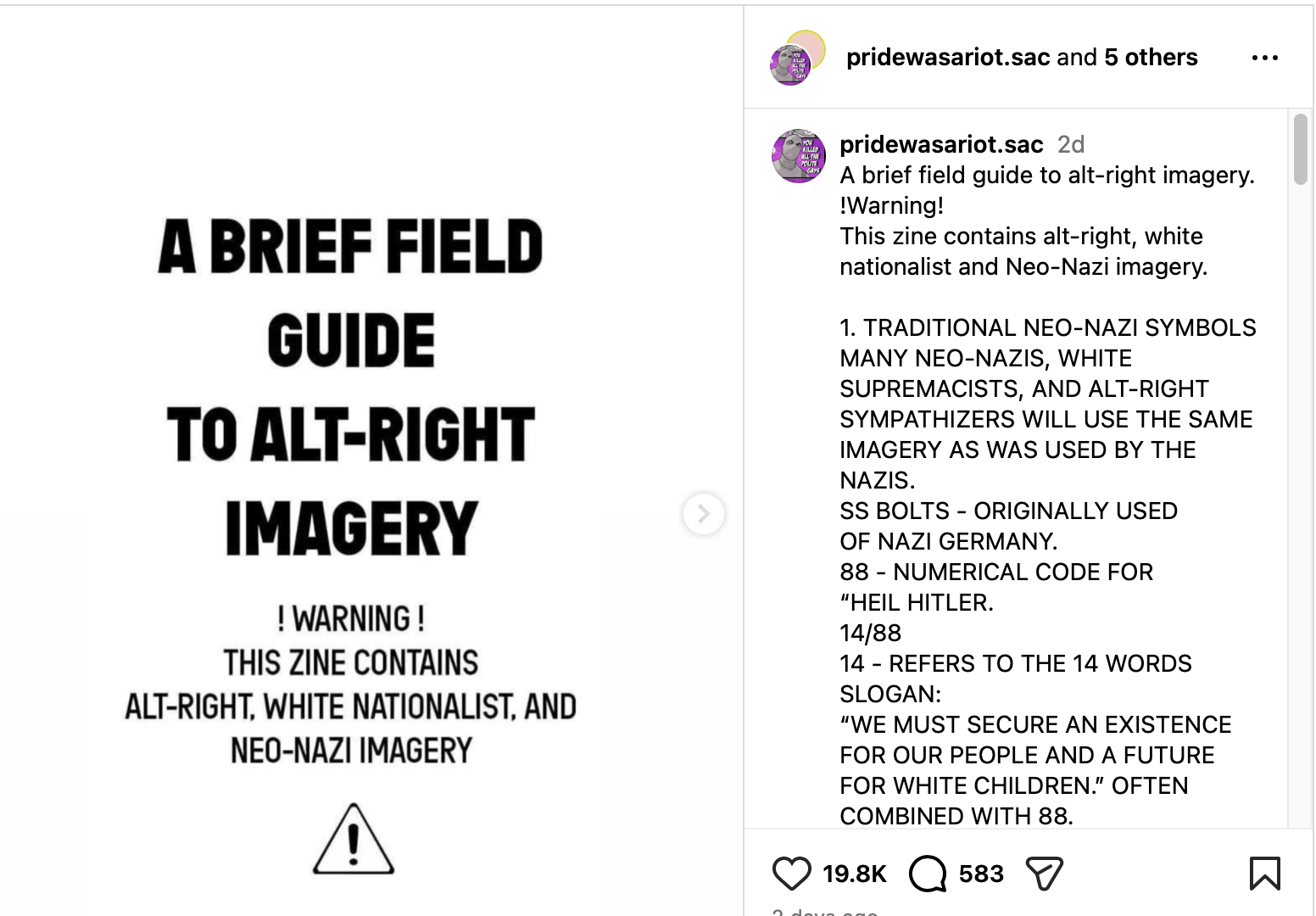
So when I saw the post above (originally on IG from @pridewasariot.sac) I thought to myself “Hey, this should be an easy one. We all hate Nazis.”
Now, if 2026 has taught me anything it’s that that particular sentiment no longer holds 100% certainty, but I do have faith in my readers and fellow coaches. So, I’m not going to waste too much time stating the obvious (our programs need to be free of Nazi’s and racism) BUT as I scrolled the post, I realized I wasn’t able to ID all the images and “code” associated with those things.
For example, I was unaware of:
Othala/Algiz markers
Celtic Cross
Pepe the Frog
Black and Yellow Polos
as dog whistles and sleight-of-hand ways to extremist groups communicate.
Believe me when I say I would imagine the chances you come across this on a player in your team room is small. You vet, you recruit, you parse your space where folks committed to hateful beliefs wouldn’t feel like they belonged there.
BUT, your players go out in the real world. No matter if you’re a college coach or a HS coach, your guys will get time away from your bubble. And what happens then?
No, I’m not claiming they go to Nazi raves…I’m saying they will be in mixed company and it would behoove them to be able to SEE and ID when the people, symbols, jokes, memes and language around them start adding up to something they don't want to be around.
This post today is less about “help your guys unlearn” as much as it is about “PROTECT your guys”.
We talk a lot about equipping young men to recognize unhealthy ideas inside themselves. But we should probably spend some time helping them recognize unhealthy spaces around themselves too.
NOTE: there is an important distinction here: seeing ONE of these things does not automatically mean you found a Nazi. Context matters. A Celtic Cross can just be a Celtic Cross. Pepe can just be Pepe. The point isn't to teach your guys to profile somebody based on a shirt, tattoo or meme. It's to help them recognize when multiple pieces of information start telling them something about the space they're in.
Coach Prompts
Would your players recognize extremist symbols or language if they encountered them outside your program?
Have you taught your athletes the difference between noticing a warning sign and making an assumption about someone?
Do your players know they can leave a party, group chat, gathering or social situation simply because something about it doesn't feel right?
Player Prompts
What would have to happen for you to realize a group or space you're in isn't one you want to be associated with?
If you noticed extremist jokes, symbols or language at a party or gathering, what would make it difficult to leave?
How do you distinguish between one thing you don't understand and a pattern telling you something about the people around you?
Your players don't need another adult telling them Nazis are bad. They need reps recognizing when a situation is becoming something they don't want to be part of—and confidence in what to do next.
That's the difference between believing the right thing and being prepared to make the right decision.