The Coaching Myth We Keep Repeating
There's a phrase I've heard from coaches for years: "I was coached by a hardass, and look how good I turned out."
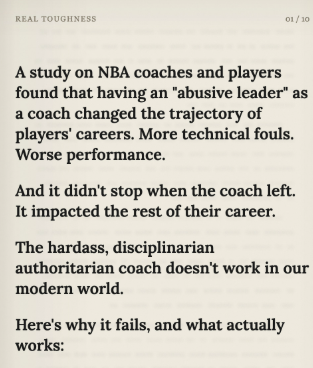
It’s a common cliche I hear a lot when I discuss what type of transformation someone’s coaching will undertake if you onboard TeamsOfMen, and something we push back against hard, usually via a “Well, I think you’re overestimating his significance and underestimating your own resilience”. But maybe this study will help folks identify that it literally DOES NOT produce the outcomes you think it does.
Posted on IG by @stevemagness, it not only details the career impact on NBA players of “hard ass coaching” (I’ll give you a hint: more techs, less points) but also lays out information on power dynamics, types of parenting models, and short term vs long term ability to make decisions on your own as both a player and person. These are all aspects of our job that we would want a study to reveal positive outcomes from using, when in fact this study reports poorer outcomes in several of the areas coaches often care about most.
This likely is NOT a blog post you want to share with your players, but rather use exclusively with your staff in the preseason before you launch a campaign. Is this worth our time to reevaluate the way we go about our jobs? Because if the report is true and “…they are only ‘tough’ when someone they fear is right next to them” we aren’t preparing then we're preparing athletes to perform under surveillance, not to make good decisions independently.
Coach Prompts
When you think of the toughest coach you've ever had, which lessons came from accountability and which came despite fear?
How would you distinguish between demanding excellence and leading through intimidation?
What behaviors do your athletes display when you're not in the room, and what does that reveal about your coaching?
If today's post made you wonder whether your coaching system is building independent decision-makers or simply compliant athletes, don't guess.
Click here to run the free Decision Confidence Analysis™ and discover where your program is reinforcing healthy decision-making—and where hidden gaps may still exist.