
"We Have Good Guys" Is Not a Prevention Plan
I struggle with the phrase “ambulance chaser.” On one hand, I know there is precedent for media to go towards “the flashing lights” so to speak to find something newsworthy. But on the other hand, I also know that awareness is a key component to driving change so sharing things that should raise alarm bells is necessary.
I’m leaning more on the latter today.
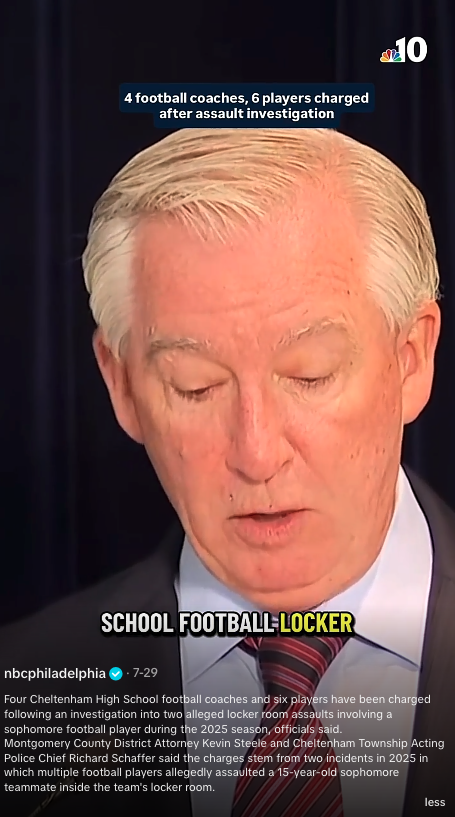
Let’s start by sharing the various reports about the debacle at Cheltenham HS (PA) and their football program. The video above and the article here detail an awful situation at Cheltenham High School in Pennsylvania, where a 15-year-old football player was allegedly assaulted twice in the locker room. Six players now face charges, and prosecutors allege four coaches subsequently attempted to cover up what happened.
A truly awful situation all around.
What’s the TeamsOfMen angle here (besides the obvious “We need to be molding better moral compasses in our guys”)? First, what’s the current plan you have for your players when the final bell rings on a HS campus and before the first whistle blows at practice? How long, how often and where are they unsupervised? If there are logistics at play that make staffing your spaces difficult, what early season conversations have you had that dictate the expectations in the locker room AND what “courage” looks like when you stand up for someone being bullied? Have your players ever actually practiced what intervention looks and sounds like when the person crossing the line is their teammate?
Those are just a few of the questions I would use as an AD and a Head Coach to ensure we have a plan of prevention not reaction to something this serious.
And to be clear, “Well, that won’t happen here because we have good guys” is NOT a solution.
Coach Prompts
Where and when are your athletes regularly together without direct adult supervision, and what expectations have you explicitly established for those spaces?
Have you taught your players what intervention actually looks and sounds like when a teammate is being humiliated, bullied, hazed or harmed?
If a player reported something serious to your staff today, does every coach know exactly what happens next—and who must be told?
Player Prompts
What makes it difficult to step in when the person doing something wrong is your teammate or friend?
What could you actually say or do if you saw a teammate being humiliated or harmed in the locker room?
At what point does watching, laughing, filming or staying silent make you part of what's happening?
If today's post made you wonder whether your program actually has a prevention system—or simply good intentions—don't guess.
Click here to run the free Decision Confidence Analysis™ and discover where your program is reinforcing healthy decision-making—and where hidden gaps may still exist.