
The Game Changed. So Did the Expectations.
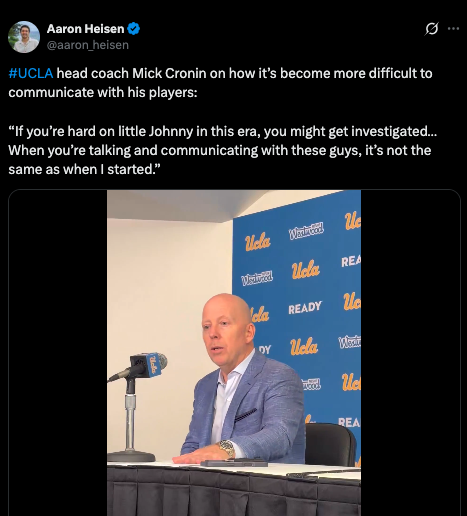
I know, I know—Coach Cronin shows up a lot in this space.
I promise I don’t have an agenda against him. If anything, it’s because (to his credit) he’s unusually willing to share his unfiltered thoughts publicly. And as both a basketball coach and the founder of TeamsOfMen, that consistently gives me something to wrestle with.
This latest rant was about how much harder it’s become to communicate with today’s players compared to when he started coaching. He touched on attention spans, difficulty connecting to directives, and—most notably—the concern that being “hard on kids” today could get a coach investigated.
I’m in my 24th year coaching male basketball players (22 at the college level, now 2 at the high school level). And yes—there are more distractions in young men’s lives today than there were in past generations. That part is real.
But I don’t think that’s the core issue being expressed here.
What I hear instead is anxiety about losing the ability to demand obedience and fealty without consequence. And honestly? I think that’s a good thing.
Young people today are more aware of the respect they deserve. They’re more informed about what harmful communication looks like. They have more access to language, resources, and accountability structures that didn’t exist when many of us started coaching.
That’s not softness. That’s progress.
And it forces something uncomfortable—but necessary—on us as coaches: self-audit. Growth. Skill development beyond volume, intimidation, or fear-based compliance.
We constantly tell our players to adapt. To evolve. To embrace change. Our profession is flooded with slogans about growth through discomfort.
So the real question is this:
Why are we so resistant to applying that same expectation to ourselves?
Growth doesn’t have to be something we lash out against.
It doesn’t have to be framed as loss.
And it definitely doesn’t require us to cling to outdated methods just because “that’s how it used to be.”
Coach Prompts
Where do you feel most threatened by change in how players respond to authority?
Which of your communication habits rely on fear, volume, or compliance rather than trust?
If accountability structures disappeared tomorrow, how would your coaching need to change?
Player Prompts
What does respect from a coach actually look like to you?
When a coach “gets hard,” how do you decide if it’s about growth or control?
What’s the most effective way an adult has challenged you without crossing a line?