The Good Guy Defense
How exhausting is “sportswashing”?
The way coaches, GMs, administrators in college athletics, all the way through your local club coach, decide that achievement in sport (hell, participation in sports) ERASES the very real harm a human being does off the field/away from the court is nauseating.
This week’s examples, on back to back news cycles, are courtesy of our friends in the NFL.
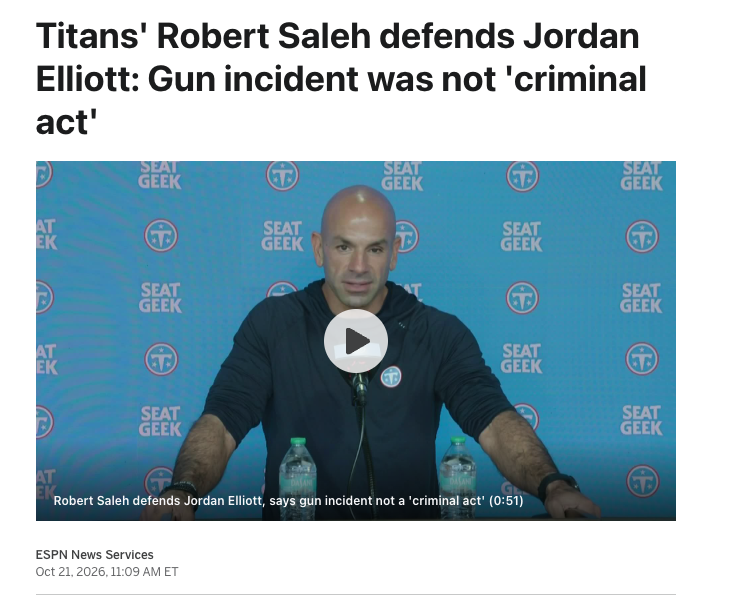
First, Tennessee Titans Head Coach Robert Saleh decided he would take to the podium and give a literal recommendation for his cut defensive tackle, Jordan Elliott, who was released from the organization following an incident in which he reportedly went to his car to retrieve a gun after an on-field altercation with a teammate.
One of the many ridiculous claims from Saleh, who earlier in the press conference described Elliott's actions as a call for help more than a criminal act, was his invitation to other NFL teams to contact him if they needed a run-stopping defensive tackle for a playoff run.
And he ended that endorsement with a declaration: "He's a good man."
We cannot equate character and work ethic.
At best we know he's willing to play a kid's game with effort. That does not guarantee the person he is off it. FULL STOP.
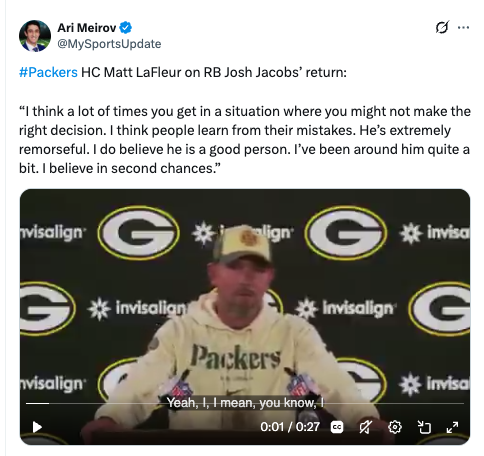
Next, we get this gem of a comment from Green Bay Packers HC Matt LaFleur about his newly returned from suspension RB Josh Jacobs (who pleaded no contest to misdemeanor battery and criminal damage to property following an incident involving his then-girlfriend) that “I’ve been around him, he’s a good dude”.
Well, Coach, where the hell were you when he did what he did? Was he being a good person then?
This stuff is just gross.
It reeks of men protecting other men, of men ignoring human harm because other men can tackle or run a ball well. And it screams that the harm done to women can become secondary to the value men bring to a football team.
And it's blatant.
I can already hear the usual “innocent until proven guilty Kip” responses. But criminal punishment and the privilege of playing professional sports are two entirely different things. And in Jacobs' case, we're not simply talking about an accusation. He entered a no-contest plea to misdemeanor charges. The least that could happen to these guys is losing the privilege of playing in the NFL. That’s the STARTING POINT.
Because if our first instinct when an athlete causes harm is to remind everyone how valuable he is to our team, what exactly are we teaching every other young man watching?
Coaching Prompts
When an athlete in your program causes harm, how do you ensure their athletic value doesn't influence your response?
What evidence do you actually use when describing a player as a "good person," and how much of that assessment comes from their behavior within your program?
How do you distinguish supporting an athlete as a human being from protecting them from accountability for their actions?
Player Prompts
Agree or Disagree: Being a great teammate means you're also a good person. Why or why not?
Have you ever seen someone receive different consequences for harmful behavior because they were particularly talented or important to a team?
Can you support a teammate who has caused harm without defending, minimizing or excusing what they did? What would that look like?