
The Language We Normalize Is the Behavior We Create
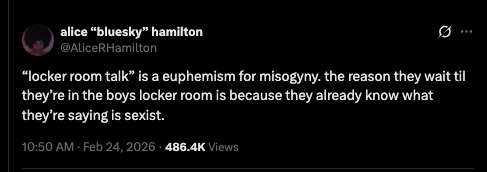
This post relates directly to the ongoing controversy surrounding the aftermath of the USA Men’s Hockey Team winning gold — a few days after the women’s team did the same — and the now-viral celebration phone call with President Trump. During that exchange, the women’s team was disparaged, and members of the men’s team were seen laughing along.
You can probably guess where we at TeamsOfMen land on that moment.
But our reaction — and the algorithmic echo chamber we all live in — is less important than what you and your team room do with it.
Because the real entry point here isn’t politics. It’s language. Specifically: the excuse of “locker room talk.” We have all heard it. Some of us have used it.
“Well, that’s just locker room talk.”
“It’s just boys being boys.”
“It’s not that serious.”
But here’s the uncomfortable truth: “locker room talk” has often functioned as a euphemism. A shield. A way to normalize misogyny, dehumanization, and entitlement in spaces we claim are protected. And the phrase “what’s said in here stays in here” doesn’t actually protect our players. It protects harmful behavior.
It allows young men to rehearse language that desensitizes them to the humanity of others. And language always precedes action. What we normalize verbally becomes easier to enact behaviorally.
We cannot let the manbox normalize the idea that accountability stops at the locker room door.
If something is wrong outside the locker room, it’s wrong inside it too.
This moment — and the viral post calling “locker room talk” what it really is — gives us an opportunity to ask ourselves:
Where have we excused language because it felt culturally acceptable?
Where have we allowed harm to be disguised as humor?
Where have we confused bonding with belittling?
If we’re serious about building men of character, then the locker room cannot be a sanctuary for misogyny.
It has to be a laboratory for respect.
Coach Prompts
Have you ever dismissed something as “locker room talk” instead of addressing it?
What language is normalized in your program that wouldn’t be acceptable in front of parents or administrators?
What does “what’s said in here stays in here” actually protect?
Player Prompts
Why do people say certain things only in the locker room?
Have you ever laughed at something you wouldn’t say publicly?
What’s the difference between joking and disrespect?