The Lesson Isn’t the Fake Story — It’s How Fast We Believe It
I got duped.
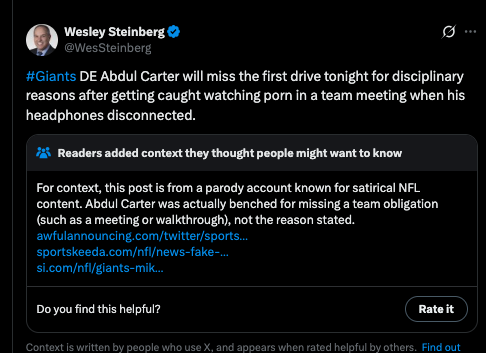
I saw the original post above about NYG DE Abdul Carter and, like the two million people before me, took it as fact. I even sent it to the Giants fans in our locker room with a “Look at this ish” reaction. A couple hours later, it came out the post was from a parody account. Not true. Not even close.
And I felt like a fool.
Not because the original claim sounded impossible — I know enough about the spread of porn use among men (especially young men) to know nothing surprises me anymore — but because I ran with something I should’ve double checked.
That’s the real lesson here: social media is designed to fool us.
AI deepfakes.
Engagement algorithms that reward outrage.
Content farms pumping out believable garbage.
Rabbit holes that look like research but are just traps.
I’m 46. I’ve got a master’s degree. I use social media every single day.
And I STILL fell for it.
So imagine the opportunity the internet has to deceive our players — who scroll faster, trust quicker, and are targeted more aggressively than any generation before them.
If we’re not teaching them to slow down, question, verify, and think…someone else is teaching them not to.
COACH PROMPTS
When’s the last time you taught your players how to verify information, not just react to it?
How can you build digital literacy into your program the same way you build film study?
What systems or habits in your team encourage players to pause before they share?
PLAYER PROMPTS
What’s one post you believed this week that you never double checked?
Who benefits when you react instantly instead of thinking critically?
How much stronger would your decisions be if you slowed down before you clicked?