Who You Say You Are
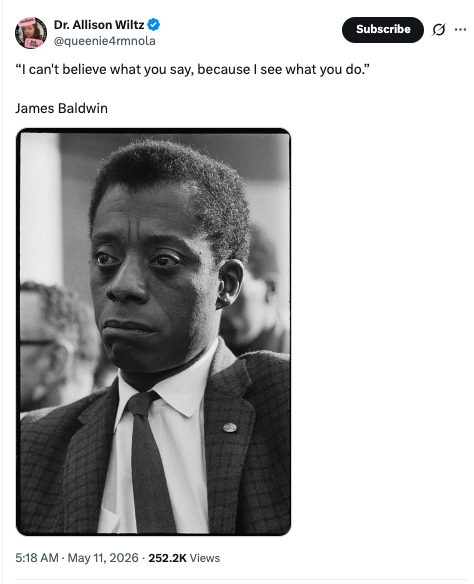
Today’s featured post is simple in its power, both because one of the most prominent voices in activism (James Baldwin) is the source and because it is applicable to literally any aspect of your coaching. I can imagine coaches of male athletes deploying this (or their own versions of it) comfortably when applying it to their players performance on the field or court of competition. I can see them using it when trying to stimulate growth in a player’s academic performance (and the habits they are or are not using in the classroom).
However, my challenge to our industry today is rooted in a change of scenery.
I want you to read this aloud and apply it to what you claim and what you do as a man. Further, as a human being. Are you acting to your claims? Are you behaving in a manner (as a father, a husband, a friend, a brother, a son, etc) that is in alignment with all the cliches you claim to believe and tout to your players?
Of course, I’m not demanding perfection from us. We are human after all. But I am acting for interrogation and analysis of who you are vs who you say you are. We ask this of our players day in and day out. The least we could do is turn the light on ourselves. Better yet, tell them we are doing that, why we are doing that, and admit the times the light showed you something you failed out.
Coach Prompts
Where is there a gap between what you tell players matters and how you actually live?
When was the last time you openly admitted a failure or blind spot to your team?
What would change if coaches treated self-reflection with the same seriousness they expect from athletes?
Player Prompts
Do adults in your life model the things they ask from you?
What does accountability look like when someone older admits they got something wrong?
What values do you say matter most, and how often do your actions match them?