Your Players Live Online. So Does the Harm
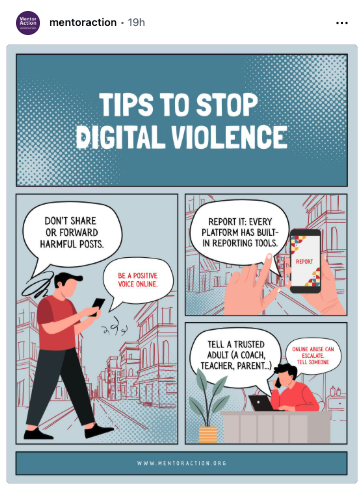
Today’s blog is in response to this simple, powerful infographic from Mentor Action on stopping digital violence.
I think a lot of coaches of male athletes use the thought-stopping cliché of “I don’t do social media” to protect themselves from wading into the deep (and often dark) online lives our players live.
But I know from firsthand experience — as a coach, a parent, and a victim myself — that online harassment and online bullying are real. And in 2026, they’re not some rare edge case. They’re an ever-present part of human existence.
Your guys are either:
the target,
friends of a target,
or (let’s be honest) the ones doing the attacking.
And the forms are evolving: deepfakes, screenshot sharing, pile-ons in comment sections, anonymous DMs, “jokes” that aren’t jokes, and harassment that follows someone everywhere because the internet doesn’t have an off switch.
This graphic is a gateway into a team conversation from two angles:
“Let me help you navigate harm that’s happening to you.”
“Let me be clear what I will do if you’re doing the harm.”
We don’t get to opt out of this because it’s uncomfortable. If we’re serious about building people, we have to be willing to name what’s happening online — and put real expectations around it in our programs.
Coach Prompts
Where have you used “I don’t do social media” as permission to avoid a hard conversation?
If a player is being targeted online, what’s your plan — specifically — beyond “block them”?
What are your program’s non-negotiables around screenshot sharing, pile-ons, and group chat behavior?
Player Prompts
Have you ever seen something online and stayed quiet even though you knew it was wrong? Why?
What’s the difference between “it’s just a joke” and actual harm?
What would you want your coach to do if you were the one being harassed?