
Youth Hoops Isn’t a Military Boot Camp
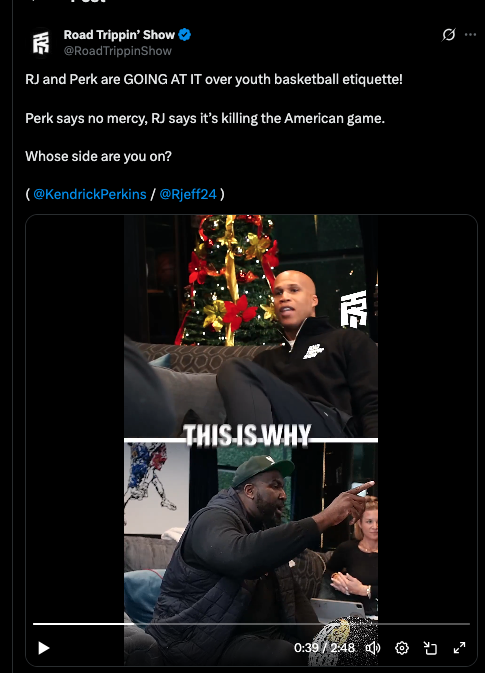
This conversation sits right at the intersection of two of my biggest passions: hoops and developing the next generation.
Both Kendrick Perkins and Richard Jefferson live in that space. Former NBA players. Current commentators. Guys who run club programs for young players. They’re both clearly invested, and I respect that.
My issue — which won’t surprise anyone familiar with our TeamsOfMen philosophy — starts with Perk’s very first rebuttal and the line about “developing killers.”
That phrase is completely soaked in manbox thinking.
This is a game.
If you want to develop “killers,” send them to the military.
And even if someone says, “Kip, he meant a killer mentality,” that’s still an opportunity for growth. As adults, we can evolve our language. He could say, “We’re developing players who know how to close out a win.” Words matter.
But here’s the bigger point: that’s not even the real argument being made.
RJ already establishes the common ground. He’s saying, when you’re up 30, the game is sealed — how do you approach the remaining time on the clock?
That’s it.
You can develop competitive, driven young people and teach them how to finish a contest with respect and dignity for a defeated opponent. Those things are not opposites.
The idea that a club sport team should function as a training ground for hardened, empathy-less souls is exactly the mindset we’re trying to dismantle with this work.
We don’t need youth basketball to produce “killers.”
We need it to produce skilled players, thoughtful competitors, and whole human beings who know how to win and how to be decent when the scoreboard already says they have.
Coach Prompts
When you’re up big, what specific lessons are you trying to teach in the remaining minutes?
How often do you rely on phrases like “killer mentality” instead of naming the actual basketball skill you want?
Where might your language about toughness be teaching values you don’t actually intend?
Player Prompts
What does it look like to finish a game the right way once the outcome is decided?
How do you separate being competitive from trying to embarrass an opponent?
What kind of teammate do you want to be remembered as when you’re clearly the better team?