
Escaping Conversations with Empty Promises
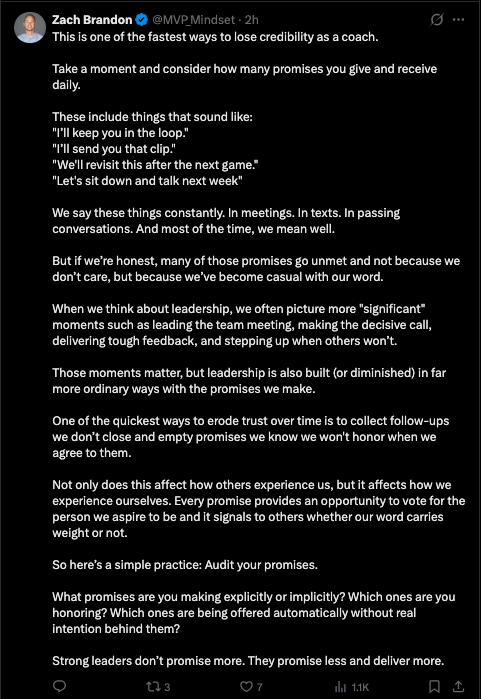
Today’s blog is in response to a post I saw on X that, for once, made me nod along instead of bristle.
It hit close to home.
Just last week, I told a younger player I’d send him a PDF with a couple new entries to our dribble-drive package. And I didn’t do it. No excuse. I forgot. And if I’m being honest, this post smacked me in the face for that failure—because I know exactly how I’d react if I asked him to bring something to me before practice and he didn’t follow through.
What I loved most in this post was the idea of auditing our promises. Not the big, dramatic ones—but the everyday throwaways:
“I’ll send you that clip.”
“We’ll talk next week.”
“I got you.”
Most of the time we mean well. But over time, those missed follow-ups quietly erode trust. Not just how others experience us—but how we experience ourselves. Every kept or broken promise is a vote for the person we say we want to be.
Here’s the TeamsOfMen layer I’d add:
I wonder how often we make these promises not because we intend to follow through—but because they let us exit a moment. A longer conversation. A relational pause. An uncomfortable or vulnerable exchange we’re not quite ready for.
As men, we learn early that saying “I’ll get to it later” or “I gotchu” is an efficient escape hatch. It buys time. It avoids depth. And sometimes it replaces the actual work of connection.
Strong leadership isn’t just about doing more.
Sometimes it’s about promising less—and meaning every word.
Coach Prompts
What promises do you make most often in passing?
Which follow-ups on your plate have gone quiet?
Where do you promise later instead of engaging now?
Player Prompts
When someone says “I got you,” what makes you believe them?
How do broken promises change how you trust teammates or coaches?
Where do you say things just to end a conversation?