Manhood, Paternity, and the Cost of the Grind
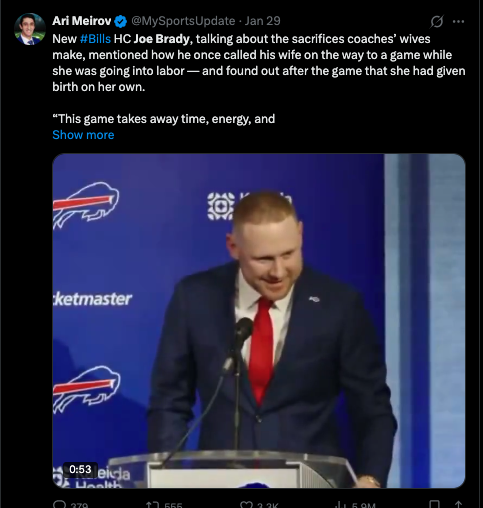
Today’s blog is in response to two NFL headlines from last week: the hiring of new Bills HC Joe Brady and the firing of Vikings GM Kwesi Adofo-Mensah.
I’m not writing about football decisions here. I’m writing about the manbox framing attached to each moment—and the lessons they quietly teach.
First, Joe Brady. I appreciate him publicly acknowledging his wife during his introductory press conference. That matters. But the idea that he framed missing the birth of his child as part of answering a “calling” is where I can’t nod along.
There’s thanking your partner for being a rock of support—and then there’s publicly admitting you asked them to carry something that never should have been asked in the first place. Take off the headset. Leave the booth. Get to the hospital. That’s not a lack of commitment. That is commitment.
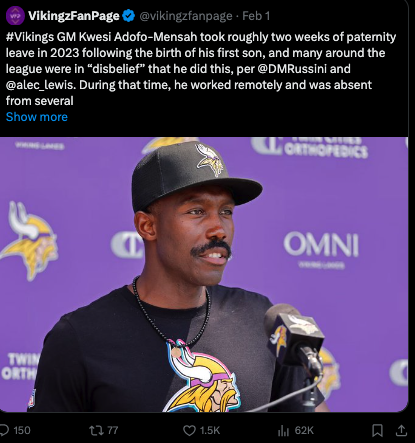
Second, Kwesi Adofo-Mensah. I have no commentary on his work as a GM. But there is no world where a man should be questioned, doubted, or quietly penalized for taking paternity leave to care for a newborn. That framing is absurd. Paternity leave is not a luxury. It’s not softness. It’s not negotiable. Caring for a child is not a one-gender job.
Sports do teach life lessons. That’s why so many of us love this work. But without intention, they can also reinforce harmful scripts:
That sacrifice always means absence.
That devotion means disappearance at home.
That ambition requires emotional or relational neglect.
That’s the work here—interrupting those scripts before they get handed down to the next generation as “normal.”
Coach Prompts
Where have you praised “sacrifice” without questioning who is absorbing the cost?
What messages do your players hear about family, presence, and priority—spoken or unspoken?
How would your program talk about paternity leave if one of your assistants took it tomorrow?
Player Prompts
What does being “committed” mean to you—on the field and at home?
Where have you been taught that showing up for family is optional?
How do you want your future partner or children to remember your priorities?