If Hype Turns Into Hate, We Wrote the Script Wrong.
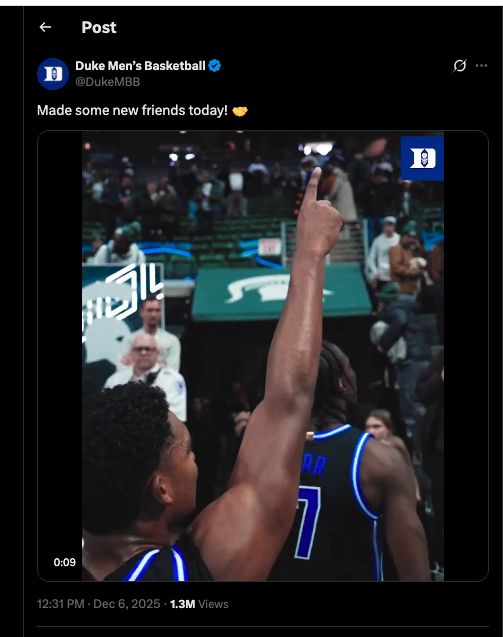
Today’s blog is about the Duke Men’s Basketball post — the official team account — showing their players walking off the floor at Michigan State after a 66–60 road win, surrounded by a crowd unloading verbal assaults. And, to be fair, Duke players giving some energy back.
This is a script we see at every level.
HS gyms. College arenas. Rivalry games. Packed student sections. Coaches hype up their guys. Fans hype themselves up. Players convince themselves it’s go-time in every possible sense.
And in all that energy, the Man Box scripts slip in as “requirements”:
“We’re warriors.”
“This is battle.”
“No room for pause or reflection.”
“If they come at me, I have to come back harder.”
These stories feel natural because they’ve been handed to men for generations. They work up front — adrenaline, bravado, identity. But they also strip away the exact humanity we claim to be building in young men. They turn a road win into a referendum on manhood. They turn fans into antagonists. They make the gym feel like a proving ground instead of a place to play a game.
Why do we think supporting a team requires us to show up as our worst selves?
Why do we equate “backing our guys” with losing emotional control?
Why do we treat vitriol as if it’s part of the ticket price?
I firmly believe competitive fire and human decency can coexist. Intensity doesn’t require cruelty. Hype doesn’t require hate.
And winning never requires dehumanizing anyone — not opponents, not fans, not ourselves.
We can compete without cosplaying gladiators.
We can support our teams without abandoning who we are.
If anything, that’s the culture worth celebrating.
COACH PROMPTS
What pregame language are you using that unintentionally frames competition as combat?
How do you model intensity without crossing into dehumanization — especially on the road?
Does your team know the difference between confidence and hostility?
PLAYER PROMPTS
Who do you become when the crowd turns hostile — and is that who you want to be?
How often do you mistake someone “coming at you” for a requirement to match their energy?
What would competing look like if you stayed locked in and stayed human?