Physicality Isn’t the Problem — Our Language Is
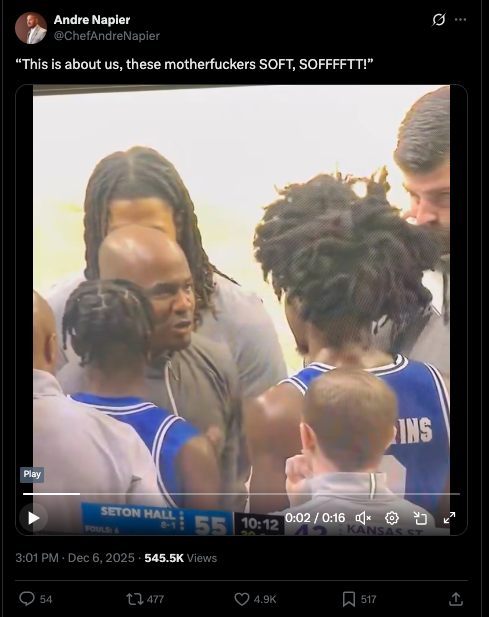
I’ve said this in a huddle. I’ve said this in a staff meeting. I’ve said this watching a game at home.
And that’s why the line we walk at TeamsOfMen when we challenge it is tough — because the core truth remains:
You cannot be timid in basketball, football, or life.
You cannot play scared.
You cannot shy away from contact or hesitation.
Those are real components of sport. They’re measurable. They matter.
But here’s the issue: we use “soft” as the catchall for all of it.
“Soft” becomes the bucket where we dump every mistake, every missed box-out, every blown tackle, every moment of indecision… and it becomes something much darker when you peel it back. It often masks coded homophobia. It often functions as an attack on identity rather than a correction of behavior. And most importantly, “soft” is what we reach for when we don’t have the vocabulary — or the clarity — to coach what’s actually happening.
Telling your guys you need more physicality isn’t wrong. Telling them you need urgency isn’t wrong. Telling them you need force, precision, or aggression in the right context isn’t wrong.
What’s wrong is hiding all of that inside a lazy trope.
Say the real thing:
“We’re not boxing out.”
“We’re not finishing tackles through the hips.”
“We’re avoiding contact in the lane.”
“We’re hesitating on the catch.”
“We’re not cutting with purpose.”
These are coachable.
“Soft” is not.
If we want players to own corrections, we have to give them something real to own.
If we want to build men, not just athletes, we have to stop assigning character flaws to tactical mistakes.
Words matter.
And “soft” isn’t coaching — it’s venting.
COACH PROMPTS
What specific behaviors are you actually frustrated by when you default to calling players “soft”?
How would your corrections change if you forced yourself to describe the behavior instead of the character?
What message are you unintentionally sending about masculinity when you weaponize that word?
PLAYER PROMPTS
When you hear “soft,” do you actually know what needs to change?
What physical cues make you play hesitant — and how can you attack those directly?
How would you want a coach to communicate a lack of physicality to you?