The Decision Hidden Inside Non-Decisions
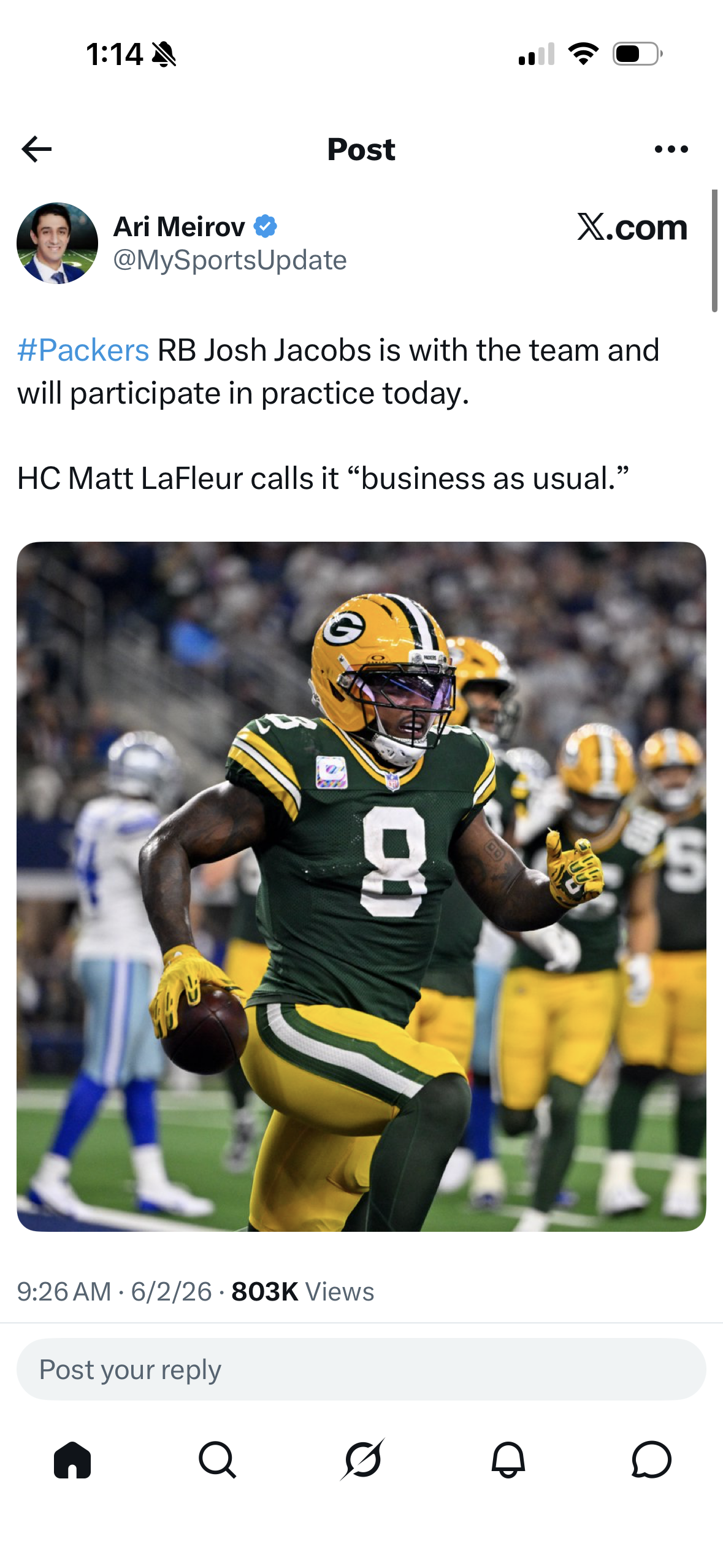
We wrote about Josh Jacobs’ legal troubles late last month, and this blog is obviously both a follow-up to that conversation and a critique of how the Packers’ coaching staff and organization chose to proceed after he was arrested on domestic violence charges.
As always, it is necessary to acknowledge that the legal process is still ongoing. Jacobs was clearly able to post bail and return to practice, and the case has not yet been resolved. It is also important to acknowledge that TeamsOfMen was born from a desire to help coaches actively engage male athletes in conversations and work that reduce and prevent violence against women. So when situations like this arise, I am far less interested in depth charts and rushing totals than in what leadership looks like when harm enters the picture.
What bothers me most is how quickly organizations retreat into business as usual.
That approach functions as a security blanket for coaches like, at least from the outside looking in, Matt LaFleur. What do I mean by that? I mean that if sport remains the sole focal point, coaches never have to grapple with the realities their players are wrapped up in beyond practices, film sessions, and dog piles of tackling. If I continually toe the company line and pretend my mouth is somehow sealed shut by an all-seeing "process playing out," then I never have to take a stand on how I believe someone representing my logo should act in society.
Instead, we get statements like, "We'll see what the authorities say."
It's a remarkably convenient sound bite.
It allows organizations to continue benefiting from a player's talent while avoiding any meaningful conversation about the possibility that someone may need intervention, accountability, or help. It avoids confronting the possibility that others may be at risk from the very behaviors being dismissed as separate from football. It allows leaders to remain comfortably passive while presenting that passivity as professionalism.
To me, that's "hear no evil, see no evil" leadership. Ostrich syndrome from grown men in positions of power.
And before someone jumps to the predictable response, no, I am not arguing that coaches should become judges, juries, or prosecutors.
What I am arguing is that organizations have choices.
At the very least, why couldn't the response be: "We will allow the legal process to play out. If our player is ultimately exonerated, we will welcome him back. If he is found guilty, we will not have compromised the integrity and stated values of our organization for a few extra rushing yards on Sunday."
That is a choice.
The fact that so few organizations make it tells us something.
Part of it is cowardice. Part of it is the persistent unwillingness to believe survivors. And part of it is the reality that many people in positions of power prefer systems that protect players because those same systems may someday protect them. If the precedent becomes that allegations of serious violence carry meaningful consequences during an investigation, then suddenly people have to imagine how those standards might apply to themselves, their friends, their colleagues, or their favorite players.
So the safest path becomes pretending there is no decision being made at all.
But there is.
Allowing business as usual is a decision.
Continuing to benefit from someone's labor while distancing yourself from the allegations surrounding them is a decision.
Claiming neutrality while one side of the situation is carrying all the risk is a decision.
It's gross. It's disappointing. And unfortunately, it remains a pattern that runs through major college athletics and professional sports alike.
We must be better.
Coach Prompts
When a player is accused of serious harm, what responsibilities do coaches have beyond simply waiting for the legal process?
What is the difference between respecting due process and avoiding leadership?
How do our actions communicate organizational values more clearly than our mission statements?
Player Prompts
What message does a team send when nothing changes after a player is accused of harming someone?
Can a team claim certain values if it only enforces them after a court ruling?
What does accountability look like before guilt or innocence has been legally determined?