What Did We Give Them Permission To Do?
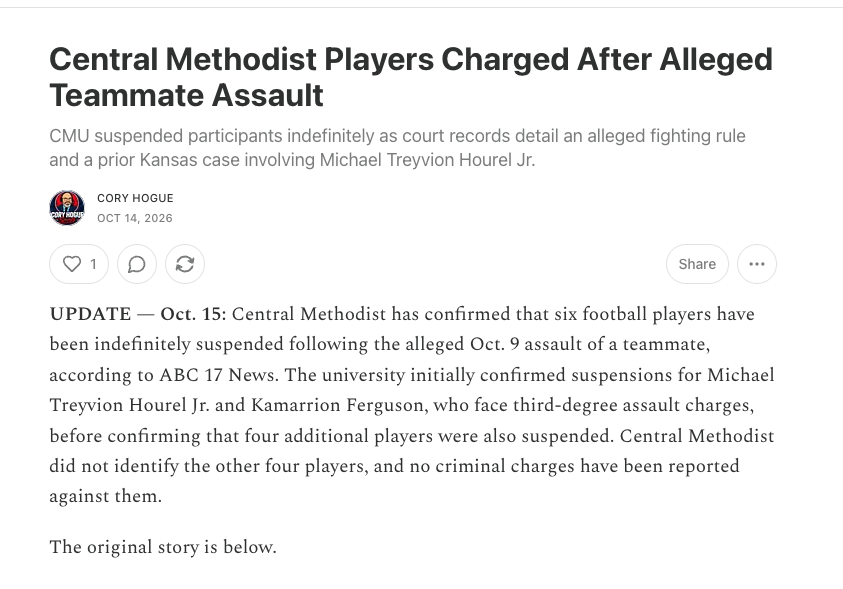
Here’s what I want to do with this story today (originally reported by Cory Hogue on his Substack last week).
I am not going to sit here and claim that in the almost 15 years of TeamsOfMen shaped coaching that I haven’t had young men let me down. That I haven’t had young men make stupid, harmful decisions. Guys that played for me have absolutely had moments of awful.
All of those guys that made mistakes had sat in TeamsOfMen meetings. And yet, they still made a poor decision in moments that mattered.
That is a factual statement.
What I will instead do with this story is ask you to examine what methods, processes or structures you have in place that would alert you to the existence of this kind of “internal player-led accountability” measure.
And what might you have said (directly or indirectly) that would make leaders of your team think this was OK?
According to court records, a group of players allegedly instituted a “If you are late, we fight” policy.
We, as coaches, don’t want guys to be late. All of us have some version of a speech, a sign and/or a consequence for dudes walking in late. Late doesn’t work in the real world, and we therefore, as people supposedly “teaching life lessons,” want to make sure late doesn’t work in sports either.
BUT BUT BUT…how do you, in your program, ensure that the guys don’t go to this model when trying to live up toyour “on time” philosophy?
I’m running this same self-scout myself.
What, in my high school boys basketball program, ensures that my older, better or most influential players would never lay hands on someone AND would step in to stop others from doing so?
I believe in the vision and the philosophy we aspire to here with TeamsOfMen. But saying that and living it require a very specific examination of the ways we put it into practice.
Because what our players believe accountability looks like when we're not in the room might tell us more about our program than what we preach when we are.
Coaching Prompts
• What structures exist in your program to ensure that your players' version of accountability reflects the values you claim to teach?
• How would you know if your most influential players were enforcing team standards in ways you would never approve of?
• What have you said, celebrated or allowed that your players might interpret as permission to harm a teammate in the name of accountability?
Player Prompts
• If an influential teammate decided that physical punishment was how your team should hold guys accountable, would you challenge him? Why or why not?
• When does holding a teammate accountable cross the line into controlling or harming him?
• If your coaches could see how your teammates enforce standards when adults aren't around, would they recognize the culture they believe they've built?