
What the Hell Does “Process It” Mean?
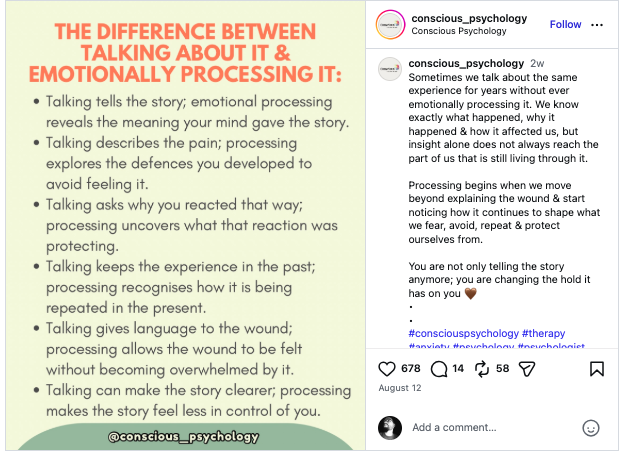
I had to look in the mirror myself today with this blog post inspiration.
Originally posted on IG by @conscious_psychology, it caught my attention because of the “emotionally processing” line. I say that A LOT in my ToM work (both in speeches with other programs and departments and with my own players).
“Emotions are information to be processed.”
“Emotional fluency means being able to process through tough feelings.”
“Process it, don’t act on it.”
But this post made me realize we need some more detail in describing what our guys think “processing” actually is. Because for some of them (especially the high school age group) their experience with processing might literally be “like the food plants coach?” And that of course doesn’t lend itself to a ton of action steps they would feel confident taking.
I would (and will this year IN SEASON) most likely use this graph in the following way:
Split team up by position groups.
Ask them to think of the last situation that cause them a BIG EMOTIONAL REACTION (good, bad, everything in between).
Decide as a group if they TALKED that emotion out or PROCESSED that emotion out.
Then, take one agreed upon scenario that all groups can be queued to use this posts bullet points with (for example: “Hey, I just got a technical foul in the game and it was my fifth foul so I’m OUT).
Now, deploy bullet by bullet what does TALKING look like this and what does PROCESSING look like with this
For example, third bullet: “Coach asking you and you saying why you yelled “Fuck that” at the ref is talking it out” vs “Was there some aspect of you the baller you were protecting with that verbal assault…like, you did get beat baseline and foul that guy, and you’re supposed to be our stopper, so you probably were protecting that identity, without realizing failing at that job one time doesn’t mean I’m not still that guy for us”
That is what a ToM session looks like with this post. And I think you should bet on 10-12 minutes for the exercise. And I would put it EARLY, PRESEASON as most of the pitfalls of a team that can’t process will be exposed once games start, so do this prep work up front!
Coach Prompts
How often do you tell your players to “process,” “reset,” “move on” or “control their emotions” without ever teaching them what those actions actually look like?
What emotional situations can you predict your players WILL encounter this season—and which could you give them reps with before they happen?
When a player reacts poorly, do you stop once you've learned WHY he did it—or help him understand what the reaction may have been protecting?
Player Prompts
Think about your last BIG emotional reaction. Can you tell the story of what happened AND identify what your reaction might have been protecting?
Which is harder for you: recognizing what you're feeling or figuring out why you're feeling it?
What basketball situation is most likely to make it difficult for you to process before you react?