When the Laughs Tell You Something
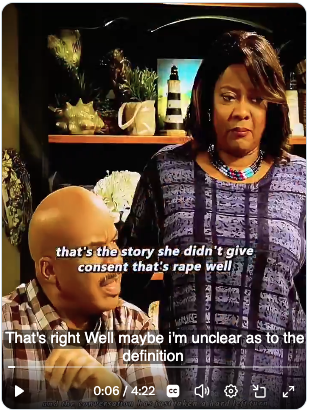
Shout out to long time TeamsOfMen practitioner and Inner Circle member Coach Chris Horton of Warren Wilson College Men’s Basketball for the share of this video (originally posted on X here). The video shows a scene from The Carmichael Show (allegedly Season 3 Episode 1) with a family debating the nature of consent, rape and sexual assault. I have never watched the show, but familiar faces like David Alan Grier, Jerrod Carmichael and Tiffany Haddish interact in the scene and the discussion feels authentic enough that it’s worth a share with your players.
As a coach running this, I would let it play one time through without any comment from you or your staff. Then, at the conclusion (it’s about four and a half minutes long) I would ask the players to physically stand up. Ask them to sit down on the left side if they agree with the argument from the character “Maxine” or sit on the right side if they agree with the argument from the men in the show. Additionally, you can allow players to stay in the middle and call that the “I don’t know yet” space.
Next, I would have them pick one note taker and then as the clip is played again, write down/record which aspects they most identified with. Then, have the note taker and another elected voice from the group stand up and present the WHY behind why they sat down on the side they did.
Now, let’s be real clear here coach: This is not a “both sides are equally right” or a “let’s all kumbaya in the middle of this thing” moment. Rape is (statistically speaking) very unlikely to fit the stereotype of a man in the bushes or a random stranger breaking into your house at night. It is much more likely (statistically) to come from someone known to the victim. In fact, the study linked above found that literally 76% of SA is committed by someone known to the victim. So we’re not going to end this session with your guys who agreed with the old man’s point of view getting a pat on the back and a “hey bro, great convo today” as they leave.
No, you’re going to ask them “where did you learn the ideas or stereotypes that lead you to believe that side of this thing” and “what parts of the manbox are showing up when you lean towards that definition or belief of what rape and SA are” and finally “why was it so hard for you to engage with what the female character was saying”? And then coach, I want you to take specific notes at the answers you get.
They will be a window into the ideas about sex, consent, women and sexual assault that already exist in your team room.
Notice I labeled it an abstract set of ideas and not some targeting of your guys. That is important. Because to engage with them, you will need to separate them from those beliefs. Our hope is they are embracing unlearning and curiosity and vulnerability in your program on a daily basis, so this ask won’t feel foreign. But, in all honesty, you need to be prepared to unearth some things about your guys that don’t sit well. While the clip itself is from a comedy, the topic and the WHEN of the laughs are going to unearth UGLY in your vicinity.
But, that’s the point of TeamsOfMen.
Better to find this now, when they are HS to college aged young people who have lots of time to grow and discard nonsense, than to find out later when they are set in stone and acting towards these ideas. You have the “laboratory” for them in your gym, on your field, in your team room, to run the experiments they need to field test the bullshit.
And hopefully, when the results come back, it hits them in a way that starts the change we want to see.
Coach Prompts
If your players watched this clip today, which arguments do you think would get the most agreement—and why?
Where are your athletes currently learning what counts as consent, rape and sexual assault if you aren't intentionally talking about it with them?
What belief could surface during this conversation that would be difficult for you to hear without immediately judging the player who said it?
Player Prompts
Where did your definition of rape and sexual assault actually come from?
Which argument in this clip felt most believable to you—and what made it feel believable?
Has anything you once believed about consent changed as you've gotten older? What changed it?
And coach, this is prevention infrastructure.
Not waiting until one of your athletes is accused of crossing a sexual boundary and then scrambling to figure out what your guys believe about consent. Creating the space beforehand to surface those beliefs, challenge them, and give your players reps thinking through situations they may actually encounter.
That is exactly the kind of intentional system the TeamsOfMen Decision Confidence Analysis™ (DeCA) is designed to help you examine. If you're curious how much of that prevention infrastructure actually exists in your program right now, start there.