

Breadcrumbs to the Truth
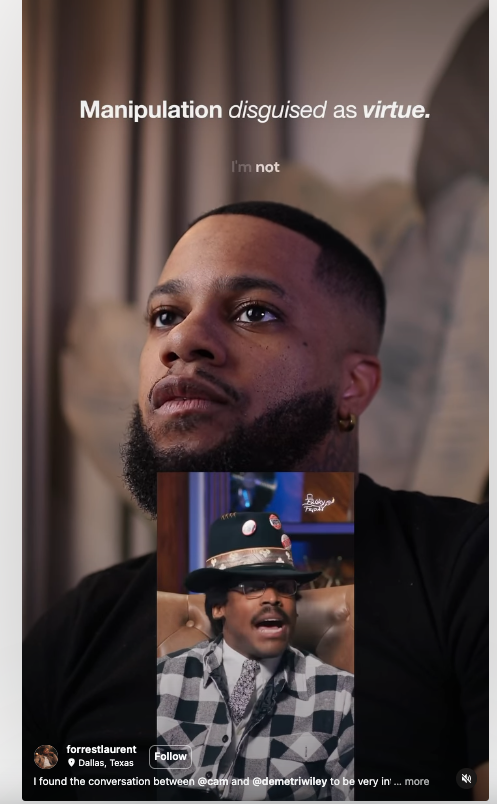
Today’s blog is a spot-on example of what my colleague @Professor_Neil calls “using cognitive dissonance” to disrupt manosphere-influenced thinking.
This clip comes from a conversation between former NFL quarterback Cam Newton and Demetri Wiley (posted by Forrest Laurent). If that feels like a roundabout way of getting to the source, welcome to trying to properly cite people’s work in the era of social media.
The clip is gold for any coach trying to understand how questions can move us closer to truth behind what motivates our guys actions and beliefs..
Wiley asks Newton why he doesn’t have any female friends, and what follows is such a clear example of how the right questions can expose the stories we tell ourselves. As Laurent points out so deftly later in the clip, what gets uncovered is often less “truth” and more the excuses we use to avoid ownership.
One of the most powerful moments comes when Wiley asks, “What that mean?” and then follows with, “When you’re attracted, what then happens?”
Cam’s answer: “Sex.”
Then Wiley responds, “Oh, damn Cam.”
That moment hits because in that second, the questioner fully realizes what has just been unearthed, while the person answering seems almost oblivious to what he has just admitted about himself.
I think a lot of our players would hear Cam in this moment and immediately respond with, “He’s just keeping it real, Coach,” or “That’s facts.”
And that’s exactly why the questioning matters because if we simply jump straight to Laurent’s later point about manipulation being disguised as virtue, I don’t think it lands nearly as well. The breadcrumbs matter. The interrogation matters.
Young men often need to hear how one assumption leads to the next until the logic collapses under its own weight. Because if the script becomes, “Well, if she’s attractive, I’ve got to sleep with her — that’s just nature,” then what we’re really confronting is not nature at all, but a learned excuse system that protects harmful thinking from scrutiny.
That’s where coaches have to step in. Not always with the answer. Sometimes with the next question.
Coach Prompts
Where in your team room do players use “that’s just how guys are” as a shield from ownership?
What questions could you ask instead of immediately correcting the statement?
When have you seen “keeping it real” actually mask harmful assumptions?
Player Prompts
What beliefs about attraction, women, or masculinity have you accepted without ever questioning?
Have you ever defended something as “just nature” that was really learned from peers, media, or culture?
What happens when someone keeps asking you why?
What Happens When Boys Don’t Trust the Data?

Today’s blog comes out of an anecdotal observation from engaging with young men last week.
In one of our Positive Masculinity Club sessions, we posed a simple question to the room: Are you moved by statistics? In other words, if I give you numbers that support a claim in any realm, does that help you believe it?
The answer in the room was a pretty resounding no.
What followed was a general distrust of math itself, and that sat with me for the rest of the day. I won’t pretend this is representative of all young men in the country. It’s one room, one moment, one set of voices. But it raised something that feels bigger than that particular session.
In the hats I wear — coach, educator, father, facilitator — numbers often serve as validation. Sometimes they confirm what I already believe. Other times they force me to change my mind. Either way, the point is that the data has a chance to move me.
Math be mathing.
It is, in so many ways, a universal language. So what do we do if boys don’t believe numbers they don’t like? Because this isn’t just about academic trust in statistics. This spills directly into coaching. If a quarterback doesn’t believe his touchdown-to-interception ratio tells the truth about decision-making, where do you go next?If a player refuses to believe the plus-minus, the shot chart, the turnover numbers, or the film breakdown, what are you actually dealing with?
I’m not sure the issue is math.
I think the issue may be what the numbers threaten.
Sometimes stats don’t just communicate performance. They challenge identity. They tell a young man something about himself that he may not be ready to hold. That he’s not as efficient as he thinks. That his shot selection hurts the team. That his effort comes and goes. That his version of himself and the evidence on the page are not aligned.
And when that gap shows up, disbelief can become self-protection.
So maybe the work is not simply convincing boys that stats don’t lie.
Maybe the work is helping them understand that changing your belief in light of valid information is not weakness. It is growth. It is what development actually requires.
I did a brief search to see if there is research specifically on young men’s distrust of numerical evidence, and while there is plenty on declines in educational outcomes and male participation rates, I didn’t find much that directly speaks to this exact question. I’m going to keep digging.
But for coaches reading this, I’d love your thoughts on when the numbers don’t move your athlete, where do you turn next?
Coach Prompts
When do your players resist what the numbers are telling them?
What part of their identity feels challenged by the data?
What other tools do you use when stats alone don’t create movement?
Player Prompts
Have you ever rejected feedback because it didn’t match how you saw yourself?
What feels harder: being wrong or changing your mind?
How do you know when numbers are helping you grow?
Platform, Volume, and the Performance of Certainty
This is the second weekend in a row I’ve found myself moved to write out my angst from something happening that I just couldn’t process without the keyboard.
Last week it was Geno Auriemma’s meltdown on national television. Today it’s a recently released sit-down on Stephen A. Smith’s “political” show Straight Shooter, this time interviewing one of my favorite follows, Joshua Doss (@doss.discourse on Instagram).
A colleague of mine who works in gender violence prevention sent me some Doss clips a year or so ago, and since then he’s been good for at least two or three posts a month that feed my appetite for both more Black and Brown men giving a damn and nuanced data breakdowns on topics I care deeply about. So naturally, I was excited to see him invited onto the bombastic SAS show.
Full context: in his previous life as an up-and-coming beat writer in Philadelphia covering Allen Iverson and during his first stint at ESPN, I was a big fan of Stephen A. Since then, with his transformation into the tent-pole “I have an opinion on everything” voice and face of the network, I do not consume much of his content. He is too proudly confident that he doesn’t have much left to learn on any topic, from sports to politics, and his debate-shouting style has become the norm in discourse everywhere.
In many ways, he represents Manbox culture dressed up in a suit. He is willing to talk about anything at a surface level, willing to shout about it, and because he makes a lot of money doing that, he seems to have decided it is his intellect — not his volume and company privilege — that makes him important in the world.
I won’t try to dissect all aspects of their conversation. Instead, I want to focus on a very specific back-and-forth around the 45-minute mark.
Doss was his usual intentional, measured, precise self. SAS was, well, loud.
Doss was probably too quick to launch his pushbacks with disclaimers like, “I agree here,” or “I can see why you’d think that,” but when you appear on someone else’s show, it’s probably a requirement to placate that person just enough to maintain access to the space and maybe move the needle, even a little.
Smith, for his part, kept paying homage to Doss as a “quantitative and qualitative data expert,” but for some reason didn’t want to give Joshua his bona fides as a representative political and gender-equity voice.
That framing aside, I’ll let you find and watch the entire discourse, though I hesitate to lend more views to SAS numbers, lest we encourage more ridiculous lines like, “Let me state for the record, you should have a damn ID… To the progressive left, shut the hell up,” along with his predictable assault on “wokeness” and his championing of the MAGA-favorite bootstrap mythology around wealth accumulation.
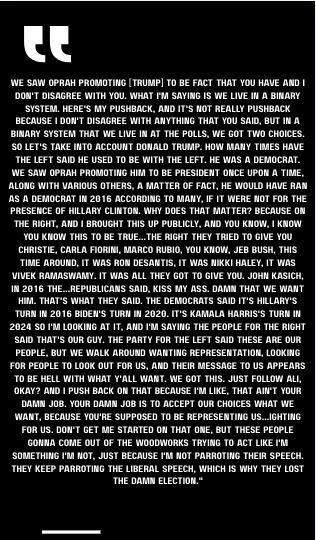
The moment I want to hone in on came after Doss challenged him to recognize that his buddying up to Sean Hannity, Mark Levin, and others was problematic because those voices have long functioned as mouthpieces for white conservatism, a force that has historically physically harmed Black people.
SAS then launched into the tirade in the graphic below. I had to stop the playback numerous times just to scream into the ether.
Why?
Because I do not accept his premise from the start.
I do not accept the idea that because the “voice of the Republican base” selected the monster that is Donald Trump, they are somehow a better landing spot for Black and Brown bodies to have their voices heard.
Trump is a known racist. People selecting him is not evidence of representation. It is a huge blinking sign to run from that group of people if you are a body of culture.
His brazen approach to the topic, complete with the bluster and the “I’m so taken aback by this affront to my character” mannerisms, is a classic Manbox script. It teaches that biggest and loudest is always better than measured and tactical. It also allows him to skate past lines like “it’s on record” or “don’t get me started on that” while never actually stating what that is.
Notice: I’m not here defending Democrats.
They are a mess themselves. They have proven feckless in the face of the authoritarian takeover of our federal government, and I refuse to cape for them.
But for Smith to tell us on one hand he’s “not here to settle for the binary at the polls,” while then doing only enough historical diving to utter phrases like “Dixiecrats” and “Oprah had him on her show,” is just another version of what allows him on First Take to give us one sentence on LeBron James and then pivot to something about Lewis Hamilton in the next block.
He is a willing messenger on everything, but rarely the right messenger on anything.
I purposely paused before Doss had a chance to respond at this point because I did not want to parrot his words in this rant. But I am hoping, when I return, to hear a more direct push on Smith than we’ve gotten thus far.
Because throughout the show Smith framed his upbringing in Queens as liberal at the polls but conservative at home, took a dig at trans kids with the “Stephen one week and Stephanie the next” line, and earlier claimed, “Hannity and I get along, just not on politics.”
That is a ridiculous claim in 2026, when nearly every societal pain point we are living through is rooted in, or worsened by, political policy and the enforcement of it.
In summary, you should watch, listen to, and follow Joshua Doss. Not just because of this episode on a blowhard’s show, but because he consistently makes you pause, reflect, and leave with a new action directive.
Once you know, you cannot go back to living as if you do not.
Take my usual work around the brainwashing of the Manbox and apply it not only to Stephen A., but to every other platformed voice in these dark times.
Coach Prompts
Where in your team room does volume get mistaken for leadership?
Think about your own communication style: when do you use certainty as a shield instead of curiosity?
What messages are your players receiving from sports media personalities about what it means to “be a man” in conflict?
Player Prompts
When someone is loud, confident, or famous, do you automatically assume they are right? Why?
What’s the difference between speaking with conviction and shutting down conversation?
Have you ever stayed quiet because someone else’s tone made it feel unsafe to push back?
If This Is the Opponent, What’s Your Response?
Today’s blog hit me with both an Oh my God and a why doesn’t this move men to immediate action? response.
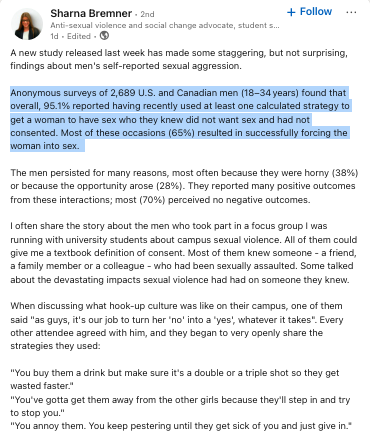
A post on LinkedIn by Sharna Bremner stopped me this week as she highlighted findings from a study of nearly 3,000 men ages 18–34 in the U.S. and Canada. These were men who reported using at least one calculated strategy to get a woman to have sex when they knew she did not want sex and had not consented.
Let’s be clear about what that means.
This is not confusion. This is not mixed signals. This is not “I thought she was into it.”
The entry point to the survey is essentially this: you know she does not want sex and you are still going to try to get it anyway.
That’s why I’m framing this as a scouting report on attacks.
The first thing that jumps off the film is the sheer volume. The number is staggering: 95.1% of this sample reported recently using at least one strategy. Whether we’re talking verbal pressure, isolation, alcohol, repeated touching, or outright force, this is not a one-off bad actor issue. This is something many young men have learned how to do.
Second, they run a two-man game. Nearly half reported using a friend, partner, or group of friends to help, and a striking number reported using a female friend to make the woman feel safe and convince her. Coaches, sit with that. Sometimes the room is not neutral. Sometimes the room is part of the problem.
Third, this is a selfish opponent. The most common reasons given were because they were horny or because the opportunity was there. That is entitlement language. Desire becomes permission. Impulse becomes justification.
Fourth, their best play is alcohol. The study repeatedly points to keeping women drunk, getting them drunk, or using substances as part of the strategy. That is not incidental. That is part of the game plan.
And finally, they are relentless. Repeated asking, continued touching, kissing, verbal pressure, and escalating physical persistence all show up as common tactics. They keep going until resistance wears down.
Now here’s the part I cannot stop thinking about: some men in the study saw themselves as better than their peers at getting what they wanted sexually, and that sense of status was linked to more forceful strategies.
There it is. This is exactly why challenging the Manbox in your space is not optional. If status in the male friend group is attached to pressure, conquest, and disregard for consent, then the team room has to become a place where a different version of status is built.
So my question for coaches today is simple:
What is your defensive game plan?
How are you disrupting the idea that dominance over women earns credibility with other men?
How are you giving your players language and courage to interrupt the two-man game?
How are you preparing them for party spaces where alcohol is the best play?
And if you read this scouting report and honestly do not know what your answer is, that is not a failure. That is exactly why TeamsOfMen belongs in your space.
Will This Survive Contact With Reality?
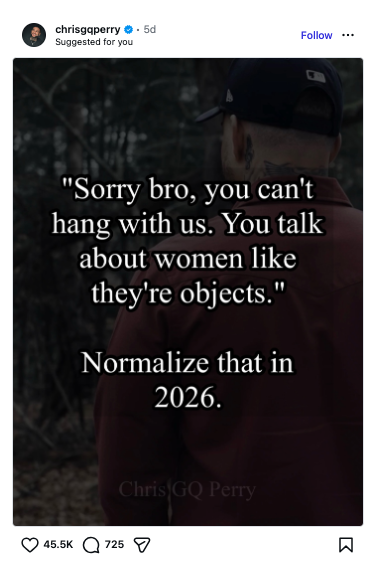
Today’s blog is really a question about the post above: What do you think it will take for you to have players on your team who actually go forward with that kind of boundary setting in their circles of male friendship?
I love the idea of it. Clearly, with TeamsOfMen, I’ve been working toward some version of this existing in team rooms all over the country for the better part of a decade. But like I tell my staff when we’re game planning, I’m worried this won’t survive contact with reality.
It’s one thing for our guys to nod along in a session. It’s one thing for them to agree when the coach, the room, and the moment are all aligned. It is something entirely different for them to carry that same conviction into the locker room, the group chat, the lunch table, the party, the ride home, or the friend group where the real social pressure lives.
So if we’re being honest, what do you think they need from us to make this type of comment the norm in male friend groups?
I have my opinions, and I’ve built curriculum over the past decade trying to move this forward. But you are on the ground with your guys every day. You hear the way they talk. You know what they laugh at, what they let slide, what they are afraid to challenge.
What are they lacking right now?
What are they afraid of right now?
Is it fear of losing status? Fear of being clowned by the group? Fear of being seen as soft, disloyal, or doing “too much”? Is it that they still don’t have the language to interrupt harmful talk in real time? Or is it deeper than that — that they still don’t believe the room will back them when they do?
Because that is the real test of this work. Not whether they can say the right thing in our session. Whether they can say it when it costs them something. That’s the question I’m sitting with today, and I’d love to hear what you’re seeing from where you coach.
Coach Prompts
Where does your team currently break down between agreement in the room and action outside of it?
What fears or social costs are most present for your players right now?
What tools, language, and team norms need to be built before accountability becomes peer-led?
Player Prompts
What makes it hard to challenge a friend when you know something is off?
What are you most worried will happen if you speak up?
What would make it easier to set boundaries in your own friend group?
Selective Outrage Is Still the Script
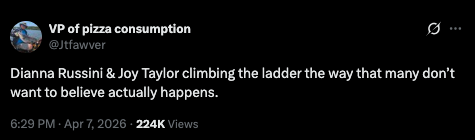
So this is an example of the social media fire lit by the sharing of images allegedly showing Patriots HC Mike Vrabel and NYT football reporter Dianna Russini spending time together at an adults-only resort in Arizona. BOTH are married to other people, and this appears to raise issues not only for those personal situations, but also around the idea of journalistic integrity.
IF the photos posted are truly showing infidelity, I suppose this type of comment is expected. (The add-on of Joy Taylor is based on allegations of her behavior at FS1 while growing her career imprint.) But this is where the TeamsOfMen conversation begins.
Why is there such a quick erasure of disdain for Vrabel — and for any other men on the other side of the “she slept her way to the top” coin? The woman becomes the center of the outrage, the villain of the story, the one whose career legitimacy gets put on trial. Meanwhile, the man involved often fades into the background as if he were simply present rather than an active participant.
Let’s say for a moment the allegations are true. He is married. He made a decision. He is also someone entrusted with leadership, judgment, and representing an organization. Those qualities are not just football words. Those are life words. So why does the public response so often erase disdain for the man on the other side of the story?
This is Manbox framing 101.
The script teaches us to blame women, repeat the same lazy tropes about men being wired to sleep with whatever moves, and then quietly erase consequence and responsibility for male action. Somehow the woman is framed as the architect while the man is cast as powerless, confused, or simply overtaken by temptation. Come on.
That framing is not just intellectually dishonest. It is dangerous.
Because if a woman is supposedly “using sex to climb,” then by definition there is a man in power who is willing to exchange opportunity, salary, access, promotion, or protection for sexual access. That does not make him invisible. That makes him equally accountable.
Our guys need help seeing this script when it shows up in the world around them. The lesson is not about celebrity gossip. The lesson is about how quickly culture defaults to shielding male agency while putting women on trial. If we don’t name that, we are reinforcing the same belief system that excuses harm in locker rooms, classrooms, workplaces, and relationships.
And here’s the part that matters most to me: this cycle almost always moves on faster for the man. By preseason, the sports world will likely tell us to focus on the next opponent and let the story die. Meanwhile, the woman may continue to face attacks on her credibility, her career, and her character long after the headlines fade.
That imbalance is the lesson.
Once our players can see the script, they can stop unconsciously living inside it.
Coach Prompts
When stories like this hit social media, whose responsibility does your team instinctively focus on first?
What language around men’s “nature” have your players been taught that might excuse accountability?
How do we help athletes separate attraction, power, and responsibility?
Player Prompts
Why do you think public blame so often lands first and hardest on the woman?
Can someone in power claim they were not responsible for the choice they made?
Where do you see this same script show up in everyday life, not just celebrity stories?
Attraction Does Not Equal Access
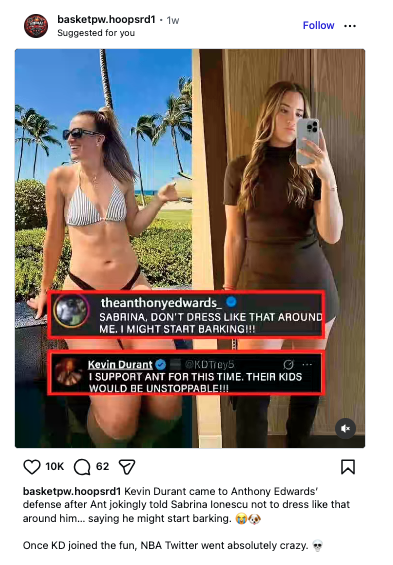
Let’s start today’s blog with an important qualifier: we do not know if this was actually posted by Anthony Edwards and Kevin Durant in response to Sabrina Ionescu’s Instagram post. In the age of AI, edited screenshots, and fake quote cards, we have to be disciplined enough to acknowledge the possibility that it is fabricated.
But here’s the thing: even if it’s fake, I still think it is absolutely worth sharing with a group of male athletes.
Why?
Because someone in that room is going to believe it was posted by NBA players. And even more importantly, someone in that room is going to resonate with the sexualization of a WNBA star in the comments.
That’s the conversation.
This becomes a launch point to talk with your guys about catcalling, about online harassment, and about the dangerous leap from I find someone attractive to I have the right to comment on their body.
Attraction does not equal access.
Someone being proud of their body does not mean they are asking for over-sexualized comments in their feed.
Someone posting a picture of themselves does not create permission for you to turn their comment section into a locker room.
That’s the line.
And this is exactly where our guys are being trained every single day by the content ecosystem around them.
You can even go deeper into the comment section responses, where people start saying things like, “Sabrina’s husband would kick their ass.” That reaction deserves unpacking too, because even the instinct to respond through possessive protection can be deeply rooted in manbox thinking.
It shifts the conversation from respect for her autonomy and dignity to protection through ownership. That matters. Because now we’re not just talking about inappropriate comments — we’re talking about the scripts boys are constantly being fed:
Women’s bodies as public property
Male attention as normal
Protection as possession
Attraction as entitlement
This is the type of daily force-feeding the algorithm is giving our guys. We have to be willing to create spaces dedicated to unpacking it. If we don’t, the feed will educate them for us.
Coach Prompts
What are your players learning from the content they consume every day?
How do you talk about online harassment in your program?
Where does attraction cross into entitlement?
Player Prompts
What’s the difference between attraction and entitlement?
Why do some guys feel the need to comment sexually online?
Have you ever seen a comment section cross the line?
April Cannot Be Foreign To Coaches
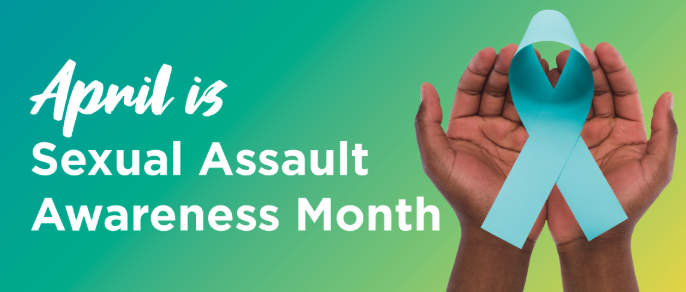
Today’s blog is going to start with this image because I want to begin with a simple question: How many coaches reading this today are even aware that April is Sexual Assault Awareness Month? My honest guess is that the number is lower than it should be.
I was unaware too until a sort of ha moment back in 2013 that, in many ways, launched TeamsOfMen in the first place. I’ve told that story enough times that I won’t repeat the full version here, but I do want to reemphasize something that I sometimes have to remind myself of: my education and journey into identifying the manbox, and the subsequent work to help other men escape it, was originally rooted in my horror at the thought of my players ever being involved in sexual assault.
The original question that sat in my gut was simple and urgent: How can I possibly be part of the solution here? How can we stop this from happening to women on college campuses at the hands of male athletes? That was the launch point.
As my ecosystem of support grew — mentors, experts, books, educators, advocates — I began to recognize that these harmful choices were not random. They were often rooted in allegiance to manbox thinking and in the desperate need to prove a “man card” through conquest, achievement, and control, including sexual conquest. That realization widened the work. It moved from simply reacting to harm into trying to understand the identity scripts that were helping produce it.
But if I’m being honest, I sometimes have to remind myself of where this started.
Even though I deeply believe the solution is rooted in reeducating men around what drives their identity, I do not want to lose sight of the fact that making the world safer for women was the launch and remains the goal.
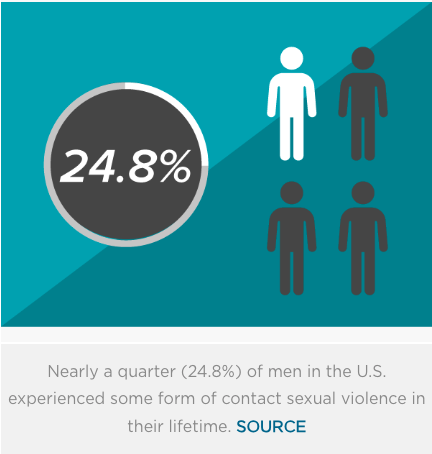
In trying to grow the message, I’ve sometimes focused more on the frames I think coaches of men will gravitate toward. The second graphic above is one example. Nearly a quarter of men in the U.S. report experiencing some form of contact sexual violence in their lifetime. If you do simple math and you’re coaching a roster of 100 football players, that means roughly 25 young men under your guidance may themselves be survivors. That matters deeply, and it absolutely belongs in this work.
But I also recognize the risk in over-rotating toward what feels most “coachable” or what is easiest to get buy-in around. If I’m not careful, that can miss the point that women are still disproportionately catching the brunt of the poor choices, entitlement, coercion, and violence that manbox thinking helps normalize.
I have not found the perfect balance yet.
And maybe that’s the wrong goal anyway.
This probably isn’t something solved by a neat equation of this percentage of content goes here and this percentage goes there. It is probably something I have to keep navigating, revisiting, and auditing in real time.
But as you read this during April, I want this part to land:
If we are serious about building the “good men” we claim we are trying to develop, Sexual Assault Awareness Month cannot be a foreign concept in our spaces.
Coach Prompts
Were you aware that April is Sexual Assault Awareness Month?
How explicitly does your program address consent and harm prevention?
Where have you drifted from your original purpose as a coach?
Player Prompts
What messages have you received about consent and respect?
How do guys your age talk about relationships and sex?
Where do harmful ideas about masculinity show up most?
Geno, Dawn and a Temper Tantrum In Prime Time
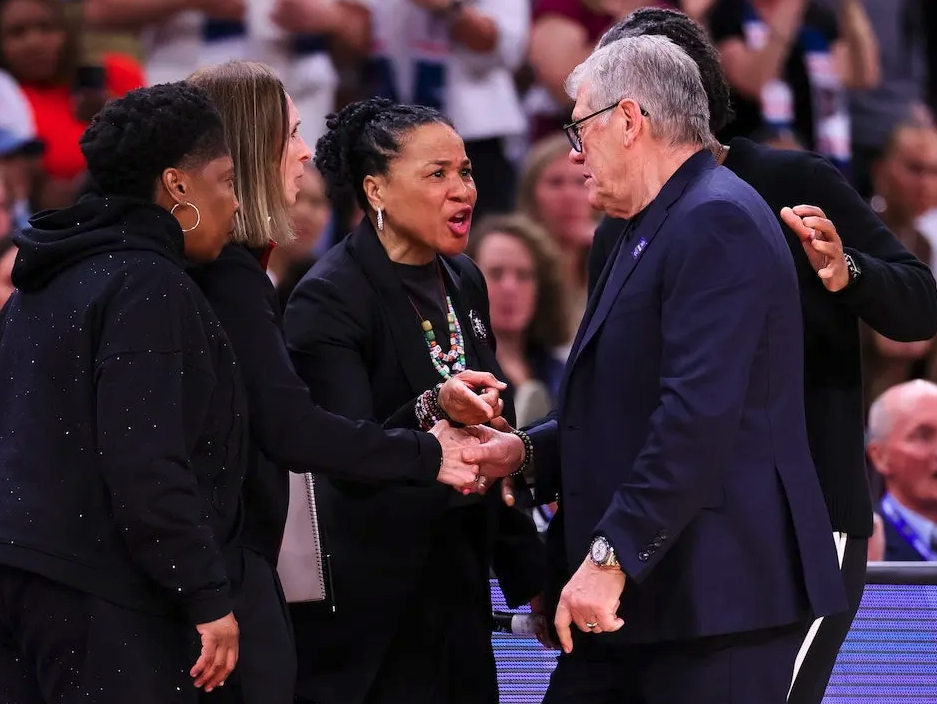
I don’t usually write 30 Second Timeout blogs on the weekend, but what Geno Auriemma did Friday night at the Women’s Final Four — and maybe even more infuriating, the subsequent coverage of it — left me needing a place to vent.
Aside from Chiney Ogwumike and Andraya Carter rightfully taking Auriemma to task, so much of the framing around his postgame antics with Dawn Staley has followed a script we see over and over when men try to escape consequence for causing harm: DARVO — deny, attack, and reverse victim and offender.
What Geno did, in my view, was throw a hissy fit after getting his ass whipped and then immediately try to create the illusion that he was actually the one who had been wronged. He claimed he was left waiting a “whopping three minutes” for a pregame handshake, even though video showed Staley greeting him and his entire staff during warmups. He then tried to wrap his ranting in the blanket of “tradition,” as if invoking this is how it’s always been somehow transforms bad behavior into justified behavior.
And then came the apologists.
Almost immediately, people began assigning him tactical-genius foresight, claiming he had somehow “sacrificed himself” to take pressure off stars like Azzi Fudd and Sarah Strong after the loss. If that sounds eerily similar to the 4D chess narratives people use to explain away harmful behavior from powerful men elsewhere (paging the White House), you’re picking up what I’m putting down.
No. Make no mistake. Geno was a sore loser Friday night.
He threw a temper tantrum in front of the world.
This is the same man who is always ready with a quote about bad body language, about how soft the world is becoming, about standards and toughness — and yet when his own team got dominated for forty minutes, suddenly all that accountability language disappeared.
The irony is staggering.
This is also not isolated behavior. The man has undeniably won at a level few ever will, and yet he has repeatedly found himself in conflict with his female peers — from Pat Summitt to Muffet McGraw and now Dawn Staley.
On Friday, when his juggernaut was on life support, his response was to rant about officiating, portray Dawn Staley as the unhinged one, and manufacture grievance. Part of that included his comments about “the language she gets to use with officials,” which lands in a much deeper and far more dangerous historical script. Too often, language like that is deployed to dehumanize Black people — and Black women in particular — by casting their passion, advocacy, or frustration as threatening, irrational, or out of control.
In this moment, it felt less like a neutral observation and more like an attempt to paint Staley as the volatile one while he positioned himself as the wronged party. That framing matters. It taps into a long-standing cultural reflex to read Black emotion as aggression and white male emotion as intensity or competitiveness. He wanted sympathy over a “ripped jersey” that replays appeared to show his own player had done to herself. He stormed off instead of walking the handshake line after the buzzer. His players stayed. They did what leaders in their own right do: they honored the moment and the people who beat them.
Then, somehow, he still positioned himself in the postgame as the steadying presence, the shoulder-rubber, the paternal figure beside Fudd as she struggled to process the loss publicly.
Why does this belong in a TeamsOfMen blog?
Because it is a case study in what lengths men deeply rooted in the manbox will go to in order to excuse behavior they willingly chose. It shows how quickly a culture built on old myths and tropes bends reality to preserve the image of a powerful man as misunderstood hero rather than accountable adult.
And, as Chiney Ogwumike so eloquently pointed out, it once again shows how our ecosystem so often requires women — and especially Black women — to stand ten toes down in their dignity while simultaneously rescuing men from their own emotional illiteracy.
That, too, is part of the script.
Coach Prompts
How do you respond publicly when things don’t go your way?
What accountability standards do you apply to yourself after a loss?
Where have you seen DARVO show up in coaching culture?
Player Prompts
What does respectful losing look like?
How do you react when you feel embarrassed or exposed?
Have you ever seen someone reverse blame after doing harm?
Winning Is Not Behavioral Proof
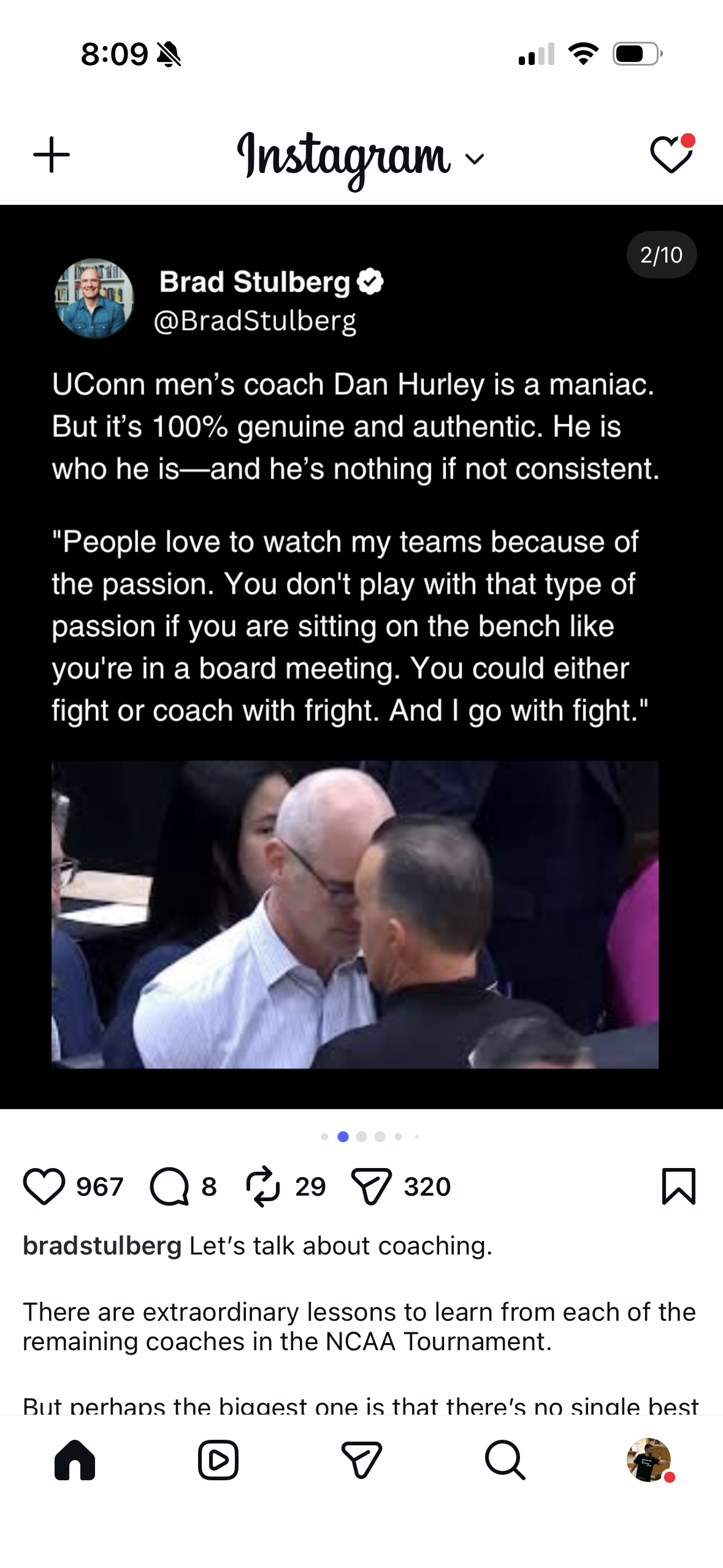
At this point in the blog, and with this being the fourth or fifth post featuring something Dan Hurley did, we should almost require everyone reading to ask themselves one question:
Is Dan Hurley’s on-court success something I would be willing to experience in exchange for behaving like him?
That, to me, is the actual reflection point here. Winning cannot become an automatic eraser of everything attached to how it was achieved.
There are so many false equivalencies wrapped into this statement — and I should probably tag this as allegedly by Dan Hurley, because in today’s internet culture quotes are often cleaned up, paraphrased, or outright misattributed — that it is honestly hard to know where to begin. The first one is the “100% genuine and authentic” line. On its face, that sounds admirable. Of course we want coaches and men to be genuine. But authenticity becomes a problem the moment it is used as a shield against growth. The phrase “that’s just who I am” has too often become permission for men to stop evolving. If someone is quick to rage, emotionally illiterate, or verbally abusive, labeling it as authenticity does not suddenly make it healthy. Authenticity without evolution is just stagnation with better branding.
The second false equivalency is the leap from Hurley’s sideline demeanor to the idea that this is why his teams play hard. That part is where I recoil most. I do not have the accolades Coach Hurley has. I can acknowledge that without hesitation. But I have coached teams that have been repeatedly complimented on how hard they compete, how fiercely they defend, and how relentlessly they play for one another — and I do not conduct myself like a raging lunatic on the sideline. The idea that hard play must be born from hard conduct by the coach is lazy thinking. Sometimes teams play hard because they are talented, deeply connected, accountable to one another, and bought into a shared standard. To reduce that to “they only play this way because coach acts like a maniac” is an easy narrative, but it is not proof.
Then there is the “fight or fright” framing, which really loses me. Beyond being a false binary for coaching conduct, it also badly misuses the language of trauma response. Fight and fright are not motivational styles a person consciously selects in the moment. Trauma responses are involuntary nervous system reactions under perceived threat, and there are more than just two. We know the broader framework includes fight, flight, freeze, fawn, and flock. These are not coaching identities to choose from. They are human responses that require awareness and processing. To casually turn that into a coaching philosophy gives far too much cover to outdated tropes about domination, aggression, and intimidation.
Honestly, this kind of quote becomes fuel for coaches who already want permission to double down on old methods because one highly visible coach won banners with it. That is the danger. One coach, one system, one roster, one set of circumstances gets elevated into doctrine. We have to stop treating every successful coach’s public comment as if it were testimony from on high on how to coach young men. Winning is not moral proof. Success is not behavioral validation. And one coach’s path to championships does not need to become the blueprint for how all coaches treat people.
Coach Prompts
What parts of your coaching style do you defend as “just who I am” that may actually need growth?
Where have you mistaken intensity for effectiveness?
Do your players compete hard because of fear, connection, clarity, or culture? How do you know?
Player Prompts
What kind of coaching helps you compete at your highest level?
Is there a difference between being pushed and being disrespected? What is it?
When does intensity from a coach help you, and when does it shut you down?
The Language Of Legitimate Praise
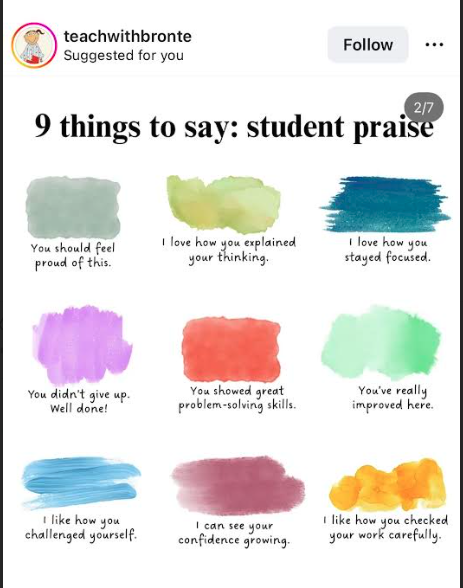
Today’s blog has to do with this post, originally by @teachwithbronte on Instagram, and it immediately caught my attention because in reimagining manhood, we have to level up our ability to authentically and honestly praise one another. For too long, we’ve settled for the quick “good job” or the high five, and while those are fine, too often we stop there. We haven’t built the habit of sharing genuine reasons we are impressed by one another, and going deeper has too often been framed in male spaces as “soft” or worse.
As coaches, we can fall into this trap too. We can underfeed our players legitimate praise—not fake hype, not empty compliments, but real, specific acknowledgment of what they are doing well. This is not to say these nine examples are perfect must-uses for you and your staff tomorrow. That’s not really the point. The point is that just skimming them should at the very least get your brain moving. What actually fits your voice? Which of these sounds like something you would genuinely say? Which could become a launchpad for phrases you create yourself?
I also think there’s something valuable in the shock value of using one of these with your guys for the first time. You say something like, “I love how you explained your thinking,” and you may immediately get, “What the heck does that mean, Coach?” Honestly, that’s perfect. Now you have a conversation. Now you’re not just praising effort, you’re teaching language, reflection, and meaning.
That’s modeling emotional growth. That’s connection building. That’s helping young men get more fluent in how they see and speak value in one another. Easy win-win.
Coach Prompts
How often is your praise specific instead of generic?
What kinds of growth do you notice but rarely say out loud?
What phrases sound authentic in your voice?
Player Prompts
What kind of praise actually means something to you?
When has someone named something specific you did well?
What’s harder for guys: giving praise or receiving it?
If The Human Is Struggling, So Is The Player
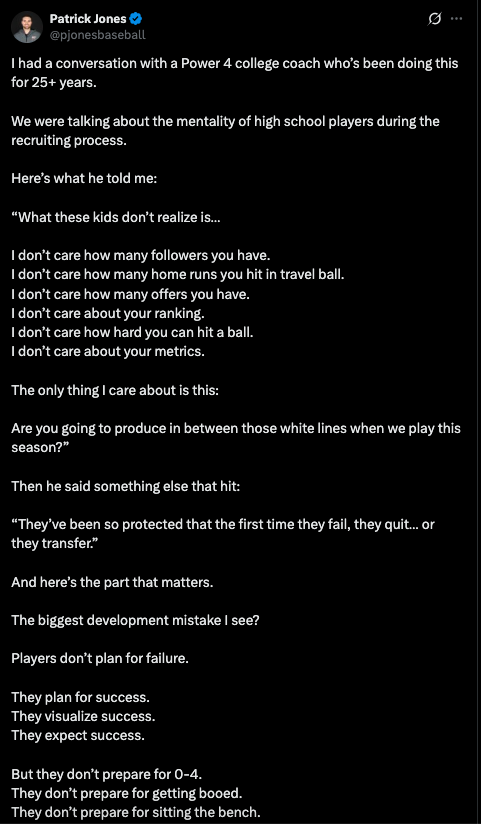
This isn’t the flex this post thinks it is.
Why?
Because of this line:
“The only thing I care about is this: Are you going to produce in between those white lines when we play this season?”
That, from this particular coach, says everything you need to know about the blind spot he has. Sure, at the Division I level, getting a player to perform on game day is a huge part of the job. No one is disputing that. But the idea that you can somehow separate his production from his humanity is where this framing loses me.
If a young man is operating under the belief that his worth is tied to the things this coach claims not to care about — followers, rankings, metrics, offers — then you are never going to reach the underlying force that is actually driving him.
You won’t reach what motivates him.
You won’t reach what destabilizes him.
And you certainly won’t reach what needs to change in order for growth to happen.
The post later moves into failure and the importance of having a plan for when things on the diamond get hard. That part is sound. Players absolutely need to be prepared for adversity.
For going 0-for-4.
For sitting the bench.
For getting booed.
But doesn’t that same logic require the coach to have plans and processes in place for when the human is struggling? Because if the player is lost in a world of looks-maxing, stat-maxing, and manosphere-style self-valuation, doesn’t it become the coach’s responsibility to have some strategy in place to interrupt that approach when it starts costing him performance? If that worldview is driving the slump, then you can’t coach the slump without coaching the worldview.
That’s the blind spot.
This myopic vision of what coaches do — and what supposedly “isn’t our job” — is exactly why TeamsOfMen exists. The man matters. How he feels. How he interprets the world. How he believes he is supposed to move through the world. That directly impacts how he plays.
Those things are intertwined.
And so is how you coach with how you operate as a person. You don’t get one without the other.
Coach Prompts
What parts of your players’ humanity are you pretending don’t affect performance?
What beliefs about worth and identity are driving their play?
Do you have a process for when the person is struggling, not just the athlete?
Player Prompts
What do you believe your worth is tied to right now?
How does how you feel off the field impact how you perform on it?
What happens to your confidence when success is your only identity?
What Arizona Planned For
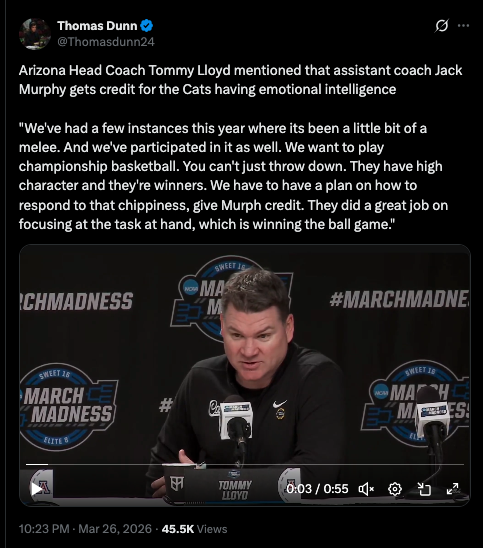
Today’s blog was inspired by this postgame quote from Arizona Head MBB Coach Tommy Lloyd after their Sweet 16 win. This time of year always creates an internal wrestling match for me as a coach.
March Madness is so tempting.
When you watch success on the biggest stage in college basketball, it is incredibly easy to start trying to steal whatever you think led to that success. Was it the BLOB with five seconds left? Was it the halftime adjustment to go zone instead of man in the upset game? Was it the roster construction of the Regional Champs that now suddenly becomes the blueprint — length above everything else, shooting at every spot, veteran guards?
Part of me always wants to study it like film and immediately ask, What do I need to take from this for my own program? And another part of me wonders if sometimes it’s okay to just sit back and enjoy the game for the entertainment it is, without immediately turning every possession into a coaching clinic. That back-and-forth lives in me every March.
But this quote from Coach Lloyd hit differently because it was about emotional regulation. It was about planning for the human moments that can lose you a game just as quickly as a busted coverage or bad late-game set.
He talks about how they had identified moments during the season where games started to tilt toward a melee, where emotional chippiness could derail what they were trying to do, and how they built a plan for responding to that.
That, to me, is refreshing.
So many coaches will have twenty late-game “special situation” packages and rehearse those over and over. But Arizona correctly identified that getting emotionally triggered into a stupid foul, a retaliatory shove, or a technical was just as vital to winning as a late-game home run set. And they built reps around it. They planned for it. They practiced it.
That’s exactly the philosophy behind our Meet The Moments work at TeamsOfMen.
We have built an entire Meet The Moments progression for teams to use in the first three weeks of any season so your staff is thinking about these exact kinds of non-scheme situations that still decide games.
What happens when a player gets taunted?
What happens when the officials miss three calls in a row?
What happens when frustration spills into confrontation?
What happens when a player wants revenge more than the next possession?
Because character under pressure is just as trainable as execution under pressure.
Kudos to the Wildcats for showing on a national stage that values, preparation, and emotional readiness are not separate from winning. They are winning.
Coach Prompts
What emotional moments in games repeatedly hurt your team?
What do you rehearse that isn’t Xs and Os?
How do your players respond to taunting, missed calls, or chippy play?
Player Prompts
What game moments make it hardest for you to stay composed?
How do you usually react when an opponent tries to get under your skin?
What helps you reset after a frustrating play or call?
The Monster He Named
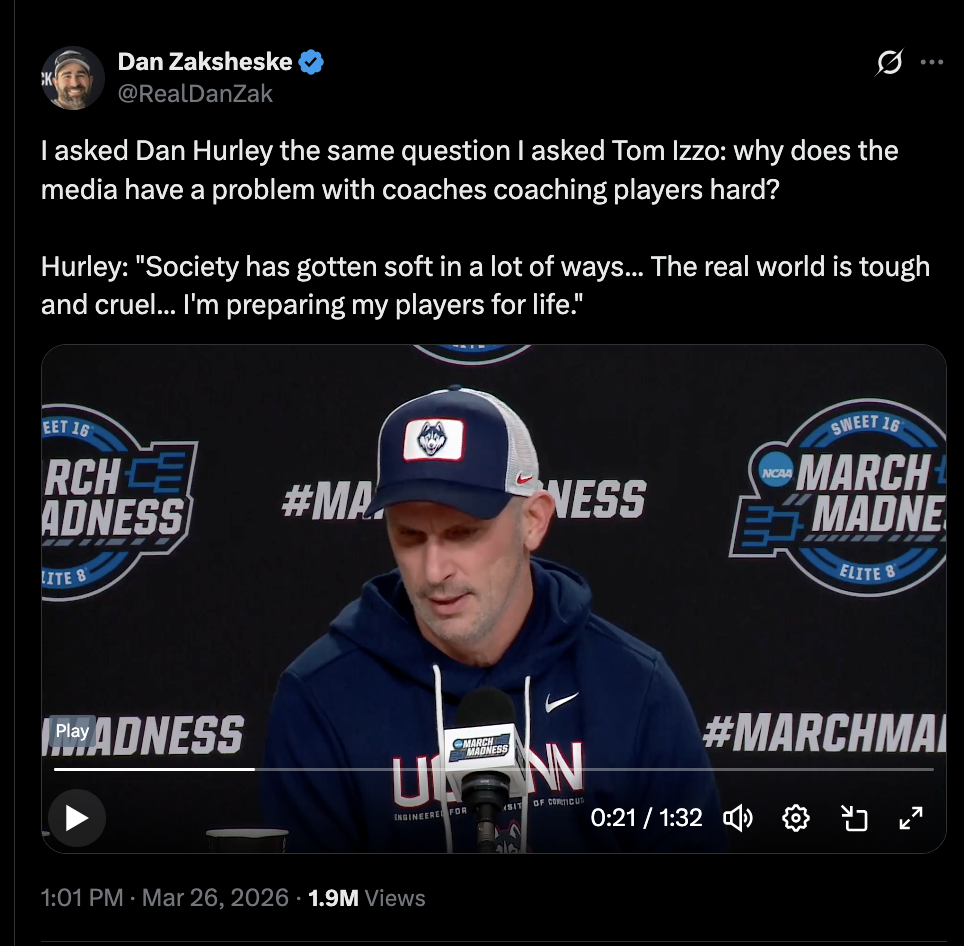
UCONN Head MBB Coach Dan Hurley (along with UCLA’s Mick Cronin) has become a frequent flashpoint in the coaching world—and for us here at TeamsOfMen. Hurley has won two national titles while displaying a sideline demeanor that at best is called “intense,” and at worst is clear emotional dysregulation and explosion. To his credit, he has been open about trying to regulate himself and reflect on his antics, but then is just as likely, as in this week’s press conference, to double down on what he believes is “hard coaching” in preparation for a “cruel world.”
In many ways, Hurley is the case study for this work. Can a coach be aware that parts of his behavior may be causing harm, but still believe those same behaviors are necessary because they’ve led to success? He is championed by the X’s and O’s crowd who see him as elite schematically, and also by coaches who would love the freedom to act however they want on the sideline and point to winning as justification.
In this recent press conference, you can hear him wrestling in real time. He answers a question about “hard coaching” by saying that we’ve “gotten soft” and that the teachers and coaches who impacted us most were the ones who pushed us, who made us do the work, who demanded more. On the surface, that idea isn’t problematic. But it starts with a Manbox entry point—“we’ve gotten soft”—which immediately frames any alternative approach as weak or unacceptable. Once that framing is in place, it becomes much easier to justify anything that follows.
Even the teacher example is telling. Yes, great teachers challenge you and hold standards. But do we really think those teachers were screaming, “you mf, you’re not getting a free pass on this test” when they handed it out? The idea of “hard” gets distorted from accountability and rigor into emotional volatility and aggression, and those are not the same thing.
What you’re really hearing underneath it is a familiar belief system: “I was pushed hard, maybe even treated harshly, and that’s why I became who I am.” And because of that, it becomes not just acceptable, but necessary to repeat. That’s the loop.
The most telling part of the interview comes later when he says, “They know I love them… there’s a lot the media doesn’t see… we laugh, we joke, we make fun of each other… sometimes you just see the monster.” That’s where it gets real. Because now you’re seeing a coach who wants connection, who wants to be a positive presence in his players’ lives, but is still defining that connection through old scripts. “We joke and make fun of each other” is often the stand-in men use for real connection, not proof of it.
And then there’s the line: “sometimes you just see the monster.” He names it. He gives it a separate identity. He acknowledges it shows up. He knows the outside world sees it. But the question that lingers for me is this—why can’t he say that his players see it? Why is the existence of that “monster” balanced out by laughter on a bus ride or joking in practice? Why is that considered enough?
That’s why Hurley is such a powerful case study. This isn’t someone unaware. This is someone aware, and still stuck in the tension between what he knows and what he’s always done.
And honestly, I’m grateful he’s sharing like this, because it shows a real journey in self-awareness. I just wish more of the conversations around him lived in this space of deeper analysis, instead of defaulting to the easy applause of “that’s hard coaching—it wins.”
Coach Prompts
Where are you aware of behaviors that don’t align with your values—but still justify them?
What parts of your coaching are rooted in “this is how I was coached”?
How do you define “hard coaching” vs harmful delivery?
Player Prompts
What’s the difference between being pushed and being disrespected?
How do you know when a coach actually cares about you?
Does joking and making fun of each other equal connection?
Not The Flex You Think It Is
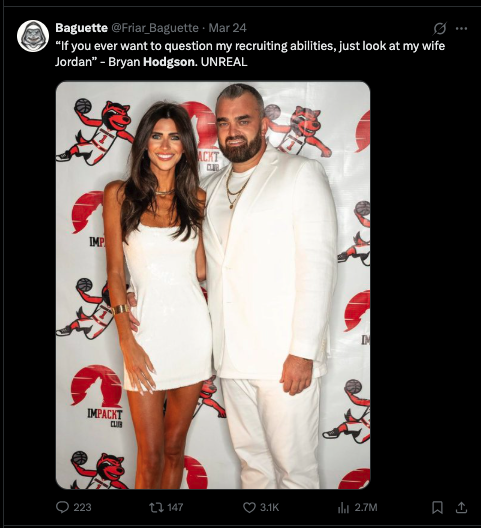
Today’s blog is in response to this viral quote from newly hired Providence Head MBB Coach Bryan Hodgson at his introductory press conference.
My immediate recoil is NOT about his wife. Not her appearance. Not her age. Not their relationship. A lot of the comments under this post went there. That’s personal. That’s out of bounds for me.
What isn’t out of bounds?
The comment itself.
Because to me, it’s an indicator of something deeper.
Here’s a man who has reached a high level in his profession — status, salary, opportunity — and is still feeling the need to appeal to the scoreboard of the Manbox to prove he belongs.
“I can do this job… because look at the conquest of my wife.”
That’s what’s being said underneath it. And that’s not a flex. That’s a self-loathing sentence wrapped up as a brag. It frames his relationship as a recruitment win. A campaign. A mission accomplished, instead of what it actually should be — a mutual journey with a life partner.
And then it goes a step further.
It subtly equates recruiting young men with that same logic:
“If I could land her, I can land them.”
That’s not the own people are celebrating it as. That’s a worldview. And if that worldview holds? Then “trophies” — surface-level wins, optics, status markers — will be the measurement of success in his program.
Not growth. Not humanity. Not development.
I hope I’m wrong.
But this is the kind of sentence that tells you a lot more than people think.
Coach Prompts
What “scoreboards” are you still trying to win approval from?
Where have you equated success with optics instead of substance?
How do you talk about your personal relationships in front of players?
Player Prompts
What does it mean to treat someone like a “trophy”?
Where do guys learn to connect success with women?
What’s the difference between partnership and possession?
You Don’t Need To Say It… But You Better Understand It
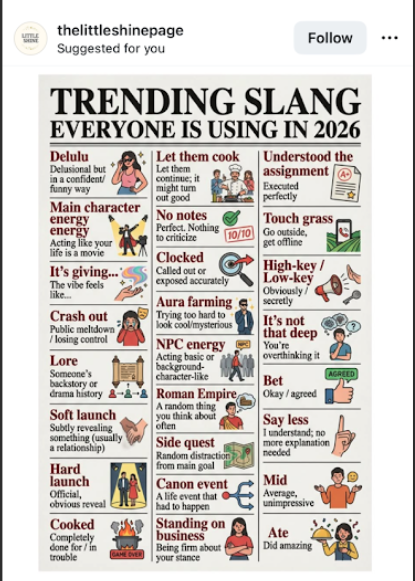
Today’s blog is about this list of “slang” terms in the graphic above.
Quick disclaimer:
I don’t know if all of these are still 2026 current, or already “old” in terms of how fast language moves.
What I do know is I’ve heard a lot of them — in my house (19, 17, and 13) and in my high school team room.
Now, I don’t know that it’s in a coach’s best interest to try and memorize these and use them. Kids will sniff out inauthenticity immediately. You running around yelling “main character energy” might get you a few laughs… but not the kind you’re aiming for.
But where this does matter? Your ears.
What are your players actually saying in those side conversations? Those small huddles that erupt in laughter? Are they talking about things we’re good with? Or are they reinforcing things that don’t align with the standards we claim in our program?
There’s also a fun entry point here.
Put this list up for your team.
Then ask you — or a brave member of your staff — to translate it into what your generation used.
Because let’s be honest: We were all young once. We all had slang. And we all thought the adults around us were out of touch.
Example:
I see “cooked” on here.
We used to say “toast.”
Same idea. Different era.
And here’s the real opportunity. Once you’ve got them laughing… Once the guard is down… Pick one of these terms. Not ten. Not the whole list.
One.
And run it through a TeamsOfMen lens. What does it mean? What does it reinforce? Is this something we actually want in our team language? Because language isn’t just communication. It’s culture. And if we’re serious about shaping culture…
We have to pay attention to what’s being said when we’re not the ones talking.
Coach Prompts
What language shows up most in your team’s informal conversations?
Are you aware of what your players are reinforcing with their slang?
Where have you tried to “fit in” instead of simply understanding?
Player Prompts
What slang do you and your friends use most often?
What do those words actually mean beyond the surface?
Do some phrases normalize things you don’t really agree with?
This Is What They Took With Them

At our post season awards banquet, my varsity players presented me with a thank you card and gift certificate for the season.
I was moved by it — not just because of what it said, but because of what it revealed.
And I’m not going to share the actual picture or their exact words.
Because they signed their names to that card with an unstated agreement:
“Coach Kip will read this… and Coach Kip only.”
Not the whole world.
And if I’m going to stand in front of them and preach about consent — about respecting what is shared, when it’s shared, and who it’s shared with — then I have to live that.
Some things are given. Some things are not. That matters.
Anway, back to what hit me.
The card speaks to what they felt I provided them as men.
And even if part of it was them “telling me what I wanted to hear”… it still matters.
Because it shows they know what I prioritize as a coach.
They didn’t write about wins. They didn’t write about stats. They didn’t write about playing time. They wrote about being pushed to be better people. About growth. About becoming a better version of themselves.
And that’s the reflection that stuck with me:
Your players may not always live it yet…
But they know what you stand for.
They know what you emphasize.
They know what matters in your space.
The question is — if your team wrote you that card… What would it say?
Coach Prompts
If your players wrote you a note today, what themes would show up?
What are you consistently reinforcing — intentionally or not?
Are your players clear on what matters most in your program?
Player Prompts
What has your coach actually taught you beyond the game?
When has a coach pushed you to grow as a person?
What do you think your coach values most?
What Actually Breaks the Manosphere’s Grip
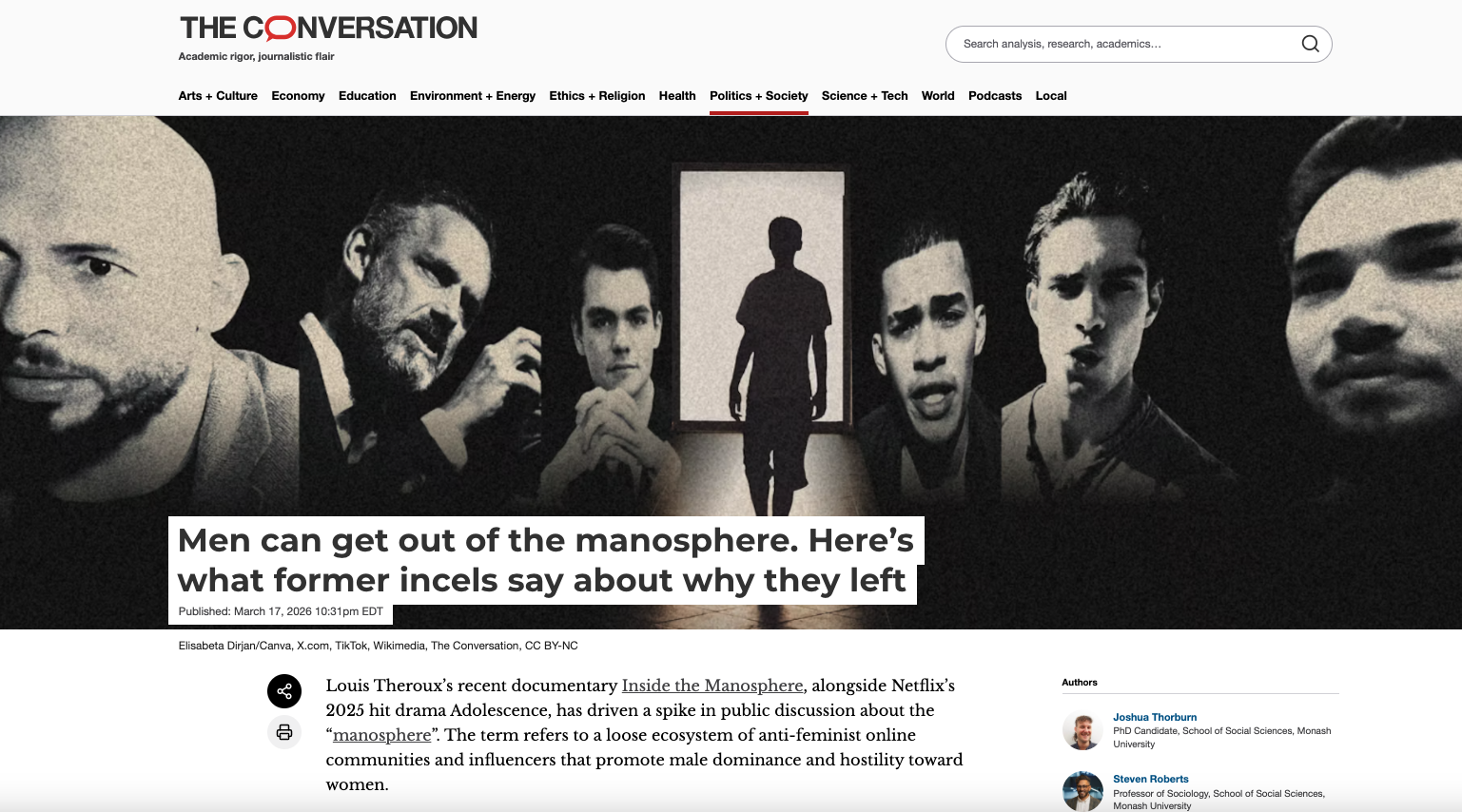
Today’s blog is in response to an article in The Conversation by Joshua Thorburn and Steven Roberts titled “Men can get out of the manosphere. Here’s what former incels say about why they left.”
Full credit for the share goes to a friend of ours, Dennis J. Barbour, Esq. (President and CEO, Partnership for Male Youth; Newsletter Editor).
Why this article for today?
Because it speaks directly to one of the HOPES we have at TeamsOfMen—that if you embrace this work in your coaching, you can help a player ESCAPE the manbox. But it also forces us to sit with two harder questions:
WHY do they get pulled into it in the first place?
And WHAT actually helps them get out?
I won’t lay out the entire article here (we live in an algorithm-dominated world—these authors need their clicks, so go give it to them), but two points hit hard.
First:
“A growing body of evidence suggests many men first encounter these communities during periods of insecurity or loneliness.”
And isn’t that exactly what we claim our SPORT is supposed to combat?
“Join us and you’ll get a family.”
“Play here and you’ll get brothers for life.”
But have we actually vetted our spaces to see if that’s true?
Second:
“Positive interactions with women, supportive friendships, or simply observing that relationships in the real world do not follow the rigid rules promoted online… can begin to undermine the worldview.”
Read that again.
Not lectures. Not punishments. Not one-off talks.
Experiences. Environments. Daily interactions.
If your program creates spaces—team room, bus, bench—where: emotional fluency is practiced, women, minorities, LGBTQ+ individuals are respected and celebrated and connection is real, not performative…it can counter the harmful ideology of the manbox.
That’s not theory. That’s proof.
The question is:
Are you creating that…or leaving space for something else to fill it?
Coach Prompts
Where are my players experiencing real belonging—and where are they not?
What messages about manhood are reinforced daily in my program (intentionally or not)?
Would an outside observer say our environment challenges harmful beliefs… or ignores them?
Player Prompts
When I feel insecure or alone, where do I go for answers?
What do I hear about women, relationships, and being a man from the people around me?
Do the spaces I’m in help me grow… or just help me fit in?
Would Your Players Say This About You?
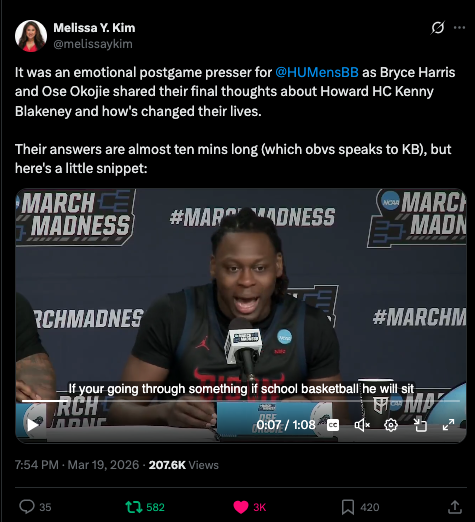
Today’s blog is a POSITIVE REFUELER from TeamsOfMen.
I know I spend a lot of time writing about the ways coaches—and the male athletes they serve—can get trapped in the Manbox and cause harm.
But this…
This is the other side of the work.
The postgame press conference from Howard University men's basketball seniors—speaking at length about the impact their head coach, Kenneth Blakeney, had on their humanity—is refreshing.
It speaks to the WHY behind this work.
It speaks to the delayed scoreboard we tell you about—the one you have to learn to value if you choose this path.
And it speaks to something a lot of us struggle with:
Sometimes getting your “flowers” has nothing to do with the scoreboard.
In this case, Howard had earned a trip to the Big Dance…
And this moment still came AFTER a loss to Michigan Wolverines men's basketball.
That matters.
Because it reframes what “winning” actually looks like.
I encourage you to watch it.
And then ask yourself—honestly:
Would my guys say this about me?
Should they say this about me?
Have I earned this?
And then make moves based on your answers.
Coach Prompts
What do your players value most about your leadership—effort, results, or how you treat them?
If your season ended tomorrow, what would your seniors say about you when you’re not in the room?
Where are you chasing scoreboard wins at the expense of long-term impact?
Player Prompts
What makes a coach someone you respect—not just someone you play for?
How has a coach impacted you beyond basketball?
What would you say about your coach if they weren’t in the room?
Appalling… But Not Surprising

Today’s blog is in response to an exploration of a horrific incident involving a high school boys program in Washington. I won’t rehash the details here—you can find those yourself.
What I will say is this:
It’s appalling… but NOT surprising.
“How can you say that, Kip?”
Because I’ve lived in, studied, and worked to change the reality of how young men—when in groups—police one another into the trappings of the Manbox. I KNOW the extent to which they will go to PROVE THEIR MANHOOD to each other. And in doing that, the things they are willing to DO TO ONE ANOTHER to solidify their status.
This doesn’t start with a moment like the one in the headlines.
It starts with what gets laughed at.
What gets ignored.
What gets excused.
What never gets talked about.
As coaches, we have to intentionally talk, model, and mandate that our spaces can identify the Manbox—and reject what it teaches.
Because if we don’t…
If we don’t level up the words our players use,
If we don’t challenge the lie that “being an alpha” is something to prove,
If we don’t teach them to see the humanity in others—especially those most often targeted in male spaces—
Then we are not neutral. We are allowing something to grow.
“Kip, you’re being dramatic…”
Ask the coaches in that program if they would have said the same thing when their season started. If you’re not sure how your team would respond in a moment like this… that’s the work.
This is the type of work we don’t just talk about—we build plans around—at the 3rd Annual Active Agent Summit.
Your team room can either be a launchpad for growth… or a space where harm goes unchallenged.
Coach Prompts
What gets laughed at in your team space right now?
When was the last time you directly challenged harmful language or behavior—and what happened after?
If something serious happened in your locker room, who would your players go to first?
Player Prompts
What does “proving manhood” look like in your friend group or team?
What’s something you’ve seen or heard that didn’t sit right—but you didn’t speak up about?
Who sets the tone in your locker room—and how do they do it?