
What This Research Should Make Coaches Question
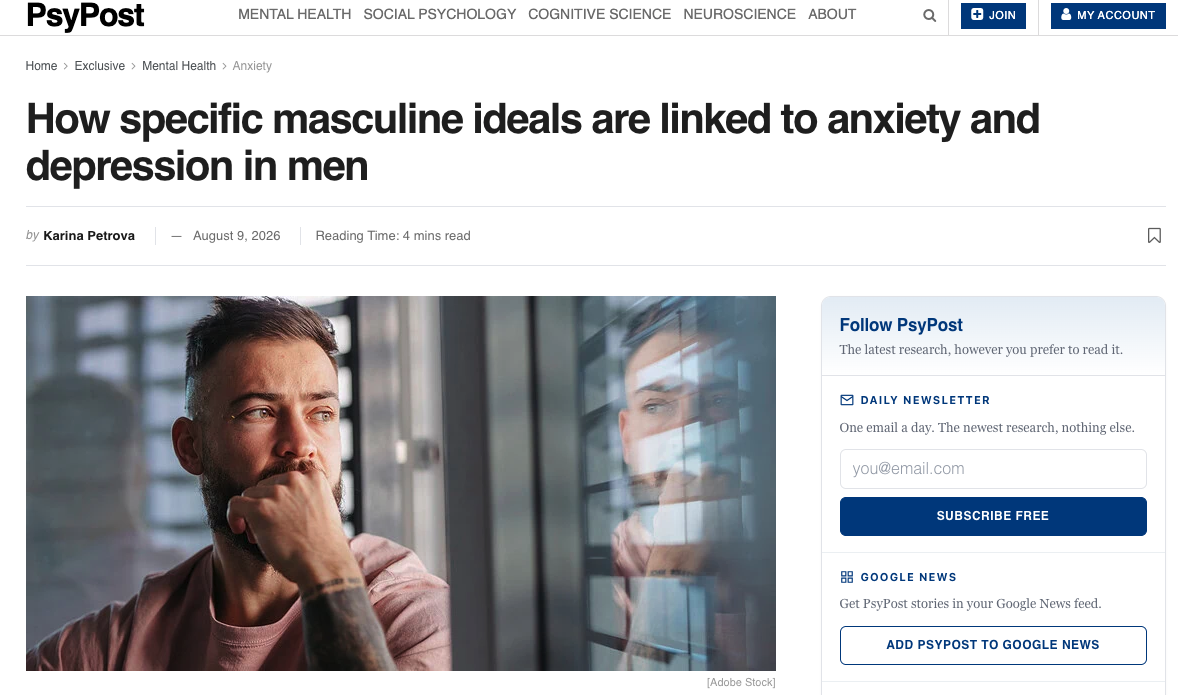
It’s been awhile since I shared one of his links, but Professor Michael G Flood on X is a must follow. In the early days of TeamsOfMen, I would wager he was one of our most retweeted and shared researchers on men, masculinities, gender, and violence prevention. The article screen grab above links to one of those “If Professor Flood shared this, it’s worth reading” moments.
As always, I don’t want to help you be lazy, so PLEASE go read the entire article. But, what the two bullet points I believe are vital for you, your staff and your players are below:
“…a recent survey reveals that specific norms—namely emotional suppression and extreme self-reliance—are uniquely linked to higher rates of anxiety and depression.”
“Men also face high rates of internalizing symptoms. Internalizing symptoms refer to mental health conditions where individuals direct psychological distress inward, rather than acting it out aggressively, with common examples including depression and anxiety disorders.”
Those two statements hold tremendous insight and ramifications for your program and players. If you accept, as TeamsOfMen believes, that your sport can be a driver of point number one (“hey man, you gotta be a dawg, you gotta handle your business out there on the field”) then we have to recognize that our spaces can reinforce some of the exact norms this research associates with higher rates of anxiety and depression.
And then, when distress does show up, how often does sport reinforce the silence described in point number two?(“we don’t got time for p***ies here man, get your -ish right and go ball out”). Now we’ve potentially reinforced the suppression AND made it harder for a young man to tell us what’s actually going on.
This is not to say “men can’t have stress in their lives.” To the contrary, I’m saying you need a plan for helping them process and move forward despite it. And that plan cannot be “drive it down and ignore it via gritting your teeth harder.” The research points to another option “Additionally, the authors suggest that school programs focusing on emotion labeling could help boys develop healthier emotional functioning long before they reach adulthood.”
I recognize not everyone is moved by fancy studies and scientific terminology (hell, in the article I first learned that “Alexithymia describes a personality trait characterized by a severe difficulty in identifying and describing one’s own emotions”) but think about the coaching implication of that for a second: How can a young man regulate an emotion he can’t even identify?
We don’t need coaches to become psychologists. But unfamiliar terminology can’t stop us from using every resource available to help our young men grow while in our care and playing our sport.
Coach Prompts
What messages do your athletes hear from your staff about what they should do when they're stressed, scared, overwhelmed or struggling?
Does your program teach athletes how to process difficult emotions, or mostly reward their ability to conceal them?
If a player couldn't identify what he was feeling beyond "good," "bad," "pissed" or "fine," what opportunities does your program currently give him to build that skill?
Player Prompts
What's the difference between controlling an emotion and pretending you aren't experiencing it?
When something is bothering you, what makes it easier—or harder—to tell someone else what's actually going on?
How good are you at identifying what you're feeling before it affects how you play, communicate or make decisions?
If today's post made you wonder whether your program actually teaches young men how to recognize and navigate difficult emotions—or simply expects them to figure it out—don't guess.
Click here to run the free Decision Confidence Analysis™ and discover where your program is reinforcing healthy decision-making—and where hidden gaps may still exist.
Who's Making Money Off Your Player’s Insecurity?
Despite 15 years and counting in the ecosystem that is “positive masculinity and the fight against the manosphere” I still find myself shocked by the appeal of the manbox. I still find myself shocked at how any person could land on ideas and beliefs that are harmful to themselves, to the people in their vicinity and to the community they live in.
Like, it literally makes no sense.
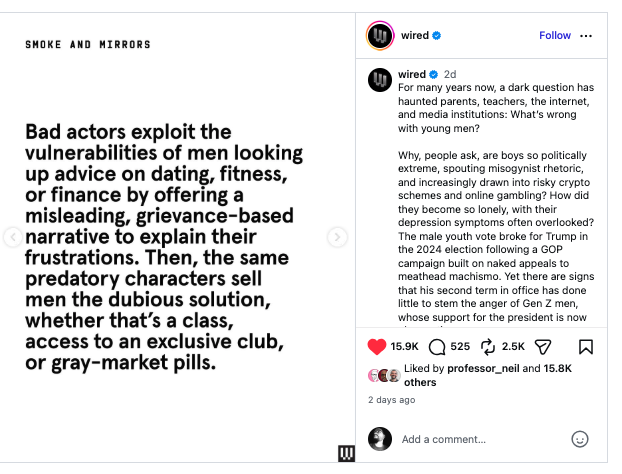
But leading with “WTF is wrong with you man” rarely moves anyone towards outcomes I would like to see so I’m always looking for entry points to the mindset in order to hopefully better position myself to help people find the exit sign. That being said, this framing (as laid out in a long IG carousel by @wired) is new and could be a break through.
I’ve never seen the economic “pyramid scheme” lens taken in our work but it absolutely makes sense. We know our society is full of opportunities to grift, and there is no shortage of folks willing to make a buck off the backs of someone’s suffering elsewhere. So of course, as the post lays out, it stands to reason that if manbox thinking has men (especially the 18-29 year old crowd) second guessing their looks, their body types, their dating life, of course there would be people offering phony ass solutions for a special “$49 today only” rate.
I won’t spoil the entire post (but will link to the study it cites by Equimundo here) because I think it warrants a read from you, a bullet break down for your staff AND ultimately a convo with your guys.
And imagine the power of presenting this to them—and, if you're a high school coach, their parents—not initially as a conversation about misogyny or masculinity, but about the financial shell game some online "gurus" are running on young men.
Who benefits financially from you believing you're not muscular enough? Not rich enough? Not getting enough women? Not "alpha" enough?
What happens to their business model if you actually become comfortable with yourself?
Coach Prompts
What online personalities are your athletes learning from about money, fitness, dating and masculinity—and which of those people are also selling them something?
How could financial literacy become an entry point for discussing manosphere content without immediately putting athletes on the defensive?
When an influencer identifies a problem young men supposedly have, how often are we teaching athletes to ask who benefits from them believing that problem exists?
Player Prompts
Think about someone online who regularly gives men advice: what does that person eventually want their audience to buy?
How can you tell the difference between someone helping you solve an insecurity and someone who financially benefits from keeping you insecure?
What would happen to an influencer's business if his followers eventually decided they were already good enough?
If today's post made you wonder whether your program is actually preparing young men to question the messages—and messengers—competing for their attention, don't guess.
Click here to run the free Decision Confidence Analysis™ and discover where your program is reinforcing healthy decision-making—and where hidden gaps may still exist.
"We Have Good Guys" Is Not a Prevention Plan
I struggle with the phrase “ambulance chaser.” On one hand, I know there is precedent for media to go towards “the flashing lights” so to speak to find something newsworthy. But on the other hand, I also know that awareness is a key component to driving change so sharing things that should raise alarm bells is necessary.
I’m leaning more on the latter today.
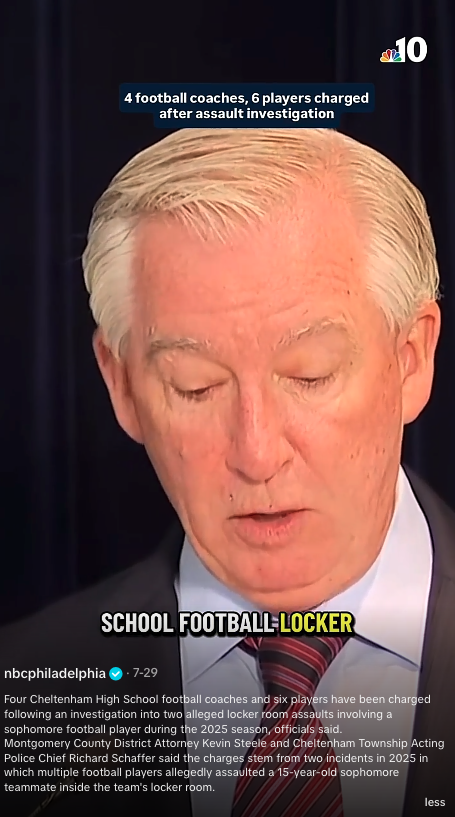
Let’s start by sharing the various reports about the debacle at Cheltenham HS (PA) and their football program. The video above and the article here detail an awful situation at Cheltenham High School in Pennsylvania, where a 15-year-old football player was allegedly assaulted twice in the locker room. Six players now face charges, and prosecutors allege four coaches subsequently attempted to cover up what happened.
A truly awful situation all around.
What’s the TeamsOfMen angle here (besides the obvious “We need to be molding better moral compasses in our guys”)? First, what’s the current plan you have for your players when the final bell rings on a HS campus and before the first whistle blows at practice? How long, how often and where are they unsupervised? If there are logistics at play that make staffing your spaces difficult, what early season conversations have you had that dictate the expectations in the locker room AND what “courage” looks like when you stand up for someone being bullied? Have your players ever actually practiced what intervention looks and sounds like when the person crossing the line is their teammate?
Those are just a few of the questions I would use as an AD and a Head Coach to ensure we have a plan of prevention not reaction to something this serious.
And to be clear, “Well, that won’t happen here because we have good guys” is NOT a solution.
Coach Prompts
Where and when are your athletes regularly together without direct adult supervision, and what expectations have you explicitly established for those spaces?
Have you taught your players what intervention actually looks and sounds like when a teammate is being humiliated, bullied, hazed or harmed?
If a player reported something serious to your staff today, does every coach know exactly what happens next—and who must be told?
Player Prompts
What makes it difficult to step in when the person doing something wrong is your teammate or friend?
What could you actually say or do if you saw a teammate being humiliated or harmed in the locker room?
At what point does watching, laughing, filming or staying silent make you part of what's happening?
If today's post made you wonder whether your program actually has a prevention system—or simply good intentions—don't guess.
Click here to run the free Decision Confidence Analysis™ and discover where your program is reinforcing healthy decision-making—and where hidden gaps may still exist.
The Coaching Myth We Keep Repeating
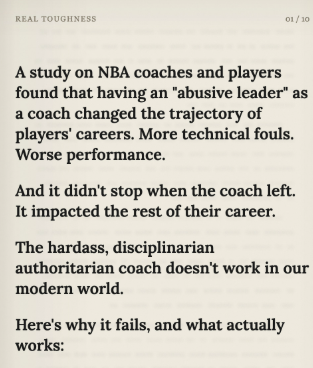
There's a phrase I've heard from coaches for years: "I was coached by a hardass, and look how good I turned out."
It’s a common cliche I hear a lot when I discuss what type of transformation someone’s coaching will undertake if you onboard TeamsOfMen, and something we push back against hard, usually via a “Well, I think you’re overestimating his significance and underestimating your own resilience”. But maybe this study will help folks identify that it literally DOES NOT produce the outcomes you think it does.
Posted on IG by @stevemagness, it not only details the career impact on NBA players of “hard ass coaching” (I’ll give you a hint: more techs, less points) but also lays out information on power dynamics, types of parenting models, and short term vs long term ability to make decisions on your own as both a player and person. These are all aspects of our job that we would want a study to reveal positive outcomes from using, when in fact this study reports poorer outcomes in several of the areas coaches often care about most.
This likely is NOT a blog post you want to share with your players, but rather use exclusively with your staff in the preseason before you launch a campaign. Is this worth our time to reevaluate the way we go about our jobs? Because if the report is true and “…they are only ‘tough’ when someone they fear is right next to them” we aren’t preparing then we're preparing athletes to perform under surveillance, not to make good decisions independently.
Coach Prompts
When you think of the toughest coach you've ever had, which lessons came from accountability and which came despite fear?
How would you distinguish between demanding excellence and leading through intimidation?
What behaviors do your athletes display when you're not in the room, and what does that reveal about your coaching?
If today's post made you wonder whether your coaching system is building independent decision-makers or simply compliant athletes, don't guess.
Click here to run the free Decision Confidence Analysis™ and discover where your program is reinforcing healthy decision-making—and where hidden gaps may still exist.
Strength Needs a Counterweight
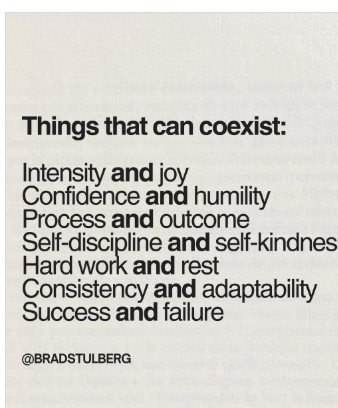
How many of the words on the right side of the graphic in the IG post above from @bradstulberg are welcome in your program? How often do you hear your male athletes use those words when talking about themselves, their teammates, or your program?
I ask because I have a sneaking suspicion that the left side words spend a lot of time existing in your world. I would wager that they are probably even championed by signs, shirts and slogans you use often. And I’m not arguing that that is a bad thing either.
I’m simply arguing that the words on the right describe states of being that are just as important as the words on the left. I’m arguing that the words on the right are just as much ingredients to winning as the others are. The manbox has taught us to see those traits as soft...But, as the original author argues, there is plenty of space alongside their companions and much NEEDED space at that. In many of the comparisons, they are the balancer, the leveling out component someone needs to become well rounded. Consistency can become a trap without adaptability. Confidence devolves quickly to cockiness without humility. The examples are numerous.
So, the main question I pose today to staff’s reading this: If you leave no stone unturned searching for balance in your offense, defense, or training plan, why wouldn't you pursue that same balance in the character traits your program celebrates?
The goal isn't replacing one side with the other. It's recognizing that the best competitors learn to hold both at the same time.
Coach Prompts
Which words from the right-hand column would your players say are genuinely celebrated in your program—and which are rarely acknowledged?
Are there qualities your athletes privately value but publicly avoid because they don't fit the image of toughness?
How intentionally do your slogans, praise, and corrections reinforce balance rather than extremes?
Player Prompts
Which pair on this graphic feels hardest to hold at the same time? Why?
Which word from the right-hand column do you think takes the most courage to live out as a male athlete?
If someone watched your team for a week, which words from this graphic would they use to describe you?
If today's post made you wonder which traits your program consistently celebrates—and which ones unintentionally get left behind—don't guess.
Click here to run the free Decision Confidence Analysis™ and discover where your program is reinforcing healthy decision-making—and where hidden gaps may still exist.
Is Your Locker Room Anyone's Favorite Place?
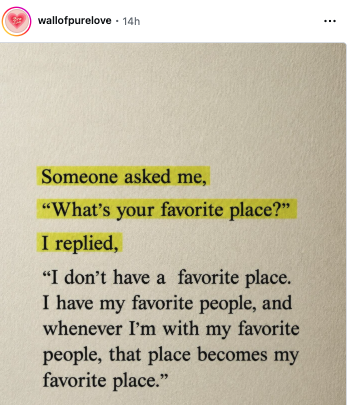
I’m not going to lie, I’m writing today’s blog with no clear cut landing spot in mind. What do you I mean by that? Typically, when I start these, I’m struck by a post or news item and I know in my mind the scaffoldings I’m going to build in my writing to both correctly frame the incident for a coach of male athletes AND what piece of TeamsOfMen philosophy it ties to.
Today is different.
The quote above (originally posted on IG by @wallofpurelove) stopped my scrolling. I nodded my head along with the sentiment, and thought “there’s blog here” but honestly, I wasn’t exactly sure what angle or frame I wanted to put on it. There were many candidates in my mind, including :
Men need a 3rd space (that isn’t HOME and JOB)
Can teams really offer valuable 3rd spaces if the space is filled with people they don’t trust?
Does favorite people always include teammates?
Power in your favorite place being fluid and nimble rather than static (and more susceptible to being taken away from you)
Do favorite places have to be free of strife
But then I thought “That's exactly what makes this quote useful.” and that means open to discussion and framing from your guys, not necessarily from you. This is one of those ToM sessions you can run by simply putting the quote/graphic up on your wall (or say out loud) and let them lead the room. Let them discuss it in pairs, small groups, or as an entire team, what defines favorite space, how they would label their own, and what qualities they think your space should have to even be considered a favorite space.
One final qualifier I would add for you and your staff: If one of your athletes honestly said, "I love this sport, but this locker room, weight room, or practice field isn't one of my favorite places to be," what would that tell you about your program?
Coach Prompts
What qualities would your athletes say make a space feel safe, welcoming, and worth returning to?
If your locker room disappeared tomorrow, what relationships would your players miss most?
How much of your program's environment is intentionally designed versus simply inherited?
Player Prompts
Who are the people that make a place feel like your favorite place?
Can a place still be one of your favorites even when it's difficult or challenging? Why?
If someone visited your team's locker room for the first time, what would they experience that might make them want to come back?
What Happens When Girls Walk Into the Weight Room?
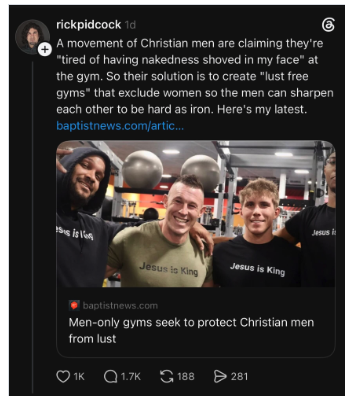
I want you to think about last season for a minute. Go back to last season and picture the two or three places your team gathered most often to practice, lift, or train. Got the images?
Now, I want you to remember times a young woman, a group of women or a team in your athletic department of women walked through those spaces. How did you guys act? Was there cat calling? Was there snickering? Was it business as usual?
Why did I start today’s blog with this? Because the post I screenshotted to share above (originally posted on IG by @mentalhealness) is probably one you could share in a one off with your guys. Put it up, ask them to think about the weight room, and then walk through how ridiculous it is for a group of guys to admit (without knowing it) that they are unable to finish their own set of weights simply because a woman is present.
As if women wake up every morning and choose their workout attire to tempt men, as if women’s sole purpose on this earth is to convince men to have sex with them, and that men are so feeble of mind that they immediately go into a cartoon-like trance of assaulting anything that moves in their presence if skin is visible. The implication is that women bear responsibility for men's thoughts simply by existing in shared spaces. That shifts responsibility away from men's own choices and self-control. I HOPE you could share this and have that conversation with your guys.
However, I started this entry with the exercise I gave you because while your players may not be to this level of weaponized victimhood, they may have failed miserably in the moments I asked you to visualize. If you are a hoops coach, what happens in the transition time between the girls team leaving the floor and your guys taking the floor? If you’re a football coach, how do your guys behave while waiting for the soccer team to finish their practice before you take the field? If you are a strength coach, literally what happens when you have mixed gender training sessions (and if you avoid them, is it rooted in the silliness of the supposed Jesus is King guys in the graphic’s “lust free” desires)?
Today's post isn't really about these men or their gym. It's about using their argument to #MirrorTrain and examine what actually happens in your own spaces when women enter them.
Coach Prompts
Think about your shared athletic spaces. What behaviors consistently appear when girls or women enter the room?
Where are athletes receiving the clearest message about respect: during formal team meetings or in everyday transition moments?
If a female coach or athlete observed your team for one week, what would she say your culture communicates?
Player Prompts
Do you act any differently when girls or women enter the weight room or practice space? Why?
What message does your behavior send to someone who doesn't know you?
What does real self-control look like in shared spaces, and who is responsible for it?
Run Your Program's System Audit
If today's post made you wonder what your athletes actually communicate in the moments you're not addressing directly, don't guess.
Click here to run the free Decision Confidence Analysis™ and discover where your program is reinforcing healthy decision-making—and where hidden gaps may still exist.
Three Mirrors for Coaches

Let’s be clear: I’m not above snark.
I’m very okay with letting folks sit in some discomfort after being shown the hypocrisy of their own words vs their actions. That’s not an issue for me.
So, the slide show above (from IG poster @professorpolished) had me smiling through the scroll. But, it also sent me on a journey of “what would this type of show look like if it was pointed at the excuses I most often here in this work”?
So, after some brainstorming, I came up with around 25 of them, but I’ll just share 3 of them below
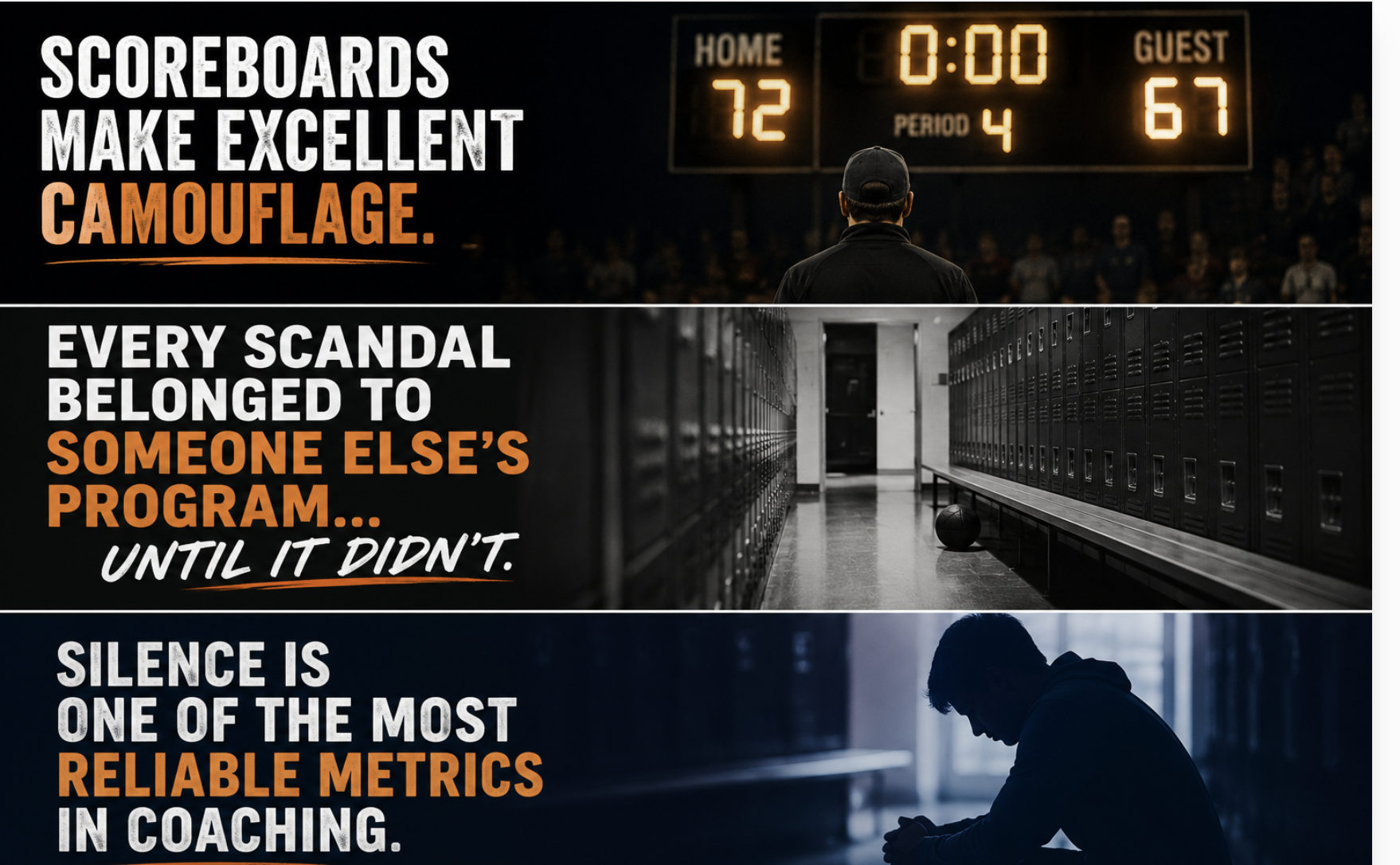
I will spare you all from explaining the biting “gotcha” moment of each, but I do want you to explore them and find for yourselves. Probably worth an exploration with your staff and or your players to, at the very least, find ways to disprove what I’m saying when applied to your program. If you can’t find concrete evidence that my statements are revealing the reality of how you coach your male athletes, it might be the impetus you need to change.
I might just know a guy you could call to get the ball rolling…
Coach Prompts
Which of the three statements made you immediately want to defend your program? Why?
What evidence—not intentions—would you point to that disproves each statement?
If your players anonymously answered these questions instead of you, would their answers match yours?
Player Prompts
Which statement do you think coaches most often miss? Why?
What does your team stay silent about that probably deserves more attention?
What parts of your team's culture are visible only when nobody from the coaching staff is around?
You wouldn't let your team run a game without a scout, but most programs leave their decision system entirely to chance.
If these statements made you even a little uncomfortable, don't guess whether they're true in your program.
Run the Decision Confidence Analysis™ (DeCA)—a free 15-minute system audit that helps coaches identify the invisible scripts, blind spots, and reinforcement patterns shaping how their athletes make decisions when no coach is around.
The report is free. The conversations it starts are often the most valuable part.
Take the DeCA and see what your program is actually teaching—not just what you hope it's teaching.
The Language Your Players Borrow
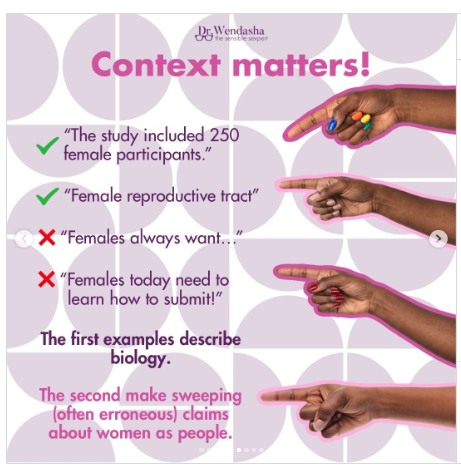
An excellent graphic from @thesensiblesexpert immediately made me think of two places I've heard the word "female" used.
NBA player Michael Porter Jr’s silly self on damn near every podcast he’s ever appeared on talking about “females be like” or “females are my vice”…
In my own team room, it's not something I hear every day, but I've heard it often enough that it caught my attention: "That's just how females are, man."
I think the entire slide show is worth your time, and this is an example of a session you can run as more educational than accusatory. My guess is many high school boys have never actually been taught the distinction. They've simply repeated language they've heard from peers, podcasts, social media, or adults. This doesn’t have to be a lecture from on high session where you come down on them necessarily.
More effective would be to approach it with “Have you heard this before” and “what context/what sentence structure did you hear it used”. Write all those out on the whiteboard and then launch into why using “females be like” should be avoided. As the author in the IG post points out, the issue isn't the word female. The issue is using a biological label in places where we'd normally refer to people as women. It subtly shifts the language away from personhood and toward categorization.
While I am loathe to sanitize any TeamsOfMen sessions (too often we hear people weaponize something like “meet them where they are” and really what they are asking for is “don’t make them feel bad” protection for men) but I do think semantics in language can be nuanced and this is a good opportunity to adjust tone. When the goal is learning rather than winning an argument, coaches can still be direct while helping athletes understand why language shapes the way we think about other people.
Coach Prompts
Where have you heard your athletes casually repeat language from podcasts, social media, or influencers without thinking about what it communicates?
How can you create space for players to examine language without making the conversation feel like a public shaming?
What everyday phrases have become "normal" in your locker room that deserve a closer look?
Player Prompts
Where do you think most of the phrases you use about girls and women originally came from?
When someone refers to a group as "females," what message do you think it sends compared with saying "women" or "girls"?
Can you think of words or phrases you've stopped using because you learned they affected people differently than you intended?
Run Your Program's System Audit
You wouldn't let your team play a game without a scouting report, yet most athletic programs leave their decision systems entirely to chance.
If today's post made you wonder what everyday messages your athletes are absorbing—and reinforcing—inside your locker room, don't guess.
Click here to run the free Decision Confidence Analysis™ and discover where your program is reinforcing healthy decision-making—and where hidden gaps may still exist.
The First Thing They Say Matters
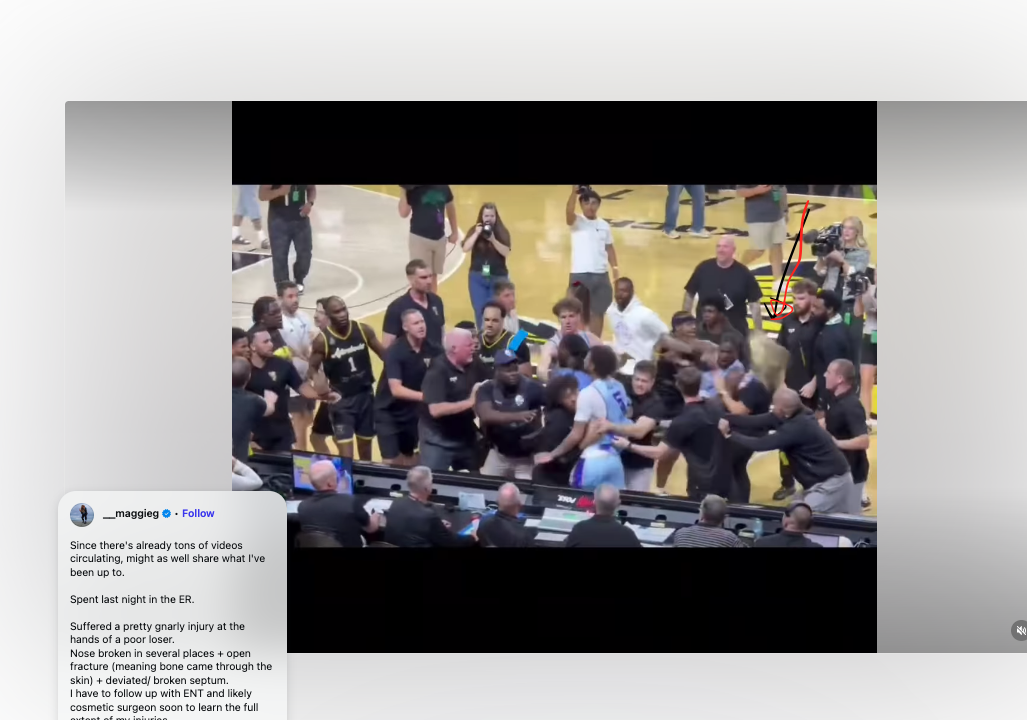
First assignment(s) before going any further in this blog:
Click on the image above and WATCH the video.
Pay particular attention to the woman on the right (red arrow I added to the screen grab above should help you find her).
Now, as you watch, you can also be given context that this happened post game of the TBT tourney and the team in blue had hit a buzzer beater to win on the team in black’s home floor (I don’t want to waste time going over the details of what the TBT is, who the two teams are, etc because to do so I think would lean into ‘hey, you gotta understand emotions were high” bullshit excuses people are already assigning to the melee that took place). The post is from the woman, and you can read the litany of injuries she suffered during this.
Now, play the video for your team and staff. Then, without any other questions or words from you or the players allowed, show the image below (whichshow the image below, which reflects a sentiment repeated throughout the comment section.)
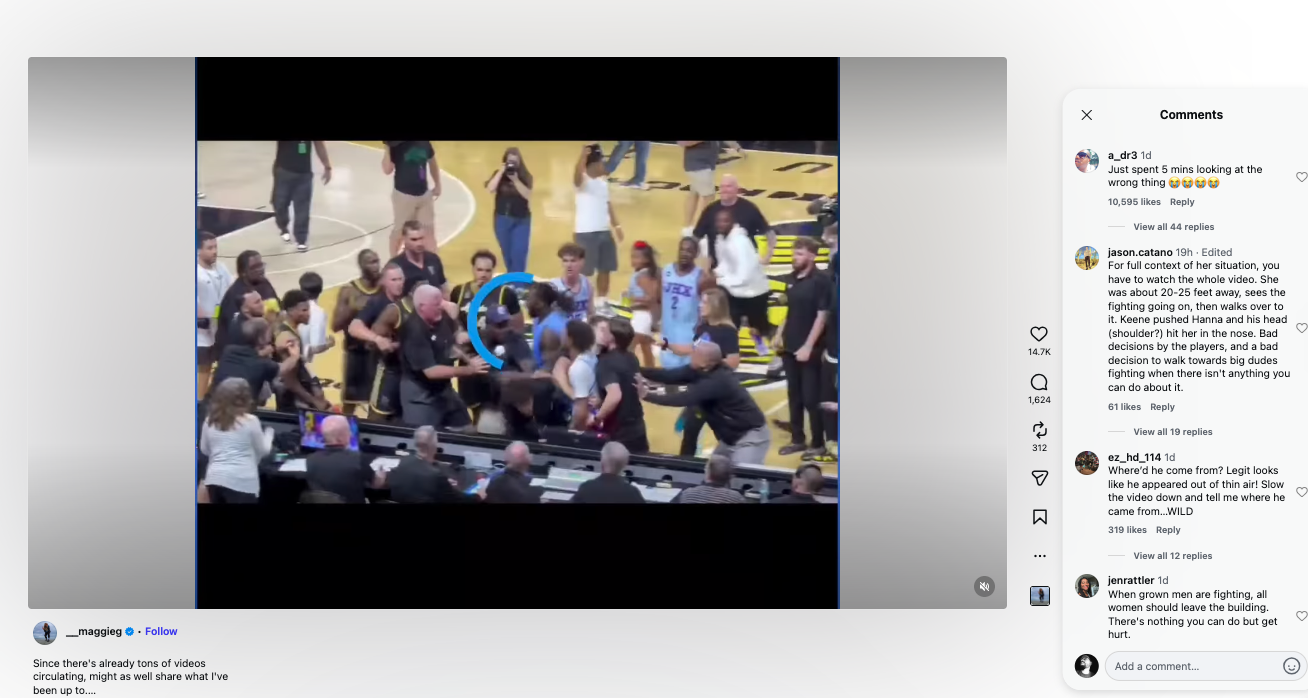
Men are literally jumping in this woman’s comments to explain why it was somehow HER FAULT for getting her nose broken and face smashed here. That “she should know better” than to get in the middle of men losing their goddamn minds over a silly game. This is clearly, as I stated above, victim blaming. This is obviously sanitizing and excusing of men’s emotional illiteracy and the harm they cause when in the throws of it. Hell, there’s even other women blaming her for not knowing to leave when men escalate.
I want you to garner input from your staff and players without my obvious leaning here. I want you to gauge your room and I want you to understand that if you have a staff or team full of dudes repeating this comment, you have a culture of complicity and a climate that excuses violence. Period.
I can’t sugar coat it for you. At a minimum, I'd hope your players respond with empathy: "Oh my God...that poor woman."
At the highest level, I'd hope they're angry—not simply because someone was injured, but because they recognize the comments afterward as another example of excusing men's inability to regulate themselves.
Unfortunately, I don't think enough locker rooms are there yet.
Moments like this are why I don't believe a single guest speaker changes a program. They reveal beliefs that have been quietly rehearsed for years. If we want different first reactions, we have to spend years building different first instincts. That's why TeamsOfMen has never been about one conversation.
It's about changing the scripts players automatically reach for when moments like this happen.
Coach Prompts
Before offering your perspective, what did your players' first reactions reveal about the beliefs already present in your locker room?
When harmful situations happen, does your team instinctively ask, "What happened to her?" or "Why was she there?" What does that difference tell you?
How intentionally are you shaping your players' first instincts, not just their answers after discussion?
Player Prompts
What was the very first thought you had after watching the video?
Why do you think so many people immediately focused on what the woman "should have done" instead of what caused her injuries?
If someone had been hurt trying to stop a fight involving one of your teammates, what responsibility would your team have afterward?
Run Your Program's System Audit
This discussion wasn't really about a basketball fight.
It was about the invisible beliefs your players and coaches reached for before anyone started teaching. Every athletic program is building those scripts—whether intentionally or not.
If today's exercise made you wonder what beliefs are quietly shaping decisions inside your own locker room, don't guess.
Click here to run the free Decision Confidence Analysis™ and discover where your program is reinforcing healthy decision-making—and where hidden gaps may still exist.
Helping Players Sit With Discomfort
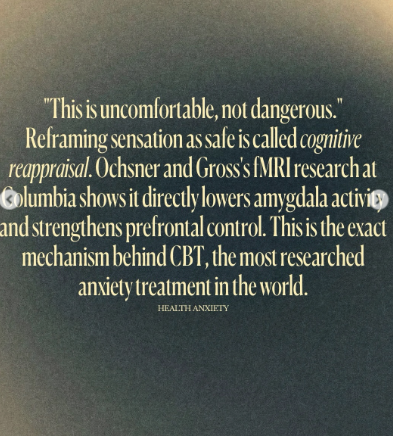
“This is uncomfortable, not dangerous.”
I LOVE THIS from an IG post by @health_anxiety that came across my feed last week.
Not just because I’m someone who has long dealt with a raging, unending health anxiety (show me a tv show with a character suffering an ailment, and I’ll be convinced I have it in under 3 minutes), but also because I think it captures something much bigger about the way we experience everyday life.
Whether it be in sports, our professional lives, or our roles at home, we're going to be bombarded with uncomfortable moments. Hopefully, true danger is something we experience only rarely. But discomfort? That's simply part of being alive.
As coaches, we're already comfortable teaching this in athletics. We ask our players to embrace discomfort in conditioning, the weight room, skill development, and close games because we know that's where growth happens. Where I think we often fall short is helping them recognize that the same principle applies away from competition. Discomfort during a hard conversation, while receiving accountability, or while challenging a belief we've always held can be just as necessary for growth as another sprint or another set in the weight room.
Too often we let our players—and ourselves—escape those moments. We walk away from the sexist joke because confronting it feels awkward. We ignore the racist framing because we don't want to make the room uncomfortable. We let a disrespectful comment slide because speaking up feels harder than staying quiet.
But that's exactly the point. If we want young men to grow, we have to help them understand that feeling uncomfortable isn't automatically a sign something is wrong. Sometimes it's a sign that an old belief, habit, or assumption is being challenged. They'll willingly change how they run a route, shoot a basketball, or attack a full-count fastball because they believe improvement is worth the temporary discomfort. Our job is to help them develop that same mindset when it comes to becoming better teammates, partners, fathers, and men.
One more reason I wanted to share this full carousel of images: It is built around sentences your guys can use to calm themselves in moments of anxiety. FANTASTIC resource to allow us to have more tools to offer than just “Hey, calm down.” Most athletes already know they should calm down. Very few have ever been taught how.
Coach Prompts
Where do you intentionally teach your players to embrace discomfort outside of practices and games?
What conversations does your team tend to avoid because they feel awkward rather than unsafe?
How do you help athletes distinguish between situations that are genuinely dangerous and those that are simply uncomfortable?
Player Prompts
When was the last time you avoided doing the right thing because it felt uncomfortable?
What's one conversation you've been putting off that probably isn't dangerous—just difficult?
Why do you think growth so often begins with feeling uncomfortable before it feels rewarding?
Run Your Program's System Audit: You wouldn't let your team play a game without a scouting report, yet most athletic programs leave their decision systems entirely to chance.
If today's post made you wonder what invisible scripts are running through your own locker room or athletic department, don't guess.
Click here to run a quick Decision Confidence Analysis (DeCA) and see where your program is reinforcing health decision-making…and where hidden gaps may exist.
What Happens When It's Your Colleague?
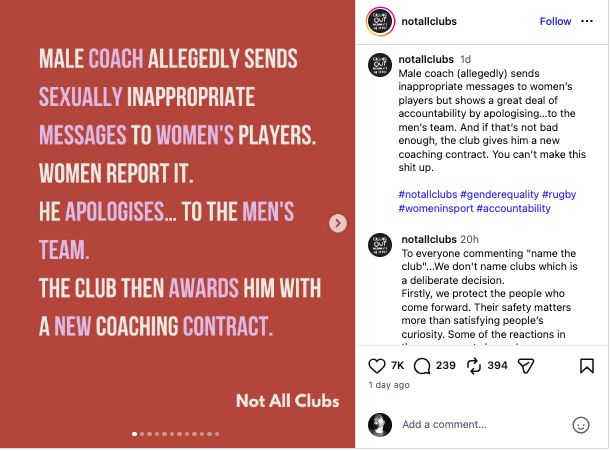
I really wish we had access to (or could rework the algorithms for) feeds on X or IG or LinkedIN that showed more examples of male athletes engaging in unlearning the manbox and reimagining what a healthy manhood could be. Instead, what we get—because of both the algorithms and the sheer volume of harmful behavior—is an endless stream of examples where sports fail to teach the life lessons we claim they do.
Today’s post falls in that category, as a fantastic new account on IG we discovered (@notallclubs) posted the above slides about a recent event where once again a coach was not the interruptor of nonsense, but instead an active participant in it. As you read through the slides, don't picture your own program. Picture the athletic department you work in. Maybe it's another coach. Maybe it's someone in another sport. Maybe it's someone you've respected for years. BUT, if some other coaching colleague at your HS or your university committed this act, then apologized to his own players instead of the women he allegedly harmed, what would you expect to happen to them?
Maybe even a better question to chew on from this is “How would I react if it was a friend of mine? What would I tell my own staff? How would I approach this topic with my team?” because if any of those answers involve sanitizing of what he did, or both sidesing nonsense that lets you stay neutral somehow, I want you to check yourself. That is not you building a “culture of excellence”…it’s you creating an environment of at best ignorance and at worst complicity.
Coach Prompts
If a coach in your own athletic department engaged in harmful behavior, what response would align with the values you say your program holds?
Are there situations where loyalty to a colleague can quietly become complicity?
What message do your players receive when they watch adults decide who deserves accountability and who deserves protection?
Player Prompts
Why do you think it's often harder to hold friends accountable than strangers?
If someone apologizes to the people who support them but not to the people they harmed, what does that communicate?
When people talk about "team culture," what actions actually prove that culture exists?
Run Your Program's System Audit: You wouldn't let your team run a game without a scout, but most programs leave their systemic accountability entirely to chance. If reading this makes you wonder what invisible scripts are running in your own department's locker rooms, don't guess at it.
Click here to run a quick system alignment audit on your program.
The Difference Between Mistakes and Patterns
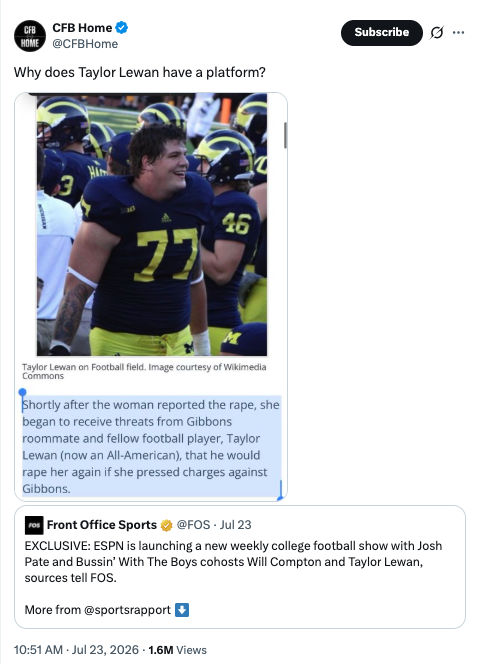
You ever wake up feeling like “I got time today”?
What do I mean by that?
I mean that I find myself writing today in a mood to take on topics that someday I just don’t have the energy for. Topics that I KNOW will lead to back and forths with casuals who haven’t done the reading, haven’t heard the research from experts, and who are so entrenched in a defensive posture that it is mostly pointless to argue with them. But, today is one of those days I feel like writing about it anyway, because the post above from X demands it.
Here’s the gist: this is less a Taylor Lewan specific rant from me than it is a plea to coaches and male athletes to decide what it means to be “a good guy.” What ACTIONS does it actually take for us to reasonably expect society to give us that label…or maybe even better…for us to EARN that label. Why the trigger here from this post about an ex NFL linemen, known for inciting rage responses via hot takes (and actions) suddenly both getting a new show (and no doubt large salary) from ESPN and being exposed for past horrific comments towards a survivor.
We LOVE to hide behind “we don’t know what happened” (right up to the moment we find out what happened and because it doesn’t fit our agenda, decide we can’t EVER decide upon truth unless we phyiscally are present for it).
We LOVE to claim “everyone makes mistakes” but then never demand someone who simply made a mistake display, through actions and words, that the mistake was the outlier of behavior…the singular moment they showed lapse in character, compared to a lifetime of being a good person (most often, the mistake is part of a pattern that is NEVER changed).
If we had a player who consistently made the wrong decision as a quarterback throwing the ball, or a catcher calling pitches or a shooting guard shot selection and they came to our staff one day and said “I”m actually a great decision maker. I apologize for the past 500 times I wasn’t” and then went out and made the exact same mistake, would we rage when someone questioned our sanity for playing him again?
Of course not.
But, coaches and athletes will flood posts above that question Lewan’s character and cape for a guy who as never shown himself to be “above the allegations”.
WHY WHY WHY?
That’s worth your time if you are around your guy’s today.
Coach Prompts
How does your program distinguish between a mistake, a repeated behavior, and a pattern of character?
What actions would convince you that someone has genuinely changed after causing harm?
Do your players believe "being a good guy" is something you claim or something you continually demonstrate?
Player Prompts
What's the difference between apologizing and changing?
If someone calls you "a good guy," what evidence would they point to?
Should people be judged more by what they say about themselves or by the pattern of their actions?
When "We'll Wait and See" Isn't Enough
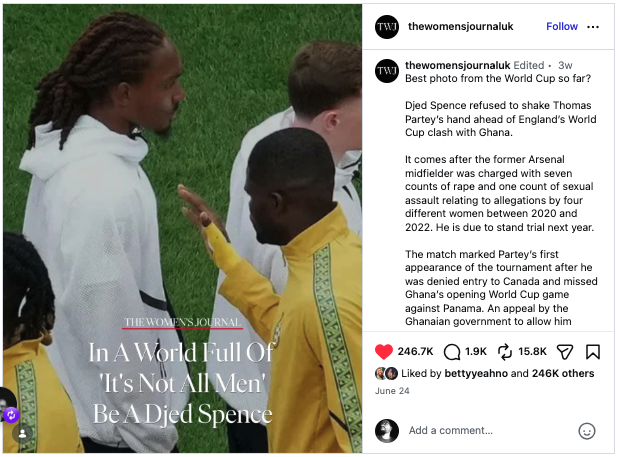
Even without the record setting number of viewers for the final match (I believe north of 60 million), the World Cup captured the attention of the world these past 5 weeks. I can admit I am a casual soccer (futbol) fan at best, but I absolutely watched a ton of games and found myself finding new nations to cheer for alongside Team USA. But the post above (originally on IG from @thewomensjournaluk) caught my attention, as it spoke to not just a TeamsOfMen of lens (aka believe survivors) but also to something I’ve seen young men struggle greatly with:
How do I honor a commitment to believe survivors in a world where I also respect the principle of “innocent until proven guilty”?
I LOVE what England defender Djed Spence did here. He made a statement by simply not shaking hands with Thomas Partey (who has been accused of seven counts of rape and is awaiting trial) post match. He didn’t make a declarative “You did it” but he also didn’t bro hug him and pretend being on the pitch was a magic elixir that removes all credibility of Partey’s accuser. He walked past him. Simple. Not a declaration of guilt, but also not a blind naivete to the serious accusations against his former teammate.
At worst, if Partey didn’t commit the crime, Spence will later have to say “Hey, I didn’t shake your hand” but also if Partey IS found responsible, Spence did not cosign him and some sort of escape to the world of soccer. So often, I believe, coaches and teammates get twisted in knots over “well, I gotta see the evidence”…sure you can say that, but in the meantime, while we’re all waiting on the “evidence” this person doesn’t need to be playing a sport. They don’t need to be locked up either, but they damn sure shouldn’t be getting the glory of scoring touchdowns or goals.
People have asked me over the years how I could comfortably coach with a policy that said, "If you're accused of certain forms of harmful behavior, you won't compete until the matter is resolved."
My answer has always been simple. I understand there is risk in that decision. I also understand there is risk in the opposite decision. If you tell me that false allegations are uncommon, I'm willing to accept the possibility that I may occasionally hold an innocent player out rather than repeatedly create an environment where survivors learn our program defaults to skepticism. Coaches make decisions under uncertainty every single day. We call plays that don't always work. We foul at the end of games. We press knowing someone will eventually beat it. Leadership is often about deciding which risk you're willing to live with.
In fact, along these lines, I would have a serious conversation with yourself, with your admin and with your staff (all BEFORE you roll something out to your guys): As we navigate claims of harmful behavior against our guys, what level of participation in our program are we comfortable with? The answers you land on will speak volumes to your belief systems.
Coach Prompts
Before an allegation ever reaches your program, what principles do you want guiding your response?
What's the difference between determining criminal guilt and deciding who represents your team?
How would you explain your program's approach to both the accused athlete and the person making the allegation?
Player Prompts
Is there a difference between saying, "I know he did it," and saying, "I'm going to take these allegations seriously"? Why?
What responsibilities come with representing a team, school, or community beyond simply following the law?
How should teammates balance loyalty to one another with accountability when serious allegations arise?
Every Emotion Is Carrying a Message
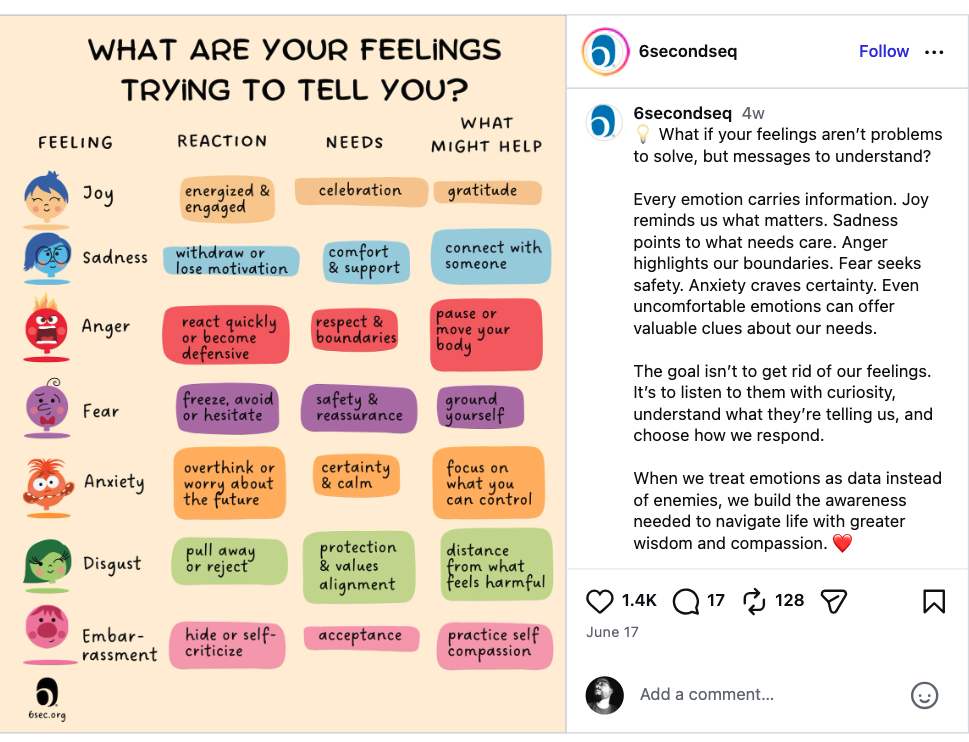
I liked this on IG from @6secondseq for a couple of reasons:
I think there is always tremendous value in listing multiple emotions, as so many young men can’t name past "I’m cool” or “I’m pissed”
Labeling the REACTIONS associated with feeling these emotions is vital, as your players can make the connection with moments in their life when the action matches the description
I haven’t seen NEEDS listed on very many charts like this. I have seen the “what might help” (which I really like because we all crave action), but laying out the why and what of the information that particular emotion is giving you is a revelation
The visuals! Inside Out is very popular movie, and if you have high school aged players, many of them probably watched that movie when they were younger and can connect to their memories of the characters
I could see this being an entire program activity, where you put up this table, but MISSING certain segments. Say a group of seniors is up (3-4 of them) and they are given the 3rd line, with only the visual picture and “react quickly or become defensive” segments. They then have to work together to populate the missing pieces of that line of the chart. Put a timer on it and watch the fun AND learning happen.
Remember, TeamsOfMen work doesn't require a doctorate in psychology or counseling. It doesn't require you to become an expert in emotional intelligence before you begin these conversations. It simply asks you to create intentional moments where the topic isn't the game your players are competing in, but the lives they're living outside of it. That's where posts like this become a gold mine. You don't have to create every activity from scratch. Sometimes the best thing you can do is recognize a quality resource, adapt it for your team, and let the discussion do the heavy lifting.
Coach Prompts
Where do your players typically stop when describing how they feel? Is your team emotionally literate, or do most conversations end with "I'm good," "I'm fine," or "I'm pissed"?
Which column on this chart would create the best discussion with your team: Feelings, Reactions, Needs, or What Might Help?
What existing resources have you seen recently that could become a meaningful five-minute team activity with just a little adaptation?
Player Prompts
Which emotion on this chart do you think is most misunderstood by guys your age? Why?
Looking at the "Needs" column, was there anything that surprised you or challenged the way you've thought about emotions before?
If your teammates had to describe you during a stressful week, which reaction on this chart would they probably choose? Is it accurate?
If We Swapped Jerseys...
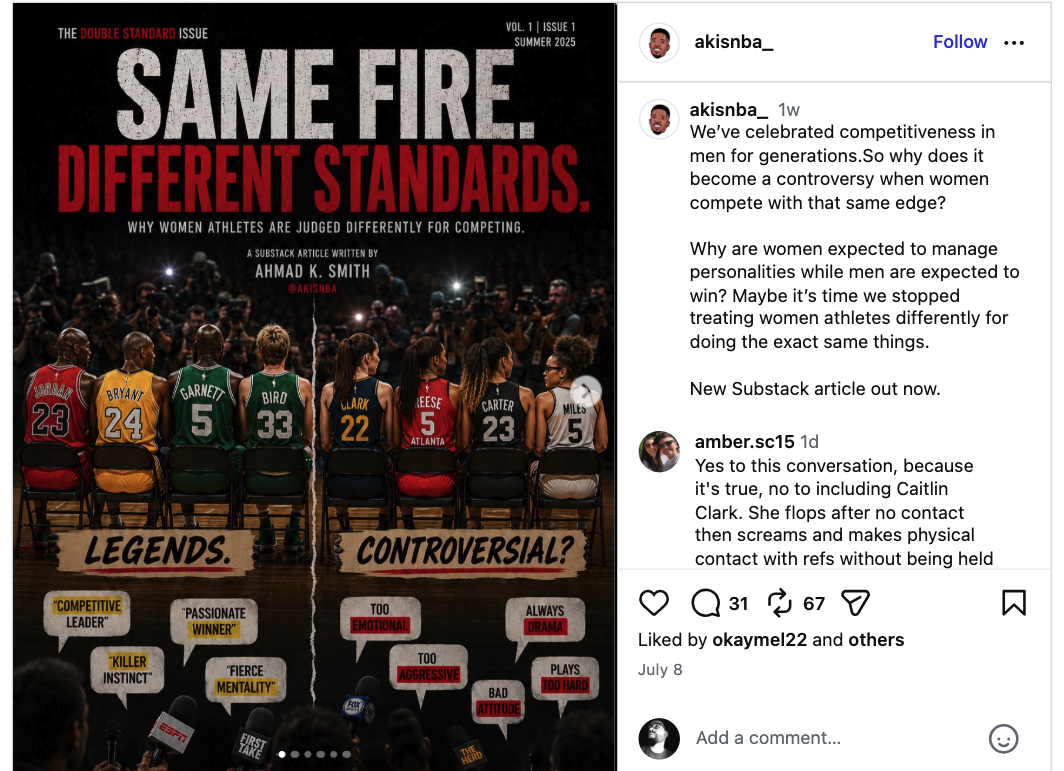
Today’s blog is based on this IG post from @akisnba_ and I think it serves as the perfect reminder that we are training a new lens for our players to use when interacting with the world. Whether that be through pop culture, current sporting events, or the communities they call home, we're trying to help young men develop a different lens for interpreting the world around them. If we're doing this work correctly, they should increasingly be able to recognize and call out moments where the Man Box is at play, even when nobody points it out for them.
This post highlights one of those moments. It asks readers to compare the way identical behaviors are described depending on whether the athlete is a man or a woman. A man can have a "killer instinct." A woman displaying that same competitive edge is labeled "too aggressive." If a man's emotions boil over during competition, he's praised for being passionate about winning. A woman showing those same emotions becomes "too much drama." The labels change, but the behavior often doesn't.
The examples continue, but what I want you to really lean into with your guys isn't whether they agree with every single comparison. Instead, ask them when they first became aware that one gender was given permission while the other was not. At what point did they begin to recognize that the exact same characteristic could be celebrated in one person while criticized in another simply because of gender? That's a much more interesting conversation than debating any one athlete or headline.
Because if our culture creates two different standards for something as public and relatively insignificant as a basketball game, imagine the expectations it creates in workplaces, relationships, parenting, politics, and leadership. Imagine how many invisible rules boys and girls absorb long before anyone explicitly teaches them.
That's why I love using posts like this with teams. They aren't designed to tell players what conclusion they have to reach. They're designed to sharpen their ability to recognize patterns. And once someone begins recognizing those patterns, it's incredibly difficult to go back to believing they don't exist. That's the heart of Mirror Training. Not memorizing the "right" answer, but developing the awareness to notice systems and structures that only continue operating when nobody stops long enough to question them.
Coach Prompts
What messages about masculinity and femininity are your players picking up from sports that you never explicitly teach?
When have you caught yourself describing the same behavior differently depending on who was displaying it?
How often do you pause to ask your team why we use certain words to describe athletes?
Player Prompts
Looking at the graphic, which pair of labels surprised you the most? Why?
Can you think of an athlete—male or female—who has been described differently than someone else displaying the same behavior?
Have you ever changed the way you acted because you thought people would judge you differently?
Your Locker Room Is Rehearsing Something
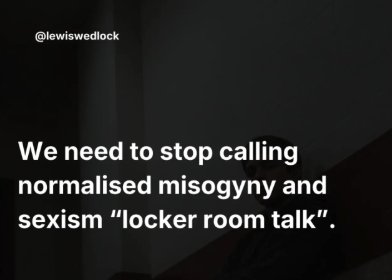
This post from @lewiswedlock on IG stopped my scroll dead in its tracks. Not because it was some new revelation, but because it was so simple in its labeling “locker room talk” for what it actually is.
Way too often we hear players—and sometimes even their coaches—excuse the spewing of awful beliefs as acceptable simply because it happened behind the dingy walls of a team room. These first two slides refuse to grant that exemption.
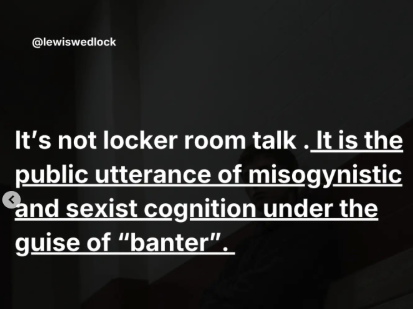
"Public utterance."
"...under the guise of banter."
Those two phrases perfectly capture what we've participated in and, too often, allowed inside the supposedly "safe spaces" of sport. As if the walls of a locker room somehow sanitize the toxicity of the conversation. As if changing the location changes the impact.
There's another belief hiding underneath the phrase "locker room talk" that deserves challenging.
It assumes young men say awful things while taking off their shoulder pads or hanging up their practice jerseys, then somehow leave those beliefs behind in the same sweaty pile of gear.
I don't buy that.
If they're rehearsing misogyny together in the locker room, there's a good chance those same beliefs travel with them into classrooms, relationships, parties, group chats, and every other community they enter after they leave the gym.That's why I think we have to stop treating locker room language as the problem.
It's evidence of the problem.
The language points us toward the beliefs underneath it.
TeamsOfMen exists to help coaches do more than simply mute racist or misogynistic language inside their programs. The work is helping players recognize, challenge, and ultimately unlearn the beliefs that produced those words in the first place.
Because if all we've accomplished is quieter misogyny, we haven't accomplished much at all.
Coaches Prompts
What's one phrase you've heard so often that you've stopped noticing it?
When you correct language, do you also explore the belief underneath it?
What conversations have you dismissed because "that's just locker room talk"?
Players Prompts
Why do people say things in a locker room they'd never say in class?
Does joking about something make the belief disappear—or normalize it?
If your words reveal your thinking, what are your words teaching your teammates?
Stop Repairing the Explosion. Coach the Pause.
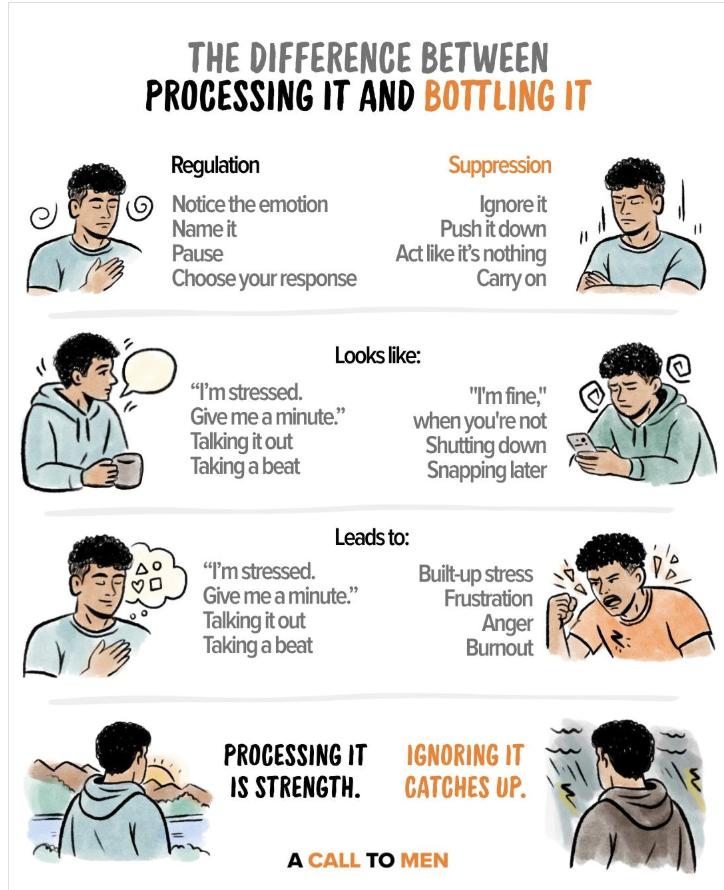
I’m hoping today’s graphic share (from a post by industry leader @acalltomen) is an easy to share graphic that a large range of ages in your team room can understand. I’ve run many a session on emotional fluency using the concept of overflowing water bottles and the visual is a powerful connector for male athletes.
I was also drawn to the side by side (shoulder to shoulder) nature of the graphic because I think the flow for your players eyes will be an easy “this INSTEAD OF that” action. Whether it's a defensive read, a passing progression, or a late-game decision, we simplify choices all the time because clarity helps execution, so why not deploy some of that same shaping in our building of their emotional fluency.
Finally, I think the “PAUSE” inclusion on the first section of the graphic is vital. It leads to a “CHOOSE YOU RESPONSE” which I think returns agency to young men during emotional roller coaster moments. It’s not as easy, obviously as a graphic makes it out to be BUT the pause (preferably with a deep breath) can head off a number of reactions with our words and bodies that we would otherwise regret.
And that's probably the one adjustment I'd make if I were presenting this to a team.
I wouldn't tell them the goal is to "process your emotions." I'd tell them the goal is to become the kind of teammate who doesn't make a bad moment worse.
Most male athletes already know what it feels like to have a teammate spiral after a turnover, a bad call, a missed shot, or a tense conversation with a coach. They know what it looks like when someone says, "I'm fine," only to snap five minutes later.
This graphic gives them something much more practical than "be emotional." It gives them a sequence.
Notice.
Pause.
Choose.
That's a skill worth practicing just like a closeout, a free throw routine, or a defensive rotation.
Coaches Prompts
When do your players most struggle to pause before reacting?
What does emotional regulation look like during a practice, not just in life?
How could you reinforce "the pause" the same way you reinforce effort?
Players Prompts
What's usually happening right before you say or do something you regret?
What does "I'm fine" actually mean when you're not?
What would change if your first response wasn't your final response?
‘Interrupting’ Habits: A Challenge for Coaches and Athletes
I know, I know. The blog has been dormant for a week. That is entirely on me.
I was back in Montana, wearing my other hat as the president of the Kas Ioane Foundation (my brother and my project to help honor the legacy of our dad and establish a non profit that gives back to the community he loves). The past 7 days were full of events, including our 136 golfer scramble at his home course that serves ar our primary fundraiser, and I had to practice what I preach so to speak, and put down things I couldn’t carry so I could be more present for urgent matters of the moment.
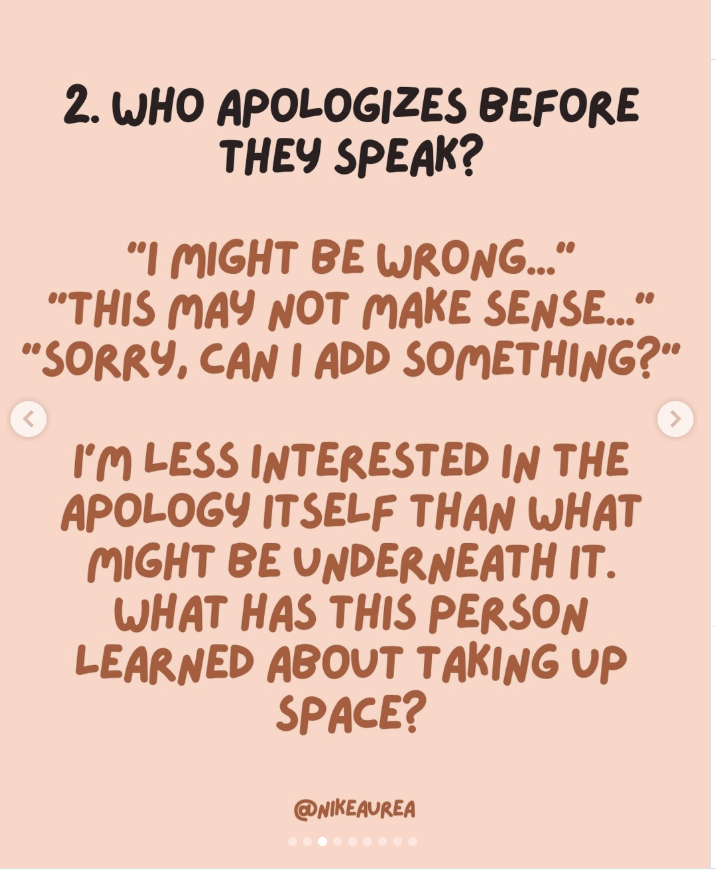
But, I’m back now and this post had me thinking of not only our team rooms and bus trips (and the various voices of our team in those spaces) but also in the staff rooms where we lead coaches (of various status, identity and experience) in conversation. I LOVE the 7 slides the original author (@nikeaurea) posits to the audience and think they will lead to a literal walk through with yourself imagining what your usual spaces sound like.
I especially interested, for my program and approach, in diving into the slide that asks “Who gets interrupted the most” as I can see myself more often than not interrupting a younger assistant (and that may or may not be something I need to correct).
If you want to run this with your guys, I think it’s worth having them imagine a classroom their in, a family dinner they are at or even in the car with their boys on the way to a movie and ask “What convo is shut down? What convo is engaged in? What convo is met with silence?” and then see where the rest of the session takes you.
Coach Prompts
Reflecting on our last staff meeting, identify one moment where you may have interrupted an assistant coach. What were you trying to achieve in that moment, and how did it impact their contribution?
In your coaching environment, which voices are typically the 'default' leaders, and which voices are consistently met with silence or hesitation?
How can you create more 'space' in your practice or film sessions to ensure younger coaches feel empowered to speak without feeling they need to apologize for their ideas?
Player Prompts
Think about a group setting you are part of outside of basketball—like a family meal or a hang-out with friends. Whose voice carries the most weight, and who feels the need to soften or apologize for their opinions?
In our team locker room or on the bus, what topics of conversation do you notice are often shut down or ignored by the group?
If you were to be more intentional about inviting quiet voices into our team conversations, who would you start with, and what is one question you could ask them to get them talking?
A Baton Pass
Today is more of a baton pass than a blog.
I want you to head over to the first long-form essay I've written in six months over on my Medium page.
It's built around a progression I think every TeamsOfMen coach is silently saying "yes" to when they accept the responsibility of leading young men. I just needed nearly 2,000 words instead of 700 to fully wrestle with it.
MODEL. PREACH. ENACT.
I'd love to know whether the progression resonates with you—or where you think I've gotten it wrong.