
What Changed When I Rewrote Two Questions?
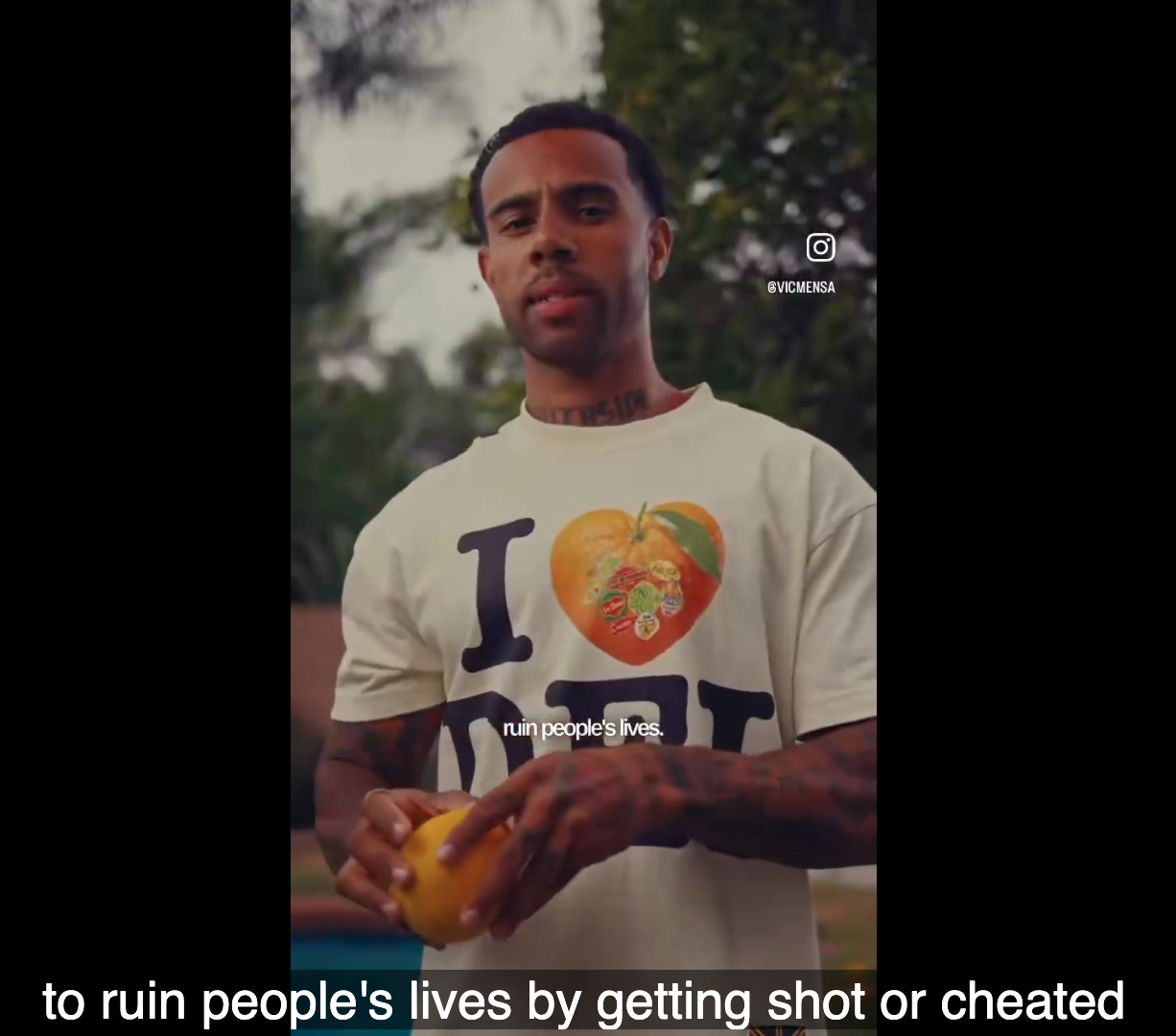
I’ll be honest: I just checked my Spotify library for any Vic Mensa tracks and I don’t have ANY. I should probably dive into his catalog more because I’ve written about his social commentary on here before and watch at least 1-2 of them every week. He is typically SPOT ON in his critiques of the social norms and realities of racism and misogyny in this country and if you’re a coach of male athletes (especially one with a diverse locker room) you should follow him as well.
This week's video is especially poignant—and immediately usable in your team space—because he takes on the classic Manbox trope that men's body counts are a badge of honor while women's are, as he states, "used as justification that she should be shot." He's talking specifically about the criticism Meg Thee Stallion has received, with people claiming she needs to stop ruining men's lives despite the fact that NBA star Klay Thompson cheated on her and hip hop artist Tory Lanez shot her.
If I were in your team room, I'd have those two incidents written on a whiteboard under a picture of Meg. The headers would read:
"What happened with her NBA relationship?"
"What happened with her hip hop relationship?"
Then I'd ask the guys to tell me the story.
I'd listen carefully—not just for what facts they remember, but for who ends up at the center of the story. Who gets named first? Who gets the most attention? Who becomes the subject of the conversation, and who becomes almost an afterthought?
Then I'd stop them.
"Guys, I actually wrote those prompts wrong."
I'd erase them and replace them with:
"What did Klay Thompson do to his girlfriend?"
"Why did Tory Lanez shoot his partner?"
Then I'd ask what changed.
If they immediately recognize why those questions feel different, you have a tremendous opportunity to talk about how the Manbox shapes not just our opinions, but the way we tell stories. Who becomes the main character? Who gets framed as the victim? Who quietly disappears from accountability?
If they don't notice the difference, that's valuable information too. It tells you there is work to do—not because they got the "wrong" answer, but because they haven't yet learned to notice how framing influences what we see.
Coaches Prompts
When your players tell a story involving harm, who do they naturally center?
How often do you rewrite questions instead of just asking better follow-up questions?
What other headlines could reveal invisible framing in your locker room?
Players Prompts
Why do some stories focus more on what happened to a woman than on what a man chose to do?
Can changing one question change who feels responsible?
When you retell a story, who gets the most airtime—and why?
The Mirror Turned on Me
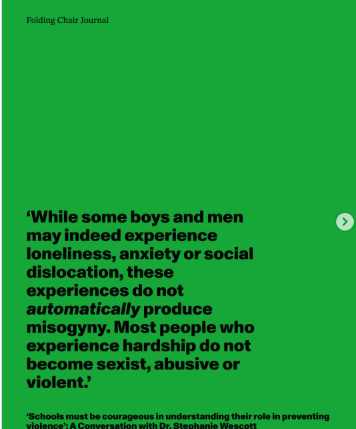
This post (originally put up by @theequalityinstitute on Instagram) scared me.
Not because I disagree with it, but because it forced me to sit with a question I haven't been able to shake.
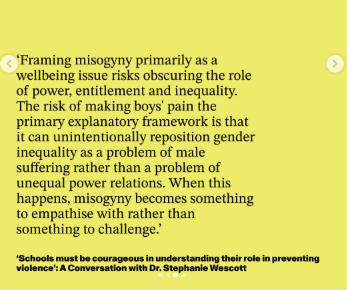
Is TeamsOfMen vulnerable to the very trap Dr. Stephanie Wescott is warning those of us working in the "anti"-Manbox space to avoid?
Is my launching so many teams into conversations about emotional fluency, self-reflection, and mental health inadvertently positioning inequality—and the misogyny that can flow from it—as primarily a male suffering issue? Am I falling down the Richard Reeves spiral?
My God...what if there's truth in that?
That's where I sit today.
I know we gain more access to teams when we frame this work around "unlocking better men" or helping boys "feel all the feels" than when we lead with the original impetus: helping ensure your boys keep their damn hands to themselves. The political realities of America in 2026 have only amplified that. If we want this work to exist in many communities, we often have to sanitize session titles to secure contracts.
But if, as Dr. Wescott writes, "...most people who experience hardship do not become sexist, abusive, or violent," then am I centering boys' pain in ways that unintentionally move the conversation away from the harm some boys cause?
Her line that keeps echoing in my head is this:
"When this happens, misogyny becomes something to empathise with rather than something to challenge."
That's a sentence I can't afford to dismiss simply because it makes me uncomfortable.
Do I think that's what TeamsOfMen has become?
No.
But I do think it's a question serious enough that I owe it more than a defensive response. Mirror Training doesn't work if I only ask other people to step in front of it. If there's even a chance that our framing could unintentionally shift attention away from accountability and toward explanation, then I have an obligation to examine it.
I don't have a definitive answer today.
But I also refuse to look away from the mirror simply because I might not like what I find.
Coach Discussion Prompts
How do we support boys without excusing harmful behavior?
Where's the line between explaining behavior and diminishing accountability?
When was the last time a critique made you reconsider your own coaching philosophy?
Player Discussion Prompts
Can understanding why someone acts a certain way coexist with holding them accountable?
What's the difference between empathy and excuse-making?
Why is it important to question your own beliefs, even when they're tied to work you're proud of?
Help Isn't Weakness
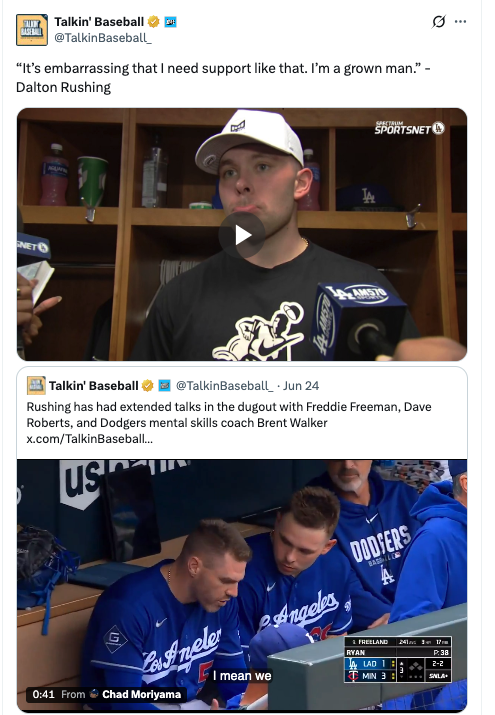
ITFDB.
If you don't know that stands for "It's Time For Dodger Baseball," then you probably can't relate to my Dodgers fandom. Next to the Cowboys, they're the team most likely to make me act like an irrational lunatic.
Having said that, I was disappointed this past week to hear Dodgers catcher Dalton Rushing say this after teammates and coaches tried to support him through an emotional stretch:
"It's embarrassing that I need support like that. I'm a grown man."
As we know, being able to play—or coach—a professional sport never guarantees someone has developed emotional fluency, compassion, or the ability to recognize and escape the Manbox.
Rushing, one of the organization's young talents, has had several emotional overflow moments recently: arguments behind the plate, visible frustration at the plate, broken bats, and interactions with teammates and coaches that suggest he's struggling to regulate those moments. This quote came after veterans and coaches intentionally sat shoulder-to-shoulder with him in the dugout to help him process what was happening.
What struck me wasn't simply that he resisted the support.
It was why.
"I'm a grown man."
That's a hell of a statement, though unfortunately not an unusual one, for a 25-year-old to make. Hopefully you've got another 50 or 60 years of growing left in front of you, my guy.
"It's embarrassing that I need support like that."
That's the sentence that keeps echoing in my head.
Because somewhere along the way, too many boys become convinced that maturity means needing less help instead of becoming better at receiving it. That's the Manbox talking.
I'd imagine every one of us has coached one or two players like this. Maybe you reached them. Maybe you didn't.
And that's the rub.
Some young men need another shoulder-to-shoulder conversation. Others need someone they respect to look them in the eye and say, "Yo, wake the eff up." The hardest part of coaching isn't knowing how to do either. It's knowing which one the young man in front of you needs today.
Coach Discussion Prompts
How do your players typically respond when you offer support during an emotional moment?
What messages about masculinity make it difficult for boys to receive help?
When do you choose a shoulder-to-shoulder conversation instead of a direct confrontation?
Player Discussion Prompts
Why do some guys feel embarrassed when someone tries to help them?
What's the difference between needing support and being dependent on someone?
Does becoming a man mean needing less help—or becoming more willing to use the help available?
Stop Giving Hate an Audience
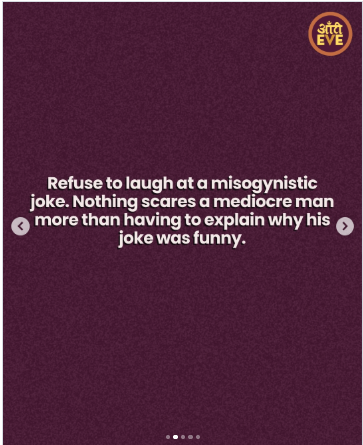
Let's admit this upfront: I'm in a confrontational mood today. Between the vile coming out of the Supreme Court's decision this morning and some other stressors, I sat down to write feeling ready for a fight. That's why this was a perfect find (originally posted on Instagram by @theauntyeve under the label “How to annoy a sexist fool without raising your voice”).
I share this specific screengrab from her post because I think it is a challenge for both our male athletes AND us as coaches.
Far too often, even if we've committed ourselves to the TeamsOfMen mindset and the journey toward a better manhood, we settle for the uncomfortable laugh when a sexist, racist, or otherwise demeaning joke gets told in our vicinity. We don't confront the hate. We allow the bullshit. And it continues in our space, either from the same person or from others now emboldened by our laughter and our silence.
There are more suggestions in the original post for dealing with the inevitable dipshittery we'll encounter in our spaces. But I think asking our guys—and ourselves—to start here is hard enough.
Refuse to laugh.
"Tough" because we've somehow decided that being "a dawg" is reserved for taking the last-second shot or sacking the quarterback. We have far fewer examples of "being a dawg" by confronting misogyny in real time, in real spaces, with real social stakes.
Like telling your own boys, "Knock it off. The rape joke isn't funny."
That's the rep.
It isn't flashy. Nobody is going to put it on a highlight reel. But it might be one of the bravest things a young man ever does. It is a reality that enrages me. It is also a reality we can change.
Start by refusing to be the hyena laughing at something that should have died the moment it left someone's mouth.
Coach Discussion Prompts
What message does your silence send when a sexist or racist joke lands in your team room?
Why is confronting a teammate's language often harder than confronting an opponent?
What behaviors do we celebrate as "tough," and what behaviors deserve that label instead?
Player Discussion Prompts
Why do people laugh at jokes they don't actually find funny?
What's harder: confronting an opponent or confronting your own friend?
What would change in your locker room if the first person stopped laughing?
Supporting the Person, Releasing the Player

“You can’t save someone who loves drowning.”
I shared that quote (I believe I grabbed it from an Instagram post) with a colleague as we were discussing our shared frustration over the response—or lack thereof—from a player we all know is headed in a bad direction off the playing field. We've tried numerous intervention strategies. We've taken away playing time, restricted access to the sport, had long sit-down conversations, and invested countless hours. The player, while always gracious and appreciative of our love for him, simply won't change his decision-making or behavior.
As coaches, we can be as dedicated to the human beings in our program as possible. We can pour into them, love them, and move mountains to help them see a better path. But we cannot force them to take those steps. We can't make them reimagine the beliefs or paradigms that continue to dictate the choices they make. It's one of the maddening aspects of the job, and often the one that keeps you up longer than a scoreboard loss ever will.
Why the quote, then?
Because I think we have to develop a process that helps us determine whether a kid "loves drowning" or is "being pushed into the water."
If he's being pushed, we keep fighting like hell to remove the forces pushing him there. We advocate. We support. We intervene. We refuse to give up.
But if he keeps jumping back in of his own choosing, despite every lifeline that's been thrown his way, we eventually have to release ourselves from the belief that one more conversation is going to change everything.
That's hard.
Every story is different. Every circumstance deserves its own consideration. But we have to have a breaking point.
We have to decide that the player is no longer allowed to occupy a spot in our program while also believing that the person is always worthy of our care and support.
What that looks like for you may be very different than what it looks like for me. That's where the real work gets done. Your capacity, your program's standards, the support systems around the athlete, and the facts surrounding the situation all matter more than any template I can give you.
But you must have a line in the sand, Coach.
Otherwise, you run the risk of pouring so much energy into one young man that you no longer have enough left to serve the others who are asking you, every single day, to help them grow. It's a painful determination, and you'll probably second-guess yourself, especially if the athlete regresses after leaving your program.
But sometimes the consequence of repeated choices is losing access to the sport.
That isn't the same thing as losing access to people who care.
Sometimes removing basketball, football, or wrestling is exactly what a young man needs to begin taking ownership of the rest of his life. If that's where the journey leads, so be it.
Coach Discussion Prompts
How do you distinguish between an athlete who needs more support and one who is repeatedly rejecting it?
Have you clearly defined the point at which a player's behavior costs them a place in your program?
How can you remove someone from the team without communicating that you've stopped caring about them as a person?
Player Discussion Prompts
What's the difference between someone helping you and someone trying to make your choices for you?
When does accountability become a consequence rather than another conversation?
Can someone care deeply about you while still refusing to let you remain on a team? Why?
Better, Not Identical
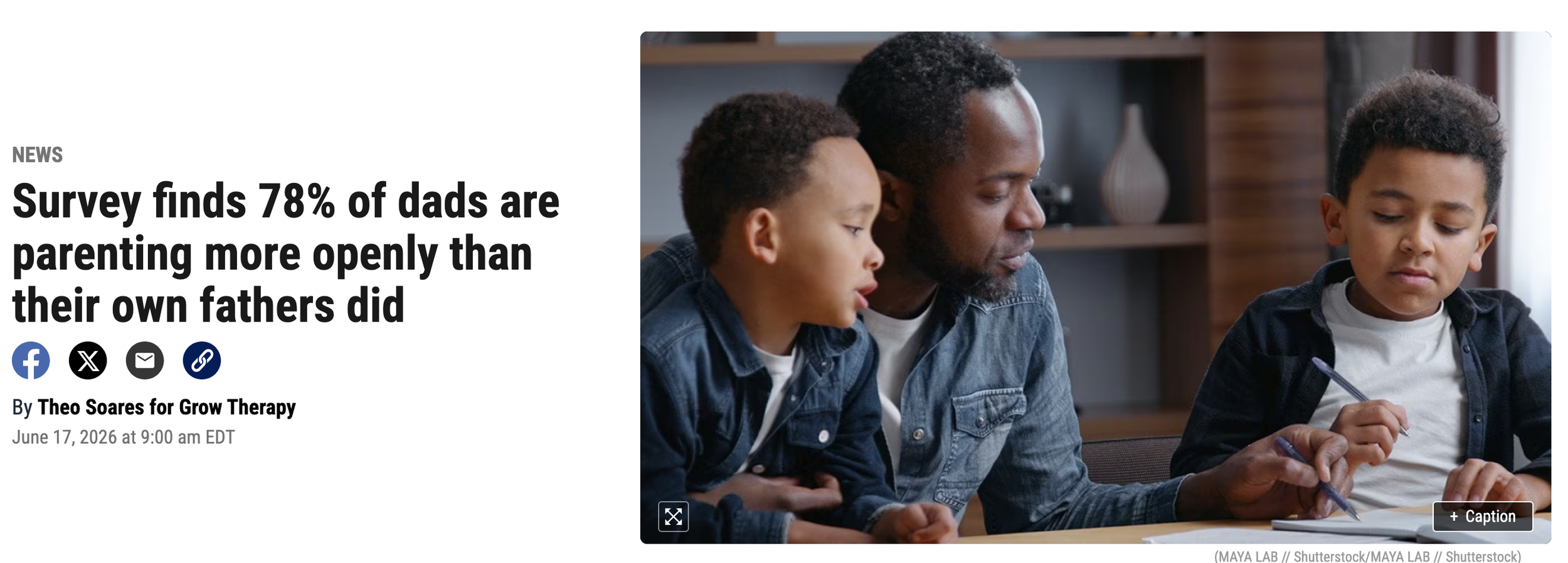
Maybe it's the proximity to Father's Day, or maybe it's the direct line from fatherhood to coaching that I feel in my bones, but this article spoke to me as something I had to share with our TeamsOfMen community. Why? Because I think it will challenge you to #mirrortrain both as a person in charge of other people's kids and with your own babies.
The article itself shares results from a survey of 1,500 fathers of children 18 years old or younger and asks them to reflect on both their current version of fathering and what they experienced from their own dads growing up. I don't want to spoil the entire article (I think when you share your take on someone else's work, you should send people to that work itself), but some of the findings that grabbed me are in the table below.
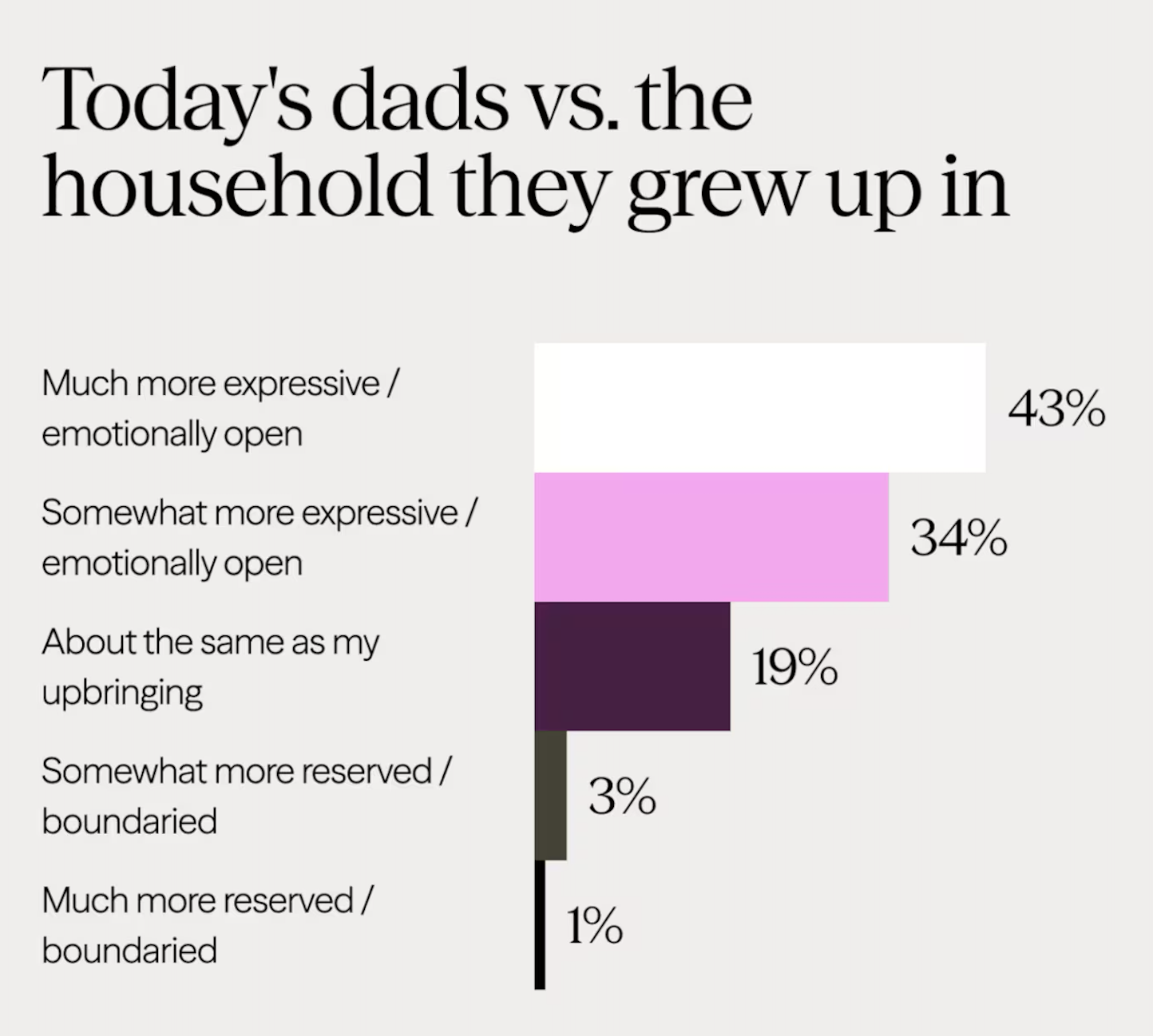
So absolutely go read the article for yourself. But I also want to put how this hit me into perspective here.
My dad, Kas Ioane, is my hero. I spent a large portion of my existence either trying to earn his approval or trying to model the impact he had on people. My brother and I both followed him into coaching. We both literally choose to pronounce our last name as "eye-own" (when the pronunciation on the Samoan Islands is different) because Pops built that name. We run a nonprofit in his honor.
But we were also fortunate enough to hear him tell us repeatedly that the goal of our lives was not to be him, but to be better. If he said it once, he said it 1,000 times.
I can't speak for my brother, but there was immense freedom in that for me. I felt able to chase the feeling he gave people without feeling obligated to copy the path he took to get there. I could chart my own version of being a coach and my own version of being a dad.
My father was not perfect, and I can hold the truth that he was immensely impactful on my life while also knowing there were things I did not want to replicate. That's not disrespect. That's the assignment.
I wonder how many of you feel the same way about your dad?
Or maybe, more directly relatable to this space, the coach in your life who you loved but don't want to copy as you lead your own program.
Because I think that's what stood out to me most in this survey. Not that today's fathers are reporting being more emotionally expressive than the fathers who raised them. It's that many seem to have embraced the idea that honoring the people who raised us doesn't require becoming carbon copies of them.
As coaches, that's worth sitting with.
Every season we ask players to learn from us. The real question is whether we're giving them permission to eventually become better versions of coaches, husbands, fathers, and men than we are right now.
Coach Discussion Prompts
Who was a coach you admired deeply but intentionally chose not to imitate in certain areas?
What parts of your upbringing are you trying to carry forward? What parts are you trying to improve upon?
Do your athletes feel pressure to become versions of you, or permission to become versions of themselves?
Player Discussion Prompts
What's something you admire about a parent, coach, or mentor that you hope to carry forward?
What's something you hope to do differently when you're older?
Can you honor someone's impact on your life without copying everything they did? Why or why not?
Words We Shouldn't Be Afraid Of

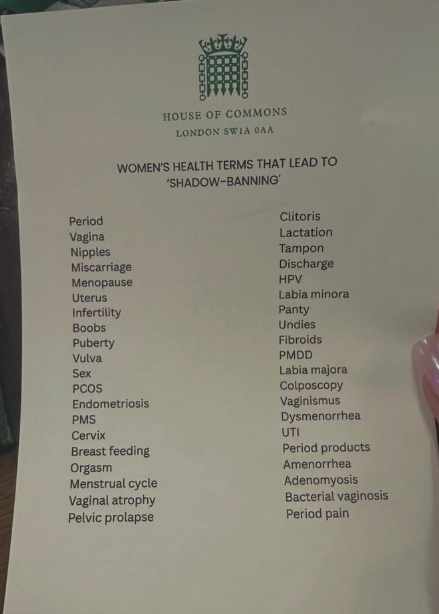
There was a post I came across in my scrolling recently by Dr. Gracie McLaven (a clinical psychologist) on LinkedIn. It immediately grabbed my attention because of the list of terms she provided that seemed to trigger shadow banning on that (and other social media) platforms. I provided the definition of shadow banning in the title image for this post, but in essence, it's the suppression of content based on words you use without you necessarily being aware your posts are being stifled.
Now scroll below and look at the list of terms that Dr. McLaven and others discovered can lead to being shadow banned. Ask yourself: Are these really things to be muted? Scared of? So terrifying that posts containing them should be limited or hidden?
They're fairly mundane, accurate scientific terms referring to women's anatomy, health, and bodily functions.
You cannot be a TeamsOfMen coach and be scared of these terms.
If you're thinking, "Kip, my guy, my admin, my parents, or my players are scared of these terms," then we know exactly where the work is. We need conversations with those stakeholders about why that discomfort exists in the first place.
Our players (their sons, their students) cannot possibly develop respect for women or learn how to treat women well if we can't even say words related to women's anatomy or day-to-day bodily functions around them. If basic biology becomes taboo, we've already taught a lesson. Just not the one we intended.
Take off the earmuffs.
Coach Discussion Prompts
Are there words or topics related to women's health that we avoid discussing around our athletes? Why?
What lessons do players learn when adults treat basic anatomy as taboo?
How does discomfort with these conversations impact our ability to teach respect and healthy relationships?
Player Discussion Prompts
Why do you think some of the words on this list make people uncomfortable?
What message do boys receive when normal discussions about women's bodies are avoided?
Can someone truly respect another person's experience if they refuse to learn about it? Why or why not?
What Kind Of Fine?
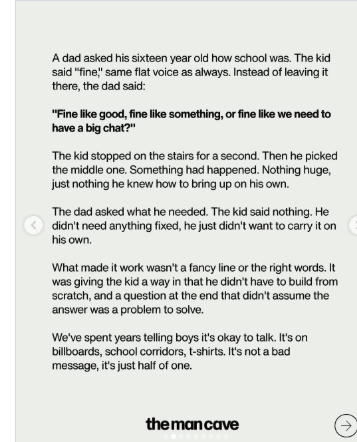
I haven’t spent a ton of time exploring the author of the post above (@themancav_aus) so I can’t really say “go follow this account.” However, this slide on this post DOES land with me as something for both the coach of male athletes in you and, for those of you it applies to, the father in you.
I know I ask my 19-year-old son some version of "Yo, how was your day? Class? Work?" on a regular basis, and I often get back "fine," "good," or "the same." Like a lot of parents, I then find myself talking with my wife about whether he's really sharing much of anything with us and wondering if there is a better way to get beyond the surface. That's why this framing stuck with me. "Fine like good, fine like something, or fine like we need to have a big chat?" is a simple device, but it's one that invites a young person to clarify what they actually mean rather than allowing the conversation to end where it usually does.
The coach in me immediately went somewhere else. I started thinking about those first few players who trickle into the gym or onto the field before practice. You ask, "How was your day, Kev?" and 70-80% of the time you probably get some version of "Fine, Coach." Most of us accept the answer and move on. Sometimes that's perfectly appropriate. But I wonder what would happen if every coach in a program committed to asking one follow-up question like this for one athlete each day. Not every kid every day. Not some impossible relationship-building marathon. Just enough intentionality that every player in your program gets a moment once or twice a month where someone pauses and asks, "What kind of fine are we talking about?"
Would that take a lot of planning? Yep.
Would that take a lot of follow up? Yep.
Would you have days where you didn’t feel like doing it? Yep.
But, we ask our players to do hard things that take up time even when they don’t “feel like it". We ask our guys to embrace “the grind.” We tell ourselves that our program will leave “no stone unturned” in the pursuit of our goals. Well, consider this a pretty important stone for each kid to see what’s underneath.
Because the power of the example above isn't really the phrase. It's the willingness to stay in the conversation for thirty more seconds after most adults would have moved on. And sometimes that's all it takes for a young man to decide whether he's carrying something alone or sharing it with someone who can help.
Coach Prompts
How often do you accept "fine" as an answer when you know it probably isn't the whole story?
What follow-up questions have helped you build stronger relationships with athletes?
If every player in your program got one meaningful check-in per month, what impact might that have?
Player Prompts
When an adult asks how you're doing, what makes you decide whether to give the real answer or the easy answer?
Has a coach, teacher, or parent ever asked a follow-up question that made you feel genuinely seen?
What are some words people use when they're struggling but don't want to say they're struggling?
“He’s a good kid” is NOT a prevention strategy
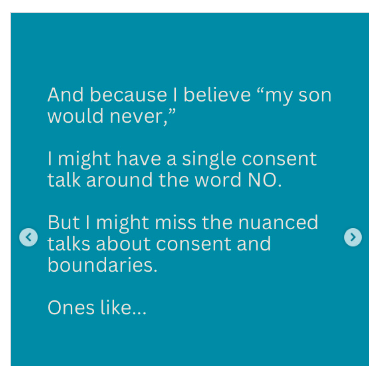
Today’s blog is from my seeing a deep post from @mandiptalkspredators on Instagram. It landed with me because while the frame she uses is in terms of “boy moms” (and a very appropriate one if you ask me) I think the protection and “blindspot” issue correlates to the relationship we as coaches have with our guys as well.
We WANT to believe in the inherit goodness in them.
We WANT to believe they are incapable of causing harm off the field.
We WANT to believe in our statement, “We have great guys in this room.”
We want to believe so badly that, like the post presents about boy moms, we SETTLE for simple one off statements “warning” our guys of dangers in the world and then decide “that’s all I need to do. He got it. He’s a good kid.” Then, unfortunately, we are take aback, shocked, and derailed by the acts our “good kids” commit away from our gaze and say things like “I can’t believe it” or “He’s not like that. He’s never shown any sign of being capable of doing that.”
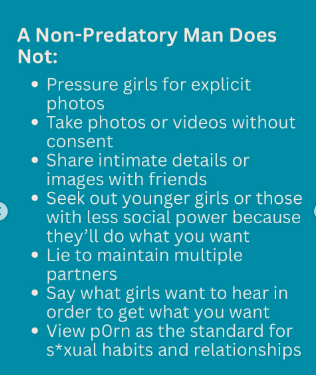
I know I can point to behaviors on that list that many of my players—past and present—have at least dabbled in. Some were probably professionals at them. And if I'm being honest, my younger coaching self often walked right past those clues. I pretended I didn't see them. I convinced myself I couldn't possibly connect those behaviors to larger patterns. I refused to acknowledge the full reality of that kid, all while excusing him in my own mind because he sweated a lot, played hard, and said "Yes sir" at practice.
That's the blind spot.
The kid who says "Yes sir" can still struggle with boundaries. The kid who dives on the floor can still pressure girls for photos. The kid who shows up early can still lie to partners. The kid who is beloved by teammates can still consume unhealthy messages about relationships, consent, and power.
The point isn't that our players are predators. The point is that "good kid" is not a prevention strategy.
That's the type of framing—and course correction—we want TeamsOfMen coaches to experience. We want coaches to move from "My guys would never" to "What conversations am I not having because I assume my guys would never?"
I feel this issue in my soul because I see examples of it playing out in front of me. Not always the extreme examples. Not always the criminal ones. But the everyday attitudes, jokes, pressures, assumptions, and behaviors that create the conditions for harm long before harm ever occurs.
And if you're reading this thinking, "I see it too, but I'm not sure what to do about it," that's exactly the point.
I see this.
I feel this.
I'm not sure how to take action on it.
I know a place where I can find the courage, information, and curriculum to start doing something about it.
Coach Prompts
What behaviors have you dismissed in athletes because they were otherwise "good kids"?
How can coaches challenge harmful attitudes before they become harmful actions?
What conversations are you currently not having because you assume your players already understand the topic?
Player Prompts
Can someone be a good teammate and still have unhealthy beliefs about relationships?
What does respecting boundaries look like in everyday situations, not just serious ones?
Why is it dangerous to assume that only "bad people" cause harm?
The Barrier Isn't Time
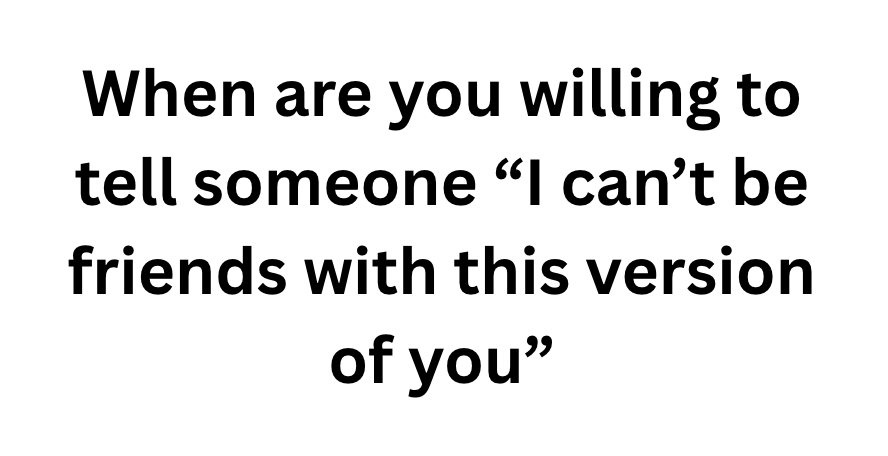
This was the final slide of an 11-minute TeamsOfMen session with my own high school boys basketball program yesterday. It was the capstone on a conversation that covered “Truth Hurts” as a false binary, “Your relationship is NOT a group project,” and this final examination of who our male athletes let into their “inner circle” and what would cause them to ask someone to LEAVE.
It was born of observations of our road trip last week, a couple instagram posts sent my way by staff (with the text “Coach, this is a TeamsOfMen clip”) and from a conversation with another coach in another state in another sport last week on text.
It really is that simple. But the simplistic nature of its creation doesn’t lessen it’s potential impact (nor, of course, guarantee it).
It required me to put together an 8 slide Canva show, roll out a screen with HDMI capability and have the guys in the bleachers as they came into practice. That’s the total “prep” work.
I lay this out not to brag about what I did, but to overcome the usual “I don’t have time” or “I’m not sure I could do that” push back I get from coaches when I ask them “What’s stopping you from executing stuff like this?”
We exist to help you do this work (from topics creation to best practices execution tips) but really, when it comes down to it, you have to overcome yourself. Whatever excuses you keep feeding yourself that keeps you from starting is no different from the ones you ask your players to overcome when you first get them in the weight, to post practice shooting or hill runs on their own in the summer.
“Take the first step. It’s the hardest. After that, it becomes the norm.”
Coach Prompts
What conversation have you been putting off with your team because you think it requires more time, expertise, or preparation than it actually does?
If you had 10 minutes before practice tomorrow, what topic would be most worth discussing with your athletes?
Which excuse is more common in your coaching life: "I don't have time" or "I'm not sure I know how"?
Player Prompts
Who currently has the most influence in your inner circle, and why?
What behaviors would cause you to ask someone to leave your inner circle?
What's a goal or habit you've been avoiding because you've convinced yourself you're not ready to start?
The Manosphere Is Already Coaching Your Players
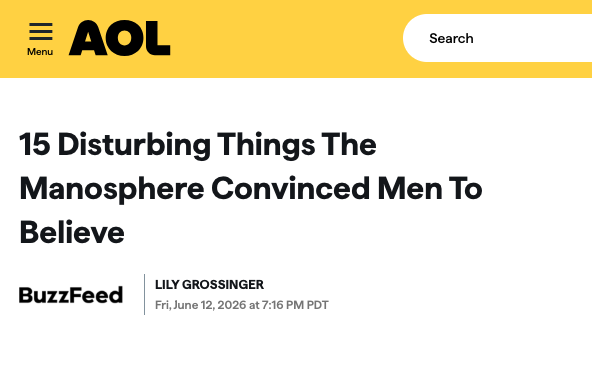
A lot of what I try to do with TeamsOfMen content, both here in the blog, on our YouTube Channel, and in person with whatever team we present to, is take real world studies and facts and TRANSLATE them for coaches. We want to take huge amounts of data and research and both break it down into “Why You Should Care” for coaches and “How You Can Act On This With Your Players” for entire programs. That’s our “We Read It So You Can Act On It” pledge.
This recent article on line is a great example of that. We take 15 bullet points from an author’s interviews and research into terrifying teachings of the Manosphere and condense them here into WHY COACHES OF MALE ATHLETES should give a damn.
But because this article is built as a list of 15 disturbing examples, I don’t think the best use of our time is to walk through every single one like we’re doing a book report. Coaches don’t need another recap of internet weirdness. You already know the internet is weird. You already know some of your guys are consuming things online that would make you want to throw their phone into the nearest body of water.
What I think matters more is asking which pieces of this actually show up in our team rooms, locker rooms, buses, group chats, weight rooms, and relationships. Which beliefs are most likely to travel from a podcast clip into a player’s sense of identity? Which ideas are most likely to hide underneath “confidence,” “leadership,” “discipline,” or “self-improvement”? Which ones, if left untouched, become the invisible curriculum our athletes are learning while we are busy trying to install an out-of-bounds play?
So here are the three reveals from the article that should hit coaches of male athletes the hardest:
1. Algorithm-to-identity pipeline
“The word refers to a sprawling network of male influencers who’ve built massive followings of young men by promoting misogynistic, racist, and far-right ideas under the guise of self-improvement and male empowerment.”
2. Women’s autonomy framed as a threat to male status
“Women don’t want to work or have careers. They prefer staying at home and just having children.”
Or the stronger relationship-control version:
“When we try to (politely, teeth-achingly politely) ask her husband about work, he’ll casually say, ‘Nah, you’re not smart enough to understand it, and I don’t feel like explaining it to you.’”
3. Grievance as masculinity
“He launched into an unprompted rant to me about how women were unfair to short men like him and how they don’t want short men and only want tall men.”
Now, as a coach, this is where you would say “I don’t want my guys going down that pathway. But what do I do besides say ‘Don’t listen to this stuff.’?” And that’s where we come in. We are here to say “Oh, these are your worries coach. We gotchu. Here’s 3-12 min sessions we would run (us OR you OR together) that we think will help your guys unlearn this nonsense.”
The best way to start that conversion flow?
Coach Prompts
What manosphere-adjacent messages have you heard your players repeat as “common sense” without realizing where those ideas came from?
When your athletes talk about discipline, confidence, leadership, or self-improvement, how do you help them separate healthy growth from Manbox nonsense?
If the algorithm is already shaping your players’ beliefs about women, relationships, and manhood, what intentional conversations are you putting in front of them instead?
Player Prompts
Who are the online voices shaping what you believe about women, relationships, and manhood?
How do you know the difference between someone helping you grow and someone teaching you to resent people?
What is one belief about being a man that you picked up online and probably need to examine more closely?
"Let Me See Your Phone"
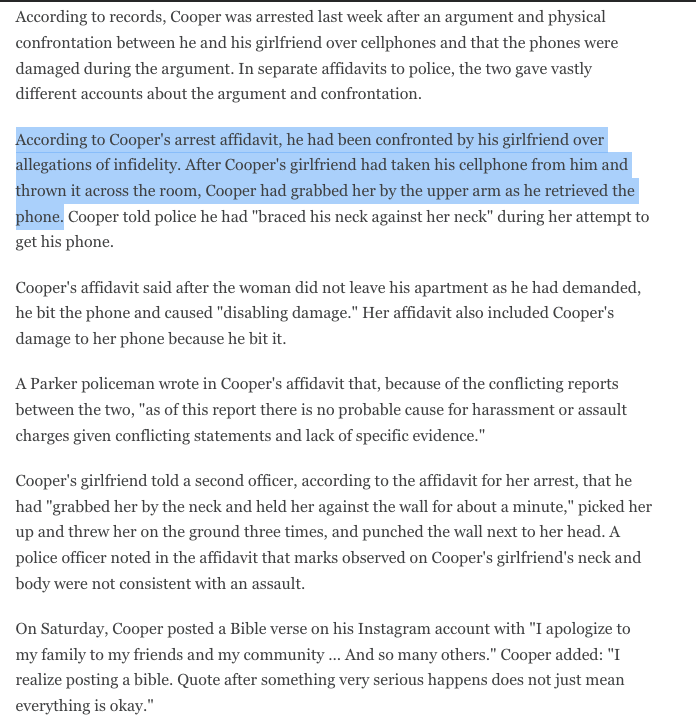
Today's headlines on ESPN included a write-up on the latest allegations involving Denver Broncos linebacker Jonathon Cooper. I won't spend much time on the details because, frankly, that's not where I think the value is for us as coaches. You can summarize it for your players as allegations that Cooper physically assaulted his girlfriend and violated protection orders, with the dispute itself reportedly stemming from an argument involving cell phones, accusations of infidelity, and access to personal communications.
There is immediate TeamsOfMen material here around healthy versus unhealthy relationships, emotional regulation, accountability, and keeping your hands to your damn self. But I actually think there is an overlooked connection point hiding inside the story that maps directly onto the daily lives of the athletes we coach.
The cell phone.
Not the lazy "kids are on their phones too much" conversation that adults seem determined to have every five minutes. I'm talking about the role cell phones now play inside intimate relationships.
I write this after spending an entire weekend driving a mini bus full of high school boys basketball players. When they weren't asleep or wearing headphones, they spent an inordinate amount of time huddled around somebody's phone trying to navigate texts, Snapchats, and interactions with girls. We've talked in our program about how a text thread is not a sanctioned watch party for all the homies, but we're still dealing with the constant chorus of "You should say this, bro," "She's capping," or "Don't respond yet." Personal conversations routinely become group projects.
Over the years, both as a college coach and now as a high school coach, I've also heard countless versions of "She wants to see my phone," "I need to check her phone," or "If you've got nothing to hide, why won't you let me look?" More often than not, those requests—and the arguments that follow—are rooted in skills we supposedly want young men to develop. Trust. Self-worth. Integrity. Communication. Emotional regulation. Yet whether they're playing out a script they saw on Love Island or genuinely worried they're being cheated on, I've seen plenty of 16- to 22-year-olds completely crash out over access to a cell phone.
That's why I think this story provides coaches with a natural entry point into a deeper conversation.
Not because you need to walk your team through every allegation. Not because you need to become a relationship counselor. But because almost every athlete in your room has either had this argument, watched a friend have this argument, or will eventually find themselves in a situation where trust, jealousy, insecurity, and cell phone access collide.
What does it mean if your partner wants to see your phone?
What does it mean if you want to see theirs?
Is access the same thing as trust?
Can a relationship survive without privacy?
Can it survive without trust?
At what point does concern become control?
Those are team room questions.
And if you don't want to tackle all of them, you can literally put the highlighted section of the article on the screen, point to the fact that this entire situation reportedly escalated over "let me see your phone," and ask your players what they think. My guess is you'll have more discussion than you know what to do with.
Coach Prompts
How has cell phone access changed the way young people navigate relationships?
What is the difference between transparency and surveillance in a relationship?
How can coaches create conversations about trust without becoming relationship experts?
Player Prompts
If someone asks to see your phone, what do you think they're actually looking for?
Is having access to a partner's phone the same thing as trusting them? Why or why not?
When does concern about a relationship become control over a relationship?
What Are We Teaching Young Men About Trust?
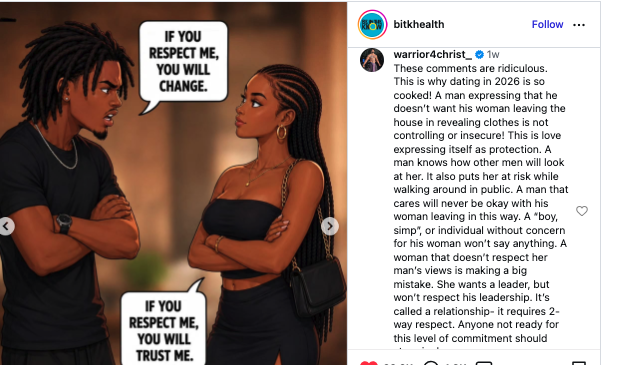
The topic (based upon the post above from @bitkhealth) most likely falls in that category coaches would tell me “Kip, there is NO WAY I’m touching that with a team.” It covers relationships, it involves how partners dress, and it could lead to BIG EMOTIONS in the room (all of which I understand a coach being leery of).
However, I also know this is 100% something your teenage and young adult players have thought about, witnessed, debated, or found themselves arguing about. And if we're being honest here, Coach, I bet you have too.
I would encourage you to approach this post in two ways. First, scroll through all of the slides. The author does a tremendous job laying out the different ways a man who is hell bent (and insecure) on controlling his partner might argue before she leaves the house, while also demonstrating how those arguments fall apart when examined through the lens of trust, autonomy, and healthy relationship skills.
Second, I would focus specifically on the comment featured in the title image of our blog today. What you're reading there is a Manbox-infused perception of how relationships are supposed to work. The commenter is somehow arguing that it is not insecure to micromanage a partner's clothing choices because "men will look at her a certain way" and that only a "simp" would allow this to happen. He even says that "she wants a leader," as if women are growing up like cattle looking for a ranch hand to guide them through the world.
What's most revealing is what sits underneath that viewpoint. It is fear masquerading as leadership. Fear of other men. Fear of losing control. Fear that trust is weakness. Fear that a partner exercising autonomy somehow diminishes your role in the relationship. None of that is leadership. Leadership requires trust. Leadership requires security. Leadership requires the ability to respect another person's agency, even when they make choices you would not make yourself.
What's most scary, Coach, is that you're probably not surprised by this viewpoint at all. You may have heard versions of it from players, friends, teammates, family members, or social media personalities. You might even have held pieces of it yourself at one point in your life. At the very least, I suspect most men can identify a season when they spent more time worrying about what other men might think, do, or say than they did trusting the person they claimed to care about.
That's why I think there is tremendous value in a coach being willing to tell that story. "I was insecure. I was a bit of a controller. I spent too much time worrying about other men and not enough time trusting my partner. I confused control with care." Then explain what helped you move beyond that viewpoint and why you eventually realized it wasn't serving either of you. Those conversations create opportunities for growth in ways that lectures rarely do.
This is a topic that requires intention and nuance. It is not a topic to avoid. And if your immediate reaction is that it should be avoided, then I would encourage you to do a little Mirror Training of your own and ask why.
Coach Prompts
What messages about relationships did you absorb as a young man that you later had to unlearn?
Where is the line between concern for a partner and control over a partner?
Why do conversations about relationships feel riskier for coaches than conversations about sportsmanship or teamwork?
Player Prompts
What is the difference between trust and control in a relationship?
Can someone genuinely care about a partner while also trying to control their choices?
What does healthy leadership look like in a relationship, and what does unhealthy leadership look like?
Sometimes The Answer Is The Answer
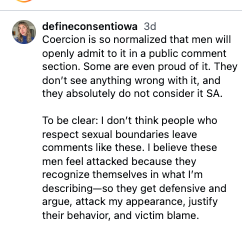
Before I show you the screen grabs of the comments men made that @defineconsentiowa is referring to (after she posted a simple “I believe if you pressure someone into sex after they repeatedly said no, that is SA”), I want you, as coaches of male athletes, to ask yourselves the following:
“Do my guys REALLY understand that no means no the first time?”
I ask you this because in today’s athletics “grind” and “chase your dreams” culture, I think you have witnessed your guys (and their parents) blowing past BOUNDARIES YOU SET first hand. What do I mean by this? Think to yourself about that conversation you had with a player about the role you foresaw for him on the team, and not a week later, he was asking you for another meeting to reassess. Or that time you explained to a player that his snap count was going to be lower that game, and then a day later he asked you for a meeting to talk about how he could get more?
Are these signals of a predator? NO. But they do show that young men today (who are emboldened and encouraged by the content they consume and the clichés their parents and adult influences peddle) rarely take the truth of their ability to be real. They embrace a “Mamba” mentality and think, “If I just push more, I can change his mind about me.”
And this is where NUANCE in coaching and life matters. Yes, you need him to embrace the idea of improvement and growth, but you also need him to understand that there are limits to this thing. He will most likely never be able to work hard enough to change your evaluation of him this season and his role (let alone magically become Messi overnight on the pitch). He won’t be able to grind into a 96 mph fastball if, as a senior, he is at 74 mph.
It’s not in the cards.
Now, hopefully you can see the through line here to the mindset of the awful takes below (when it comes to women saying no and trying to set a physical boundary)
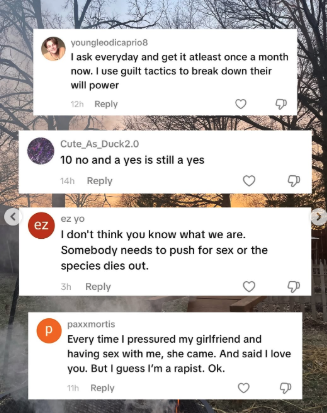
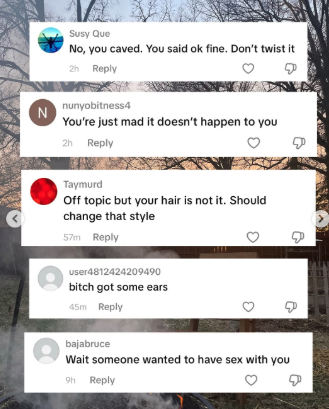
You can feel the rage here. You can read the lack of respect in the first NO. You also, if you’re being honest with yourself, can SEE in your mind that same kid who was wanting to lash out at you when you cut him, told him he wasn’t a starter, he wasn’t going to get carries in the red zone, or he wasn’t going to pitch this weekend.
The situations are obviously not equivalent. But the underlying mindset deserves our attention.
The belief that if I want something badly enough, my boundary is negotiable. The belief that your answer is merely temporary resistance. The belief that my desire matters more than your decision.
This IS a team room conversation.
And if we don't help young men understand the difference between persistence and boundary violation, someone else eventually will.
Coach Prompts
How often do we unintentionally celebrate "never take no for an answer" thinking in our athletes?
What is the difference between persistence and disrespect?
How can coaches teach boundary-respect without discouraging ambition and growth?
Player Prompts
When have you struggled to accept an answer you didn't want to hear from a coach?
What's the difference between advocating for yourself and refusing to respect someone's decision?
Can you think of situations where persistence is a strength and situations where persistence becomes a problem?
The Coaching Phrase I'm Reconsidering
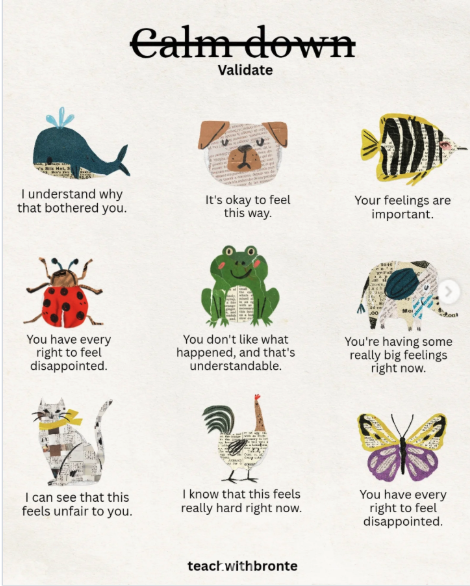
Don’t be fooled, Coach.
That urge you have right now, that feeling telling you “I don’t want to read this one, Kip. You got little kid graphics on here,” is your own Manbox conditioning popping up and trying to steer your behavior. Stick with me for at least another paragraph.
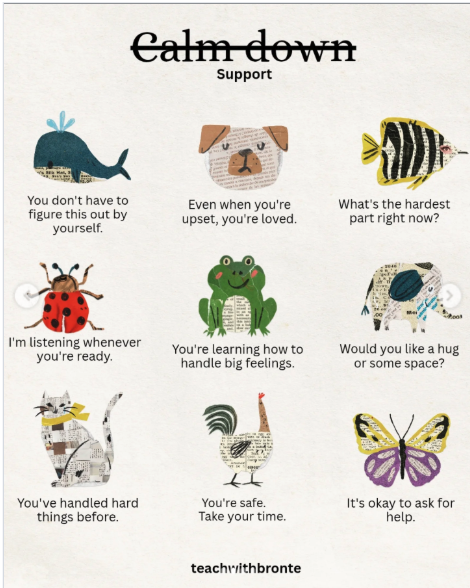
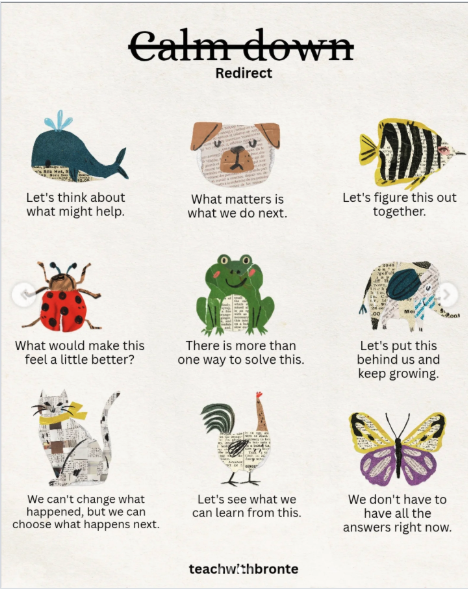
What you see is the first of three slides of alternative phrases for us to use in place of “Calm Down” (or, as I know I’ve been saying a lot to my guys this past year, “No crash-outs”). Just because they are part of a 3-graphic production from @teachwithbronte on Instagram, and she happens to be a kindergarten teacher in Australia, doesn’t make this “soft” or “too cute” for your male athletes. To the contrary, I think it’s worth figuring out which ones might be better language tools for you and your staff, and if not directly applicable, how you would swap in your words for similar usage to bring your player down from an emotionally charged reaction IN GAME?
I’m thinking of myself last weekend. I’m remembering a player furious with what he FELT like was both a poor call on a rebound by an official and his feeling that “no one is effing helping me on the boards”.
I pulled him.
I said, “NO, we aren’t going to start pointing fingers, dammit. I saw 4 other guys working with you. The call just didn’t go your way. Calm down.”
With these phrases, I think I would absolutely still PULL HIM, but I would lead with “What are you feeling the most? Because it looks like you're pissed at your teammates, but I bet you’re more upset with the ref,” and see where that takes us (either way the convo takes place right next to me on the bench).
I’ll put the other two graphics below after our usual prompts, so you and your staff can have a chance to work through the same “this instead of that” exercise I just modeled.
I’ll leave you with something poignant from the author herself: “Our words can either dismiss a feeling or help a child feel safe enough to move through it. Sometimes the most powerful response isn't telling a child to calm down—it's helping them feel understood.”
Coach Prompts
What phrases do you use most often when a player is emotionally escalating during a game?
How often do you lead with correction versus curiosity in those moments?
Which phrase from the graphics could realistically become part of your coaching vocabulary this season?
Player Prompts
When you're frustrated during a game, what responses from coaches help you regain control fastest?
Is there a difference between someone telling you to calm down and someone trying to understand why you're upset?
When have your emotions caused you to misidentify what you were actually angry about?
The Decision Hidden Inside Non-Decisions
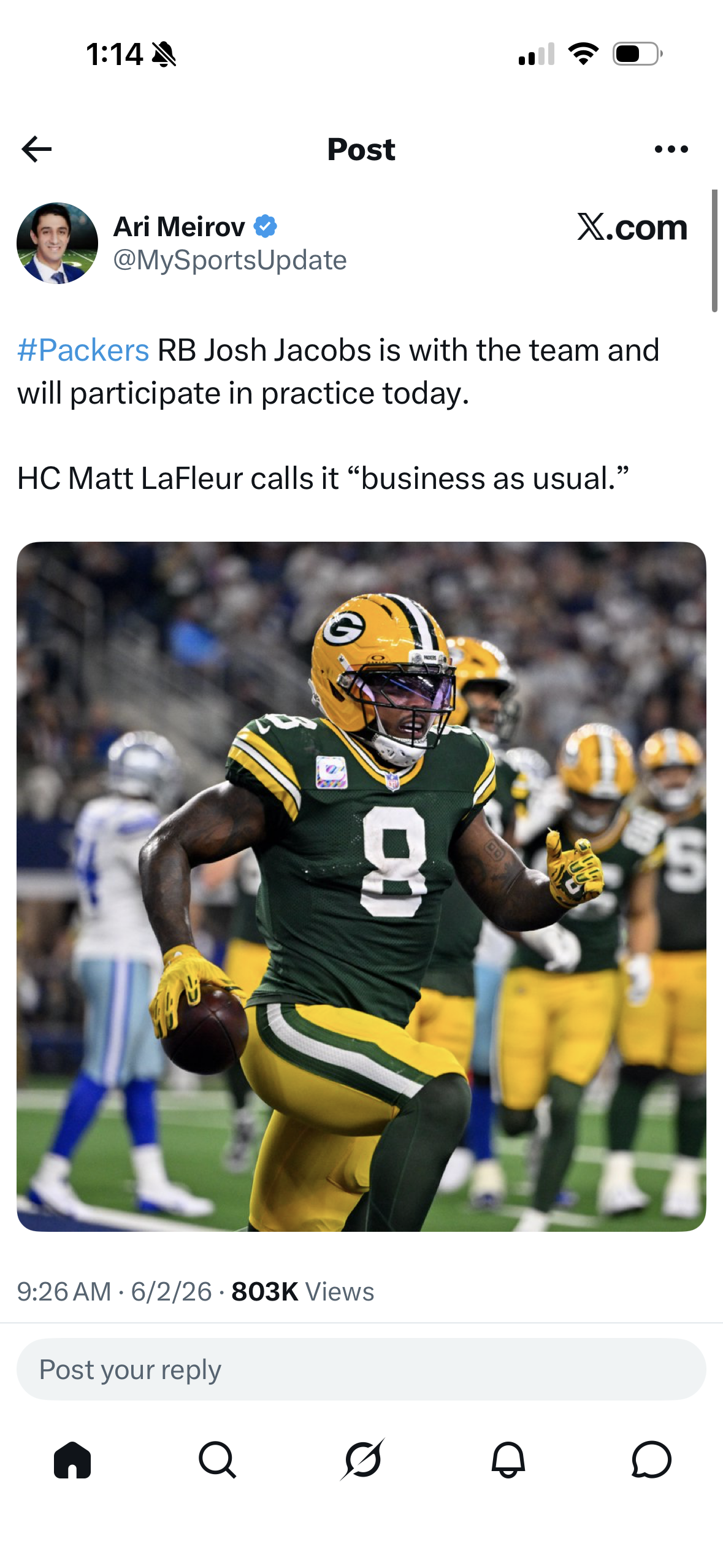
We wrote about Josh Jacobs’ legal troubles late last month, and this blog is obviously both a follow-up to that conversation and a critique of how the Packers’ coaching staff and organization chose to proceed after he was arrested on domestic violence charges.
As always, it is necessary to acknowledge that the legal process is still ongoing. Jacobs was clearly able to post bail and return to practice, and the case has not yet been resolved. It is also important to acknowledge that TeamsOfMen was born from a desire to help coaches actively engage male athletes in conversations and work that reduce and prevent violence against women. So when situations like this arise, I am far less interested in depth charts and rushing totals than in what leadership looks like when harm enters the picture.
What bothers me most is how quickly organizations retreat into business as usual.
That approach functions as a security blanket for coaches like, at least from the outside looking in, Matt LaFleur. What do I mean by that? I mean that if sport remains the sole focal point, coaches never have to grapple with the realities their players are wrapped up in beyond practices, film sessions, and dog piles of tackling. If I continually toe the company line and pretend my mouth is somehow sealed shut by an all-seeing "process playing out," then I never have to take a stand on how I believe someone representing my logo should act in society.
Instead, we get statements like, "We'll see what the authorities say."
It's a remarkably convenient sound bite.
It allows organizations to continue benefiting from a player's talent while avoiding any meaningful conversation about the possibility that someone may need intervention, accountability, or help. It avoids confronting the possibility that others may be at risk from the very behaviors being dismissed as separate from football. It allows leaders to remain comfortably passive while presenting that passivity as professionalism.
To me, that's "hear no evil, see no evil" leadership. Ostrich syndrome from grown men in positions of power.
And before someone jumps to the predictable response, no, I am not arguing that coaches should become judges, juries, or prosecutors.
What I am arguing is that organizations have choices.
At the very least, why couldn't the response be: "We will allow the legal process to play out. If our player is ultimately exonerated, we will welcome him back. If he is found guilty, we will not have compromised the integrity and stated values of our organization for a few extra rushing yards on Sunday."
That is a choice.
The fact that so few organizations make it tells us something.
Part of it is cowardice. Part of it is the persistent unwillingness to believe survivors. And part of it is the reality that many people in positions of power prefer systems that protect players because those same systems may someday protect them. If the precedent becomes that allegations of serious violence carry meaningful consequences during an investigation, then suddenly people have to imagine how those standards might apply to themselves, their friends, their colleagues, or their favorite players.
So the safest path becomes pretending there is no decision being made at all.
But there is.
Allowing business as usual is a decision.
Continuing to benefit from someone's labor while distancing yourself from the allegations surrounding them is a decision.
Claiming neutrality while one side of the situation is carrying all the risk is a decision.
It's gross. It's disappointing. And unfortunately, it remains a pattern that runs through major college athletics and professional sports alike.
We must be better.
Coach Prompts
When a player is accused of serious harm, what responsibilities do coaches have beyond simply waiting for the legal process?
What is the difference between respecting due process and avoiding leadership?
How do our actions communicate organizational values more clearly than our mission statements?
Player Prompts
What message does a team send when nothing changes after a player is accused of harming someone?
Can a team claim certain values if it only enforces them after a court ruling?
What does accountability look like before guilt or innocence has been legally determined?
Nuance Is Not Neutrality
One thing that keeps rattling around in my head after the Jackson Dart/Abdul Carter conversation is how quickly people want locker rooms to be "neutral."
When situations like that come up, especially among right-wing and MAGA-leaning folks, there is often an expectation that you shouldn't be upset with someone for supporting racist, sexist, homophobic, or transphobic nonsense because, under their version of locker room neutrality, we're all supposed to come together toward one common goal.
But that only serves one side.
A lack of nuance in the locker room. A lack of accountability in the locker room. A lack of critical analysis of our relationships and beliefs in the locker room. Those things overwhelmingly serve the side of oppression and hatred.
Because what is really being asked?
What is often being asked is, "Can I just come in here, play football, and continue holding these harmful views without anybody making me grapple with them?"
And if the answer becomes, "Actually, yes, we're going to talk about that too," suddenly people claim politics is invading sports.
I don't think that's what's happening at all. I think what is actually happening is that people are being asked to engage with nuance. And nuance is not neutrality. Those are not the same thing.
I think this applies to fandom too.
A lot of fans, particularly right-leaning fans, want sports to remain an escape from reality. They don't want to deal with the adult complexity that comes from recognizing that the quarterback on their favorite team isn't a robot designed to throw touchdowns. He's a human being. And human beings have beliefs. They have values. They make choices.
Sometimes those choices make you uncomfortable. Sometimes those beliefs make you question whether you want to cheer for them. And when that happens, the escape gets interrupted. But that's not politics ruining sports.
That's adulthood.
That's being asked to hold multiple truths at the same time. The player might be talented. The player might help your team win. The player might also support ideas you find harmful. All of those things can be true simultaneously.
That's nuance.
Nuance is being able to sit with multiple realities at once and emerge with a critical perspective on all of them.
Neutrality, on the other hand, often becomes a demand that nobody critically examine anything because doing so might make someone uncomfortable.
And if we're serious about developing young men, I don't think neutrality is the goal.
I think the goal is helping them become capable of navigating complexity.
Coach Prompts
What topics get labeled "too political" in your program, and who benefits from avoiding them?
What is the difference between creating space for disagreement and demanding neutrality?
Are your players learning how to navigate complexity or simply avoid it?
Player Prompts
Can you support a teammate while disagreeing with some of their beliefs?
What's the difference between neutrality and nuance?
Have you ever felt pressure to stay silent because speaking honestly might make others uncomfortable?
What If I Say The Wrong Thing?
One of the most honest conversations I had during my recent appearance on the Hoop Heads Podcast had nothing to do with offensive sets, leadership strategies, or team culture. It centered around a fear I hear from coaches all the time.
"What if I say the wrong thing?"
Beneath that question are a dozen others.
What if a parent complains? What if a player misunderstands my intent? What if a conversation gets taken out of context? What if addressing something beyond basketball puts my job at risk?
I think those fears are real. Pretending they don't exist doesn't help anyone.
We coach in a time where people are understandably protective of their children, where communication travels instantly, and where a single comment can be amplified far beyond the original conversation. It makes sense that some coaches would hesitate before stepping into discussions about character, relationships, identity, emotions, or the social pressures their athletes face.
But I also think there is a danger in allowing fear to become the deciding factor in what we choose to teach.
The reality is that coaches are already shaping young men every day. Silence teaches. Avoidance teaches. The decision not to address something is still a decision, and it still carries a lesson.
What has helped me over the years is remembering that the goal is not to convince athletes to become a specific version of who I think they should be. The goal is to expand what they believe is possible.
Too often, young men inherit a very narrow definition of manhood. They are told, directly or indirectly, what they are supposed to care about, how they are supposed to act, what emotions are acceptable to show, and what parts of themselves they should hide. My job is not to hand them a different rigid script. My job is to help them examine the script they've been given and introduce them to possibilities they may have never considered.
When the conversation starts there, most of the fear begins to lose its grip.
You are not telling athletes what to think. You are teaching them how to think.
You are not prescribing an identity. You are creating opportunities for reflection.
You are not trying to control who they become. You are helping them see that they have choices.
And frankly, that's what great coaching has always been.
Coach Prompts
What important conversation have you avoided because of fear of getting it wrong?
How do you distinguish between teaching athletes what to think and teaching them how to think?
What lessons might your athletes be learning from the topics you choose not to address?
Player Prompts
Who has helped you see possibilities for yourself that you hadn't considered before?
What messages about being a man do you hear most often from society, social media, or peers?
What parts of yourself feel most authentic, regardless of what others expect from you?
A Haven Is Not A Hideout
One of the most common misconceptions about TeamsOfMen is that we're trying to create a soft landing spot where athletes are protected from accountability, hard conversations, or personal growth. I understand where that assumption comes from. When people hear words like "haven," "emotional fluency," or "vulnerability," they sometimes imagine a space where expectations are lowered and standards disappear.
That's never been the goal.
What we're trying to create is what some researchers and educators call a "third space"—a place where young people know they will be challenged to become better while also knowing they are valued as human beings. A haven is not a hideout. It isn't a place to escape growth. It's a place where growth becomes possible because trust exists alongside accountability.
The athletes I work with are asked to look in the mirror regularly. They're asked to reflect on their choices, examine their assumptions, own their mistakes, and consider the impact they have on the people around them. Those aren't soft expectations. In many ways, they're harder than running another sprint or lifting a little more weight.
The part that often gets overlooked is that coaches are being asked to do the same thing. If we're going to ask young men to engage in self-reflection, we should be willing to do it ourselves. The mirror isn't just for players.
I often think about the Aspen Institute research that asked young people what they wanted most from sports. Winning mattered. Competition mattered. Improvement mattered. But the highest-rated response wasn't about championships or trophies. It was the desire to learn life skills that would help them beyond athletics.
That finding shouldn't surprise us.
Most athletes understand, whether they can articulate it or not, that their playing careers will eventually end. What they are searching for is something that lasts longer than the final game.
The reality is that players are far more likely to buy into a coach's vision when they feel seen as people first. Coaches love talking about leadership and culture, but leadership is not simply getting athletes to survive a hard workout together. Culture is not just shared suffering. If a player feels invisible, unheard, or valued only for what he produces, eventually that disconnect shows up. And when the hardest moments arrive—when the charge needs to be taken, the box out needs to happen, or the sacrifice needs to be made—it becomes much harder to ask for complete commitment from someone who doesn't feel connected to the people around him.
A haven is not the absence of standards.
It's a place where standards and belonging exist together.
Coach Prompts
How do you currently balance accountability and belonging within your program?
What opportunities do your athletes have for self-reflection beyond athletic performance?
Are your players being asked to grow only as competitors, or as people as well?
Player Prompts
When do you feel most valued by your coaches and teammates?
What life skills have you learned through sports that extend beyond competition?
What does accountability look like when it's paired with trust rather than fear?
“That’s Not Him”
One of the points I shared during my recent appearance on the Hoop Heads Podcast was that I think coaches sometimes spend too much time focusing on behavior and not enough time investigating what is underneath it.
Every coach has had the experience. A player says something cruel. A player starts a fight. A player shows off. A player takes a joke too far. A player does something that leaves us shaking our heads. And somewhere in the conversation that follows, a coach inevitably says, "That's not him."
Maybe.
But maybe it is. Or at least maybe it's the version of himself he feels pressure to become in that moment.
One of the concepts we discuss in TeamsOfMen is the idea of "man points"—the invisible scoreboard many boys and young men carry around that tells them they have to constantly prove something. Toughness. Dominance. Fearlessness. Status. Control. Popularity. Coolness. Whatever the category, the message is often the same: perform correctly and you'll earn approval.
When that scoreboard becomes the priority, young men start performing instead of being. They interrupt because they want attention. They laugh because they don't want to look weak. They pile on because they don't want to be the next target. They say things they don't actually believe because they're trying to earn approval from the room.
From the outside, it looks like bad behavior. Sometimes it is. But the behavior is often the symptom, not the cause.
This is why simply telling boys to "be respectful" rarely creates lasting change. If we never address the pressures they feel to perform masculinity in a certain way, we're asking them to fight a battle we haven't even named.
The question isn't always, "How do I stop this behavior?" Sometimes the better question is, "What is he trying to prove?"
That question won't excuse harmful actions. But it might help us understand them. And understanding creates opportunities for coaching that punishment alone never will.
Coach Prompts
Think about the last time you said, "That's not him." What behavior were you reacting to?
What pressures might that athlete have been feeling in that moment?
How often do you address the belief underneath the behavior rather than the behavior itself?
Player Prompts
Have you ever done something because you felt pressure to impress others?
What are some of the unspoken expectations young men feel from teammates, friends, or social media?
How can you tell when you're acting like yourself versus performing for approval?