

Crash Out Culture: The Moment, The Message, The Missed Opportunity
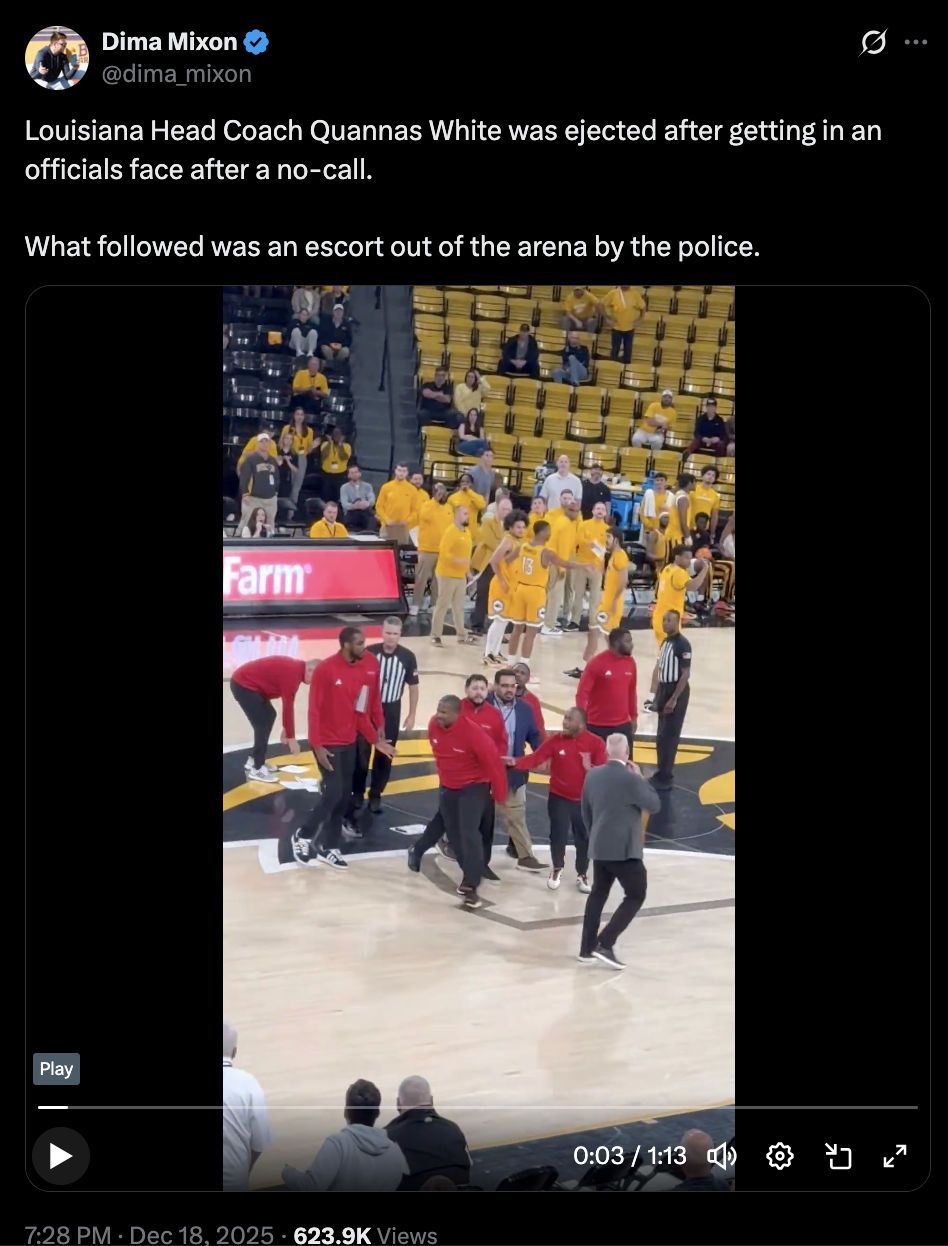
When Louisiana Head Coach Quannas White was ejected after a heated outburst at Southern Miss, the scene went viral. What followed wasn’t just a walk to the locker room—it was a full police escort off the floor. That visual, and the reaction to it, deserves your time and reflection.
Here’s why we’re putting it front and center:
1. You & Your Staff: Mirror Check
Bad officiating happens. And yes, frustration can boil. But we can’t be the ones begging our athletes to stay poised if we’re the ones cracking first. I’ve gotten techs. I’ve barked at stripes. But I’ve also made a decision the last five years: No more “working the officials,” no more sideline theatrics disguised as passion. Because my guys are watching. So are yours.
In the clip, it takes nearly the full staff to hold Coach White back at halfcourt. That image—grown men physically restraining another grown man—is not one we should ever accept as “part of the game.”
2. What the Comments Say About Us
Scroll the replies and you’ll see the real reason this clip belongs in a TeamsOfMen conversation: the reaction isn’t “How did we get here?” It’s “Why’d they need cops?” “This is soft.” “He didn’t do anything.”
This is crash out culture. The belief that our emotional spirals are someone else’s fault. The refusal to hold men accountable for public meltdowns. The normalization of grown men acting like kids when the pressure gets high.
We’re not here to pile on Coach White. We’re here to say: We’ve been there. Or we’ve been one laugh away from being there. The difference is whether we learn from the moment or excuse it.
Coach Prompts
How often do you and your staff talk about officiating strategy—beyond Xs and Os?
What message does your sideline behavior send your players after a tough call?
If a video of your worst sideline moment went viral, would it reflect your values?
Player Prompts
How do you react when things feel “unfair” on the court? What’s your outlet?
Have you ever watched a coach crash out? What did you think in that moment?
Why might the ability to stay composed under fire be a true separator—not just in games, but in life?
Success, Access, and the Lie We Keep Teaching Young Men

I want to be clear up front: Stefon Diggs has denied the allegations, and the legal process matters. Nothing here is about declaring guilt before facts are established.
But this situation still belongs in a team room conversation — especially with young men.
Because when you zoom out, this isn’t just about one player or one case. It’s about a script that keeps showing up.
Diggs is facing serious criminal charges. His attorney has reportedly attempted to seal records and disclosed efforts to resolve the situation financially. Separately, public reporting confirms multiple children with multiple women in overlapping time frames — including while in a highly visible relationship.
People will ask, “Why is this any of our business?” or, “Why would I bring this up with my players?”
Here’s why.
This is a textbook example of the Man Box formula that tells young men:
When the scoreboard says you’ve made it — when your stats, money, or status hit a certain level — access to women’s bodies is part of the reward.
That script doesn’t just distort how men treat women.
It distorts how men treat themselves.
Because having that many intimate relationships at the same time isn’t just about desire — it reflects a complete lack of boundaries, responsibility, and respect for bodies, consent, and consequences. At the very least, it signals behavior driven by entitlement rather than intention.
And let’s stop pretending this is “separate” from football.
If Diggs misses time because of legal consequences tied to violence or coercion, it costs the Patriots. When we say, “I don’t get into their personal lives,” this is exactly where that logic collapses. Personal choices don’t stay personal when they reflect power, control, and disregard for others.
Some will say, “Those women throw themselves at famous athletes.”
Cool — then answer this honestly:
What did you teach your players about the value of their own bodies?
About consent being mutual, ongoing, and not something money, fame, or effort buys?
If we never challenge the script that sex is proof of success, we shouldn’t be shocked when men chase validation instead of integrity — and leave wreckage behind.
This isn’t about policing relationships. It’s about teaching young men that achievement does not entitle you to anyone’s body — including your own being treated as disposable.
If we won’t talk about this, we’re not neutral. We’re complicit.
COACH PROMPTS
Where does your program explicitly challenge the idea that success equals sexual access?
How do you talk about consent outside of legality — as a value and a responsibility?
What message do your players receive about bodies, boundaries, and accountability?
PLAYER PROMPTS
Where did you learn what success with women is “supposed” to look like?
How do you know when desire turns into entitlement?
What does respecting your own body actually require of you?
Power, Scoreboards, and the Lie We Keep Telling Ourselves
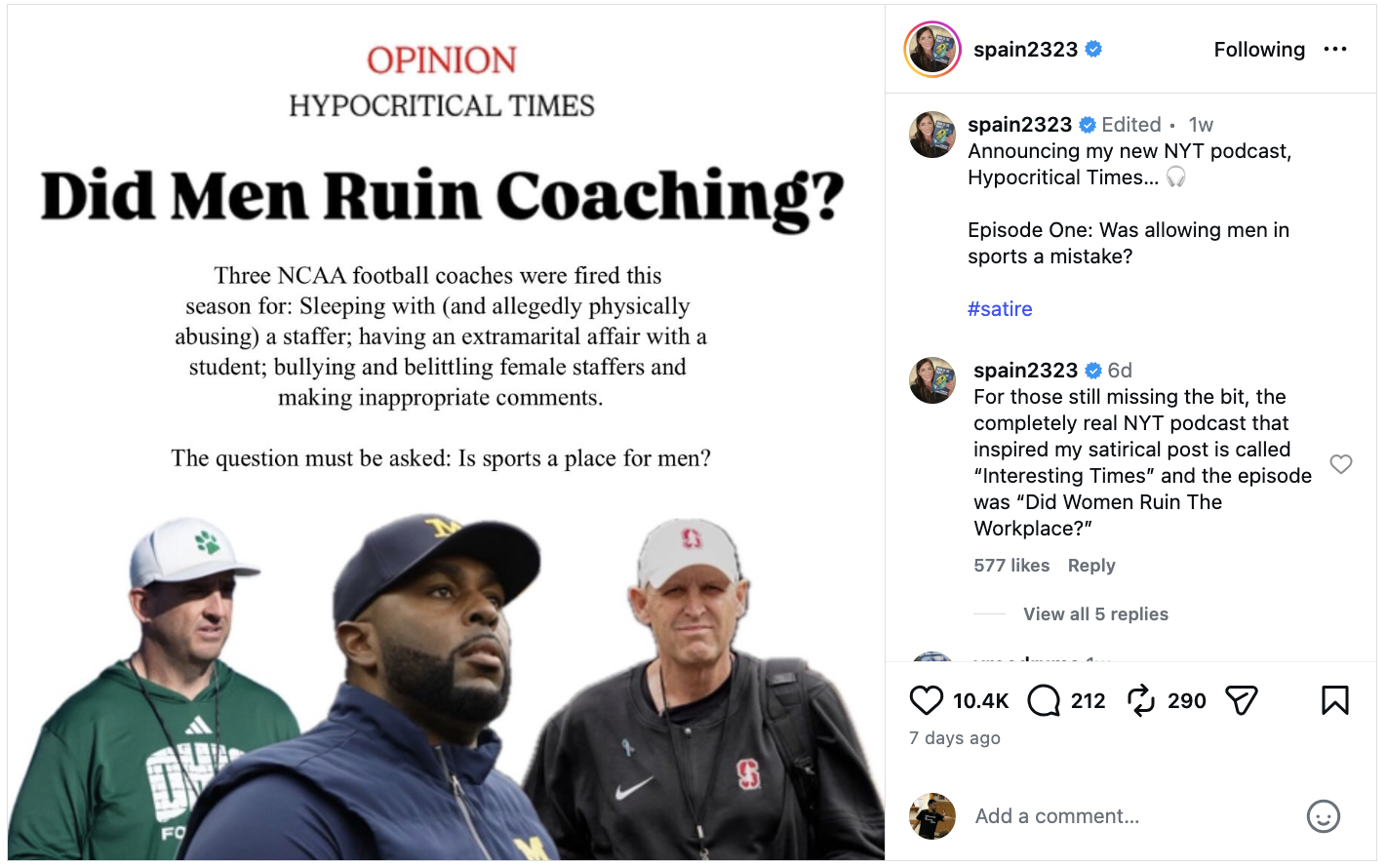
I’m sharing this spoof post from Sarah Spain not just because I respect her voice in the sports world, but because it lands on something we keep refusing to sit with.
Her satirical headline — “Did Men Ruin Coaching?” — is a direct response to two things happening at the same time:
a rash of college football coaches committing serious moral violations while in positions of power, and a very real New York Times podcast episode titled “Did Women Ruin the Workplace?”
That contrast matters.
Because we do have a long list of men who decided that scoreboard success should come bundled with either access to women’s bodies — often subordinates, often within clear power imbalances — or the right to rule their environment through vitriol, intimidation, and unchecked rage.
And yet we still call this a profession that “builds character” through the game alone.
Then comes the second wave — articles and commentary from other men saying, “We weren’t taught how to hold this kind of power,” followed by a full DARVO pivot that turns the disgraced coach into the victim. Suddenly the focus isn’t the wife, the children, or the younger woman now publicly branded for her proximity to power — it’s the coach’s pain, his pressure, his fall from grace.
Read the comments under Spain’s spoof and you’ll see it immediately:
Defensiveness. Anger. Blame-shifting.
“Women will get ya.”
“The power of the p***y.”
Every cliché soaked in Man Box thinking, all designed to avoid the same thing: accountability.
Here’s the reality we don’t want to face:
People who are willing to abuse power often seek it out — and are rewarded with it.
Which is exactly why I’ve always believed coaches of young men sit in a uniquely dangerous and hopeful position. We can reinforce the same scripts that keep producing these outcomes… or we can interrupt them early.
Reimagining manhood isn’t a side project to coaching.
It’s the work.
And whether we like it or not — WE are the work.
COACH PROMPTS
Where does your program explicitly talk about power — not just leadership?
How do you respond when accountability for men is framed as an attack instead of an expectation?
What messages about entitlement and access are your players absorbing without anyone naming them?
PLAYER PROMPTS
How do you usually react when someone you admire is held accountable — defensive, curious, or reflective?
What stories about success and access have you been taught that deserve to be questioned?
What kind of man do you want to be trusted with power — and why?
You Can’t Teach the Pause If You Don’t Use It
I’ve been a Georgetown fan since the Big John Thompson and Patrick Ewing days — through the Zo and Dikembe twin towers (I saw Zo’s final NCAA Tournament game in Boise), and peaking during the Allen Iverson Elite Eight run. I love the Hoyas. And I think Ed Cooley has done a credible job trying to turn that program around.
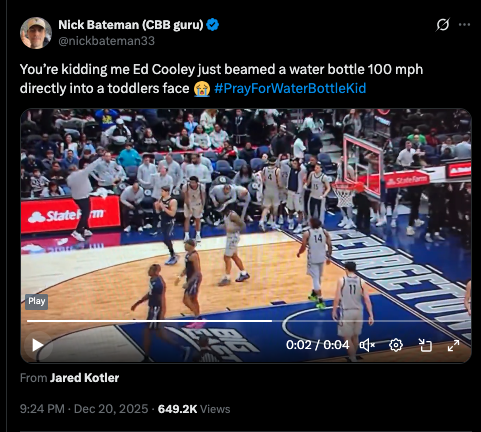
Which is why I was deeply disappointed seeing the clip last week of him losing emotional regulation and hurling a water bottle into the stands — striking a child.
I have zero doubt he did not intend to hit a kid. But intent isn’t the point here. The pause is.
If we expect players to pause in moments of disappointment, rage, or injustice — if we tell them to breathe, to regain composure, to channel emotion instead of ejecting it — then we have to ask: what was the best-case scenario when that bottle left his hand?
At best, someone was getting splashed.
At worst… exactly what happened.
I’m using this moment today because I tell partner programs and coaches — including my own staff — something we forget too often: kids are incredibly perceptive. They don’t miss contradictions. They smell hypocrisy immediately. They notice when the standard shifts depending on who’s wearing the whistle.
And when that happens, trust erodes.
This is now real work for Coach Cooley. Not a press release. Not an apology tour. But the slow, intentional rebuilding of the credibility required to look a player in the eye and say, “Hey — calm down,” or “Get it together.”
You don’t get to teach emotional regulation from a place of contradiction.
You teach it by modeling it — especially when it’s hardest.
COACH PROMPTS
What moments in your season test your ability to use the pause button the most?
Where might your players be quietly noticing contradictions between what you say and what you do?
How do you repair trust when you miss the moment?
PLAYER PROMPTS
How do you usually release frustration — and who might be affected by it?
What does “pausing” look like for you when emotions spike?
How do you respond when leaders around you don’t model what they expect?
A Stat Isn’t the Same Thing as a Story

We live in a world—and a coaching culture—that loves numbers.
Wins. Losses. Milestones. Bullet points.
But numbers are terrible at telling the whole story of who we became while chasing them.
I recently crossed a career stat that’s supposed to come with celebration.
Instead, it came with questions.
About time.
About comparison.
About the voices we internalize that tell us what should matter.
That tension—between the scoreboard and the mirror—is exactly where TeamsOfMen lives.
If you’re a coach, leader, or man who’s ever hit a number and still felt unsettled, I wrote about it more fully here: https://kioane.medium.com/a-stat-i-dont-know-how-to-feel-about-8ff2312808ba
Coach Prompt:
What stat do you secretly use as a verdict on yourself?
Player Prompt:
Who told you what “success” is supposed to look like—and who benefits from that definition?
The False Binary That Keeps Hurting Young Men
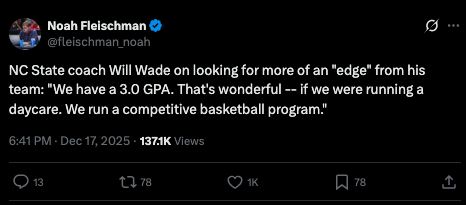
This quote attributed to NC State head coach Will Wade is a perfect example of the false binary TeamsOfMen exists to pull coaches out of.
The idea that we can either win or develop competitive young men who are thoughtful, emotionally fluent, and successful in the classroom — but not both — is a lie we keep telling ourselves because it’s convenient.
I’ve long recruited against that mindset. I tell my high school players the same thing now:
We are chasing both.
We refuse to sacrifice one for the other — in either direction.
We can compete.
We can be intense.
We can want to win badly.
And at the same time, we can demand academic excellence, emotional growth, and basic human decency.
If this quote is accurate (and to be clear, I haven’t done a deep journalistic dive to verify it), it reflects a familiar coaching shortcut:
“My job is to win, so winning requires sacrificing everything else.”
“You can’t win with softness.”
“Competitive teams need edge, not empathy.”
That’s Man Box–bathed nonsense.
Young men are capable of duality. They can be fierce competitors and smart as hell. They can be driven and emotionally aware. They can handle nuance — if we actually hold them to it.
Here’s the part that worries me most:
Once you decide it’s okay to expect less of your players as people, it becomes very easy to treat them as less than fully human.
That’s when coaching turns into rage.
Into humiliation.
Into constant demeaning language disguised as “standards.”
We don’t need that to win.
We never did.
We can be better — and the best programs already are.
COACH PROMPTS
Where have you unconsciously accepted a false choice between winning and humanity?
What standards do you hold players to off the court that match the intensity of your on-court demands?
How does your language communicate belief in your players’ full capacity — or lack of it?
PLAYER PROMPTS
Do you feel like your coaches expect you to be great in all areas — or only when it affects the scoreboard?
How do you define “competitive,” and who taught you that definition?
What would it look like to chase excellence without losing yourself?
We Are the Work — Even on the Good Days
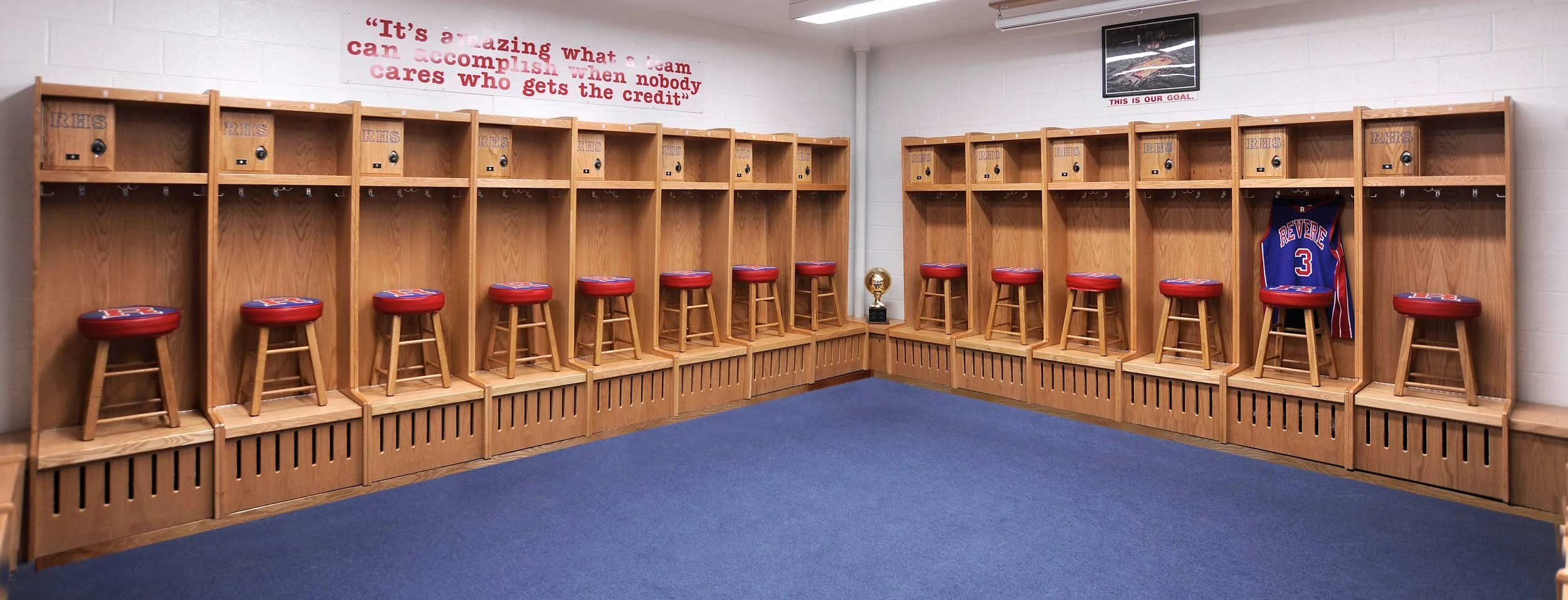
The last few weeks in our team room gave me a perfect snapshot of why this work matters — and why it never ends.
First, the win.
This fall, we spent time connecting consent to something concrete for our guys: my locker, my stuff, my space. What it means to ask before using someone else’s things, and what it means to trust that you can leave your stuff unguarded in a shared space.
Then it showed up.
A junior needed smelling salts and asked a coach for another player’s number. The coach said, “Go ahead — he won’t mind.” And the kid paused and said,
“No — remember, we said we have to ask.”
That moment mattered.
That was language turning into action.
That was TeamsOfMen showing up without a worksheet or a speech.
And yeah — we all need those moments. Proof that what we’re saying actually sticks.
But a week later? Reality checked us.
Players started coming in:
“Coach, someone took my shorts.”
“My shooting shirt got stolen.”
“My stuff keeps getting moved.”
Same space. Same standards. Same conversations.
Different choices.
And that’s the truth of this work. Growth isn’t linear. Progress doesn’t cancel relapse. One breakthrough doesn’t eliminate the need for reinforcement.
So we don’t quit.
We don’t get cynical.
We don’t pretend the win means we’re done.
We create more intentional space.
We name what’s happening.
We keep teaching, correcting, and modeling.
Because consent isn’t a lesson you deliver.
It’s a practice you build.
And in this program, we don’t outsource that responsibility.
We are the work.
Every day.
COACH PROMPTS
Where have you seen your values show up in small, unscripted ways?
How do you respond when progress and regression coexist?
What systems could reinforce trust and consent in shared spaces?
PLAYER PROMPTS
How does asking for permission change how you treat people’s stuff — and their space?
What does trust in a locker room actually require from everyone?
When you mess up, do you own it or hope it goes unnoticed?
Chest Out. Hearts Open. Twelve Minutes.
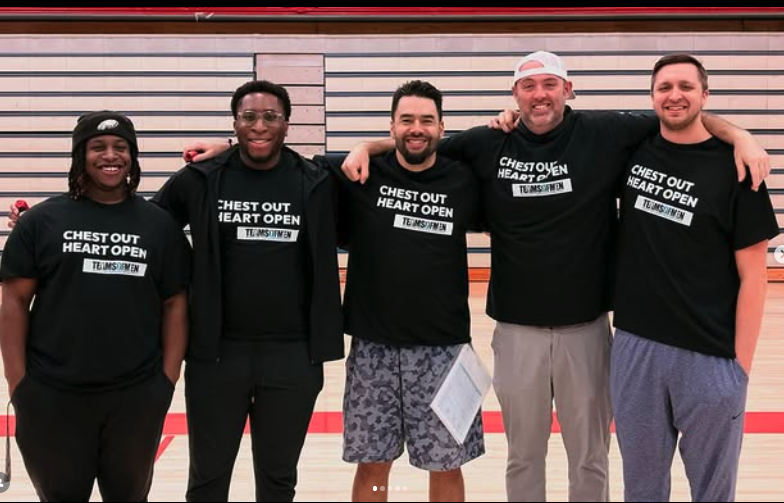
Yesterday’s TeamsOfMen session with our guys didn’t require a guest speaker, a slide deck, or a 90-minute workshop.
It started with coaches wearing the same T-shirt.
We asked a simple question:
“Raise your hand if you’ve heard ‘Say it with your chest’ or seen someone puff up.”
Every hand went up.
When we unpacked it, the pattern was clear. That phrase almost always lives in moments of conflict—drama, tension, proving you’re “about that life.” Volume goes up. Bodies get bigger. Armor comes on.
Then we flipped it.
Chest Out. Hearts Open.
What if expanding your chest wasn’t about intimidation or protection—but about making room?
Room for honesty.
Room for emotion.
Room for connection.
Room for a pause button before things escalate.
We didn’t ask for oversharing. We didn’t force vulnerability.
We just created twelve intentional minutes for small-group conversation and let the meaning do the work.
That’s the point I want other coaches to hear:
You can drive real change without overhauling your program.
A meaningful T-shirt.
A shared language.
A short, protected space on the calendar.
When coaches model it—literally wear it—and then invite players to talk about it, you start loosening the old script that says masculinity only shows up loud, hard, and closed off.
Same gym. Same practice plan.
Different posture.
Chest out.
Hearts open.
Debunk This With Your Players — Please
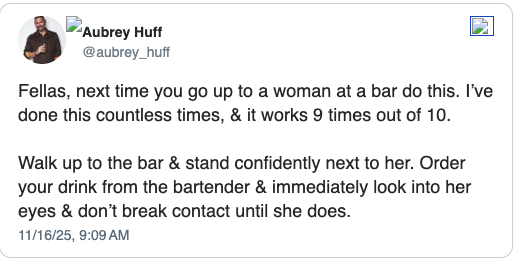
This post from former SF Giants player Aubrey Huff went viral last month, and as part of my job, I wanted to flag it as something coaches should actively debunk with their players. (Worth noting: if you click his account now, it no longer exists — draw your own conclusions. I’ve included a screenshot in the blog so we can focus on the content.)
Here’s how I’d use it with a team:
Put the bullet points of his so-called “seduction plan” on the screen. Then ask your guys:
“Have you seen dudes in your circle try this?”
If you coach high school players, ask if they’ve seen versions of this in the cafeteria, at Jamba Juice, or in the hallway between classes.
If they laugh and say, “Hell no,” ask them which parts are ridiculous — and why.
If they say, “Yeah, that should work,” ask them again: why?
Because when you actually read the plan, what you see isn’t confidence — it’s intimidation.
Forcing yourself into someone’s space.
Locking eyes until they have to disengage.
Putting a woman in an uncomfortable position where interaction is required just to exit the moment.
And remember, Huff claims “it works 9 times out of 10.”
Ask your guys what they think “works” means.
It’s almost certainly not mutual connection.
It’s almost certainly some version of “I got something from her.”
That’s the Man Box at work — turning women into outcomes, interactions into transactions, and discomfort into a strategy. And when young men internalize that script, they stop asking, “Is this welcome?” and start asking, “How do I force the result?”
That’s exactly the mindset we’re trying to interrupt.
Confidence isn’t coercion.
Presence isn’t pressure.
And if your “plan” only succeeds when someone feels cornered, it didn’t work — it harmed.
COACH PROMPTS
What behaviors are your players confusing with “confidence”?
How often do young men see intimidation modeled as attraction in media and online spaces?
How can you help players define success in relationships without entitlement?
PLAYER PROMPTS
How would you feel if someone used this approach on someone you care about?
What’s the difference between confidence and making someone uncomfortable?
What does real interest look like when both people actually have a choice?
When Scripts Fail, Men Get Dangerous
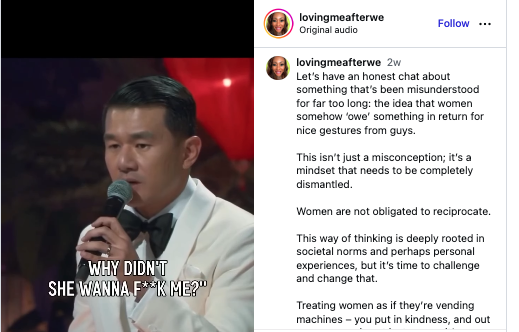
I saw this 35-second clip from a stand-up comedian on Instagram and immediately thought: our guys need this.
He says it plainly, humorously, and dead on: Women don’t owe you anything.
Not because you bought flowers.
Not because you fixed a computer.
Not because you paid for dinner.
Not because you were “nice.”
He repeats: “Women aren’t vending machines you put kindness into until sex falls out. They’re not coffee cards where ten stamps earns you access to their body.”
This matters — especially for athletes.
Because too many young men are still living inside scripts that say: effort equals entitlement. And in sports spaces, that script gets reinforced in subtle ways: wins, status, attention, stats, visibility — all quietly sold as proof you’ve “earned something.”
So when the script doesn’t play out? When the interest doesn’t turn sexual? When someone says no?
Men don’t pause and reflect.
They flip.
They rage.
At best, they say awful things.
At worst, they do awful things.
That’s why this clip isn’t just funny — it’s preventative.
Here’s how I’d use it with a team:
Play it. Sit in silence.
Play it again. Sit again.
Play it a third time.
Then ask for reactions.
Not lectures. Not debates. Just honesty.
Because if your players can’t internalize that no one owes them access — ever, then we’re failing them long before they leave our locker rooms.
COACH PROMPTS
Where do athletes quietly learn the idea that success or effort equals entitlement?
Have you ever explicitly said to your team that kindness does not obligate intimacy?
How can silence after a clip be more powerful than explanation?
PLAYER PROMPTS
Where did you first learn the idea that doing “enough” earns you sex?
How do you usually react internally when a script you expected doesn’t happen?
What would change if you removed entitlement from your expectations completely?
Accountability or Excuses? What This Schefter Clip Teaches Us
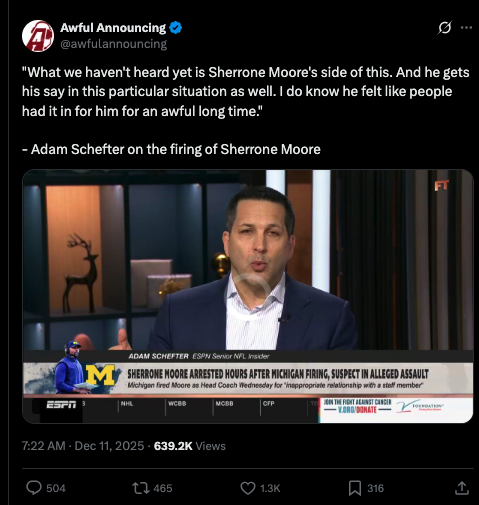
Today’s blog sits at the crossroads of two things happening at once:
• The firing of Sherrone Moore as Michigan’s head football coach after an extramarital affair with a staff member
• The ESPN clip of Adam Schefter trying to frame the fallout in a way that softens Moore’s responsibility
Let’s start with Moore.
This is one of the oldest man-box scripts in existence: success, fame, and high-status roles come packaged with access — including access to women’s bodies. Nobody says the quiet part out loud, but boys absorb it early, and men in power often act on it later. Even in consensual situations like this one appears to be, it still fits the pattern: a partner who supported you through your lowest, through the climb, through the dream becoming real… and then, once you hit the peak, you betray them with someone newer, younger, and far less likely (or able) to look you in the eye and say NO.
That alone is worth its own team discussion:
“If I ever reach the level I dream of… how will I keep my integrity intact?”
But here’s the part that needs urgent attention inside programs:
Schefter’s framing is straight out of the DARVO playbook.
If you’re not familiar, DARVO =
Deny. Attack. Reverse Victim and Offender.
It’s one of the most common strategies men use when accused of harm — especially in sexual misconduct cases — and here you can watch Schefter attempt a media version of it. He downplays Moore’s agency, paints him as someone targeted by mysterious forces, and subtly positions him as the real victim.
This, by the way, from a Michigan alum and fan who absolutely should have recused himself from commentary.
What Schefter is doing is not objective reporting. It’s narrative laundering — remaking a man’s harmful choice into a sympathy case, and shifting attention away from the actual breach of trust, power, and professionalism.
Your players need to see this clearly.
Because DARVO doesn’t only show up on ESPN.
It shows up in locker rooms.
In group chats.
In breakups.
In disciplinary meetings.
In Title IX cases.
In how boys talk about girls behind closed doors.
In how men excuse each other’s behavior.
Teach them the pattern now so they can recognize it later — in others, and in themselves.
Accountability isn’t cruelty.
Accountability is care.
And when we avoid it, young men pay the price.
COACH PROMPTS
How often do your players see powerful men avoid responsibility through narrative spin?
Have you ever explicitly taught your team about DARVO and how to spot it?
What expectations do you set for integrity when your players imagine their future success?
PLAYER PROMPTS
When you make a harmful choice, what’s your first instinct — own it, or explain it away?
How would you want someone to talk about you if you harmed someone else?
What safeguards do you need to put in place now so success never becomes a license to betray anyone?
Physicality Isn’t the Problem — Our Language Is
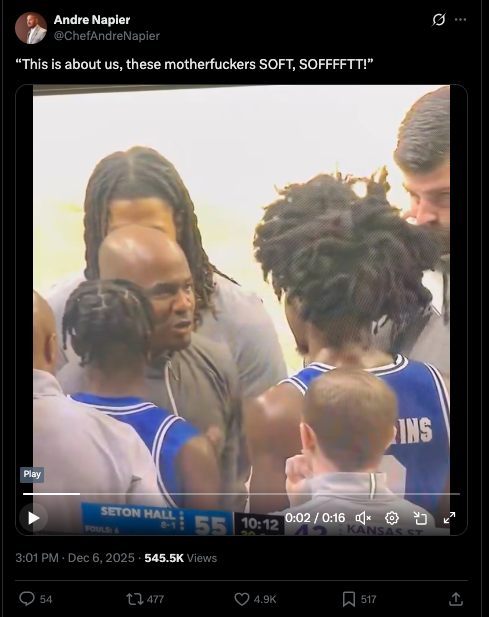
I’ve said this in a huddle. I’ve said this in a staff meeting. I’ve said this watching a game at home.
And that’s why the line we walk at TeamsOfMen when we challenge it is tough — because the core truth remains:
You cannot be timid in basketball, football, or life.
You cannot play scared.
You cannot shy away from contact or hesitation.
Those are real components of sport. They’re measurable. They matter.
But here’s the issue: we use “soft” as the catchall for all of it.
“Soft” becomes the bucket where we dump every mistake, every missed box-out, every blown tackle, every moment of indecision… and it becomes something much darker when you peel it back. It often masks coded homophobia. It often functions as an attack on identity rather than a correction of behavior. And most importantly, “soft” is what we reach for when we don’t have the vocabulary — or the clarity — to coach what’s actually happening.
Telling your guys you need more physicality isn’t wrong. Telling them you need urgency isn’t wrong. Telling them you need force, precision, or aggression in the right context isn’t wrong.
What’s wrong is hiding all of that inside a lazy trope.
Say the real thing:
“We’re not boxing out.”
“We’re not finishing tackles through the hips.”
“We’re avoiding contact in the lane.”
“We’re hesitating on the catch.”
“We’re not cutting with purpose.”
These are coachable.
“Soft” is not.
If we want players to own corrections, we have to give them something real to own.
If we want to build men, not just athletes, we have to stop assigning character flaws to tactical mistakes.
Words matter.
And “soft” isn’t coaching — it’s venting.
COACH PROMPTS
What specific behaviors are you actually frustrated by when you default to calling players “soft”?
How would your corrections change if you forced yourself to describe the behavior instead of the character?
What message are you unintentionally sending about masculinity when you weaponize that word?
PLAYER PROMPTS
When you hear “soft,” do you actually know what needs to change?
What physical cues make you play hesitant — and how can you attack those directly?
How would you want a coach to communicate a lack of physicality to you?
If Hype Turns Into Hate, We Wrote the Script Wrong.
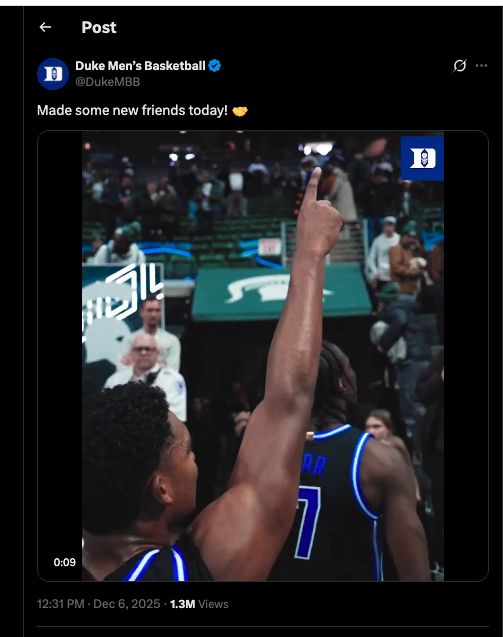
Today’s blog is about the Duke Men’s Basketball post — the official team account — showing their players walking off the floor at Michigan State after a 66–60 road win, surrounded by a crowd unloading verbal assaults. And, to be fair, Duke players giving some energy back.
This is a script we see at every level.
HS gyms. College arenas. Rivalry games. Packed student sections. Coaches hype up their guys. Fans hype themselves up. Players convince themselves it’s go-time in every possible sense.
And in all that energy, the Man Box scripts slip in as “requirements”:
“We’re warriors.”
“This is battle.”
“No room for pause or reflection.”
“If they come at me, I have to come back harder.”
These stories feel natural because they’ve been handed to men for generations. They work up front — adrenaline, bravado, identity. But they also strip away the exact humanity we claim to be building in young men. They turn a road win into a referendum on manhood. They turn fans into antagonists. They make the gym feel like a proving ground instead of a place to play a game.
Why do we think supporting a team requires us to show up as our worst selves?
Why do we equate “backing our guys” with losing emotional control?
Why do we treat vitriol as if it’s part of the ticket price?
I firmly believe competitive fire and human decency can coexist. Intensity doesn’t require cruelty. Hype doesn’t require hate.
And winning never requires dehumanizing anyone — not opponents, not fans, not ourselves.
We can compete without cosplaying gladiators.
We can support our teams without abandoning who we are.
If anything, that’s the culture worth celebrating.
COACH PROMPTS
What pregame language are you using that unintentionally frames competition as combat?
How do you model intensity without crossing into dehumanization — especially on the road?
Does your team know the difference between confidence and hostility?
PLAYER PROMPTS
Who do you become when the crowd turns hostile — and is that who you want to be?
How often do you mistake someone “coming at you” for a requirement to match their energy?
What would competing look like if you stayed locked in and stayed human?
Attraction Isn’t Obligation — No Matter What the Man Box Says
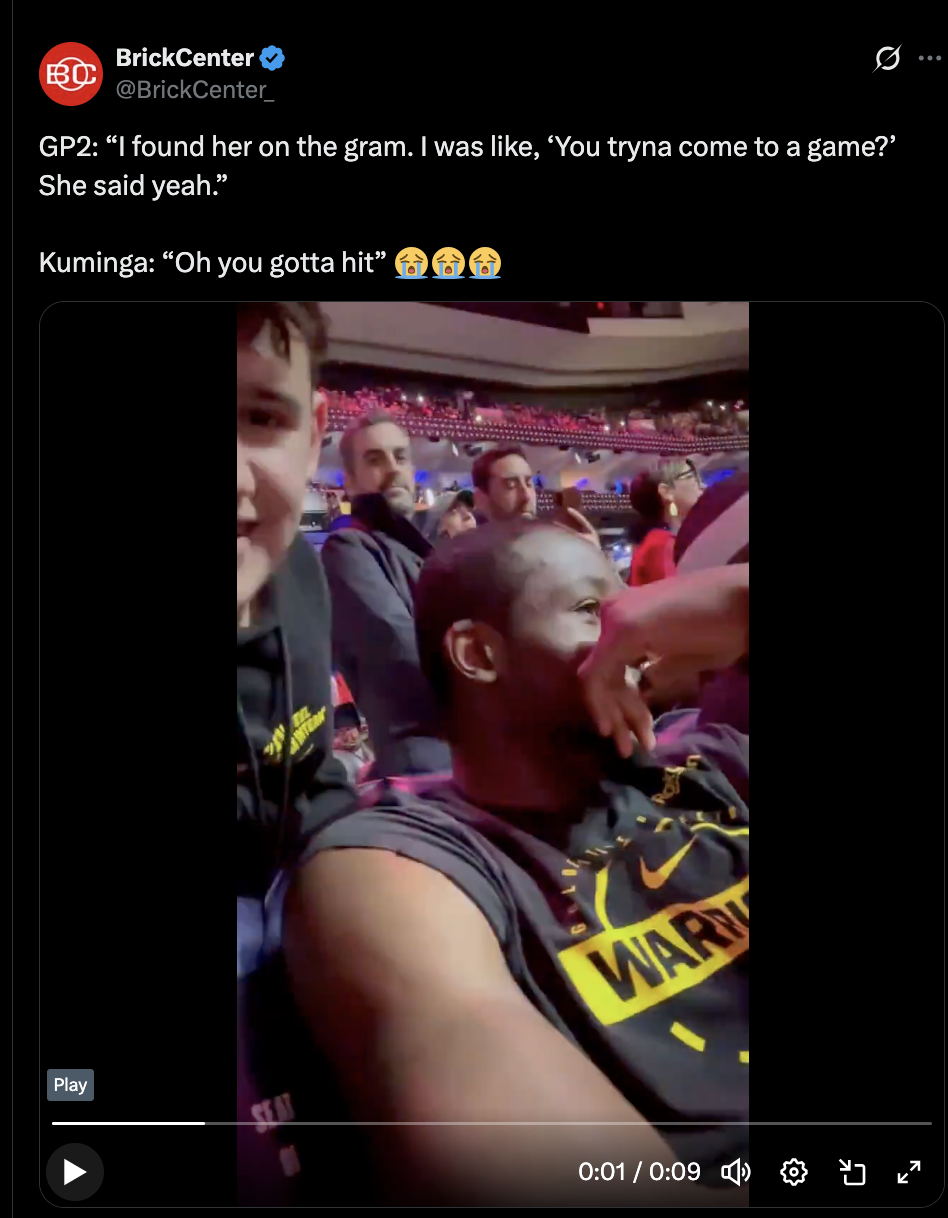
This clip has been circulating — a fan sitting absurdly close to the Warriors bench catches GP2 telling a story about inviting someone to a game, and Kuminga immediately responds with:
“Oh you GOTTA hit.”
Setting aside the wild issue of fans being close enough to record intimate conversations (that’s a whole other blog about consent and boundaries), it’s that phrase — you gotta hit — that grabbed me.
Because that line isn’t just a joke. It’s an instruction. It’s a mandate.
It’s the exact Man Box wiring boys absorb long before they ever date anyone:
If there’s mutual interest…If she says yes to hanging out…If you put in effort…
Then sex is the expected ending.
“You gotta” is the voice that tells young men they fail if sex doesn’t happen.
“You gotta” is the voice that turns attraction into entitlement.
“You gotta” is what teaches boys that women owe them access to their body if the vibes are right.
And this is coming from pros — so imagine the pressure on a 15-, 17-, 19-year-old trying to figure out what it means to be a man in front of their teammates.
Show this clip to your players.
Ask them honestly:
Would you say the same thing? Would you co-sign it? Would you tell that story the same way? And if so… what does that reveal about the expectations you’re carrying?
If the answer is yes, we’ve got WORK to do.
There is no version of masculinity worth building that confuses interest with obligation.
Nothing is required sexually — ever.
Consent is not a story arc. It’s not a reward. It’s not a scoreboard.
It’s a choice that belongs to both people, every time.
COACH PROMPTS
Where are your players learning the idea that sex is an achievement to “secure,” not a choice to honor?
How often do you challenge the casual phrases that reinforce sexual entitlement?
What would it look like to build a team vocabulary that respects boundaries instead of mocking them?
PLAYER PROMPTS
What does “you gotta hit” imply about what you think women owe you?
Who are you trying to impress when you talk like this — and why?
How would your decisions change if you removed pressure, expectation, and performance from intimacy?
The Man Box Loves “Gladiators.” Our Teams Don’t Need It.
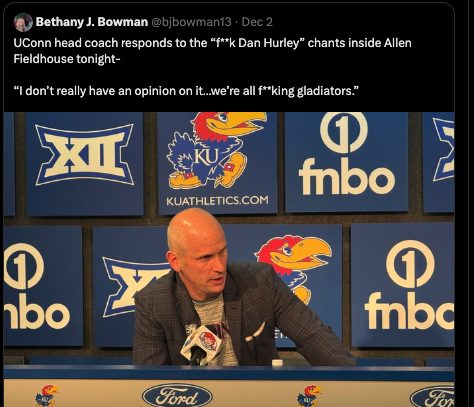
Dan Hurley gave another classic postgame soundbite last night. Asked about the Kansas crowd unloading chants at him, he said: “The chants? Yeah, I wasn't expecting that… If that’s how people want to carry themselves in a game. It’s sports. We’re all fucking gladiators, right?”
And I picked this for today’s blog for a few reasons. First — Dan Hurley is always entertaining. Second — every HS coach in Oregon is gearing up for opening night, which means student sections, emotions, and distractions are about to be back in play. Third — because Hurley’s comment (whether tongue-in-cheek or not) exposes something I think is deeply embedded in our coaching culture.
We’re competitive people. We’re excited to be “back in the arena” — bands playing, gyms shaking, scoreboards lighting up. Our blood will get going. It’s supposed to.
But we are literally playing a sport. We are not gladiators. Our physical lives are not on the line. Convincing ourselves otherwise is not just silly — it’s unhealthy.
This is exactly how Man Box framing creeps into our worldview.
We start with: sport = physical.
Then: physical = combat.
Then: combat = war.
Then: war = manly.
And suddenly a Tuesday night game in [Insert Random Town, USA] becomes “this is war” theater — and we act shocked when someone crosses a line in the second quarter.
We are not in Rome. We’re in a high school gym. Settle down.
Our players don’t need us to model “gladiator energy.” They need us to model composure, clarity, and competitive fire without the delusion that we’re stepping into battle.
Healthy men can compete without becoming caricatures of toughness.
COACH PROMPTS
What language do you use on game night that unintentionally shifts players into “war mode” instead of “compete mode”?
How do you bring intensity without borrowing toxic metaphors that distort what sport actually is?
When the crowd heats up, what version of yourself do your players see?
PLAYER PROMPTS
Do you play better when you feel like you’re in a war… or when you’re locked in and composed?
What message are you sending when your emotions spill over the line?
How can you bring fire without losing your identity?
If You Want Better Men, Give Them Better Words
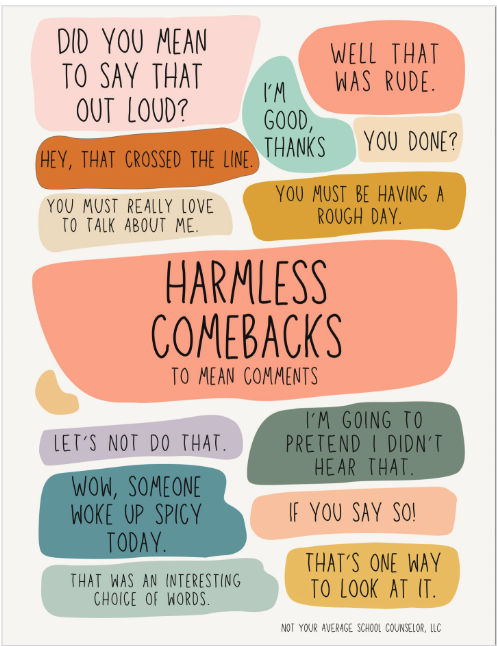
I picked this post today because it’s either #1 or #2 on my list of things I feel most urgent about delivering to male athletes. I know they’re going to be in circles with one another — locker rooms, huddles, hallways, group chats — and in those circles someone is going to say something hurtful disguised as “just joking.” And in that 2–5 second window, the real work of TeamsOfMen is needed.
That’s the moment a teammate has to choose: Do I laugh nervously? Do I let it slide? Or do I say something that actually reflects who I want to be?
This is the pain point young men name for me more than any other:
-“What am I supposed to say, Coach?”
-“I still want him to be my boy… but I don’t agree with what he said.”
THIS list — from @notyouraverageschoolcounselor — is exactly the kind of tool we need to put in their pockets. Not because every phrase will feel natural. Not because they’ll all work in every scenario. But because they give young men options. They help them find language to match the character they’re trying to build.
Which ones feel most natural for your guys? Which ones don’t? What variations can they create that sound like them? That’s the work.
And honestly, this should be up on a wall in every team room in America. I’m kicking myself — we just rebranded our hallway and I love what we used, but I should’ve posted something like this somewhere too.
If we want young men to stand for something, we have to give them the words that help them stand.
COACH PROMPTS
When your players hear something harmful, do they have actual language ready — or only silence?
What phrases from this list fit your team culture, and how will you practice them?
How might posting this visual in your team room shift your locker-room norms?
PLAYER PROMPTS
Which comeback on this list feels most natural for you to say in the moment?
What stops you from speaking up when a teammate crosses a line?
How would your friendships change if honesty and care were normal — not exceptions?
The Lesson Isn’t the Fake Story — It’s How Fast We Believe It
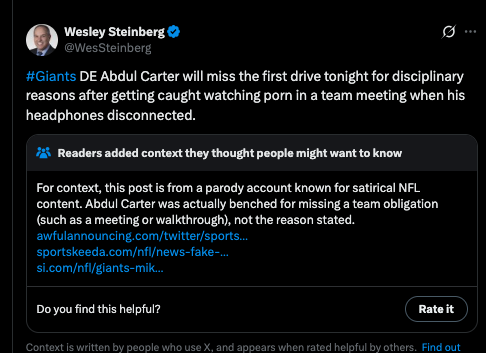
I got duped.
I saw the original post above about NYG DE Abdul Carter and, like the two million people before me, took it as fact. I even sent it to the Giants fans in our locker room with a “Look at this ish” reaction. A couple hours later, it came out the post was from a parody account. Not true. Not even close.
And I felt like a fool.
Not because the original claim sounded impossible — I know enough about the spread of porn use among men (especially young men) to know nothing surprises me anymore — but because I ran with something I should’ve double checked.
That’s the real lesson here: social media is designed to fool us.
AI deepfakes.
Engagement algorithms that reward outrage.
Content farms pumping out believable garbage.
Rabbit holes that look like research but are just traps.
I’m 46. I’ve got a master’s degree. I use social media every single day.
And I STILL fell for it.
So imagine the opportunity the internet has to deceive our players — who scroll faster, trust quicker, and are targeted more aggressively than any generation before them.
If we’re not teaching them to slow down, question, verify, and think…someone else is teaching them not to.
COACH PROMPTS
When’s the last time you taught your players how to verify information, not just react to it?
How can you build digital literacy into your program the same way you build film study?
What systems or habits in your team encourage players to pause before they share?
PLAYER PROMPTS
What’s one post you believed this week that you never double checked?
Who benefits when you react instantly instead of thinking critically?
How much stronger would your decisions be if you slowed down before you clicked?
“Alpha Energy” Isn’t Leadership — It’s Lazy Coaching
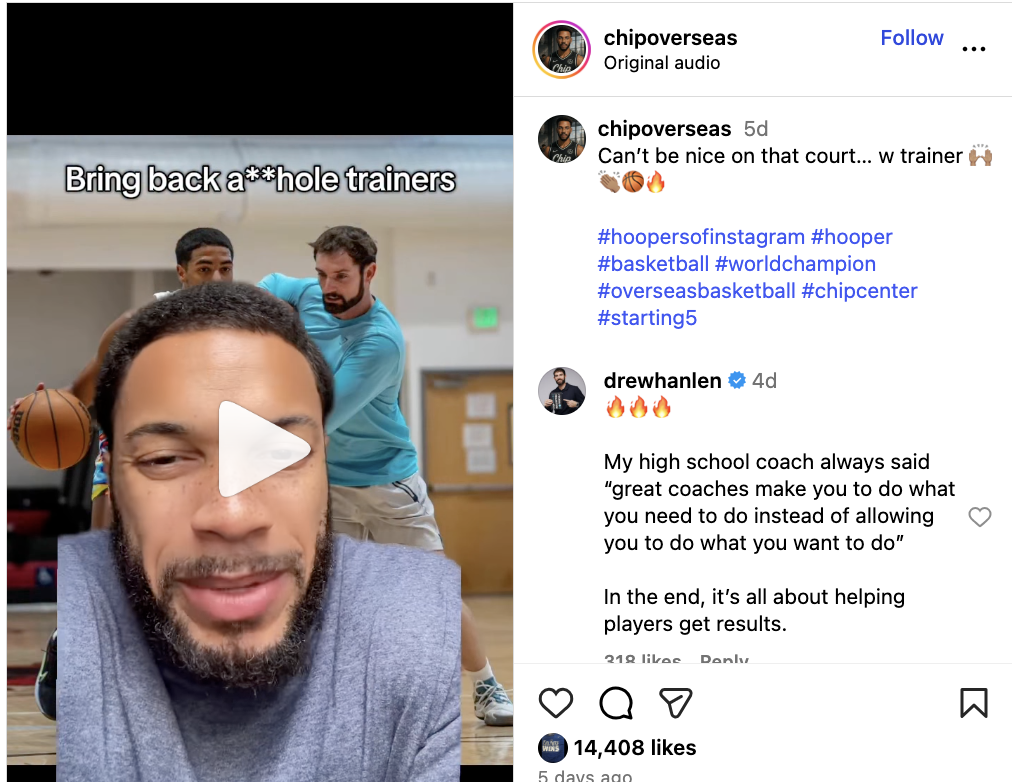
My good friend Greg Plater sent me a post today with his classic “Thoughts on this -ish” prompt — and my response was instant: big nah from me. The same tired “alpha” language, the “be an a-hole” bravado, the idea that being “nice” disqualifies you from competing. It’s the same Man Box nonsense dressed up as hoop wisdom.
Sure — you can’t be timid. You can’t be indecisive. Playing with force matters. But running around like a jerk? That guarantees nothing.
Isaiah Stewart and Ron Holland try to fight somebody every other game — and the Pistons got bounced early. Shai Gilgeous-Alexander doesn’t start anything with anybody — and he’s a champion. It’s not complicated.
“Play with rage and fury” sounds cool on a hype edit. But in real basketball? It’s the fastest route to two charges, three missed kickouts, and a dumb foul 90 feet from the rim.
And here’s the bigger problem: this mindset isn’t rare. Too many coaches, parents, trainers, and players have convinced themselves that “go hard” means “turn off your humanity.” As if shutting your feelings off magically produces better decisions, better reads, or better leadership.
It’s the opposite.
-You can’t reach clarity if you don’t know what’s happening inside you.
-You can’t find intent if you’re drowning in unmanaged emotions.
-You can’t compete at your highest level if your only gear is “anger.”
You don’t suppress emotions. You channel them. You process them. You become fluent in them and what they are signaling about yourself.
And the cherry on top? The guy also said “trainers don’t care if you eat.” Science, performance research, and basic biology all say the exact opposite. Fuel matters. Energy matters. Recovery matters. That line alone should disqualify the whole message.
We can do better than rage-bait masculinity disguised as player development.
COACH PROMPTS
Are you teaching players to feel their emotions or to fear them?
Where in your program is “toughness” actually harming decision-making?
What would your team look like if emotional fluency was trained as intentionally as physical skill?
PLAYER PROMPTS
Do you play better when you’re angry — or when your mind is clear?
Which emotions do you avoid that you actually need to understand?
What would happen to your game if you learned to channel your feelings instead of stuffing them?
The Hardest Part of Break Might Not Be Leaving…the Hardest Part Might Be Going Home

Thanksgiving is nuanced. I’ve got decades of warm memories tied to the day — growing up in Montana, and then as an adult spending almost every Turkey Day since 1997 away from home. Food, Cowboys football, and a game-night atmosphere around a table laughing. All of that is real for me.
But as time has passed and the truth around the origins of the holiday has become clearer, the reverence has shifted for me. I’m not telling anyone how to feel — just being honest about how I do.
There were years in college coaching when I wasn’t home at all. Thanksgiving happened in restaurants, in host-family living rooms, at tables filled with people I barely knew but was grateful to sit with. Different rituals. Different food. Cowboys always on.
I’m writing this today because coaches default to one script this week:
“Be thankful for your family. Be thankful for the food. Share what you’re grateful for.”
That’s not wrong. But in 2025, we can do better.
Some players don’t love going home. Some families don’t celebrate the traditional version — no turkey, no pilgrims, no curated Hallmark vibe. Some players don’t have traditions of their own at all.
Some dread the tension waiting for them.
So when your guys come back from break, don’t limit the conversation to highlight reels.
Ask: “What was hardest about being home?”
Bonding isn’t built from forced happy stories.
It’s built from the courage to share struggle — and the willingness to hear it.
COACH PROMPTS
Do you create space for players whose holiday reality doesn’t match the “thankful and blessed” script?
What questions could you ask next week that invite honesty instead of performance?
How might your team culture shift if vulnerability was a norm — not a surprise?
PLAYER PROMPTS
What part of break was actually the hardest — and why?
If you could rewrite one Thanksgiving expectation, what would it be?
Who on your team do you trust enough to tell the truth about home?
Reflection Only Works If We Use It Everywhere
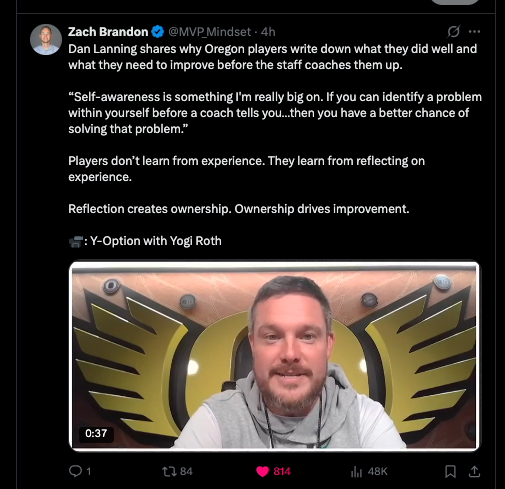
Sometimes you watch your guys on the field or the court and they do something that is so close to the version of them you know they can become. You point it out to your staff, you tell yourself, “There it is. He’s right on the edge of getting it.” That’s the feeling I had reading this post.
I love what Coach Lanning is doing — having his players write down what they did well and what they need to improve before any coach gives feedback. That’s real self-awareness work. That’s reflection as a tool, not a buzzword. It even made me think of our own TeamsOfMen mantra shirts — Self Reflection + Self Interrogation=Self Awareness— because that’s exactly what this is.
But here’s the part I can’t shake: How many coaches will repost this and completely ignore the next logical step?
If reflection and self-awareness help solve problems and unlock growth on the field, why wouldn’t the same be true for everything else in a young man’s life?
Why aren’t we carving out space for reflections in the team room about their humanity — not just their performance? Why aren’t we asking them to journal about their day as a man, not just as a player? Especially at the Power 4 level, where coaches already control 12–14 hours of these guys’ daily schedule. We can’t find ten minutes a week for them to check in with themselves?
If we really believe reflection drives ownership, then it has to expand beyond football.
Otherwise we’re just teaching them to solve problems on the field and stay lost everywhere else.
COACH PROMPTS
If you value reflection, where in your program do you provide structured time for it outside of performance feedback?
What’s stopping you from asking your players to reflect on their humanity as intentionally as they reflect on their game?
How might a weekly self-awareness routine change the emotional climate of your team room?
PLAYER PROMPTS
When’s the last time you thought about your day as a man, not just your performance as an athlete?
What did you learn about yourself this week that no box score could ever show?
How much better could you get — on and off the field — if reflection became part of your routine?