

What Happens When It’s One Of Us?
TeamsOfMen was birthed from my personal realization that sexual assault, harassment, and violence against women by men was something I COULD combat in my team room.
I COULD educate young men not just about consent and healthy relationship skills, but about the scripts the Manbox was asking them to perform — and how those scripts are part and parcel to the acts of harm men commit.
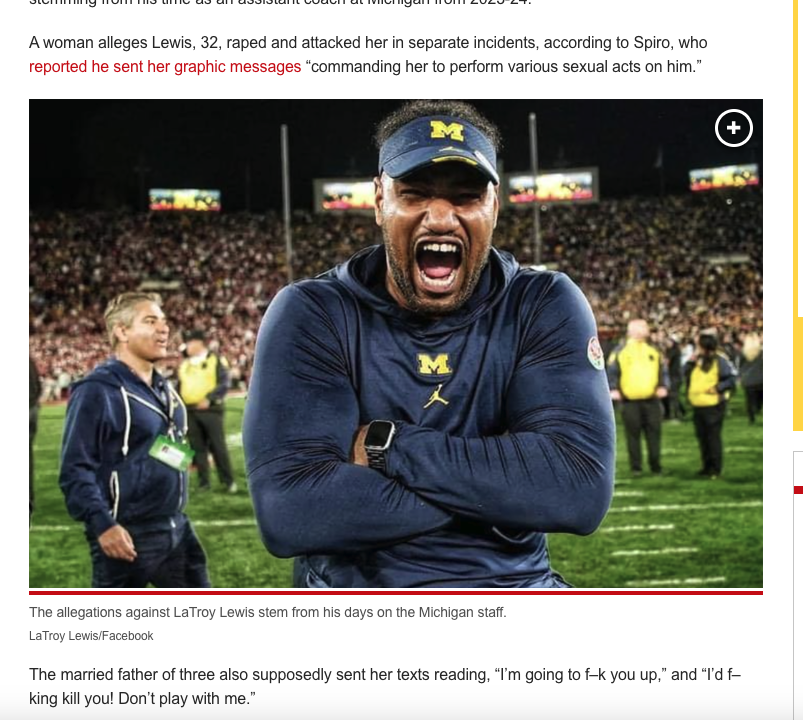
This latest sexual assault allegation (and yes, we must use that word legally — alleged — while also acknowledging that false allegations statistically account for a very small percentage of cases) against former University of Michigan and current Atlanta Falcons coach LaTroy Lewis is another validation of WHY this work is needed.
But it’s also something else. It’s a reminder that coaches of male athletes are not just facilitators of the work.
WE are the work.
We love the clichés about building character and pushing young men to be their best selves. But what about us? What about the adults in the meeting room? Are we living the principles we print on shirts and hang on banners — or are those just performances?

Look at the second image above — Lewis’ attorney stating:
“Allegations of sexual misconduct are not proof of sexual misconduct.”
That statement is legally correct. But it is also not proof of a lie.
How would your staff respond to that line?
What would happen inside your program IF — not hypothetically, but realistically — a player or staff member were accused of something this serious? What process would activate? Or would you default to damage control, loyalty reflexes, and defensiveness?
The Falcons, like so many franchises and universities before them, released statements about conducting a “thorough vetting” and promising an “investigation.”
Let’s be honest.
Do we really believe there’s an army of neutral, independent professionals digging into every hire? Or is it more likely a handful of phone calls to familiar networks and comfortable references?
This isn’t about presuming guilt. It’s about auditing preparedness. It’s about asking whether our programs are structurally aligned with the values we claim to hold. Because when allegations surface, that is not the moment to invent your ethics.
That is the moment your existing ethics are exposed.
COACH PROMPTS
What would our program actually do if a staff member were accused tomorrow?
Do we have a process — or just loyalty?
Are we prepared to protect victims with the same energy we protect reputations?
PLAYER PROMPTS
If someone on this team were accused of something serious, what should happen?
What’s the difference between “supporting your teammate” and ignoring harm?
Do you believe false allegations are common? Why?
If This Claim Makes You Angry, Ask Why
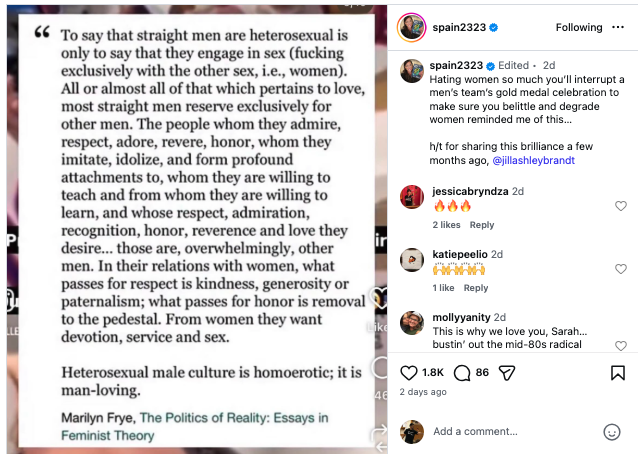
Today’s blog is a reaction to reading a quote from Marilyn Frye (shared recently by award-winning journalist Sara Spain).
Let’s be honest: in 2026 it is highly unlikely your players — or you — are going to sit down and read that entire passage. You should. But you probably won’t. So here’s the distilled conversation starter:
Which gender do supposedly heterosexual men reserve their actual LOVE for?
Because Frye’s argument is that it’s other men. Now ask that question in a team room. And then sit back.
Watch.
Listen.
Observe.
You’ll likely see panic. You’ll likely feel anger. You’ll likely hear immediate defensiveness.
Why?
One, because the manbox has trained them that any association with “love for men” automatically equals “gay” — and that being perceived as gay is a threat.
Two, because expressing love for men is framed as weakness. Emotional exposure inside male circles is status suicide.
Three — and this is the part that hits hardest — because there is truth embedded in the claim.
Who do most straight men admire?
Whose approval do they chase?
Whose respect do they crave?
Whose admiration, honor, and validation do they obsess over?
Overwhelmingly, other men.
From women, many men seek affection, sex, devotion, service, and affirmation. From men, they seek status. That’s harsh.
Good.
Because harsh invites examination. If you feel the temperature rise reading that, that’s the work. The point isn’t to shame heterosexual men. The point is to ask:
What does your love look like?
Who do you emotionally invest in?
Who do you allow yourself to admire out loud?
Who do you allow yourself to care about without caveat?
If Frye’s framing feels wrong, then prove it wrong.
Move differently. Speak differently. Love differently. Because if the only safe version of love for men is competition, hierarchy, or silent loyalty — then the manbox is still running the room.
Coach Prompts
How comfortable are you expressing admiration for another man without couching it in humor?
Where do you see status-seeking overriding intimacy in your team culture?
What conversations have you created around male friendship and emotional expression?
Player Prompts
Who do you admire most — and why?
When was the last time you told another guy you respected or loved him?
Why does saying “I love you, bro” sometimes feel risky?
The Language We Normalize Is the Behavior We Create
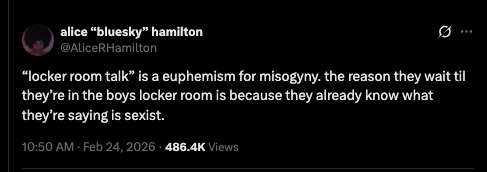
This post relates directly to the ongoing controversy surrounding the aftermath of the USA Men’s Hockey Team winning gold — a few days after the women’s team did the same — and the now-viral celebration phone call with President Trump. During that exchange, the women’s team was disparaged, and members of the men’s team were seen laughing along.
You can probably guess where we at TeamsOfMen land on that moment.
But our reaction — and the algorithmic echo chamber we all live in — is less important than what you and your team room do with it.
Because the real entry point here isn’t politics. It’s language. Specifically: the excuse of “locker room talk.” We have all heard it. Some of us have used it.
“Well, that’s just locker room talk.”
“It’s just boys being boys.”
“It’s not that serious.”
But here’s the uncomfortable truth: “locker room talk” has often functioned as a euphemism. A shield. A way to normalize misogyny, dehumanization, and entitlement in spaces we claim are protected. And the phrase “what’s said in here stays in here” doesn’t actually protect our players. It protects harmful behavior.
It allows young men to rehearse language that desensitizes them to the humanity of others. And language always precedes action. What we normalize verbally becomes easier to enact behaviorally.
We cannot let the manbox normalize the idea that accountability stops at the locker room door.
If something is wrong outside the locker room, it’s wrong inside it too.
This moment — and the viral post calling “locker room talk” what it really is — gives us an opportunity to ask ourselves:
Where have we excused language because it felt culturally acceptable?
Where have we allowed harm to be disguised as humor?
Where have we confused bonding with belittling?
If we’re serious about building men of character, then the locker room cannot be a sanctuary for misogyny.
It has to be a laboratory for respect.
Coach Prompts
Have you ever dismissed something as “locker room talk” instead of addressing it?
What language is normalized in your program that wouldn’t be acceptable in front of parents or administrators?
What does “what’s said in here stays in here” actually protect?
Player Prompts
Why do people say certain things only in the locker room?
Have you ever laughed at something you wouldn’t say publicly?
What’s the difference between joking and disrespect?
Costume vs. Character
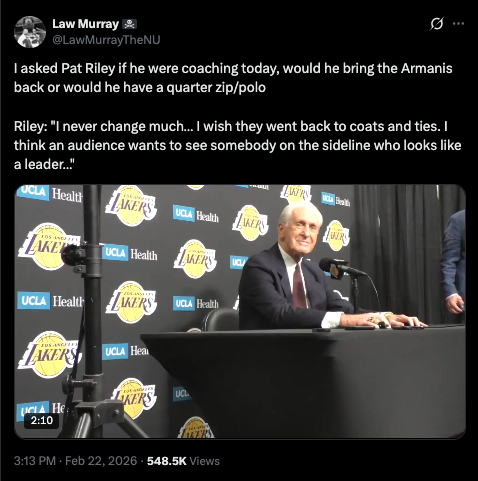
Today’s blog is in response to a recent Q&A with legendary NBA coach (and Heat GM) Pat Riley, where he was asked whether, if coaching today, he would bring the Armani suits back to the sideline or opt for the now common quarter-zip/polo look.
Full disclosure: I grew up on Pat Riley and the Showtime Lakers. They were one of my first FAVORITE teams. I respect a lot of what Riley has always been known for — grit, resilience, discipline, and a no-nonsense approach to accountability on the court.
I also understand the context here.
He was answering this question in advance of a ceremony where the Lakers are honoring him with a statue — literally sculpted in his famous suit. Of course he’s going to lean into that identity.
But his line about audiences wanting to “see somebody on the sideline who looks like a leader” is a great TeamsOfMen self-reflection moment for coaches today.
Because that statement is bathed in old scripts.
It assumes leadership is something you look like first, and something you are second. And there’s also an unrecognized privilege baked into that framing.
Pat Riley’s Armani suits were iconic — and expensive. But let’s be real: all suits are expensive. Leadership cannot be dependent upon your salary. If the visual marker of authority requires access to wealth, then we are defining leadership in a way that excludes a lot of people from the jump.
I don’t think my players suddenly pay more attention to me the one time a year I wear a suit on the sideline. And I don’t think it ever made sense for us as coaches to sweat through a hot gym or arena for two hours just to perform a version of authority. In 2026, we have plenty of options that are comfortable, professional, and representative of our team and school.
Think about it.
A suit screams “me.”
Sideline gear in your school colors — with your mascot, your logo, your identity — screams “us.”
There’s nothing wrong with loving a great suit. I do. But there is a manbox layer to assuming the suit gives you power. Authority that relies on costume is fragile. Leadership that relies on character isn’t.
Coach Prompts
What signals of “authority” do you rely on that aren’t actually tied to your behavior?
Do your players respect your wardrobe — or your consistency?
Where might image be masking insecurity in leadership?
How do you define leadership in your program: visually, verbally, or behaviorally?
Player Prompts
What makes someone look like a leader to you?
Has someone ever looked the part but failed to lead well?
What behaviors earn your respect more than appearance?
If leadership isn’t about clothes, what is it about?
What A.J. Brown Just Said Out Loud
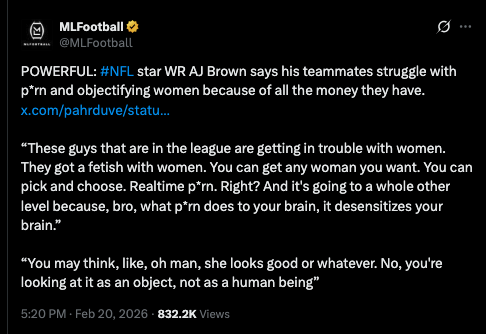
Today’s blog is inspired by a recent interview with Eagles WR A.J. Brown, where he openly discussed his belief that many athletes — especially those with money and fame — are addicted to pornography. He argues that when that addiction mixes with status and access, it fuels objectification of women and unhealthy intimate relationships.
This is the type of honesty we at TeamsOfMen wish more famous athletes would model.
Brown is pulling back the curtain on two overlapping manbox scripts:
If I score and succeed in my sport, that automatically earns me access to women’s bodies.
Pornography is normal, harmless, and just “what guys do.”
Your players — if they’re being honest — will admit (or at least privately recognize) that they’ve been trained to equate athletic success with sexual conquest. It’s embedded in locker room jokes. In music. In highlight culture. In group chats. In the silent metrics young men keep in their own heads.
Success = more attention.
More attention = more sex.
More sex = more status.
That equation gets internalized early.
Brown also names something we rarely discuss openly: porn. Not as a punchline. Not as a moral panic. But as a neurological and relational issue.
If what he’s saying is even partially true, then we can’t ignore it.
Our guys are watching it.
Our staff is watching it.
We are probably watching it.
And pretending this conversation doesn’t belong in the “life skills” category is negligence. Porn trains the brain to disconnect arousal from relationship. It trains repetition without intimacy. It trains consumption without consequence. And when that gets layered on top of fame, money, and access — the objectification can accelerate.
This is not about shame. This is about awareness.
If you are serious about building emotionally fluent, respectful young men, you cannot skip the topic of pornography. It is one of the largest unspoken influences shaping their expectations about sex, women, and relationships.
There are resources available. Organizations like Fight the New Drug provide research-based education on how pornography affects the brain and relationships. Whether you agree with every angle or not, it gives you starting points — language, science, conversation scripts — to engage your team and your own family.
We don’t get to claim we’re developing men while ignoring one of the most powerful shaping forces in their lives.
Brown did his part by naming it.
The question is whether we will.
Coach Prompts
Where are your players learning their expectations about sex and relationships?
Have you created any structured space to discuss pornography and its impact?
Do your players see women as partners… or rewards?
Player Prompts
Where did you first learn what sex and relationships were supposed to look like?
Do you think pornography shapes expectations about women? How?
What would it look like to define success differently?
Interrupting Violence Without Becoming It
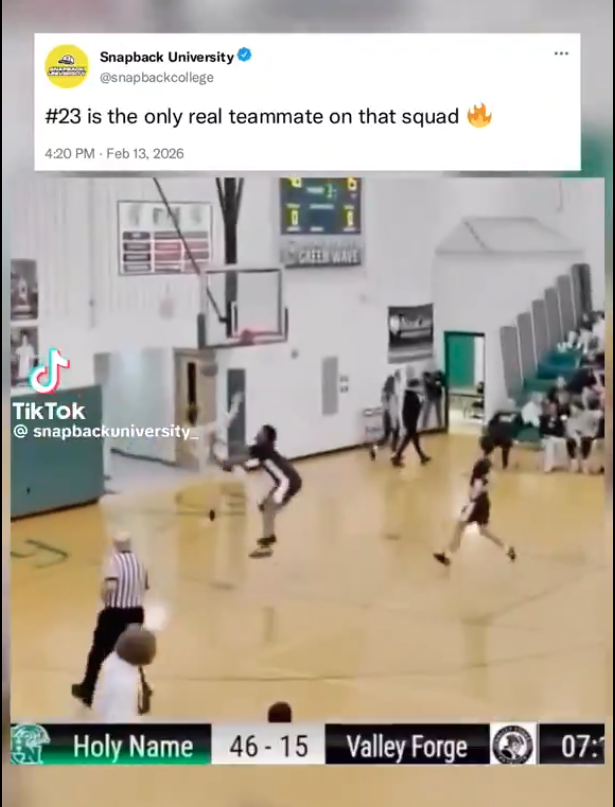
Today’s blog is in response to this boys HS basketball game that ended in a melee after a player brutally fouled an opponent on a fastbreak — and that player’s teammate came sprinting from the other end of the court and shoved the fouler to the ground himself.
The caption on the screen grab gives coaches an immediate entry point into discussion with their guys:
“The only real teammate.”
“Now THAT’S a teammate.”
These are the taglines being used to describe the retaliatory shove. And that’s where this becomes less about that game — and more about ours. Because this is a reflection moment for us as coaches.
What in our program would PREVENT the first ridiculous foul from happening in the first place?
What in our program would regulate the response from others IF our player was the one hammered like that?
SHOULD we even be regulating that response? Or do we quietly cosign it because of how hard the foul was? What have we explicitly talked about with our staff and players regarding leaving the bench, running onto the court, or inserting themselves physically into out-of-control situations?
All of these are worth discussion. And I’ll be honest — I struggle with the answers too.
Because that foul is BULLS***.
And there is a very real part of me that would want my guys standing up for their teammate. But could we rep that response to be verbal instead of physical — so they protect their teammate without triggering the automatic double-penalty and escalation? Could we train interruption without escalation?
I don’t know.
And that uncertainty is exactly why it deserves space in the team room.
Because maybe this isn’t even a “manhood” test.
Maybe this is something more universal.
A HUMAN test of loyalty.
A HUMAN test of protection.
A HUMAN test of emotional regulation inside loyalty.
Which is exactly why we can’t leave it unexamined.
Player Prompts
When you saw the shove, did you see loyalty… or loss of control? Why?
How can you protect a teammate without hurting your team?
What does a teammate owe another teammate in moments of injustice?
What response would make you trust a teammate most: retaliation, or restraint?
Protecting Your Space Means Confronting Your Circle
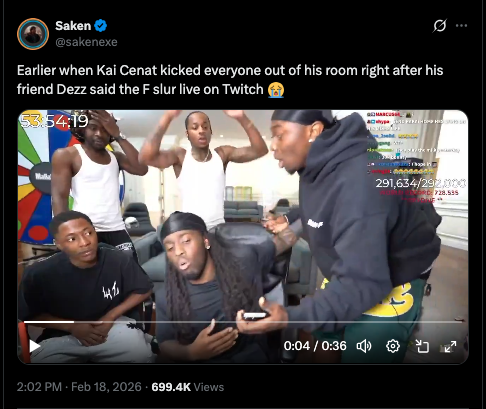
Today’s blog is in response to something we rarely see in real time: an interruption.
Famous streamer Kai Cenat was live with a group of friends when one of them casually dropped a homophobic slur into the room. No hesitation. No “let it slide.” No awkward laugh to smooth it over.
Kai immediately told everyone to get out. Cleared the room. Ended the moment. In his frustration, he also said something that stuck with me:
“Ni***s don’t have no self-awareness.”
(NOTE: There’s a double edge to this. In interrupting the homophobic slur, Kai used the most sinister slur of all time — but with the soft “a” ending that has created controversy in the Black community (and world at large), as many folks believe that version of the word is a familial, reclaimed version taken back from racists, and therefore acceptable in certain contexts.
That in and of itself is a whole other CONVERSATION we as coaches need to be prepared to navigate — especially those of us that aren’t Black — because our players are already navigating it, with or without us.)
Now, in 2026, we should question the authenticity of everything we see on social media. Performance and accountability sometimes wear the same costume. But for the sake of this space, I’m assigning credibility to what we witnessed—because the action itself is the lesson.
He interrupted nonsense language in real time. He protected his space. He enforced a boundary.
And here’s where this matters for us as coaches: your players are in rooms like this every single day. Locker rooms. Group chats. Parties. Team buses. Weight rooms. Spaces where language like this gets normalized through silence.
Not agreement—silence.
Because interruption is uncomfortable. Because interruption risks status. Because interruption risks belonging.
So show them this clip. Ask them plainly:
Would you have done the same thing?
Would you be willing to risk awkwardness, tension, or even friendships to enforce the standards you claim to believe in?
Because protecting your space isn’t just about who you let in.
It’s about what you allow to exist inside it.
And for everyone saying, “Kai only did this to protect his brand”—good. That’s still accountability. That’s still a line being drawn. It may be a low bar. But it’s a bar. Our world is filled with far too many examples of people who won’t audit their space for any reason at all.
Interrupting nonsense—especially when it comes from your own circle—is one of the clearest indicators of growth.
Seeing it is step one.
Interrupting it is evolution.
Coach Prompts
What language gets normalized in your program because no one interrupts it?
How do your players see you handle harmful language—in real time?
Where have you stayed silent because interruption felt uncomfortable?
Player Prompts
Would you interrupt a friend who said something harmful—or stay quiet?
What makes interrupting harder: fear of losing status, friendship, or comfort?
What kind of space do you want to be known for protecting?
Emotional Regulation Is a Skill—Not a Personality Trait
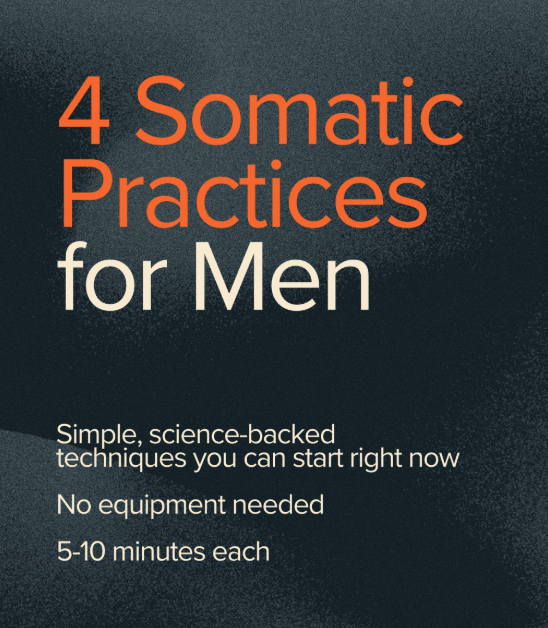
Today’s blog is one I had to go digging for.
There wasn’t a current sports event that naturally fit the TeamsOfMen framing, so I went into my MUST REMEMBER folder on Instagram. When I scroll, I screenshot, email myself, or tag posts that I know will matter later—even if I don’t yet know how or when.
This one stood out.
It’s a departure from our usual group dialogue prompts and instead offers something more personal: actual tools (courtesy of A Call To Men) for processing and releasing built-up emotional overflow—whatever form that overflow takes.
I was first introduced to this type of work while reading My Grandmother’s Hands by Resmaa Menakem, which explores the idea of somatic abolition. One of the most important takeaways from that book was this paradox: if you claim to be an expert in somatic abolition, you are not an expert.
So I won’t pretend to be one here.
What I will do is invite you to read these practices—with yourself, your staff, and your players—and decide what resonates.
Because emotional regulation is not just intellectual. It’s physiological. It lives in the body.
We spend so much time teaching our athletes what to do with their minds—film study, scouting reports, decision-making under pressure—but how often do we teach them what to do with their nervous systems? How often do we give them tools to come down from rage, anxiety, fear, or overwhelm?
In my own self-work, I’ve found that some of these practices fit my capacity better than others. That’s part of the process. There is no one-size-fits-all approach. But if we are serious about helping young men escape the manbox, we can’t just teach them how to think differently. We have to help them learn how to feel differently.
Process differently. Recover differently.
This could be something you share directly with your team. Or it could simply be the doorway that leads you deeper into your own work.
Either way, the body keeps score.
And the body can also help us heal.
Coach Prompts
How do you currently teach emotional regulation in your program—intentionally or accidentally?
What do your players do physically when they’re overwhelmed, angry, or anxious?
Do you model emotional regulation—or just demand it?
Player Prompts
What does your body feel like when you’re angry, anxious, or overwhelmed?
What do you usually do to calm yourself down—and does it actually work?
Have you ever reacted in a way you later regretted because you couldn’t regulate your emotions?
The Hidden Cost of the “Body Count” Script

Today’s blog is in reaction to watching this clip circulating on X where a host and panel discussed the alleged number of children and mothers connected to various NBA players.
Let’s do the legal and ethical work upfront: these numbers are alleged. We do not have verified proof of their accuracy, and any responsible discussion has to acknowledge that clearly.
But here’s why this still matters in a team room.
Because even without perfect data, we all recognize the script behind the conversation.
We all recognize the cultural expectation that once male athletes reach a certain level of success, the manbox whispers a familiar lie:
“You’ve earned access.”
“You’ve earned conquest.”
“You’ve earned bodies.”
And let’s be honest — that script doesn’t just devalue women.
It devalues men, too.
It teaches young men that their worth is measured not just in points scored or games won, but in how many partners they accumulate. It turns intimacy into currency. It turns relationships into transactions. It turns human connection into proof of status.
And there is a tremendous human cost to that script.
The most obvious are the children created inside dynamics where stability, presence, and intentionality may not exist. But the cost also includes the men themselves — who were never taught that their bodies, their attention, and their emotional presence carry value beyond momentary validation.
This is why coaches cannot pretend this topic lives outside the scope of our responsibility.
Because whether we address it or not, our players are already being educated on this subject — by social media, by locker room conversations, by celebrity culture, and by the manbox itself.
The question isn’t whether they’ll hear the message.
The question is whether they’ll hear a different one from us.
Scoring baskets and hoisting trophies does not require abandoning intentional, respectful, and healthy relationships.
Success does not require conquest.
But if we don’t actively interrupt that idea, the default script will win.
So the real question for us as coaches is simple:
What are we doing to help our players see themselves — and their relationships — as something more than a scoreboard?
Coach Prompts
Where are your players learning their expectations about relationships right now?
What messages about intimacy and success are reinforced — directly or indirectly — in your program?
How do you teach players to value themselves beyond performance and validation?
Player Prompts
Where do you think the idea comes from that success should include sexual conquest?
Do you think athletes feel pressure to live up to that expectation?
How do you decide whether you’re acting from your own values or someone else’s script?
The Most Dangerous Coaching Script Isn’t Written on a Play Sheet
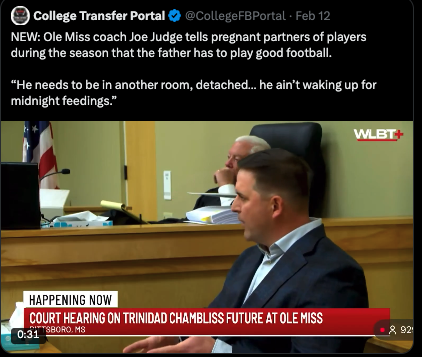
Here is your edited version (tightened, not ghostwritten) followed by title options and coach/player prompts in your established format:
Edited Blog Version
Today’s blog is in response to a viral moment yesterday involving current Ole Miss football staff member (and former NFL head coach) Joe Judge, who made the following statement while appearing in court on behalf of quarterback Trinidad Chambliss:
“He needs to be in another room, detached… he ain’t waking up for midnight feedings.”
Let’s be clear about the context.
Judge was there to support his quarterback’s eligibility case. Sticking up for your player is one thing. Veering off into commentary about how players should approach fatherhood is another entirely.
This quote has rightfully been lambasted online (at least according to my algorithm), and I won’t waste too many lines explaining how deeply manbox-inspired this take is. The idea that commitment to football requires emotional and physical detachment from your partner and newborn child isn’t toughness. It’s abandonment dressed up as sacrifice.
What I want to do instead is use this moment as an AUDIT opportunity for all of us as coaches.
Because if we’re honest, many of us have heard a quieter version of this voice inside our own heads.
The voice that says:
“The game comes first.”
“The family will understand.”
“This is just what it takes.”
And while the hours, the film, the preparation, and the obsession are real parts of coaching and competing — we have to ask ourselves:
At what cost? And to whom?
Even more importantly, we should be willing to bring moments like this directly to our players.
Play the clip. Show them the quote. And ask them:
“What about this feels in line with how you experience me as a coach?”
“What about this feels out of line?”
Because the truth is, they already know.
They know whether we see them as whole human beings or just performers. They know whether we model balance or preach sacrifice without boundaries.
The manbox has always tried to convince men that love, presence, and caregiving are distractions from purpose.
But the real work isn’t choosing between being a great coach and being a present human being.
The real work is refusing to let the game strip you of your humanity in the first place.
Coach Prompts
Where have you normalized sacrifice in ways that might actually be abandonment?
What do your daily habits teach players about balancing purpose and relationships?
Have you ever used “commitment to the game” as justification for emotional absence elsewhere in your life?
If your players described your priorities, would “human first, athlete second” be part of their answer?
Player Prompts
What does it mean to you when a coach says “football comes first”?
Do you think it’s possible to be fully committed to a sport and still fully present in your relationships?
What kind of man do you want to be outside of your sport?
How would you want a coach to respond if you became a father while playing?
Recognition Is Step One. Interruption Is Step Two

A few days ago, I saw the work of TeamsOfMen tested in real time.
And when I say “the work of TeamsOfMen,” I’m referring to all of our collective efforts to use spaces with male athletes to teach escaping the manbox and embracing a new version of masculinity—one rooted in emotional fluency, curiosity, and self-reflection.
I won’t go into names or specific scenes, as I don’t have permission from everyone involved. But I will say this:
We encountered a situation where manbox tropes were being modeled in our immediate vicinity. And I could see it on my guys’ faces. They saw it. They recognized it. They knew what they were witnessing.
Later, when some time had passed, I asked them:
“Yo… was that a manbox moment right there?”
Their response was immediate.
“Yeah coach. That was SOOO manbox.”
I’d be lying if I said I didn’t feel vindicated in that moment. Not because of what happened—but because they had developed the recognition skills to see it clearly.
That’s the first level of growth: awareness.
But it also made something else crystal clear.
Recognition is not the final step.
Courage is.
They saw it—but they didn’t interrupt it.
And because they’re teenagers, I’m not assigning failure to that moment. That’s not how growth works.
That’s how training works.
It’s now on me to give them tools. To give them language. To give them reps in interruption.
Because seeing the manbox is one level of evolution.
Naming it—and calling it up to something better in real time—is another level entirely.
And that level doesn’t happen by accident.
It happens through practice.
Coach Prompts
Where have your players shown recognition of unhealthy behavior—but not yet interruption?
What phrases have you explicitly trained your athletes to use when something crosses a line?
Are you teaching awareness, or are you teaching action?
Player Prompts
Have you ever noticed something that didn’t feel right—but stayed quiet? Why?
What makes it hard to speak up in the moment?
What would make it easier for you to interrupt something that doesn’t align with who you want to be?
The Long Way Back to the People Who Knew You First

Today’s blog is in response to Coach Christ Horton sending me the song “Safety” by J. Cole, off his new album The Fall Off, with one simple text attached:
“Serious Character Development in this.”
Coach Horton—Head Men’s Basketball Coach at Warren Wilson College—is a longtime TeamsOfMen executor. If he sends me a prompt, I’m listening. And this one landed immediately.
Now, J. Cole may not be your brand of music as a coach—but he is known in your team room. More importantly, he’s a tremendous lyricist. And even if you never play this song out loud for your players, the lyrics alone are worth sitting with.
This song is about male friendship.
About time and distance.
About the paths life pulls us down—and the quiet question of whether we can ever find our way back to the people who once made us feel safe.
It’s about the comfort of the known—the people who knew us before the world did.
And it’s about the pain that comes with realizing we’ve hurt people we love… and waited too long to say it out loud.
There’s protection in this song.
There’s grief.
There’s regret.
There’s accountability that doesn’t arrive clean or perfect—but arrives honestly.
What makes this song especially useful in a TeamsOfMen space is that it gives language to things young men often feel but rarely articulate:
Missing someone without knowing how to reach back out
Loving people you’ve drifted from
Carrying guilt for who you used to be
Wanting safety without knowing how to ask for it
Much like how an early J. Cole song, “Foldin Clothes,” became a powerful entry point for reflection at a past TeamsOfMen Active Agents Summit (thanks to Jeff Matsushita’s suggestion), “Safety” can be another bridge.
Not a lecture. Not a sermon. A bridge.
One that invites your guys to reflect on who they feel safe with…
Who they’ve lost touch with…
And who they might still owe honesty to.
Coach Prompts
Who were the people that made your players feel safe before success, status, or expectations showed up?
How often do we make space for grief, regret, and reconnection in male development work?
What does “accountability” look like when it’s quiet, emotional, and relational—not public or performative?
Player Prompts
Who in your life makes you feel safe to be honest—even when you’ve messed up?
Is there someone you’ve drifted from that you wish you could talk to again? What’s stopping you?
What does “coming home” mean to you—literally or emotionally?
Who Gets Erased When Men Spiral
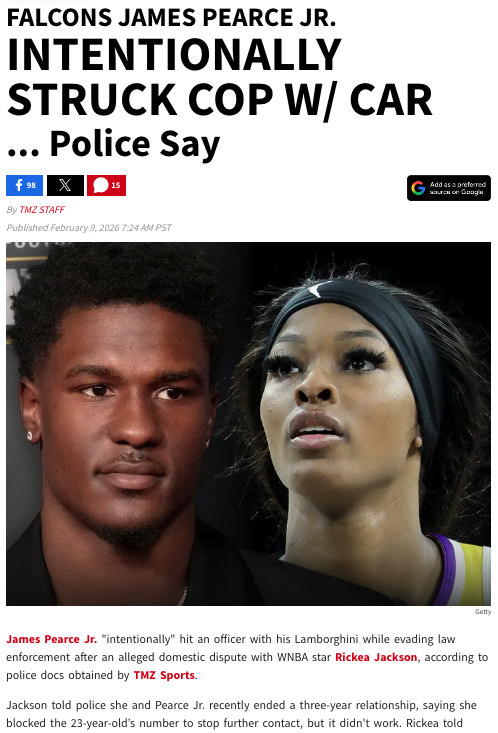
Why use this photo—and this TMZ headline—for today’s blog?
Because it perfectly illustrates how survivors of domestic violence and unhealthy relationships—most often women—are routinely erased in the coverage of men’s public “crash outs.”
To be clear: I will use alleged throughout this post. Not because I don’t believe WNBA star Rickea Jackson—but because writing responsibly about third-party reporting requires legal care.
That said, look at the framing.
The headline centers Falcons rookie James Pearce Jr. and the police car he allegedly rammed. What it buries is why the situation escalated in the first place: Rickea Jackson had ended their relationship, blocked his access to her, and asserted a boundary.
According to reports, his response wasn’t acceptance. It was rage.
The alleged behavior didn’t stop at emotional volatility—it spiraled into dangerous actions directed at her and then outward, as he attempted to evade accountability for what he was doing. The violence is framed as spectacle. The survivor is reduced to a footnote.
And this pattern isn’t accidental.
We routinely narrate men’s loss of control as an isolated “incident,” while stripping away the relational context that explains it. We focus on the dramatic end point—the crash, the arrest, the headline—while ignoring the entitlement, possessiveness, and refusal to accept “no” that often precede it.
Here’s the uncomfortable part:
The entire NFL was aware of Pearce’s history of unstable decision-making and violent turns. And yet, because he might get a sack on third down, the Falcons drafted him anyway.
Talent keeps getting the benefit of the doubt.
Women keep getting erased.
This matters especially right now.
It’s Valentine’s Day weekend. If you coach male athletes, you have players who are navigating relationships—some healthy, some not. You have young men who are either learning partnership rooted in affection, consent, and mutual trust…or reenacting manipulative scripts that say:
“I bought you this.”
“I showed up.”
“You owe me.”
This headline analysis can be a gateway conversation.
Not about shaming.
Not about fear tactics.
But about helping young men ask themselves a real question:
What kind of partner do I want to be when I don’t get what I want?
Coach Prompts
How often do media narratives center male behavior while erasing the harm done to women?
What conversations are you not having with your players about rejection, boundaries, and entitlement?
If talent keeps excusing behavior at the top, what standards are you setting at the team level?
Player Prompts
How do you react internally when someone sets a boundary you don’t like?
What’s the difference between affection and entitlement?
If a relationship ends, what does respect look like—especially when it hurts?
The Game Changed. So Did the Expectations.
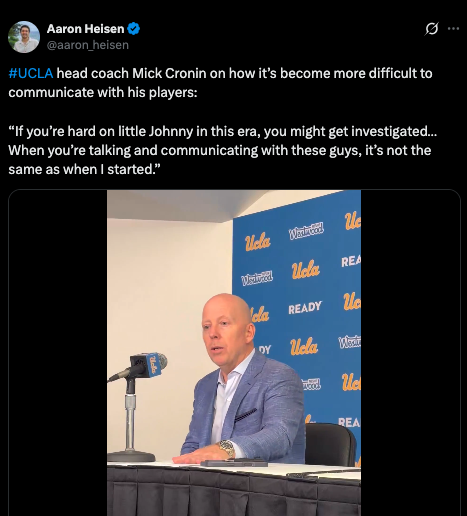
I know, I know—Coach Cronin shows up a lot in this space.
I promise I don’t have an agenda against him. If anything, it’s because (to his credit) he’s unusually willing to share his unfiltered thoughts publicly. And as both a basketball coach and the founder of TeamsOfMen, that consistently gives me something to wrestle with.
This latest rant was about how much harder it’s become to communicate with today’s players compared to when he started coaching. He touched on attention spans, difficulty connecting to directives, and—most notably—the concern that being “hard on kids” today could get a coach investigated.
I’m in my 24th year coaching male basketball players (22 at the college level, now 2 at the high school level). And yes—there are more distractions in young men’s lives today than there were in past generations. That part is real.
But I don’t think that’s the core issue being expressed here.
What I hear instead is anxiety about losing the ability to demand obedience and fealty without consequence. And honestly? I think that’s a good thing.
Young people today are more aware of the respect they deserve. They’re more informed about what harmful communication looks like. They have more access to language, resources, and accountability structures that didn’t exist when many of us started coaching.
That’s not softness. That’s progress.
And it forces something uncomfortable—but necessary—on us as coaches: self-audit. Growth. Skill development beyond volume, intimidation, or fear-based compliance.
We constantly tell our players to adapt. To evolve. To embrace change. Our profession is flooded with slogans about growth through discomfort.
So the real question is this:
Why are we so resistant to applying that same expectation to ourselves?
Growth doesn’t have to be something we lash out against.
It doesn’t have to be framed as loss.
And it definitely doesn’t require us to cling to outdated methods just because “that’s how it used to be.”
Coach Prompts
Where do you feel most threatened by change in how players respond to authority?
Which of your communication habits rely on fear, volume, or compliance rather than trust?
If accountability structures disappeared tomorrow, how would your coaching need to change?
Player Prompts
What does respect from a coach actually look like to you?
When a coach “gets hard,” how do you decide if it’s about growth or control?
What’s the most effective way an adult has challenged you without crossing a line?
Love Isn’t Confusing—Unhealthy Scripts Are
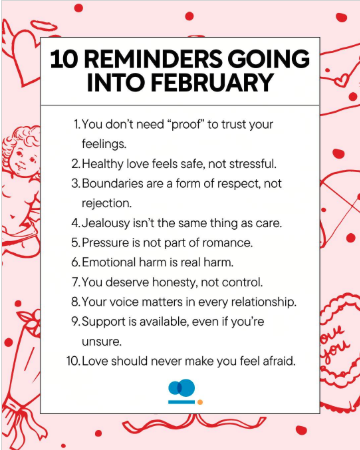
Today’s blog is in reflection of a post from @loveisrespectofficial (on Instagram) that lays out simple reminders about what love actually is.
Honestly, this is less a “feel-good February post” and more a plain-language relationship gut check. A quiet but powerful list that asks us to examine both our relationships and the beliefs we carry about what relationships are supposed to look like.
The timing matters. It’s February. Valentine’s Day is coming. A lot of our athletes—and plenty of us as coaches—are thinking about love, expectations, pressure, and what we think we’re supposed to tolerate.
If you’re in a relationship you’re grateful for, this list can be affirming.
If you’re single, it still matters—because it can validate why something didn’t work, or help clarify what you don’t want to normalize going forward.
Here’s the part that matters most for those of us working with male athletes:
How often do you think young men are explicitly taught what healthy love looks like?
Not what looks impressive.
Not what feels dominant.
Not what gets laughs in a group chat.
But what is safe. Respectful. Honest. Mutual.
The manbox does not want them to see this list.
It doesn’t want them to know these standards exist.
Because once they do, they can’t unknow them.
And if our vision for TeamsOfMen is breaking down manbox walls one team room at a time, then this isn’t optional content. This is a must-share. A must-discuss. A conversation that gives our guys language, boundaries, and permission they may have never been offered.
Coach Prompts
When was the last time your players heard an adult clearly define what healthy love looks like?
Which parts of this list might be hardest for young men to believe—and why?
How does your program address relationships beyond “don’t mess up”?
Player Prompts
Which line on this list stood out to you the most? Why?
Have you ever mistaken pressure, jealousy, or control for care?
What would change in your relationships if safety and respect were non-negotiable?
Manhood, Paternity, and the Cost of the Grind
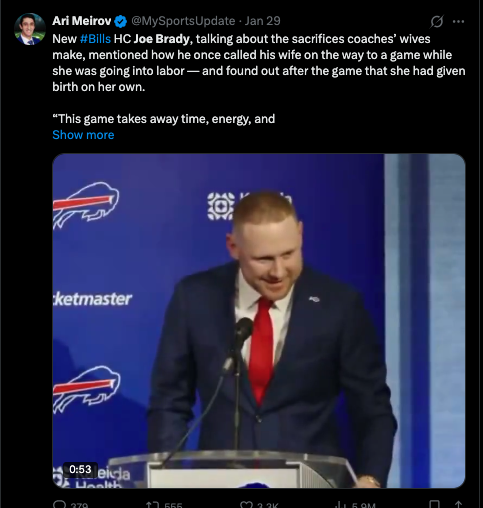
Today’s blog is in response to two NFL headlines from last week: the hiring of new Bills HC Joe Brady and the firing of Vikings GM Kwesi Adofo-Mensah.
I’m not writing about football decisions here. I’m writing about the manbox framing attached to each moment—and the lessons they quietly teach.
First, Joe Brady. I appreciate him publicly acknowledging his wife during his introductory press conference. That matters. But the idea that he framed missing the birth of his child as part of answering a “calling” is where I can’t nod along.
There’s thanking your partner for being a rock of support—and then there’s publicly admitting you asked them to carry something that never should have been asked in the first place. Take off the headset. Leave the booth. Get to the hospital. That’s not a lack of commitment. That is commitment.
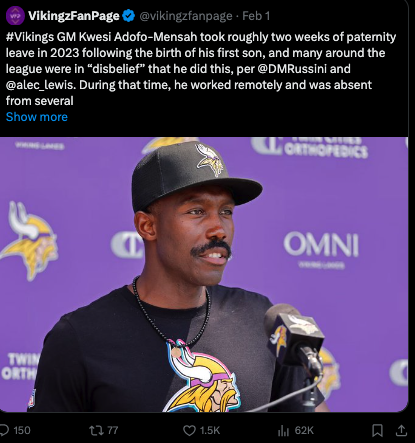
Second, Kwesi Adofo-Mensah. I have no commentary on his work as a GM. But there is no world where a man should be questioned, doubted, or quietly penalized for taking paternity leave to care for a newborn. That framing is absurd. Paternity leave is not a luxury. It’s not softness. It’s not negotiable. Caring for a child is not a one-gender job.
Sports do teach life lessons. That’s why so many of us love this work. But without intention, they can also reinforce harmful scripts:
That sacrifice always means absence.
That devotion means disappearance at home.
That ambition requires emotional or relational neglect.
That’s the work here—interrupting those scripts before they get handed down to the next generation as “normal.”
Coach Prompts
Where have you praised “sacrifice” without questioning who is absorbing the cost?
What messages do your players hear about family, presence, and priority—spoken or unspoken?
How would your program talk about paternity leave if one of your assistants took it tomorrow?
Player Prompts
What does being “committed” mean to you—on the field and at home?
Where have you been taught that showing up for family is optional?
How do you want your future partner or children to remember your priorities?
Escaping Conversations with Empty Promises
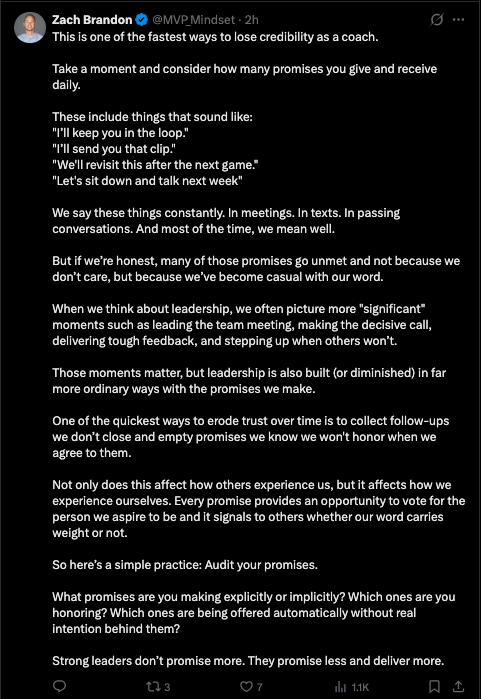
Today’s blog is in response to a post I saw on X that, for once, made me nod along instead of bristle.
It hit close to home.
Just last week, I told a younger player I’d send him a PDF with a couple new entries to our dribble-drive package. And I didn’t do it. No excuse. I forgot. And if I’m being honest, this post smacked me in the face for that failure—because I know exactly how I’d react if I asked him to bring something to me before practice and he didn’t follow through.
What I loved most in this post was the idea of auditing our promises. Not the big, dramatic ones—but the everyday throwaways:
“I’ll send you that clip.”
“We’ll talk next week.”
“I got you.”
Most of the time we mean well. But over time, those missed follow-ups quietly erode trust. Not just how others experience us—but how we experience ourselves. Every kept or broken promise is a vote for the person we say we want to be.
Here’s the TeamsOfMen layer I’d add:
I wonder how often we make these promises not because we intend to follow through—but because they let us exit a moment. A longer conversation. A relational pause. An uncomfortable or vulnerable exchange we’re not quite ready for.
As men, we learn early that saying “I’ll get to it later” or “I gotchu” is an efficient escape hatch. It buys time. It avoids depth. And sometimes it replaces the actual work of connection.
Strong leadership isn’t just about doing more.
Sometimes it’s about promising less—and meaning every word.
Coach Prompts
What promises do you make most often in passing?
Which follow-ups on your plate have gone quiet?
Where do you promise later instead of engaging now?
Player Prompts
When someone says “I got you,” what makes you believe them?
How do broken promises change how you trust teammates or coaches?
Where do you say things just to end a conversation?
Humor Isn’t Harmless When It Reinforces Old Scripts

Today’s blog is in response to a quote from Texas A&M men’s basketball coach Bucky McMillian in a recent press conference, where he described his defensive philosophy as “mother-in-law defense”—constant nagging and harassment.
Let me be clear up front:
I love pressure basketball. I believe in defenses that dictate, that bother, that disrupt rhythm and timing. I’ve also been known to slide in a side quip or analogy myself to lighten a serious point. Humor can be a tool.
But I also know this: words matter.
Leader framing matters. Tone matters. And even when something is said in jest, it still reinforces a worldview.
The “mother-in-law” trope isn’t neutral. It’s rooted in old manbox scripts—ones that paint women (especially women asserting boundaries or advocating for their daughters) as inherently nagging, adversarial, or something to be endured. Underneath the joke is a familiar story: men vs. women, husbands vs. wives’ families, dominance vs. autonomy.
And here’s the thing—I don’t live that story.
I have a fantastic mother-in-law. There’s no battle. No power struggle. No constant conflict. Which tells me this framing isn’t universal truth—it’s a recycled stereotype.
I know the immediate response: “Kip, it’s just a joke.”
But intent doesn’t cancel impact.
If we truly believe that “no detail is too small” when it comes to winning games—footwork, spacing, language in the huddle—then we can’t suddenly wave off our own words as meaningless when they quietly reinforce harmful scripts.
We ask our athletes to be precise.
We ask them to be intentional.
We ask them to care about how they show up.
That standard has to apply to us too.
Coach Prompts
Where have you used humor or shorthand that might reinforce stereotypes you don’t actually believe?
What metaphors do you lean on most—and what worldview do they quietly carry?
How do you balance being relatable with being responsible in your language?
Player Prompts
When a coach or teammate makes a joke, how do you decide whether it’s harmless or harmful?
Have you ever laughed along with something that didn’t sit right with you—why?
What stereotypes do you hear repeated so often they start to feel “normal”?
Cruelty Is a Costume
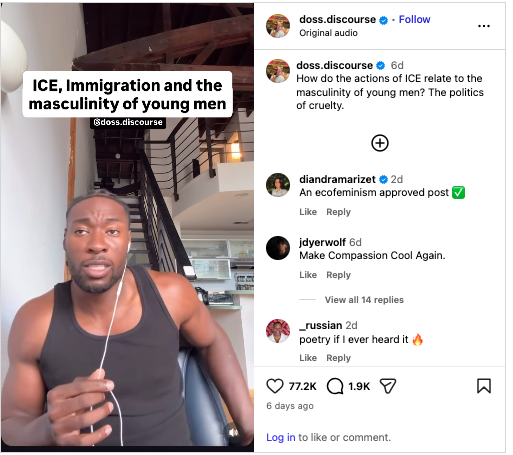
Today’s blog is me sharing a piece from Joshua Doss (@doss.discourse) — because it helped me name something I’ve been wrestling with all weekend: the way “cruelty” is being sold to young men as if it’s a requirement of masculinity.
I’ve struggled with how to address the killing of Alex Pretti in Minneapolis by ICE agents. I don’t want to do the lazy version of this conversation. I don’t want to posture. I don’t want to perform.
I want to be useful.
Doss’ message gave me language for what I’ve been feeling: there are voices in our culture actively conflating cruelty with manhood — and then calling that “strength.” They frame compassion as softness. They frame dominance as leadership. They frame malice as “alpha.”
And you see it everywhere right now: not just in policy, but in the tone around it. Not just “enforcement,” but delight in humiliation. Memes. Dunking. Laughing at families being displaced. That’s not power. That’s insecurity wearing a costume.
So here’s where I’m going with our guys today in our Monday full-program gathering:
Every day as men, we’re faced with a choice: compassion or cruelty.
And the scary part is that cruelty is contagious — especially when it gets framed as funny, righteous, or “just how the world works.”
Masculinity is not supposed to be malice.
Confidence isn’t demeaning people. Confidence is the ability to stay human when you’ve been given a thousand excuses not to. Confidence is having enough internal security to say, “I’m not joining the pile-on.”
If your politics — or your group chat — requires you to shut off empathy to prove you’re a man, you’re being played. The manbox doesn’t just limit men. It weaponizes them.
And that’s why this video matters in a team room: because our players are being recruited into cruelty every single day. Online. In jokes. In memes. In the “bro, it’s not that deep” scripts.
It is that deep.
And we’re going to practice choosing better.
Coach Prompts
Where are your players being “trained” into cruelty online—what are the tells?
How do you model compassion in a way your athletes won’t dismiss as “soft”?
If you had to build a weekly habit that strengthens empathy, what would it be?
Player Prompts
Where do you feel pressure to laugh along even when something feels wrong?
What’s a moment you’ve seen someone get dehumanized online—what did you do, and what do you wish you did?
What’s one “small courage” move you can make this week when a group chat turns ugly?
Your Players Live Online. So Does the Harm
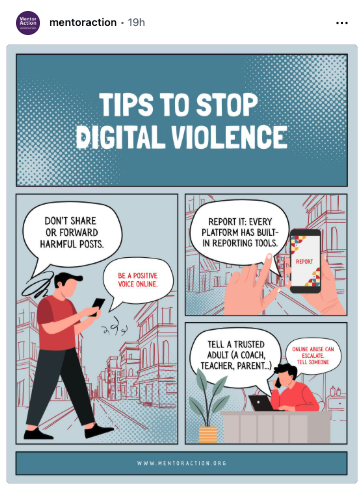
Today’s blog is in response to this simple, powerful infographic from Mentor Action on stopping digital violence.
I think a lot of coaches of male athletes use the thought-stopping cliché of “I don’t do social media” to protect themselves from wading into the deep (and often dark) online lives our players live.
But I know from firsthand experience — as a coach, a parent, and a victim myself — that online harassment and online bullying are real. And in 2026, they’re not some rare edge case. They’re an ever-present part of human existence.
Your guys are either:
the target,
friends of a target,
or (let’s be honest) the ones doing the attacking.
And the forms are evolving: deepfakes, screenshot sharing, pile-ons in comment sections, anonymous DMs, “jokes” that aren’t jokes, and harassment that follows someone everywhere because the internet doesn’t have an off switch.
This graphic is a gateway into a team conversation from two angles:
“Let me help you navigate harm that’s happening to you.”
“Let me be clear what I will do if you’re doing the harm.”
We don’t get to opt out of this because it’s uncomfortable. If we’re serious about building people, we have to be willing to name what’s happening online — and put real expectations around it in our programs.
Coach Prompts
Where have you used “I don’t do social media” as permission to avoid a hard conversation?
If a player is being targeted online, what’s your plan — specifically — beyond “block them”?
What are your program’s non-negotiables around screenshot sharing, pile-ons, and group chat behavior?
Player Prompts
Have you ever seen something online and stayed quiet even though you knew it was wrong? Why?
What’s the difference between “it’s just a joke” and actual harm?
What would you want your coach to do if you were the one being harassed?