
When The Values Get Taxed
“Sounds like Arch needs some TeamsOfMen curriculum.”
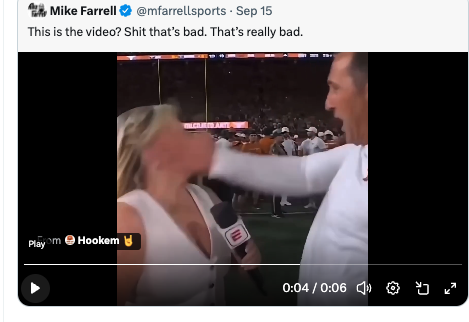
I got that text last night round 9p.m. from a longtime friend of mine who has been in HS teaching and admin for almost three decades. He was of course referring to the situation that occurred after the University of Texas football team win over Ohio State Saturday night, when Texas HC Steve Sarkisian ended his postgame interview with sideline reporter Holly Rowe in a strange, abrupt way. In the media sessions following the game, Texas QB Arch Manning was asked about the social media edits he had seen from the weekend. Manning brought up the video above, laughed, and called it “a good one” and “hilarious.” The video was an AI creation depicting Sarkisian slapping Rowe across the face.
Multiple things are true in this case.
First, what Sarkisian did to Rowe in reality was not physically violent, but was at best weird and more accurately RUDE and DISMISSIVE.
Second, Manning’s laughter doesn’t in and of itself convey his agreement with violence against women, but it at least signals his willingness (like so many other boys and men) use laughter to move through a moment without confronting what is actually being laughed at.
And third, Manning has since apologized. He acknowledged that there was “nothing funny” about the video, apologized specifically to Rowe, and Rowe accepted that apology after the two had a private conversation. That matters, too.
There are two paths I want to take in examining this entire situation, which of course is generating national discussion (and includes the usual deflection points in online responses like “libtards are soft” and “it was just a joke”).
First, in 2026, a currency in manhood as important as (if not more so) than literal cash is HUMOR.
Boys will do anything to be seen as funny.
Boys will laugh at anything to maintain their status in a group (even when the thing they are laughing at is not in alignment with their values).
Boys will look for escape from accountability for causing any type of harm by claiming “it was just a joke” or “it’s not that deep.”
What’s worse? The adults in their lives (as evidenced by some of the comments below on the blowback Arch was getting) will GRANT them those hall passes (and I suspect that is due to the adults themselves wanting that future grace from their own bullshit moments). Examine the boys in your life and imagine them being confronted with awkward silence…they may be prone to making weird noise or strange sound or dumb joke to break that quiet (rather than sit with their own thoughts).
Think of the men in your life who rather than share real truths and thoughts on their lives and the world with each other devolve to sex and fart jokes in each other’s presence (the hyena cackling is probably echoing in your ears right now).
Lastly, even if we are to imagine the moments in life when men hear something they know their values don’t align with, rather than confront it with an interruption, you can visualize them right now smirking or quietly laughing while trying to escape the scene.
Humor can absolutely build connection between boys and men. But it can also become camouflage.
This jokester economy is not one of courage. It is one of deflection. And THAT is something worth teaching our guys to recognize: Am I laughing because I think this is funny? Or am I laughing because laughter gets me out of having to decide what I actually think about it?
Second, in taking a 150-foot view of this entire situation, I want to present the image below (allegedly an online image from the Texas team room). Among the listed “CORE VALUES” is “TREAT WOMEN WITH RESPECT.” Reporting about the image has likewise identified it as a Texas locker-room values display.
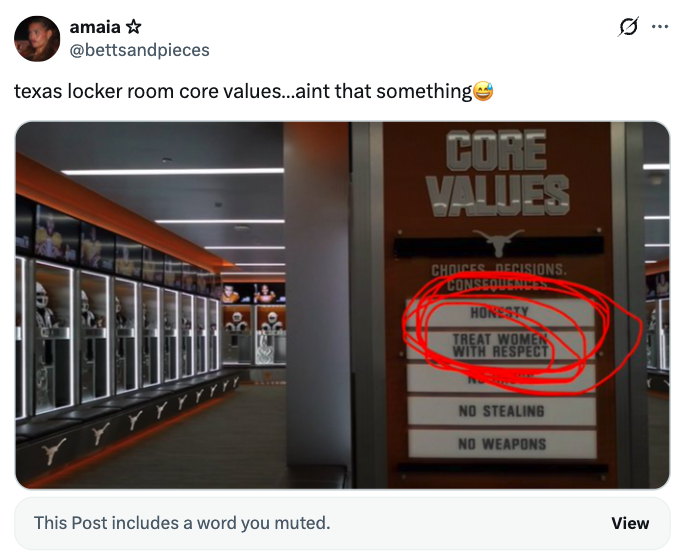
In 2026, I’m not sure being called (or even proven) to be a hypocrite moves anyone anymore (I mean, you can just look to our Commander in Chief for examples of this claim). Knowing this, I’m willing to bet Coach Sark and the ol ‘Horns won’t be adjusting their behaviors based on the fact their sign clearly states they believe in acting the complete opposite of how he did on Saturday night.
And we know, as we’ve pointed out in this blog and in our TeamsOfMen in-person sessions with coaches, that signs to don’t guarantee outcomes or behavior. This literally isn’t worth the paper it’s printed on if the leader of the program is going to move the way he did on national television. We could waste our time and point out that the sign also claims “Choices. Decisions, Consequences” for players in the Longhorn burnt orange…but we can reasonably deduce that (based on the “oh, well Sark and Arch issued statements") that consequences should be read as “apologies and amnesia required”.
If these stated “core values” or “standards” don’t hold up in the brightest moments under the biggest lights with the most at stake, then we cannot claim them.
And trust me, I know after almost 25 years of coaching, that things GET TAXED and FAIL. But, in the version of coaching I choose to deploy, that failure requires as much scrutiny and practice planning for improvement on the same scale as a failed 4th down conversion.
I wonder, with the millions of dollars UT football has its disposal, about the who/what/how of the internal examination of this moment for their coach and QB.
Coach Prompts
When one of your program’s stated values FAILS in a real moment, what happens next besides an apology or consequence?
Which of your team’s values have you actually practiced under pressure rather than simply talked about or displayed?
When your players use humor to escape an uncomfortable moment, can you help them distinguish “I think this is funny” from “laughing gets me out of dealing with this”?
Player Prompts
Have you ever laughed at something you didn’t actually think was funny because everyone else was laughing?
When you say “it was just a joke,” does that explain your intention or erase the impact?
Pick one value your team claims. What would it actually look like to live that value when doing so is uncomfortable?
NOTE: This same blog appears as a longer form article on my Medium Page
The Pass Isn't Transferable
If you coach in a diverse community, the N word is something you are going to have to have a policy and plan for.
If you coach in a monolithic white community, the N word is something you are going to have to have a policy and plan for.
If you coach against teams from either of those descriptions, the N word is something you are going to have to have a policy and plan for.
If you do the math, between those three sentences, I’ve covered everyone everywhere in coaching.
No matter how badly I would love to erase that damn word from existence, it is going to come up at some point, somehow, somewhere in your coaching.
If you are lucky, it will be the soft “n***A” version of the word. That’s what today’s writing is on.
The hard R ending version of that word? I have zero tolerance for, by my coaches, my players, our opponents, their staff, their fans, whoever. That shit don’t fly with me. I will walk my team the hell off the floor until you either find the fool who used it towards us or you clear the damn arena (RIP to Coach John Thompson who showed the way on how to combat in house racism by not taking the floor until it was gone). I don’t believe the hard R needs me to write a long list of “how should I deal with this”. You don’t. You eradicate even the idea of it in your presence.
Now, the soft A is harder.
Especially if you are NOT Black (I am Samoan) but have Black players/coaches etc in your orbit who use the soft A as a term of endearment between each other (and, in fact, may come from families or communities where its usage is normalized). You are stepping into cultural and relational territory that isn't yours to simply define for them. That is not your battle, and the most I ask of my guys is “in our program spaces, in my presence, I don’t want to hear it. BUT, that is not me telling you what happens in your life away from here. That is absolutely within your agency to decide.” (NOTE: In Oregon HS hoops, even a black player saying the soft A version to another black player within earshot of a ref earns an auto ejection.)
But, you may have Hispanic, Polynesian, or even Asian players in your space who claim to have some version “a pass” to say it.
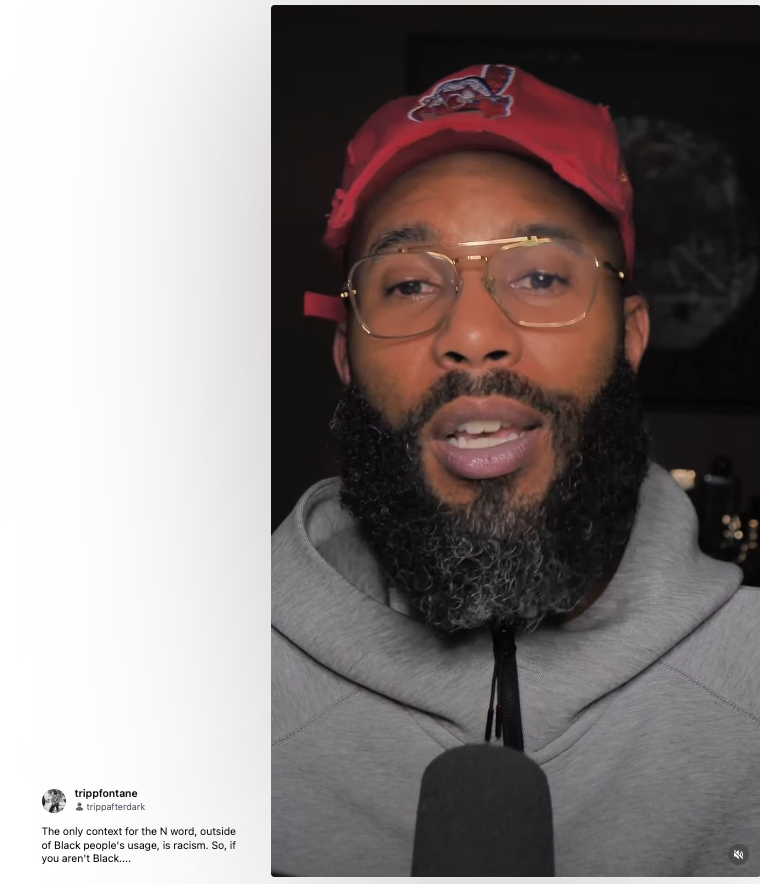
As the speaker @trippfontane explains in the MUST WATCH video above, they may actually have that pass…WITH THAT set of specific Black friends.
But that's the important distinction: permission within a relationship isn't universal permission. Those friends do not speak for the entire Black community.
That pass expires the second they try that -ish around someone from the Black community they don’t know.
And whatever permission exists inside those particular friendships doesn't automatically transfer into every other space they enter.
That pass also expires the second they try to use that word between each other from their ethnic group that isn’t Black. You don’t get to throw around that word in your group because your group doesn’t carry the history and consequences of that word on the Black Americans experience (and I say that as someone who has been mistakenly called the N word despite being from the Pasifika diaspora).
And THIS is exactly why waiting until somebody says it is a terrible coaching strategy.
I think this video is a staff meeting before the season starts viewing.
I think this video is then a shared viewing with your Black players followed by a discussion of their thoughts on it premise and statements.
Not because you're asking those players to create the policy for you or speak for every Black person. You're listening because the policy you're about to implement directly affects their experience in your program.
I think this video is then a must view for everyone in your program, TOGETHER.
Then you tell them exactly where your program stands BEFORE somebody tests the boundary.
At the very least, this video should be the basis by which you and your staff build the policy and plan for this word you KNOW has the potential to derail your season.
Coach Prompts
What is your program’s policy around the N word, and do your players know it BEFORE an incident happens?
Have you distinguished between setting a boundary for your team space and trying to dictate your players' language outside of it?
If this word were used at practice or during a game tomorrow, would every coach on your staff respond consistently?
Player Prompts
Does permission to use certain language with one group of friends mean you have permission to use it around everyone? Why or why not?
What responsibility do you have to understand how a word may land differently with someone who doesn't know you or your intentions?
What should happen in our team space when someone's language crosses a boundary we've already agreed upon?
Bring Who You've Become

This past weekend I spent time with a group of lifelong buddies (literally guys I have known and been teammates/friends with since elementary school) in Reno, NV. We have a tradition where as many of us as possible get together for a weekend, centered around my brother Kane’s college football team’s schedule. He’s currently the defensive coordinator at the University of Nevada, but whether there, at Boise State, the University of Washington or even Montana State, we pick a game that is located somewhere we all want to meet at and then we spend an awesome two days together.
I bring this up because I think our group finds itself, like many male friend groups, navigating the nuance of adult friendship:
What we were THEN
What we are NOW
How long we go between actually experiencing time together
Now, if you dive into this, you will probably recognize the similarity between those three bullet points and the life cycles of a team. You can draw throughlines to your players being around each other all day every day IN SEASON, then going their separate ways in the offseason and reconvening the next year, older, (hopefully bigger and faster) and looking to rekindle bonds and relationships.
It is NOT easy to do.
Because the people who come back aren't exactly the same people who left.
How does this apply to TeamsOfMen convos with your guys?
Because I think you SHARE adventures like this with them…not just in terms of “yeah, we flew in at this point, we then did this thing, our seats were here” transparency truths, but VULNERABLE things like “Yeah, a friend of mine is single now, looking to start a new adult relationship” or “this guy, we hadn’t seen in two years, we had NO idea his wife was sick” or any other of the many things that come up when you get back together with a group and both try to relive the old days AND create new memories.
Those are chances to show your players that adult male friendship isn't just nostalgia. It requires continuing to learn who your friends are becoming.
Here’s an easy one to start a convo with your guys about: “So, when you picture your friend from elementary school…is he the same guy today? Do you treat him like he is (for example, a nickname he had in 2nd grade might not feel right to him now in 10th)? How can you help the friendship grow and be about who each of you are now?”
You could go another way and ask: “When you are around your guys who ARE NOT in our TeamsOfMen sessions, do you hold them accountable to language and jokes you know now are nonsense…or do you just stay silent?”
Because that's another test of growth: when you return to an old group, do you bring the person you've become with you? Or do you slip back into the version of yourself that group remembers?
A combo of these could prove to be a powerful reflection and MODELING for your guys about how important friendship can be, but also about the idea that we must let and CELEBRATE each other as we grow beyond the “old days".
The old stories matter. The old nicknames might. The old jokes might not.
Maybe part of being a lifelong friend is giving each other permission to become somebody you didn't know when you first became friends.
Coach Prompts
When you talk with your players about friendship, do you talk about how friendships have to change as the people inside them change?
What could you share from your own adult friendships that would MODEL something your players rarely get to hear men discuss openly?
When your players leave your team environment and return to other friend groups, are you preparing them to bring their growth with them?
Player Prompts
Think about one of your oldest friends. How is he different from the person you first became friends with?
Is there an old nickname, joke, expectation, or version of you that doesn't really fit who you are anymore?
When you're around friends who aren't part of the conversations happening on your team, do you act like the person you're becoming or slip back into the person they expect you to be?
You Don't Have To Laugh

So I have a Starbucks addiction.
No, seriously.
Every day, since the birth of my oldest child in 2007, I have had at least one Starbucks Venti Iced Coffee (sometimes two).
Yeah, it’s an issue I’m well aware of but unwilling to do anything about.
Also, as you are all aware, I am into Mantra TShirts. I think taking the small step in courage of wearing a shirt with words on it that not only state something you believe in, but also something you are pretty sure others disagree with, is a choice we should all try to make occasionally.
These two truths collided yesterday for me at my local “watering hole” Starbucks here in Salem. I was in for my usual and it happened to be a light-traffic today and there was a middle-aged man also waiting for his mobile order to be served. I caught his gaze as I walked in and I knew he was reading my shirt (one of the She Is Not Your Rehab line found here). I took a short breath knowing some nonsense was coming and the man said, “Whoa, what does that shirt say?”
I responded, “She Is Not Your Rehab,” and sort of flipped the bottom of the shirt out a little tighter so he could read the text.
He said, “What does that mean?”
I said, “To me, it means that if you are a man with a wife, girlfriend, partner….that person is NOT responsible for your issues. You need to figure them out your damn self.”
He made a weird joke about “being IN rehab” and then said “well, I think women should wear that shirt for us” which of course is a pretty clean example of the deflection tendency we men know well: somehow turning a challenge about our behavior into a conversation about what women do wrong.
I said, “Tell me more about that” something which he appeared very unready to do.
He mumbled something and the convo ended.
I don’t think I changed the world yesterday during this Starbucks convo.
But, I do think this was an opportunity to interrupt some line of thinking and a script too many men let unfold unchallenged. This person, who let’s stop short of claiming to be awful (but most likely carries some Manbox training) was used to saying some sexist -ish, joke, banter with another man and getting laughter back.
I simply didn’t provide it.
That in and of itself was I’m sure a shock to his system. If that shock held or not is immaterial.
For me, it was a modeling of what I ask my players to do. In those moments, when someone is saying or doing what you KNOW you don’t agree with, you at least have to say something.
And THAT is the part I keep coming back to.
He didn’t need me to win an argument with him. I didn’t need the perfect comeback. I didn’t need to turn Starbucks into a TeamsOfMen session.
I just needed to not give him what the script was asking me for: another man’s approval.
Or, sometimes, simply refuse to give them the laugh, head nod, “exactly,” or whatever other form of approval they expected from you.
Because interrupting a script doesn’t always require a speech. Sometimes the interruption is simply making sure the other guy doesn’t leave believing you agreed with him.
Coach Prompts
When a player makes a sexist, homophobic, or otherwise harmful joke, what response is he expecting from the other guys in the room?
Do your players believe interrupting something they disagree with requires a confrontation, or have you shown them smaller ways to refuse participation?
How often do YOU unintentionally reinforce a harmful script with a laugh, smile, head nod, or silence?
Player Prompts
Think about the last time another guy said something you disagreed with but you laughed or went along with anyway. Why did you?
What could you do when a friend says something you don’t agree with without turning the moment into a huge confrontation?
What does another guy assume about your beliefs when you laugh along with something he says?
When a player makes a sexist, homophobic, or otherwise harmful joke, what response is he expecting from the other guys in the room?
Sweat Equity Isn't Character Development
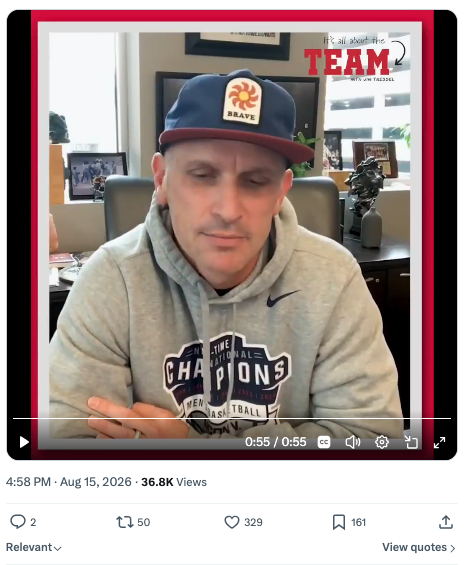
Coach Hurley returns to the blog!!! I say that a bit tongue in cheek because if you have been here often, you know Dan Hurley has provided us with a few moments worth a TeamsOfMen lens deep dive. Now, he is nowhere near the number of appearances by Mick Cronin, but he is back. As always, there is no denying his acumen on the scoreboard, as his back-to-back National Championships attest. But, once again, I think his words here are at best a misunderstanding of definitions or at worst a blatant bastardizing of them.
The post, originally put up on X by @coachajkings, is supposedly cueing the viewer to watch the video where “Dan Hurley shares the difference between transactional and transformational coaching.” But as you watch the video, you realize that YES, Coach Hurley says that he is a transformational coach, not a transactional coach…but then proceeds to simply describe an environment of physical and mental challenge.
He describes hard work. He describes seeking discomfort. And he describes a payoff the includes a lot of winning.
That’s sweat equity and a culture of effort. Absolutely fine. No issue there.
But transformation doesn’t happen during rigorous physical exertion simply by osmosis. Muscles and cardio systems are improved for sure. Work capacity can improve. Perseverance can be practiced.
But when I hear transformation, I think of human qualities and character. I think of (as we’ve talked about in the past) character of HEART, not simply perseverance.
I can run a lot of lines. I can do defensive slides for hours. That can get me in phenomenal shape.
I can be yelled at for hours. I can bite my tongue and learn to deal with it. That probably makes me at least PATIENT, maybe?
But I’m not sure you can claim TRANSFORMATION simply from enduring hard work. I think that requires exactly what we’ve learned about “virtue translation” lately and that is framing and reflection time on what happened, what I thought, what I felt, and WHY and HOW it applies to my future life.
Otherwise, we’re making the same assumption sport has made forever: because an athlete EXPERIENCED something hard, they automatically LEARNED the lesson associated with it.
I appreciate the outlining of what a day in the life of UCONN MBB looks like here (it sounds like a grueling physically challenging environment). Great.
But I don’t think this blurb (at least) showed us WHAT was transformed, WHY it was transformed, or HOW that transformation transfers beyond basketball.
Coach Prompts
What do you call “transformational” in your program, and what evidence tells you an actual transformation occurred?
When athletes experience something difficult in your program, where does the framing and reflection happen that helps them understand what they learned?
Which qualities developed in your program could your athletes identify, explain, and intentionally apply somewhere outside their sport?
Player Prompts
Think of something difficult you’ve endured in your sport. What did it actually teach you about yourself?
What is something you’ve learned through your team that you know how to use somewhere outside of sports?
When you’ve changed because of a difficult experience, what helped turn the experience into an actual lesson?
You Don't Gotta.
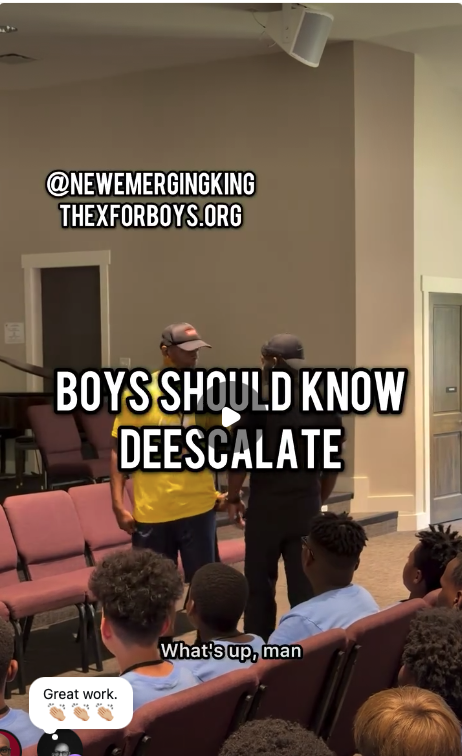
“As a man, I gotta…”
I’ve long argued that there may be no more destructive trap sentence than that one. And I know most men reading this can probably think of a time they’ve deployed it.
Pay attention to what comes AFTER “As a man, I gotta…” because what follows is often a Manbox-influenced limitation you’ve placed on yourself. TeamsOfMen teaches us to help our young men identify the snare before it makes the choice for them.
Our video share today (originally posted to IG by @newemergingking) is a great example of how to show your guys a way to counter the programming of “As a man, I gotta.”
What do I mean? The video shows a training session on deescalation, including a skit where the trainers role play how an interaction can go sideways AND how to stop it from doing so.
The shoulder bump, the mean mugging, the fist clenching…all those triggers that you see on a football field post play…on a basketball court after a hard foul…on a soccer pitch after a slide tackle gone awry. Think about how many times you’ve had a player react with that exact posture, get the flag or whistle for the resulting tussle, and then give you some version of: “Coach, as a man, I gotta…”
But he doesn’t gotta. He has options.
This could be the video you need (either to show, or to steal techniques of unlearning training from) to show your players how to #meetthemoment differently in your program. I would probably take it a step further and ask the guys to show you the way THEY would be currently comfortable deescalating. What would they say? What would they do with their hands? Would they walk away? Could they walk away without feeling like they had just “lost” something?
Their answers give you another launch point. Meet the guys where they are and start unlearning the idea that every confrontation requires them to prove something.
Coach Prompts
What versions of “As a man, I gotta…” have you heard from your players after a confrontation?
When conflict starts escalating, what options have you actually taught and rehearsed with your players?
Could your players deescalate a confrontation without feeling like they backed down or “lost”?
Player Prompts
Finish this sentence honestly: “If another guy disrespects me, I gotta…”
What could you do to deescalate a confrontation and still feel like you stood up for yourself?
When someone bumps you, stares you down, or talks trash, what makes it hardest to choose not to escalate?
Can You Watch This Without Making It Funny?
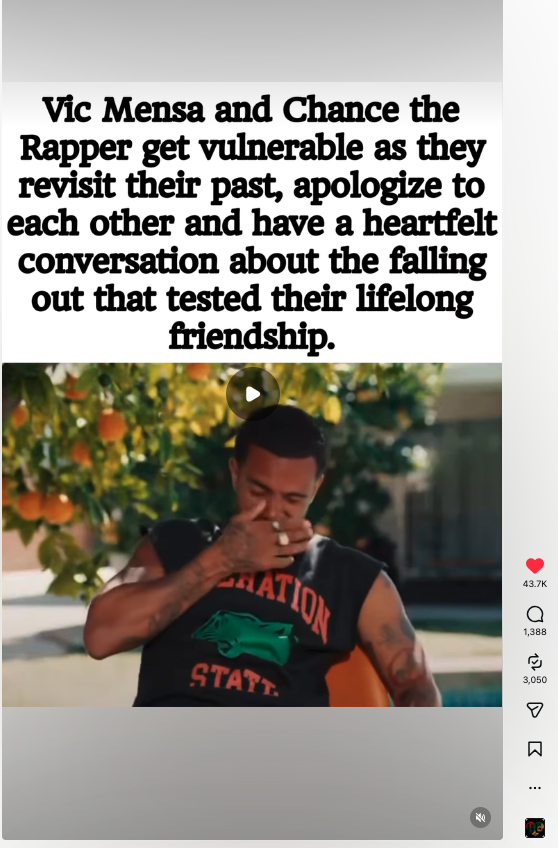
I’m not going to claim that your locker room is full of Chance The Rapper and Vic Mensa fans…but they are relevant artists in hip hop culture. And I’d wager that hip hop has some version of influence in your room.
So my hope is this video can resonate with your group.
Long story short, this is a exceptionally emotional and vulnerable scene of Vic and Chance (who were very tight for an extended period of their lives) apologizing to one another and mending fences after a prolonged “beef” between them. Their friendship was literally non existent for years and this is their trying to patch it back together.
I wouldn’t put this up with a bunch of prompts and stop it at a bunch of different points. I would let it play all the way through and then intentionally call for silence for 2 minutes. Not because it’s the best apology makeup scene of all time, but because the TEARS between the two men matter. I want your guys to be able to see the emotional exchange between Chance and Vic.
If you don’t enforce the silence, you will get guys trying to escape the moment with snickering and jokes. And those mechanisms are probably their default in all heavy situations that challenge their emotional fluency.
So, make them sit in this one for a little bit. They don’t need a lecture about how “real men cry” and you don’t need to immediately ask them to share some deeply personal story of their own. They just need to WATCH two men they recognize as culturally relevant be hurt, apologize, cry, tell each other what their friendship meant and try to repair it.
I think sometimes we get ahead of ourselves when we ask young men to “be vulnerable.” Hell, some of your guys might not even be comfortable WATCHING another man be vulnerable without using humor to break the tension. So maybe that’s the rep today. Can you sit in a room with your boys, watch two men cry with one another and not need to make the moment less uncomfortable?
After the two minutes, I’d probably start with one question: “What was it like to sit and watch that without anybody talking?”
And then LISTEN.
Coach Prompts
When something emotionally vulnerable happens around your team, how quickly do YOU help the room escape the discomfort?
Do jokes and laughter in your locker room create connection—or sometimes protect your guys from having to feel something?
Are you asking your players to demonstrate emotional vulnerability before you've given them enough opportunities to simply witness it?
Player Prompts
What made any part of that uncomfortable to watch?
Why do you think guys sometimes make jokes when another guy cries or gets emotional?
Which do you think would be harder: apologizing like that, accepting an apology like that, or letting somebody see that the relationship hurt you that much?
Before we can expect a young man to confidently CHOOSE vulnerability, he may need reps simply learning not to escape it when he sees it. That's Decision Confidence too.
Boy Math
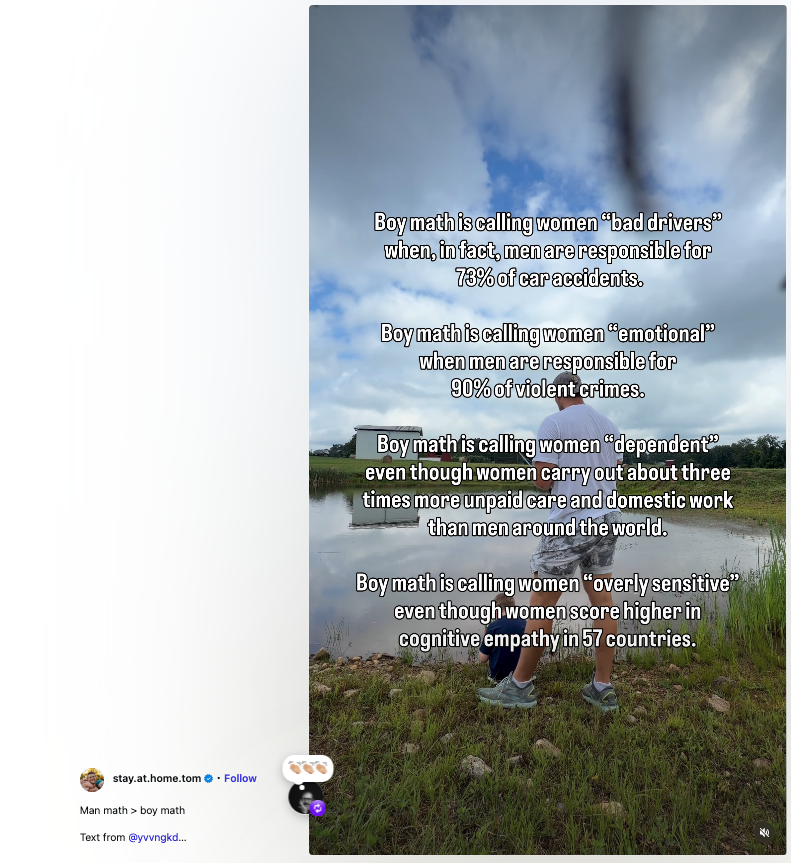
Sometimes our blog shares posts and or events that need some framing from you the coach to make it palatable for your players. Sometimes we ask you to do some “gymnastics” with the content in order to get to the real lesson in sharing it with your guys.
Today, we aren’t doing that.
Today, you can just put this graphic up as is (originally posted on IG by @stay.at.home.tom) and be quiet for awhile.
Let your guys read the captions (hell, you probably don’t even need this specific graphic, you can just read or write the stats out for your team to see). Then deploy a familiar TeamsOfMen tool (embrace the silence) and sit back and LISTEN.
Which one of those stats surprise them?
Which one’s make them uncomfortable?
Which one’s did they know in advance?
This is a Manbox myth busting list. This a cliche busting list. But it’s also going to ruffle “some feathers” in your space because you, your coaches and your players have most likely been hearing some of this “boy math” your whole life. You’ve been told my men you respect that these “boy math” statements are facts to live by.
So, maybe when one of your guys pushes back, don’t immediately tell him why he’s wrong. Ask him where he learned it. Who told you women were worse drivers? Who taught you that women were “too emotional”? Where did you learn what work “counts” inside a household? Who taught you that being sensitive or empathetic was somehow a weakness?
Using this session is a first step toward UNLEARNING that nonsense and, at the very least, planting the “hmmm, there might be some things I’ve been taught that I need to question” seed in their minds.
And that is the entire point of what we do.
Not telling young men WHAT to think, but teaching them to examine WHY they think it.
Coach Prompts
Which one of these claims would YOU have pushed back against when you were your players' age?
What beliefs about women did men you respected hand down to you that you later had to question or unlearn?
Can you let a player openly disagree with one of these claims long enough to understand WHERE his belief came from before you try to change it?
Player Prompts
Which one of these claims did you immediately want to argue with? Why?
Who or what taught you what you currently believe about that claim?
What is something you believe about men or women that you've honestly never stopped to question where you learned it?
You can't build Decision Confidence without examining the beliefs underneath the decision. Sometimes the first rep is simply asking: “Who taught me that?”
Before Somebody Needs Protecting

I met the author of the post above (on IG @Professor_Neil ) in Hamilton, Ontario when I presented at MentorAction “Rewriting The Playbook” conference in 2025. His content is so refreshing AND applicable as he almost always stitches himself into a video that is trending online and gives well informed, often scientifically backed takedowns of the bullshit being spewed (and you know I am here for a good intellectual smackdown).
So, I was not surprised to see him use his considerable platform to pushback against the woman’s video above (where, without spoiling the entire thing, she claims her girls trip was marred by a lack of being around “masculine” men who could protect her if the scene went sideways).
As Neil points out, research on bystander intervention complicates the hell out of this idea that MEN = PROTECTORSand women should feel safer simply because “masculine” men are nearby. Women frequently report greater willingness to intervene, depending on the situation and type of intervention, while men aren't automatically stepping into the protector role we've culturally assigned them.

Why share this here in our 30 seconds space?
Not because I want you training a legion of Batmen in your program (that could actually lend itself to creating an unhealthy ownership of and white knight syndrome in your guys).
But because I want them to sit and reflect/process the imaginary scene the woman describes, and where they are currently likely to find themselves in it.
“If I’m at a party…or I’m at a club...”
Who am I with in this scene?
What are we doing?
What are we TRYING to do?
With who?
“If things ‘popped off’ in this scene…”
What is likely the REASON for escalation?
Who said something?
What did something?
What happened in the five minutes before it got physical?
“Is it more likely I could stop this from happening via prevention or reaction like a superhero?”
What would prevention look like and deal with?
Who would I need to say something to?
How early would I need to say it?
Protection doesn't have to begin when somebody throws a punch.
Hell, if that's when your guys believe their responsibility begins, we've probably started teaching this way too late.
You might even find yourself leaning into a conversation about the mindset difference between the woman in this video—who seems to be reinforcing some pretty traditional Manbox ideology through her desire for a “masculine” protector—and perhaps women in your players' own lives.
What do their moms tell them? Their sisters? Their girlfriends? Their female friends?
What actually makes those women feel safe around men?
There are GREAT conversations to be had from this.
Don’t shy away from them.
Coach Prompts
When you talk about men “protecting” women, are your players imagining prevention—or primarily physical confrontation?
Have you given your guys actual reps recognizing the moments BEFORE a situation becomes dangerous?
Would your players be more comfortable fighting a stranger for a woman or checking their own teammate whose behavior is making her uncomfortable?
Player Prompts
Would it be easier for you to confront a stranger who threatened a woman or YOUR BOY who was making her uncomfortable? Why?
Think about a party where something eventually “pops off.” What decisions probably happened in the 10 minutes BEFORE the fight?
Ask a woman you trust what men do that actually makes her feel safer. Is her answer what you expected?
Believing you would protect someone is not the same as being prepared to make the decisions that might keep them from needing protection in the first place.
What the Hell Does “Process It” Mean?
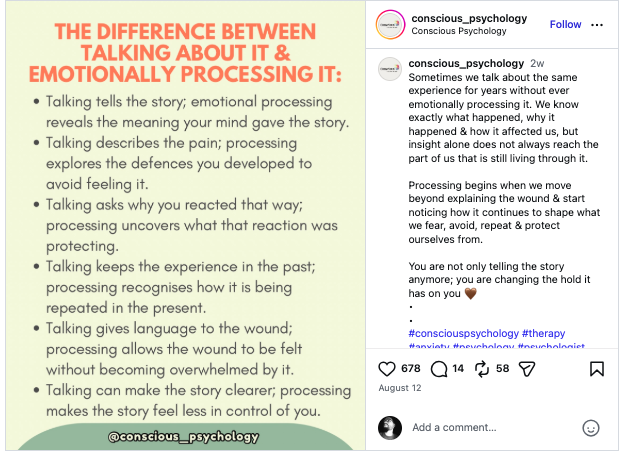
I had to look in the mirror myself today with this blog post inspiration.
Originally posted on IG by @conscious_psychology, it caught my attention because of the “emotionally processing” line. I say that A LOT in my ToM work (both in speeches with other programs and departments and with my own players).
“Emotions are information to be processed.”
“Emotional fluency means being able to process through tough feelings.”
“Process it, don’t act on it.”
But this post made me realize we need some more detail in describing what our guys think “processing” actually is. Because for some of them (especially the high school age group) their experience with processing might literally be “like the food plants coach?” And that of course doesn’t lend itself to a ton of action steps they would feel confident taking.
I would (and will this year IN SEASON) most likely use this graph in the following way:
Split team up by position groups.
Ask them to think of the last situation that cause them a BIG EMOTIONAL REACTION (good, bad, everything in between).
Decide as a group if they TALKED that emotion out or PROCESSED that emotion out.
Then, take one agreed upon scenario that all groups can be queued to use this posts bullet points with (for example: “Hey, I just got a technical foul in the game and it was my fifth foul so I’m OUT).
Now, deploy bullet by bullet what does TALKING look like this and what does PROCESSING look like with this
For example, third bullet: “Coach asking you and you saying why you yelled “Fuck that” at the ref is talking it out” vs “Was there some aspect of you the baller you were protecting with that verbal assault…like, you did get beat baseline and foul that guy, and you’re supposed to be our stopper, so you probably were protecting that identity, without realizing failing at that job one time doesn’t mean I’m not still that guy for us”
That is what a ToM session looks like with this post. And I think you should bet on 10-12 minutes for the exercise. And I would put it EARLY, PRESEASON as most of the pitfalls of a team that can’t process will be exposed once games start, so do this prep work up front!
Coach Prompts
How often do you tell your players to “process,” “reset,” “move on” or “control their emotions” without ever teaching them what those actions actually look like?
What emotional situations can you predict your players WILL encounter this season—and which could you give them reps with before they happen?
When a player reacts poorly, do you stop once you've learned WHY he did it—or help him understand what the reaction may have been protecting?
Player Prompts
Think about your last BIG emotional reaction. Can you tell the story of what happened AND identify what your reaction might have been protecting?
Which is harder for you: recognizing what you're feeling or figuring out why you're feeling it?
What basketball situation is most likely to make it difficult for you to process before you react?
Update the Playbook
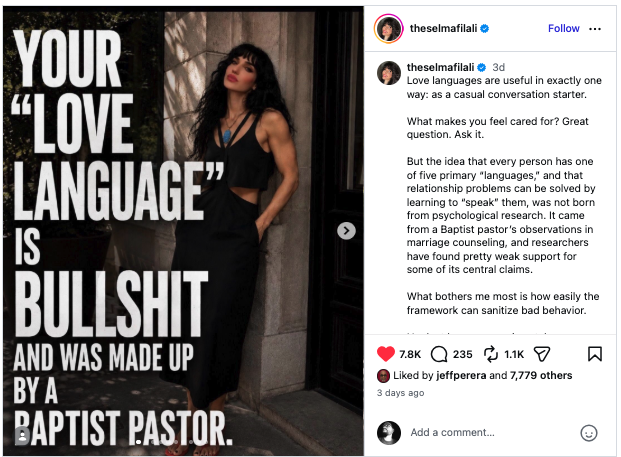
I know you've heard of the “Love Languages.”
Words of Affirmation
Quality Time
Receiving Gifts
Acts of Service
Physical Touch
I know you and/or your wife/spouse/partner have probably even had at least a cursory discussion of which one is yours and which is theirs, etc.
And, yes, I'm writing about this today in a space that hopefully gets read by coaches of male athletes because your players have heard of them too.
(Pssst: They might have heard YOU mention them as well.)
And I want you to STOP using them, talking about them, mentioning them at all.
Why?
First, because of what I learned on [IG from @theselmafilali] about the origin and fake science behind their creation (just click on the image above for more insight on that). READ her entire post and scroll every slide.
And there is research backing up the larger criticism here: the Love Languages framework didn't originate from psychological research, and subsequent research has failed to provide strong empirical support for its central claims—that everyone has one primary Love Language, that there are exactly five of them, and that relationships are better when partners “speak” one another's primary language.
But, also, because your players look to you as a model of manhood.
They take cues from how you and your staff navigate the world as men (regardless of age), and if you constantly reinforce—via talking about and acting according to—these “languages,” you are going to encourage them to do the same.
And if you are living out these fake ideals that ultimately lead to unbalanced asks of women in relationships and cater to ridiculous manbox-cliched ideas of men's “needs,” they will be more likely to do the same.
Think about how easily:
“Physical Touch is my Love Language.”
can become:
“This is what I NEED from you.”
Or:
“Acts of Service is my Love Language.”
can become:
“This is how you need to show me you love me.”
Or how any of these supposedly fixed “languages” can become an explanation for why the other person needs to change their behavior to accommodate you.
And maybe THAT'S the part I most want our guys thinking about.
NOTE: I’m writing more about this in today’s HuMANiTEAM Report—including what ditching “Love Languages” might actually look like when we talk with young men about relationships.
Coach Prompts
Have you ever talked about “Love Languages” with your players as though they're established psychological categories?
How are you helping your players distinguish between identifying something they value in a relationship and believing they're entitled to receive it?
What other relationship ideas have become so culturally normal that you've never stopped to ask where they came from or whether they're actually supported?
Player Prompts
What's something that makes you feel cared for—and does valuing it mean somebody else owes it to you?
What happens when something you want from a relationship conflicts with a boundary your partner has?
What's the difference between telling someone what you appreciate and telling them what they're responsible for providing you?
Wield It On Yourself
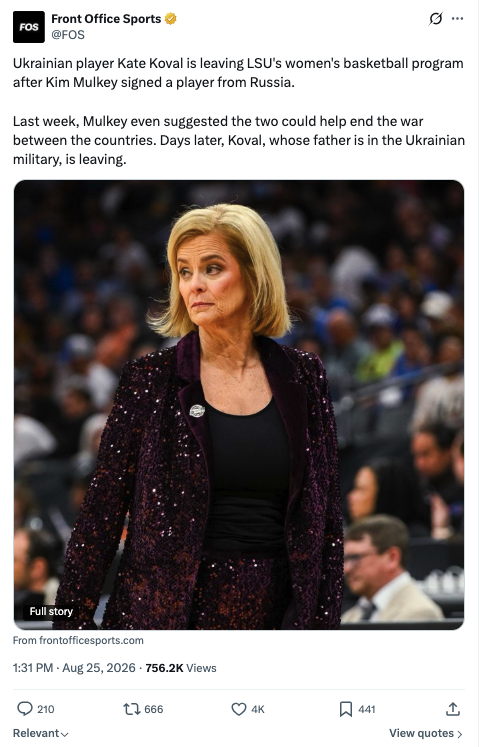
Listen, I’m the TeamsOfMen guy.
I’m the “Hey, when you use your platform as a coach of young men, you can change the world via the men you help mold” guy.
I believe that.
But, this from @frontofficesports on X alleging famous LSU WBB Head Coach Kim Mulkey thought it was a good idea to have Ukrainian player Kate Koval and a Russian player on the same team in the middle of their countries mired in a 4 year war (12 years if you start from the annexation of Crimea) is peak coach delusion.
Seriously, what we do is NOT THAT IMPORTANT.
Even for someone as well compensated as Mulkey (reportedly $3.6 million/year), at a place as big as LSU, on a stage as national as SEC basketball, this is a SPORT and your “team room” is most likely incapable of solving world conflict.
Coach, the girl’s FATHER is literally a soldier fighting in this war every day.
You’re asking her to box out and then shake hands with someone who, at best, is from a country who is actively trying to kill her dad.
This is beyond a misstep. This is a complete break from reality.
I think in this profession the best you can hope for is a progression from where you mandate actions to a player…who grows in their ability to act independently enough to the point you can simply witness their choices in the game. I do believe you have a responsibility to try and use the learning design you deploy for that progress with the athlete with the human being too.
But notice in there, it was very much an individual growth proposition.
And maybe that's where we coaches need to develop some humility around this whole “use your platform” thing.
Your team room can be an incredible place for individual growth. You can help a young person examine what he believes. You can expose him to people different from himself. You can give him reps navigating conflict, empathy, curiosity and disagreement. You can create conditions where he leaves your program a more thoughtful human being than when he entered it.
That's a hell of a platform.
It is also still just a basketball team.
There are experiences your players bring into your room that are bigger than you. Bigger than your program. Bigger than whatever lesson you've designed for Tuesday afternoon.
A player's father fighting a war against the country her new teammate comes from qualifies.
Maybe the growth opportunity in those moments isn't for the athlete. Maybe it's for the coach to recognize the limits of his or her own influence.
Sometimes using your platform responsibly means knowing where the platform ends.
And this is where I think Mulkey, who reportedly told Koval she couldn’t pass on recruiting the Russian player because she could help LSU win, needs to take some of that considerable influence and power coaches like us love talking about and WIELD IT ON HERSELF.
Look in the mirror and say:
“I'm Kim Mulkey, dammit. I run this program. If I sense this is going to be an issue for either of these young women, I can and HAVE found talent everywhere. I can find somebody else.”
That's an option too. In fact, that's probably the place where Mulkey had the MOST power in this entire situation.
Not to make two young women ambassadors for peace.
Not to see if basketball could somehow bridge a war.
To make a different recruiting decision.
Sometimes we coaches get so enamored with the idea that our influence can change the people in our room that we forget we also have the power to change OUR OWN DECISIONS.
Coach Prompts
Where are you asking your players to grow when the decision that actually needs reconsidering might be YOURS?
What problems are legitimately within the reach of your platform—and which ones require the humility to admit they aren't?
When you identify a difficult “growth opportunity” for a player, do you first ask whether there's a decision YOU could make that changes what you're asking them to carry?
Player Prompts
What parts of your life should a coach understand aren't theirs to fix?
Can teammates respect one another without being responsible for resolving everything that exists between them?
Have you ever had an adult frame something as a “growth opportunity” for you when you wished they would simply make a different decision?
We talk a lot about preparing athletes to reconsider their decisions. But what happens when the decision that needs reconsidering belongs to the coach?
Coach Readiness requires more than having the tools to develop the people in your program. It requires the ability to turn those same tools inward.
Your Decision System has to apply to you too.
Who Do You Send Him To?

You’re a basketball coach. You see a football practice drill. You’re mind immediately goes to “Ooohhh, I think there’s a way to use this in hoops.”
You’re a soccer coach. You see a tennis warm up. You’re brain screams “Yes, we could do that in lines of 4 instead of 1 on 1 and it would be great.”
Okay, so maybe that’s just my brain (although I have a sneaking suspicion there are a lot of you reading like this too), but that tendency to look for correlation from random sources is a good thing! “Curiosity is a Superpower” after all. But, the article I share above [originally posted on LinkedIn by Matthew Hood, EdD, CMPC] has me thinking there’s a danger to doing that without pause, especially when it comes to the well being of our players.
First, read the article. While it is full of technical jargon relating to the mental health industry, it is directly addressing the idea that numerous experts CROSSING LANES so to speak in to other’s lanes of expertise can be a problem for the very athletes they are trying to serve (not to mention the professional blow back that it can cause between various providers).
Second, I was very interested in Hood’s “org chart” so to speak of what Nutrition, Strength & Conditioning and Injury can be affected by (ie one can affect mood, one can affect emotional regulation, one can play a role in mood). While I still would ask him about the two way arrow I see in his statements (like, if S&C can affect identity, then identity can affect S&C), it’s a helpful diagram of the many ways your sport is going to hit your athletes.
Finally, though, the real TeamsOfMen tie in here, I believe, is an examination of your pathways.
What do I mean by pathways?
I mean IF & WHEN (because in 2026, it’s not really crazy to assume this is GOING TO HAPPEN to you and your team this year) you and your staff ID that a player is struggling as a person, what is the flow chart for getting him the help he needs?
What questions come up? Who gets called? Who decides if this is a coach convo, a parent call home or a mental health referral?
In my experience (at HS and D3 levels) that unfortunately is almost always a single person. Regardless of titles, degrees, or even capacity, this particular person in some office or job who has proven to give a damn and more importantly, is WILLING, gets assigned fire fighter duty over and over again. You send kids to them. You text them issues. You walk into their office with problems.
Now, these spaces all have one thing in common: They are under resourced. NO ONE is claiming the answer to NOT ONE “GOOD HERO” set up is “oh, well, we’ll just hire a team of all the right certifications” but the answer to “What is the path to help for a struggling young man” can’t be the same one person answer it is now either.
This is a TeamsOfMen type question that doesn’t require a CPMC or a MD or an SPLSW.
Coach Prompts
Think about the last player you realized needed help beyond what you could provide. Who did you send him to, and why that person?
If your program’s usual “go-to person” disappeared tomorrow, could your staff still explain the pathway for getting a struggling player help?
Where does your competence end? Can you identify the moment when “I can help this kid” needs to become “I need to help this kid find someone else”?
Player Prompts
If something was going wrong in your life that your coach couldn’t help you solve, do you know who you would go to next?
Who are the adults around your team that you trust for different kinds of problems? Are you relying on one person for everything?
Have you ever avoided asking for help because you didn’t know who the right person was or what would happen after you told them?
Having caring adults available is not the same as having an intentional system for what happens when an athlete needs help. DeCA examines whether your organization has built structures that reinforce what you say matters. One question worth adding to that examination: Could your coaches and athletes describe the same pathway from “we noticed something” to “this young man is getting the right help”?
What Is It Like to Be Around You When You're Angry?
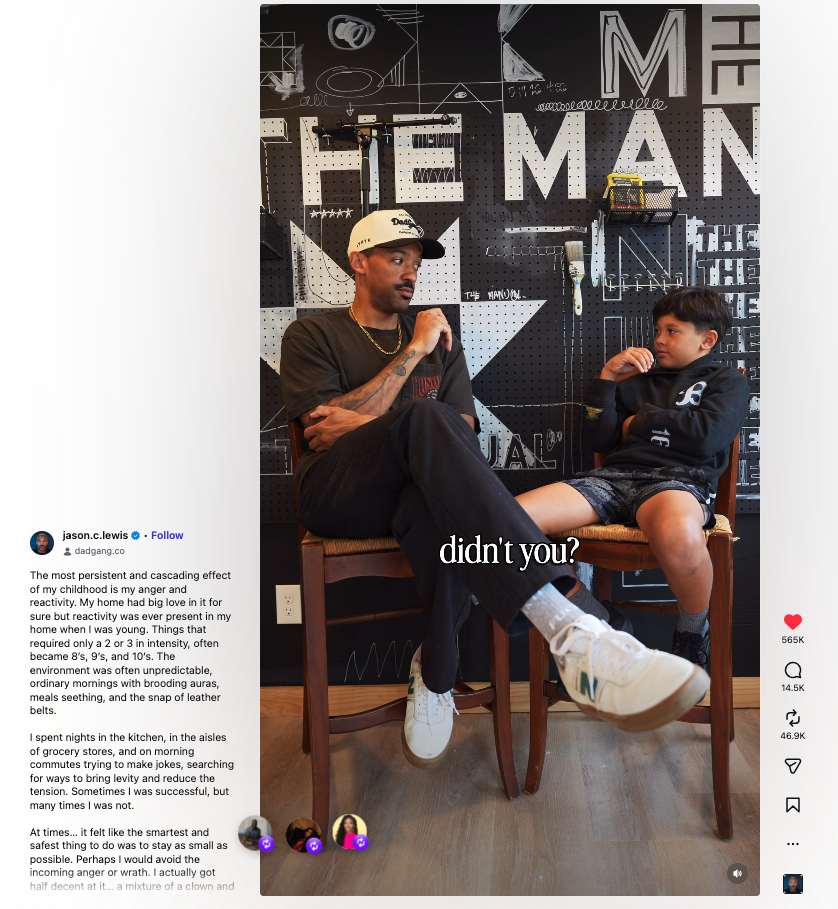
Shout out to TeamsOfMen Inner Circle Coach Joseph Jackson (Milwaukie HS Boys Basketball HC) for sending this my way via IG. Originally posted by @jason.c.lewis the video shows a father debriefing with his son their effort to build a new bed, and features the dad asking his son questions like “how often am I super angry” “what’s it like to talk to me when I’m angry” and the ways that anger showed up when the son was “messing up” in the construction of the bed.
Candidly, this hit me as a SON, as a FATHER and as a COACH.
The line in the caption “The most persistent and cascading effect of my childhood is my anger and reactivity” resonated with me, as much of my upbringing revolved around a fear of setting my father off. Like the author here states, my dad showed my brother and I HUGE expressions of love and was never shy in telling us how much he loved us. He, also, was capable of nuclear explosions that would make grown men quake, much less the boys we were.
As a dad myself, I know I have had reflection moments where I tell my wife, “oh god, that blow up when I was screaming at the kids, that was so [insert my dad’s name]” and the horror that came with remembering the fear I felt in those moments, combined with the knowledge that I could very well have done that to my own kids, was mortifying.
Finally, I know I use my voice selectively nowadays, but in the beginning of my head coaching career (almost 20 years ago now) I know I used it as a weapon often, deploying tirades and volume-intensified rants that I thought were “coaching tough”.
All these reflections and contemplation came from both the emotional video here AND the caption description. Both for me as the current pivot point of many rooms (the angry dad or coach) AND as a former person who “used levity to deflect the rage” or “got as small as possible to avoid it.”
What really sat with me is this:
“When you have the power to move rooms, you can’t assume you are always moving it in a good way. Sometimes, you are TERRIFYING them.”
And that made very uneasy. I don’t want to be that guy.
I believe we must hold our kids and our players and ourselves accountable. I believe we must strive to be better every day. BUT, I know there are so many more tools at your disposal as a father and a coach to make those things a reality.
Anger and volume are not the only solution (and often, part of the problem).
Maybe the rep from this video is as simple (and terrifying) as asking the question this dad was willing to ask his son:
“What is it like to be around me when I’m angry?”
And then shut the hell up and listen to the answer.
Coach Prompts
What is it actually like for your players to be around you when you're angry?
When you raise your voice, are you choosing a teaching tool—or have you lost access to the other tools you have?
Who in your program could tell you honestly that your anger scares the room without worrying about what you'll do with the answer?
Player Prompts
What's the difference between a coach being intense and a coach making players afraid of him?
What happens to your ability to listen and learn when you're worried about someone's reaction?
What does a coach do after losing his temper that helps rebuild trust?
One of the hardest gaps for a coach to see is the distance between what we intend our players to experience and what they actually experience.
“I was holding him accountable.”
“I was creating urgency.”
“They know I love them.”
Maybe.
But what did the room experience?
That gap between intention and experience is exactly the kind of thing DeCA is designed to help coaches examine.
The Camera Doesn't Care About Your Excuse Either
I was ecstatic this summer when our AD informed me that our Hudl InFocus camera had been mounted in our Main Gym. With the click of an app on our phone, I could grab any portion of practice I wanted on film and break it down for use however my staff and I decided. It was a setup I was used to in college and was glad was now, two years in, being the norm at the high school level as well.
More film more film more film am I right?
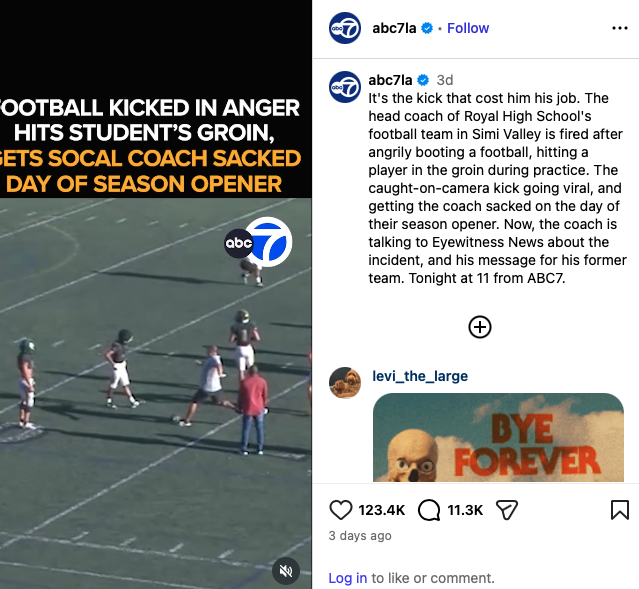
Well, the clip above, originally posted on IG by @abc7la (where a HS football coach is ranting in practice and kicks a ball in anger into a young man’s groin), reminded me of not just the need for emotional fluency in coaching, but also the fact that if we believe “put it all on film” applies to our players (namely, the idea that I can catch them with the eye in the sky slipping and then show them that and expect a new version of them) it also means WE ARE GOING TO BE ON FILM MORE TOO.
Our words, our tactics, OUR RANTS.
Those are going to be captured too.
I lived this in college.
Over a decade into being a Head Coach, I had the Hudl camera running during practice filming a 5 on 5 session. One of our players made a comment to a teammate I didn’t appreciate and I lost it. I screamed eff bombs, etc at him, took him out of the scrimmage and stomped around the floor. Now, I thought it was a warranted rant, as the young man needed to be checked for failing with his words, but I also went too far in the words I CHOSE to correct him with.
And guess what?
That shit was on camera.
And the players all had their own log ins to that days footage.
So that film ended up in front of our AD, because I did a poor job debriefing with the player post practice (because I was still processing rage) and what could have been repaired between the two of us right then and there ended up being a week long issue in our program.
Credit to the young man in the story, as he held grace for me in my own failings to meet the moment and owned his own. We “made up” and had a productive season of him starting. But my point here is both emotional processing AND more “eyes in the sky” means you have to be better at your job.
For years, coaches have loved film because the camera doesn't care about the player's excuse.
“You said you were in help? Let's watch the film.”
“You said you sprinted back? Let's watch the film.”
“You said you didn't say anything? Let's watch the film.”
Well, Coach...the camera doesn't care about your excuse either. We can’t hope for gotcha moments on video that move our guys and then NOT own our own on the same feed.
Coach Prompts
If your players had unrestricted access to film of YOU at practice, what would you be uncomfortable having them watch back?
When was the last time you watched coaching film to evaluate your own behavior instead of your players'?
When you cross a line with a player, how quickly does your system move you toward repair instead of justification?
Player Prompts
What would you notice about your coaches on practice film that they probably aren't watching for?
Does a coach owning a mistake make it harder or easier for you to respect them? Why?
What's the difference between a coach holding you accountable and a coach losing control?
We love building accountability systems for players. Film. Stats. Grades. Standards. Consequences.
Where is the accountability system for the adults?
If your program's decision system only creates feedback loops for athletes, it isn't much of a system.
DeCA examines Coach Readiness too—because the adults designing the environment are making decisions inside it every damn day.
Teach Them to See It
I realize that if you’re a frequent reader of my blog, you have to do a lot of extracting from my writing…meaning I think I put up topics and frames of current events that require you to digest a story you may not have heard of, then decide if the TeamsOfMen frame I apply to it sits well with you…and then ultimately decide if it works for YOUR belief system, YOUR program’s system and WHERE your players are in this particular moment (oh, and don’t forget the little detail of “do I have time and access to them today Kip” to even do this session).
I get it. I’m usually asking for a lot.
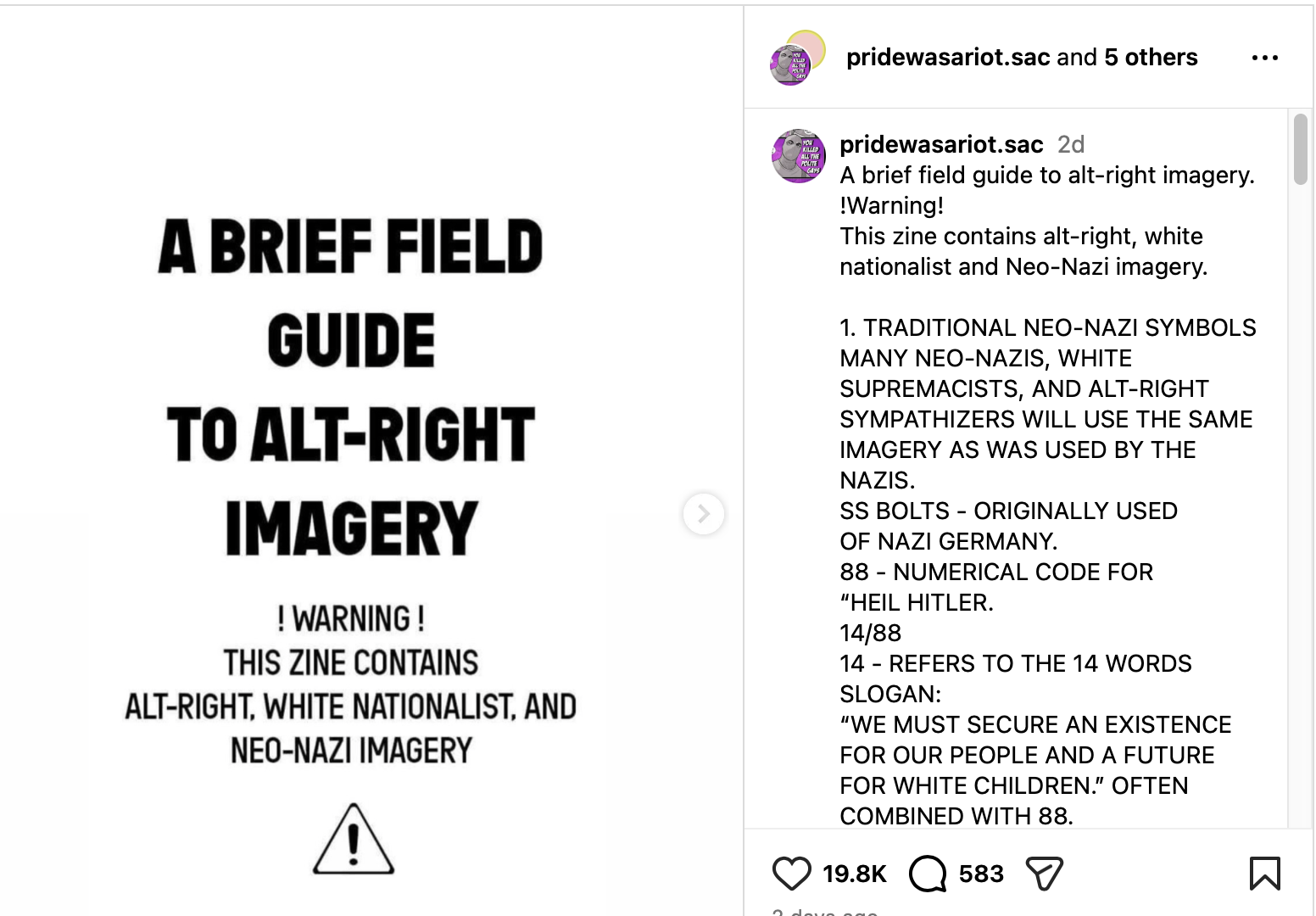
So when I saw the post above (originally on IG from @pridewasariot.sac) I thought to myself “Hey, this should be an easy one. We all hate Nazis.”
Now, if 2026 has taught me anything it’s that that particular sentiment no longer holds 100% certainty, but I do have faith in my readers and fellow coaches. So, I’m not going to waste too much time stating the obvious (our programs need to be free of Nazi’s and racism) BUT as I scrolled the post, I realized I wasn’t able to ID all the images and “code” associated with those things.
For example, I was unaware of:
Othala/Algiz markers
Celtic Cross
Pepe the Frog
Black and Yellow Polos
as dog whistles and sleight-of-hand ways to extremist groups communicate.
Believe me when I say I would imagine the chances you come across this on a player in your team room is small. You vet, you recruit, you parse your space where folks committed to hateful beliefs wouldn’t feel like they belonged there.
BUT, your players go out in the real world. No matter if you’re a college coach or a HS coach, your guys will get time away from your bubble. And what happens then?
No, I’m not claiming they go to Nazi raves…I’m saying they will be in mixed company and it would behoove them to be able to SEE and ID when the people, symbols, jokes, memes and language around them start adding up to something they don't want to be around.
This post today is less about “help your guys unlearn” as much as it is about “PROTECT your guys”.
We talk a lot about equipping young men to recognize unhealthy ideas inside themselves. But we should probably spend some time helping them recognize unhealthy spaces around themselves too.
NOTE: there is an important distinction here: seeing ONE of these things does not automatically mean you found a Nazi. Context matters. A Celtic Cross can just be a Celtic Cross. Pepe can just be Pepe. The point isn't to teach your guys to profile somebody based on a shirt, tattoo or meme. It's to help them recognize when multiple pieces of information start telling them something about the space they're in.
Coach Prompts
Would your players recognize extremist symbols or language if they encountered them outside your program?
Have you taught your athletes the difference between noticing a warning sign and making an assumption about someone?
Do your players know they can leave a party, group chat, gathering or social situation simply because something about it doesn't feel right?
Player Prompts
What would have to happen for you to realize a group or space you're in isn't one you want to be associated with?
If you noticed extremist jokes, symbols or language at a party or gathering, what would make it difficult to leave?
How do you distinguish between one thing you don't understand and a pattern telling you something about the people around you?
Your players don't need another adult telling them Nazis are bad. They need reps recognizing when a situation is becoming something they don't want to be part of—and confidence in what to do next.
That's the difference between believing the right thing and being prepared to make the right decision.
Let the Team Die
I don’t do “captains” in my HS hoops program. Long story short (and this blog isn’t really about captainship) I used to spend an inordinate amount of time trying to create a “leadership” plan for our captains and then inevitably in season you find yourself lagging on it once the season started.
In addition, to be honest, I believe as the coaching staff it’s your job to lead and too often we scapegoat young people with a “captains” label as a last bastion of desperation when a year isn’t going well (you know you’ve done it, the “well, we need better internal player leadership”).
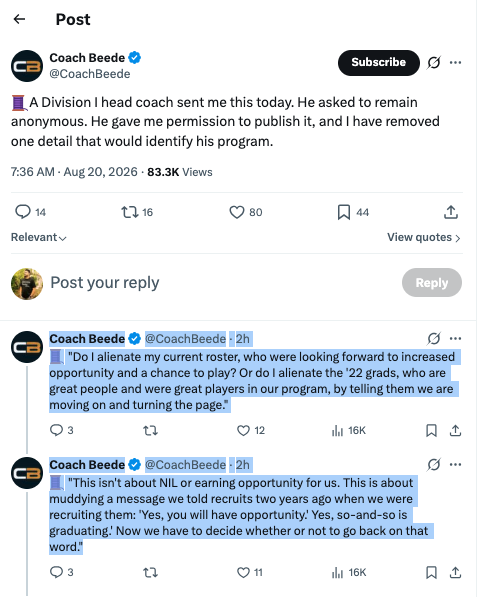
Anyway, I start there because my commentary on the above post this morning from X stems from something I read during one of those long rabbit hole investigations trying to find captains material.
Namely, something written by Bruce Tuckman called the Stages of Group Development. I will let you deep dive the entire theory, but one of my main takeaways that I’ve held onto since then AND I think applies here to the sheer panic gripping college sports (especially football) after a recent court ruling granted the possibility of eligibility to guys who were already graduated and gone, is that you MUST LET THE LIFE CYCLE OF A TEAM HAPPEN…and that includes LETTING IT DIE (years after his original work, Mary Ann Jensen helped add “Adjourning” to the stages).
Seriously coaches…let them go.
Let’s avoid the banter back and forth about the legality of the ruling, and just address the question here in the screengrab that allegedly comes from a D1 Head Coach. He is asking what to do with the promises made to kids who are “of age” now in the program vs letting back “great guys and great players” and while I understand the stress involved, I think the answer is actually really simple:
Let. Them. Go.
I think the idea of “more time: or “run it back” or “one last ride” is getting overplayed here. These young men, let’s say, were “screwed” out of a year of CFB because of a worldwide pandemic. Sure. Yes. They were. It happened. It was unjust.
But life is full of injustice. Life is full of “dammit, I wish that would have gone better.” Coaches preach that all the time. “Adversity builds character” am I right?
So we can’t pretend these guys didn’t live out a “last year” “last ride” with your program. At the time, everyone believed it was over. He finished and did his senior day spectacle, lived through the senior day emotions, and grieved through the “this was my last time in the uniform” process.
He’s done it. You’ve done it together. That team LIVED its cycle.
It “died” honorably.
It is over.
Let it go.
And in terms of direct TeamsOfMen teaching points? This is for you as a staff. You can’t hold on to something too tight, you can’t prevent TIME from taking its toll. And I’m not convinced we should always want to.
There is something developmentally important about endings.
A senior plays his last game. He takes the uniform off. He cries with his teammates. He walks out of the locker room. Eventually somebody else gets his locker. Somebody else takes his minutes. The team becomes something new without him.
And he has to become something new without the team.
When in your calendar is the natural process of death to mourning to acceptance to rebirth of a new team?
Because learning how to let something you love end—and discovering that you are still somebody after it does—is a life lesson too.
That is a life lesson your team calendar should embrace.
Coach Prompts
Where in your annual calendar do you intentionally acknowledge that one version of your team has ended before beginning to build the next one?
Have you ever tried to hold onto a player, team or season longer than was healthy because YOU weren't ready for it to end?
What are your athletes learning from you about mourning something meaningful, accepting its ending and moving forward?
Player Prompts
What was hardest about the last team, season or role you had to leave behind?
When something important to you ends, what helps you move from wishing you still had it toward accepting what's next?
Who are you when the thing you've spent years identifying yourself by is no longer yours?
We spend enormous energy intentionally bringing teams together.
Tryouts. Retreats. Team dinners. Standards meetings. Leadership exercises. Preseason practices.
How intentionally do you take them apart?
DeCA asks whether development is actually designed into the rhythms and systems of your program rather than left to chance. The ending of a season belongs in that design too.
If your players are supposed to learn how to navigate transition, loss, identity and what's next, where exactly have you built the rep?
Are You Coaching—or Performing Coaching?
I’m a Notre Dame Football fan.
I have loved the Irish since my godfather first introduced them to me during the Tony Rice hey day of Lou Holtz era.
The fight song. Touchdown Jesus. NBC. The alternate green uniforms. I was and am still all in.
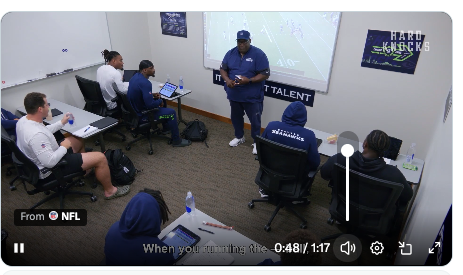
I lead with that because the Seahawks RB coach above, Coach Thomas Hammock, was previously the Head Coach at Northern Illinois and he defeated Notre Dame (in Head Coach Marcus Freeman’s debut) in 2024. So when I saw him on HBO’s Hard Knocks in the clip above it triggered a memory of “Hey I know this guy.”
However, I don’t share it here in our TeamsOfMen blog space to get you to like Notre Dame. I share it because I think this is one of those moments where the term “performative” is appropriate. I know you are probably used to hearing that term in the world of social justice, as it means “actions, allyship, or activism done primarily to increase social capital, protect a reputation, or signal virtue, rather than out of deep devotion to a cause.” But performance happens in coaching too.
I don’t know Coach Hammock so I won’t blanket his career or individual integrity with claim beyond THIS SPEECH he gave his RB room reeked of coaching performance.
Count the bleeped eff bombs. Feel the cringe at the timing and usage of all of them. Look at the players faces as they are delivered. At least from what we can see in this edited clip, NONE of them land, none of them move anyone. If our goal as coaches is to use our platform to teach and inspire change in behavior (both on and off the field), this was a not a tool that delivered.
Hard Knocks is, of course, a hard environment for anyone to coach in. Where are the cameras, when are they rolling, what is the level of clipping and out of context of each scene we see. I get all that.
But, if you’re being honest, you have been in spaces where a coach fell flat like this. Where a coach tried to be someone he isn’t and you know the players FELT IT. Hell, I would argue Coach Hammock would watch this and cringe himself and navigate thoughts of “Who in the hell is that guy up there? That ain’t me.”
Because how many of us have a version of “Coach” that we put on? The voice gets deeper. The profanity increases. The anger gets manufactured. The speech gets louder. We perform toughness because somewhere along the way we learned that this is what leadership in men's sports is supposed to look and sound like.
Maybe that's what happened here. Maybe it isn't. I don't know Coach Hammock well enough to make that claim about him. But I damn sure know I've seen it happen in coaching.
I’ve seen Coach Hammock’s pressers as a college coach (albeit never behind the scenes cutups from any Hard Knocks type production) and he was NOT this guy in those public settings.
It’s worthy of both a reflection and #MirrorTraining by him, but also as an example for you and your own staff to navigate as well. Go find film of yourself coaching this week. Not game film. YOU film. A timeout. A practice huddle. A pregame speech. Something where you're doing the talking. Turn off the sound first and watch your players.
Are they with you?
Then turn the sound back on and listen to yourself.
Is that actually you talking—or are you performing what you think a coach is supposed to sound like?
Coach Prompts
When you turn the sound off on film of yourself coaching, what do your players' faces tell you?
What parts of your coaching personality are authentically yours—and what parts did you inherit because you thought that's what a coach was supposed to look like?
When do you find yourself getting louder, tougher or more profane than you naturally are? What are you trying to accomplish in those moments?
Player Prompts
How can you tell when a coach is genuinely fired up versus trying to manufacture intensity?
What makes something a coach says actually stick with you?
Does yelling or profanity make a coaching message more powerful to you? When does it make you tune out instead?
One of the things DeCA asks us to examine is Coach Readiness. And readiness isn't just knowing what you want your athletes to learn. It's being able to communicate it in a way they can actually receive.
Your athletes can't make decisions aligned with lessons that never got through.
The Decision Confidence Analysis™ gives coaches a way to examine whether the teaching they believe they're doing is actually supported by the systems they've built around their athletes.
What Are the Other 20 Players Doing?
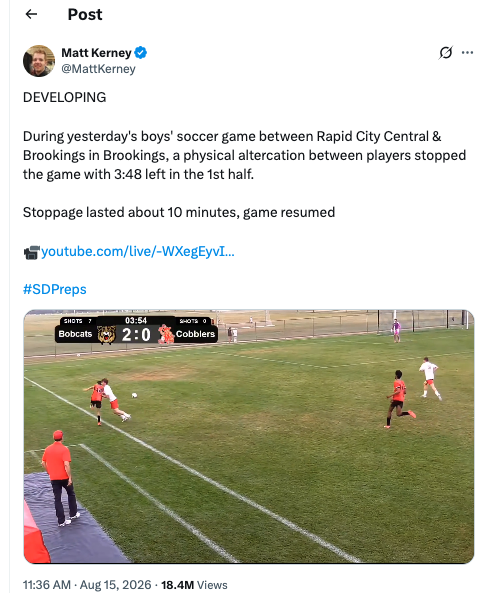
Our blog today is going to be one of those “Where’s Waldo” type film exercises. I say that knowing that I am both DATING the hell out of myself (as Waldo picture books where you had to physically search high and low on a page for Waldo’s red and white hat are a thing of the past) and asking you to deploy a “gotcha” type moment in your film room.
Background first: the screengrab above is allegedly from film from a South Dakota HS soccer game (originally posted here). The first 10-20 seconds are just soccer action but I think that is the hook setting you need for a TeamsOfMen session impact here. As the game plays out you get the moment above where competitive intensity turns into a violent assault by one of the players against an opponent.
Yes, you can (and probably should) stop the film then and there to talk about emotional fluency and processing on the field (note: this film works for any sport, not just soccer). That’s fine, especially for a first year, first month or first exposure ToM program.
But, where the real work can happen is letting it play after that and stopping the film at say the point below.
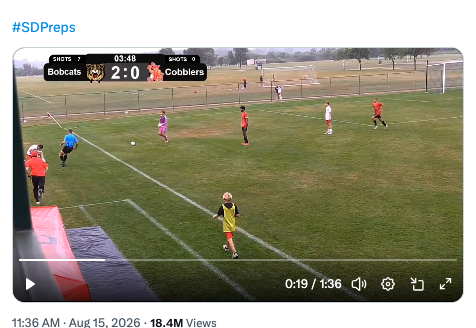
And I say that because the assault is happening. The defender is on top, wailing away with punches at the offensive player.
Now LOOK AROUND.
Ask your players to SCAN the rest of the field. Who is reacting to this? Who is MOVING to this? Who, in the moment, has the courage to go over and STOP THIS? Literally ask them for body counts, for descriptions of age, of team affiliation, etc.
You are going to be able to have a myriad of conversations from this film, including but not limited to:
Look at the teammates FROZEN of the attacker. Why aren’t they rushing to stop him? Is staying out of it necessarily the wrong response?
Look at the teammates of the kid being assaulted. How are they reacting? What would you do?
One teammate eventually comes flying into the situation and reportedly throws punches himself. Is that protecting his teammate—or escalating the violence? Where's the line?
If this was your teammate and he came back to the bench after tackling and punching an opponent, what would you say to him? Why?
Where are both teams' coaches? Did they get there in time in your opinion? What should they do next?
Hell, I’m interested in the comments you could record during playing of the clip from you team. What was the breakdown of laughs, shock and silence? What does that tell you about your program climate and culture?
Email me any and all feedback!
Coach Prompts
When violence suddenly happens, what do your players believe “having your teammate's back” requires them to do?
Have you ever explicitly discussed the difference between protecting a teammate and retaliating for one?
What did your players' first reactions to this video reveal that their polished answers afterward might not?
Player Prompts
Forget the two players on the ground. Who else on the screen made a decision you noticed?
If someone attacks your teammate, what does “having his back” actually require from you?
Where is the line between protecting your teammate and becoming another person who needs to be stopped?
The attacker makes one decision. Everybody else on that screen suddenly has to make one too.
And most of them don't have time for a team meeting, a coach's speech or a reminder of your program values before making it.
That's Decision Confidence.
The TeamsOfMen Decision Confidence Analysis™ (DeCA) asks coaches to examine whether they've intentionally built the systems, conversations and repetitions that prepare athletes for moments exactly like this one—when the coach isn't standing beside them telling them what the right decision is.
When the Laughs Tell You Something
What do your players actually believe counts as rape or sexual assault? This 4½-minute comedy clip could give you a pretty uncomfortable answer—and a hell of a coaching opportunity.
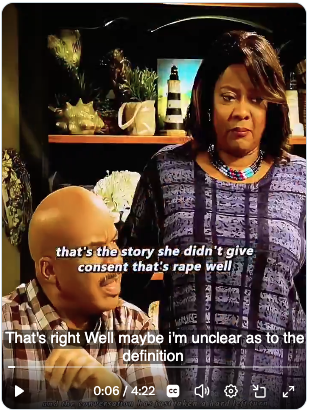
Shout out to long time TeamsOfMen practitioner and Inner Circle member Coach Chris Horton of Warren Wilson College Men’s Basketball for the share of this video (originally posted on X here). The video shows a scene from The Carmichael Show (allegedly Season 3 Episode 1) with a family debating the nature of consent, rape and sexual assault. I have never watched the show, but familiar faces like David Alan Grier, Jerrod Carmichael and Tiffany Haddish interact in the scene and the discussion feels authentic enough that it’s worth a share with your players.
As a coach running this, I would let it play one time through without any comment from you or your staff. Then, at the conclusion (it’s about four and a half minutes long) I would ask the players to physically stand up. Ask them to sit down on the left side if they agree with the argument from the character “Maxine” or sit on the right side if they agree with the argument from the men in the show. Additionally, you can allow players to stay in the middle and call that the “I don’t know yet” space.
Next, I would have them pick one note taker and then as the clip is played again, write down/record which aspects they most identified with. Then, have the note taker and another elected voice from the group stand up and present the WHY behind why they sat down on the side they did.
Now, let’s be real clear here coach: This is not a “both sides are equally right” or a “let’s all kumbaya in the middle of this thing” moment. Rape is (statistically speaking) very unlikely to fit the stereotype of a man in the bushes or a random stranger breaking into your house at night. It is much more likely (statistically) to come from someone known to the victim. In fact, the study linked above found that literally 76% of SA is committed by someone known to the victim. So we’re not going to end this session with your guys who agreed with the old man’s point of view getting a pat on the back and a “hey bro, great convo today” as they leave.
No, you’re going to ask them “where did you learn the ideas or stereotypes that lead you to believe that side of this thing” and “what parts of the manbox are showing up when you lean towards that definition or belief of what rape and SA are” and finally “why was it so hard for you to engage with what the female character was saying”? And then coach, I want you to take specific notes at the answers you get.
They will be a window into the ideas about sex, consent, women and sexual assault that already exist in your team room.
Notice I labeled it an abstract set of ideas and not some targeting of your guys. That is important. Because to engage with them, you will need to separate them from those beliefs. Our hope is they are embracing unlearning and curiosity and vulnerability in your program on a daily basis, so this ask won’t feel foreign. But, in all honesty, you need to be prepared to unearth some things about your guys that don’t sit well. While the clip itself is from a comedy, the topic and the WHEN of the laughs are going to unearth UGLY in your vicinity.
But, that’s the point of TeamsOfMen.
Better to find this now, when they are HS to college aged young people who have lots of time to grow and discard nonsense, than to find out later when they are set in stone and acting towards these ideas. You have the “laboratory” for them in your gym, on your field, in your team room, to run the experiments they need to field test the bullshit.
And hopefully, when the results come back, it hits them in a way that starts the change we want to see.
Coach Prompts
If your players watched this clip today, which arguments do you think would get the most agreement—and why?
Where are your athletes currently learning what counts as consent, rape and sexual assault if you aren't intentionally talking about it with them?
What belief could surface during this conversation that would be difficult for you to hear without immediately judging the player who said it?
Player Prompts
Where did your definition of rape and sexual assault actually come from?
Which argument in this clip felt most believable to you—and what made it feel believable?
Has anything you once believed about consent changed as you've gotten older? What changed it?
And coach, this is prevention infrastructure.
Not waiting until one of your athletes is accused of crossing a sexual boundary and then scrambling to figure out what your guys believe about consent. Creating the space beforehand to surface those beliefs, challenge them, and give your players reps thinking through situations they may actually encounter.
That is exactly the kind of intentional system the TeamsOfMen Decision Confidence Analysis™ (DeCA) is designed to help you examine. If you're curious how much of that prevention infrastructure actually exists in your program right now, start there.